
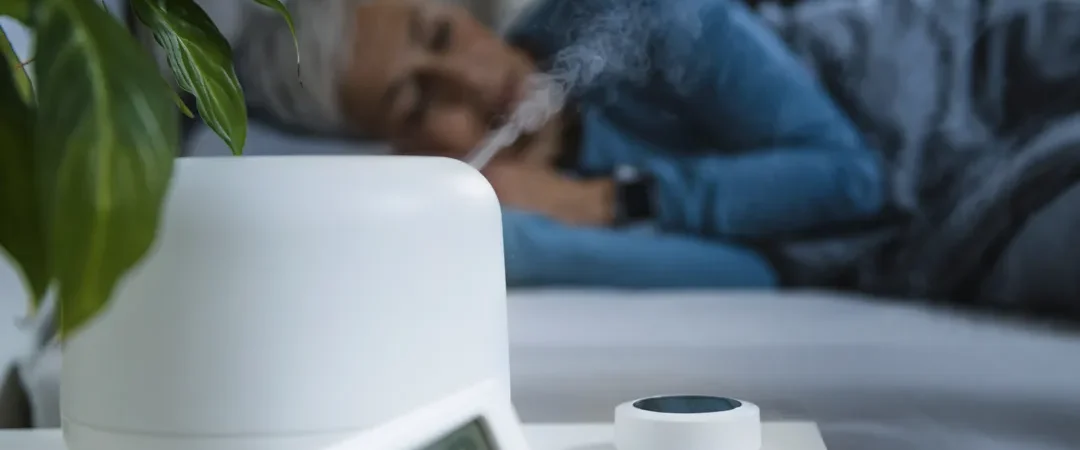
Bottom line: The ideal bedroom humidity for sleep sits between 40% and 60% relative humidity — but most people chasing better sleep never check their hygrometer. They buy new pillows, try white noise machines, and cut caffeine after noon, all while their air is quietly working against them at 70% humidity or higher.
Here’s what almost no one talks about: the problem isn’t just high humidity or low humidity — it’s the mismatch between humidity and temperature that does the real damage to your sleep. That combination is where the science gets interesting, and where most advice falls completely flat.
Why Does Humidity Affect Sleep Quality So Directly?
Your body has one job during the first hours of sleep: drop its core temperature by roughly 1 to 2 degrees Fahrenheit. That’s not a metaphor — it’s a literal physiological requirement for deep, restorative sleep to begin. The mechanism is simple: your skin acts as a radiator, releasing heat outward through evaporation of moisture (sweat) into the surrounding air.
When ambient humidity is high, that evaporation slows dramatically. The air is already saturated with moisture, so your sweat has nowhere to go. You feel hot, sticky, and uncomfortable — but more importantly, your core temperature stays elevated longer than it should, delaying slow-wave sleep and REM cycles.
Low humidity creates a different but equally disruptive problem. Dry air pulls moisture aggressively from your mucous membranes, leading to dry nasal passages, throat irritation, and sometimes a persistent dry cough that wakes you up at 2 a.m. for reasons you can’t immediately explain. Both extremes interrupt sleep, just through entirely different biological pathways.
What Is the Ideal Bedroom Humidity Level for Sleep?
The range recommended by sleep researchers and HVAC professionals consistently lands at 40% to 60% relative humidity. That window isn’t arbitrary — it’s the zone where your respiratory tract stays hydrated, dust mites and mold struggle to proliferate, and your body’s thermoregulation works efficiently through the night.
Below 30%, you’ll likely wake up with a scratchy throat, cracked lips, or nasal congestion from dried-out membranes — paradoxically, very dry air can cause as much congestion as a cold because the cilia in your airways stop functioning properly. Above 60%, you’re creating conditions that actively promote dust mite reproduction (they peak above 70%) and mold growth, both of which are serious allergen triggers that fragment sleep architecture.
There’s an honest nuance worth acknowledging here: what’s “ideal” varies slightly by person. Someone with eczema might find 50% far more comfortable than 40%. A person prone to sinus infections may feel better at the higher end of the range. The 40–60% window is a solid starting point, not a one-size-fits-all prescription.
“People focus obsessively on sleep temperature, and rightly so — but they forget that humidity modulates how temperature actually feels on the skin. A bedroom at 68°F with 70% humidity can feel just as disruptive to sleep onset as a room that’s 75°F with normal humidity. The two variables are inseparable when you’re trying to optimize nighttime thermoregulation.”
Dr. Meredith Calloway, Sleep Physiology Researcher, Department of Integrative Medicine, University of Colorado
The Temperature-Humidity Combination Most Sleep Advice Completely Ignores
Here’s the underexplored core of this whole topic: relative humidity is always relative to temperature. At 65°F, air holding 50% relative humidity contains far less actual moisture than air at 80°F holding the same 50%. This is why your “comfortable” summer bedroom can feel drastically different from your “comfortable” winter bedroom even if a hygrometer shows the same reading in both seasons.
The metric that actually matters for human comfort is called the “dew point” — the temperature at which air becomes saturated and moisture condenses. A dew point below 55°F feels genuinely comfortable to most people. Above 65°F, most sleepers report discomfort, stickiness, and difficulty settling into sleep. You’ll never see that number mentioned on a standard bedroom hygrometer, but it’s the real measurement behind why some humid nights feel tolerable and others feel suffocating.
Practically, this means that running your air conditioning to cool the room also dehumidifies it simultaneously — which is part of why air-conditioned bedrooms tend to produce better sleep outcomes than just using a fan. The fan moves air but doesn’t reduce the dew point. The AC does both.
How Does High Humidity Specifically Disrupt Sleep Architecture?
Sleep isn’t a flat line of unconsciousness — it cycles through distinct stages roughly every 90 minutes, including light sleep, deep slow-wave sleep, and REM. Each stage serves different restorative functions, and each has a slightly different thermal requirement. High humidity disrupts multiple stages through multiple mechanisms simultaneously, which is why the fatigue from a humid night feels qualitatively worse than just “not enough hours.”
Research on how indoor moisture levels may affect sleep quality consistently shows that elevated humidity increases nighttime waking frequency, reduces time spent in slow-wave sleep, and extends sleep latency (the time it takes to fall asleep in the first place). You might be in bed for eight hours and still wake up feeling unrested — not because you slept less, but because the sleep you got was shallower and more interrupted than your body needed.
There’s also an indirect allergen pathway that compounds the problem. Dust mites — the single most common indoor allergen — thrive above 50% relative humidity and reproduce explosively above 70%. Their waste particles are small enough to become airborne and are a primary trigger for allergic rhinitis, which causes nasal congestion, postnasal drip, and nighttime coughing. You’re not just sleeping in damp air; you’re sleeping in an increasingly allergen-rich environment.
What Are the Signs That Bedroom Humidity Is Ruining Your Sleep?
The tricky thing about humidity-disrupted sleep is that it mimics other problems almost perfectly. People blame stress, screen time, or diet — all plausible culprits — while never connecting the dots to the air in the room where they sleep every night.
Here are the specific signals worth paying attention to:
- Morning congestion that clears within an hour of waking — classic sign of dry air irritating nasal membranes overnight, not a cold
- Waking between 1 a.m. and 4 a.m. feeling too warm despite a cool thermostat setting — your core temperature isn’t dropping efficiently due to high ambient humidity
- Nighttime coughing or throat clearing — dry air, postnasal drip from allergen exposure, or both
- Skin that feels tacky or damp when you wake up — even when you don’t feel particularly hot, indicating inefficient evaporative cooling
- Allergy symptoms that are distinctly worse in the bedroom than elsewhere in the house — pointing directly at dust mite or mold allergen concentration in that specific space
None of these symptoms in isolation confirms a humidity problem, but multiple symptoms together — especially if they’re worse in summer or winter when humidity extremes peak — makes a very strong case for checking your bedroom’s relative humidity before trying anything else.
Is Sleeping in a Humid Room Actually Bad for Your Health Long-Term?
Short answer: yes, if it’s a chronic pattern. Poor sleep from any cause — including persistently disrupted sleep from a humid environment — accumulates into real physiological consequences over time. These include elevated cortisol, impaired glucose metabolism, weakened immune response, and increased inflammatory markers. Sleep isn’t passive recovery; it’s when your brain clears metabolic waste and your tissues repair themselves.
The research on humid sleeping environments points to a secondary concern beyond just comfort: chronic exposure to elevated indoor humidity creates biological habitat for mold species that produce mycotoxins. Some of these compounds are well-documented respiratory irritants; others have more complex effects on cognitive function and systemic inflammation with prolonged exposure. Sleeping in a chronically damp room isn’t just uncomfortable — you’re breathing that air for six to eight hours every night.
The counterintuitive fact worth knowing: dry air has its own long-term risks that often get minimized in the conversation. Chronic exposure to air below 30% relative humidity progressively damages the mucociliary clearance system in your airways — the microscopic hair-like structures that sweep pathogens out of your respiratory tract. Basically, chronically dry air makes you more susceptible to respiratory infections over time, not just uncomfortable at night.
How to Measure Bedroom Humidity Accurately
A digital hygrometer is the tool for this — they’re inexpensive (typically $10–$25), accurate to within 2–3%, and small enough to sit on a nightstand. Analog dial hygrometers look nicer but tend to drift over time and are generally less reliable for precision readings. Get a digital one.
Placement matters more than most people realize. Don’t put the hygrometer near a window, an air vent, or directly on the floor — all three locations will give you readings that don’t represent what you’re actually breathing while lying in bed. Nightstand height, roughly 2–3 feet from the center of the room, gives the most representative reading of your sleeping environment.
Check it at multiple points: when you go to bed, when you wake up in the middle of the night if you do, and first thing in the morning. Humidity fluctuates significantly across a single night, and a single reading can be misleading. If readings are consistently outside the 40–60% range, that’s your actionable signal.
How to Fix High Bedroom Humidity for Better Sleep
Controlling high humidity in a bedroom involves addressing both sources and ventilation — not just masking symptoms with fans or window-cracking. Here’s a practical sequence that actually works:
- Identify moisture sources first. Attached bathrooms without exhaust fans, ground-floor rooms, and rooms adjacent to kitchens often have chronically elevated humidity from adjacent moisture generation. Run bathroom fans during and for 20 minutes after showering — this alone can measurably reduce bedroom humidity in adjacent spaces.
- Run air conditioning where available. AC units remove 2–7 pints of water per hour from indoor air depending on size and conditions. This is the most effective single intervention for summer humidity and the reason air-conditioned homes consistently show lower rates of dust mite proliferation than non-AC homes.
- Use a portable dehumidifier for targeted control. A unit rated for the square footage of your bedroom (don’t oversize — an oversized unit cycles off before adequately dehumidifying the air) can maintain 50% relative humidity with minimal effort. Empty the reservoir daily or connect a drain hose to avoid re-releasing moisture.
- Reduce fabric mass in the bedroom. Heavy curtains, multiple layers of bedding, and wall-to-wall carpet all absorb and slowly release moisture, acting as humidity buffers that work against you in humid conditions. Switching to lighter, breathable bedding in summer isn’t just about feeling cooler — it reduces the moisture-retention surface area in the room.
- Check for hidden water intrusion. If bedroom humidity is persistently high even in winter, you may have a slow roof leak, foundation seepage, or plumbing condensation inside walls. A moisture meter on walls and baseboards can identify problem areas that a hygrometer alone won’t reveal.
How to Fix Low Bedroom Humidity for Better Sleep
Winter heating systems are the primary culprit for chronically dry bedrooms. Forced-air heating pulls outdoor cold air in (which is naturally low in moisture content), heats it, and circulates it — dropping relative humidity in some homes below 20% during cold snaps. That’s genuinely harsh on your respiratory system over a full night’s sleep.
A cool-mist ultrasonic humidifier is the standard recommendation, but the detail most people get wrong is maintenance. Humidifier reservoirs left unwashed for more than 48 hours begin growing bacteria and mold, which then get distributed as fine particles throughout the bedroom air. Rinse the reservoir daily with clean water and do a full disinfection with white vinegar weekly — this isn’t optional if you’re actually trying to improve the air quality you sleep in.
Warm-mist humidifiers (which boil water before releasing steam) are naturally cleaner because the boiling process kills most microorganisms, but they increase room temperature slightly and carry a burn risk — not ideal for households with children or small spaces where the unit might be knocked over. For most adult bedrooms, a properly maintained cool-mist unit is the better practical choice.
Pro-Tip: Place your humidifier 3–4 feet from your bed, not directly on the nightstand. Concentrated moisture directly next to your face can paradoxically cause condensation on bedding and pillows — creating a localized damp zone that encourages dust mite activity right where you sleep. Let the humidifier disperse moisture into the room rather than targeting it directly at you.
What Bedding and Mattress Materials Do in High vs. Low Humidity
This is a connection that almost never appears in humidity-and-sleep articles, but it matters significantly. Memory foam mattresses are hydrophilic — they absorb moisture from the air and from your body during sleep. In a high-humidity bedroom, a memory foam mattress will stay perceptibly warmer and feel denser than the same mattress in a dry room, because moisture absorption changes its thermal properties. That’s part of why memory foam gets so many “sleeps hot” complaints in humid climates specifically.
Natural fiber bedding — linen, cotton, bamboo — handles moisture better than synthetic fabrics in both directions. These materials wick moisture from skin more efficiently in humid conditions and don’t create that clammy, cold feeling against skin in dry conditions the way polyester blends can. The texture difference is real, not just marketing language.
Pillow fill matters too. Synthetic-fill pillows hold moisture longer than latex or buckwheat fill, meaning they can sustain localized high-humidity zones right at face level — exactly where you’re breathing — even when the rest of the room is at a reasonable humidity level. If you’re having persistent nasal or respiratory symptoms at night, the pillow is a logical place to look beyond just room humidity.
Humidity and Sleep: What the Numbers Actually Show
| Relative Humidity Level | Primary Sleep Impact | Common Trigger |
|---|---|---|
| Below 30% | Dry nasal passages, throat irritation, nighttime coughing, reduced mucociliary function | Winter forced-air heating |
| 40%–60% | Optimal thermoregulation, low allergen risk, comfortable respiratory environment | Balanced HVAC or controlled humidification |
| 60%–70% | Increased dust mite activity, mild discomfort, slightly elevated allergen load | Late summer, poor ventilation |
| Above 70% | Significant sleep disruption, mold risk, dust mite proliferation, elevated allergen exposure | Uncontrolled humid climates, leaks, no AC |
Why Seasonal Humidity Changes Create Sleep Problems You Might Not Recognize
Consider this scenario: someone in a humid coastal city notices their sleep deteriorates every July and August. They attribute it to summer stress, heat, or longer days disrupting their schedule. They add blackout curtains, keep their phone out of the bedroom, and try melatonin. Nothing meaningfully helps.
What’s actually happening is that their bedroom’s relative humidity climbs from a comfortable 48% in spring to a consistent 72–78% during peak summer months. Their body temperature isn’t resetting properly during the night, their dust mite population has tripled over the season, and they’re spending significantly more time in light sleep than in previous months. The solution isn’t behavioral — it’s environmental. A dehumidifier running from June through September would likely outperform every behavioral intervention they tried.
The same pattern happens in reverse in winter. People who sleep well in other seasons start waking up with sore throats and fragmented sleep in December — not because of holiday stress (probably), but because their forced-air heat has dropped bedroom humidity to 22% and their airways are paying for it every night. A hygrometer would identify this in about three seconds.
Do Humidifiers or Dehumidifiers Actually Improve Sleep Quality?
The evidence is clear enough to be practical: when sleep disruption has a humidity cause, correcting the humidity improves sleep. The challenge is that most people don’t confirm the humidity cause first — they buy a humidifier because they read it helps sleep, run it in a room that’s already at 58% relative humidity, push it up to 70%, and then wonder why they’re sleeping worse.
The appliance is never the answer by itself. The measured humidity reading is the answer, and the appliance is just the correction tool for what that reading tells you. Buy the hygrometer first. Identify whether you’re high, low, or within range. Then decide which appliance (if any) you actually need.
For people with CPAP machines: this is particularly relevant. CPAP therapy already dries nasal passages due to continuous airflow, which is why most modern CPAP units include integrated heated humidifiers. If your bedroom’s ambient humidity is already low, that drying effect compounds. Getting bedroom humidity to 45–55% before running your CPAP significantly reduces the morning congestion, dry mouth, and compliance issues many CPAP users experience.
The One Overlooked Step That Ties Everything Together
Sealing your bedroom at night — keeping the door closed, closing windows when outdoor humidity is high — creates a controllable microenvironment that’s far easier to manage than trying to regulate an entire home’s humidity. A bedroom with the door closed is typically 100–150 square feet; that’s a manageable space for a small dehumidifier or humidifier to maintain consistently. Your living room and hallways are not your concern when you’re asleep.
The honest reality is that most people would see measurable improvement in sleep quality from two things that cost almost nothing: a $15 digital hygrometer on the nightstand, and whatever cheap targeted correction addresses what that reading reveals. The elaborate sleep optimization rabbit holes — temperature-controlled mattress pads, weighted blankets, sleep tracking rings — are all operating downstream of something as basic as whether the air you’re breathing all night is comfortable for your body to work with.
Once your bedroom humidity is consistently in range, you might be surprised how many other sleep “problems” quietly resolve on their own — because you’ll finally be eliminating the variable that was quietly undermining everything else you were trying to fix.
Frequently Asked Questions
Can humidity affect sleep quality?
Yes. It can influence comfort, temperature regulation, and breathing sensations.
Is high humidity bad for sleeping?
It may make sleep feel less comfortable, especially in warm conditions.
Can low humidity disrupt sleep?
Yes. Dry air may irritate the nose and throat.
Why does the bedroom feel stuffy at night?
Because airflow is reduced and humidity builds up overnight.
Disclaimer: This article is for general informational purposes only and does not constitute medical advice. Indoor air quality and humidity can affect individuals differently depending on age, pre-existing conditions, and overall health. If you’re experiencing persistent symptoms you believe are linked to your indoor environment, please consult a licensed healthcare provider rather than relying on this article alone.