
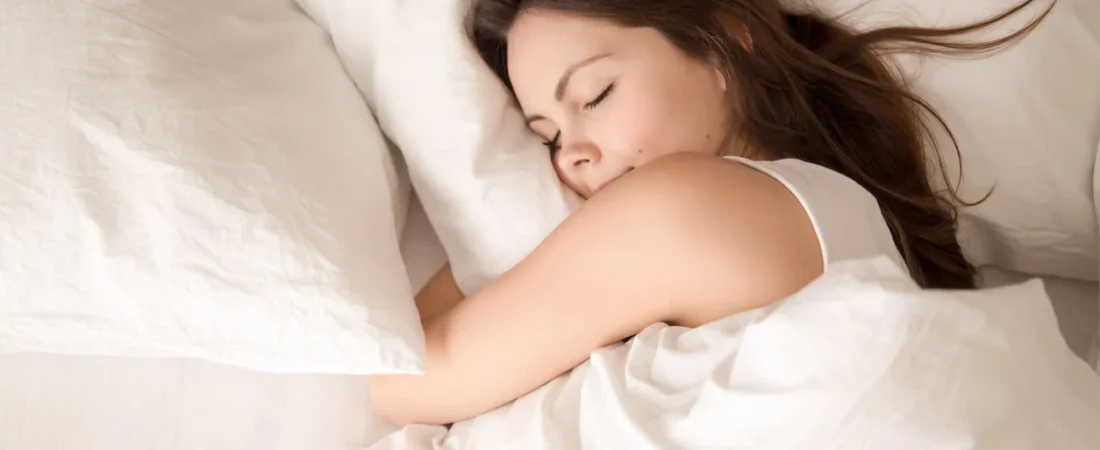
Sweating through your sheets at 72°F while your AC runs full blast isn’t a temperature problem — it’s a humidity problem, and the distinction matters more than most sleep guides will ever tell you. Yes, high humidity affect sleep quality in ways that go far deeper than simple discomfort. But the angle almost every article misses is this: humidity doesn’t wreck your sleep by making you hot. It wrecks your sleep by dismantling the one physiological process your brain absolutely cannot skip — core body temperature drop. Once you understand that mechanism, everything else clicks into place.
Why Does High Humidity Affect Sleep Quality More Than Heat Does?
Your body has a precise, non-negotiable requirement for sleep onset: your core temperature needs to drop roughly 1 to 2 degrees Fahrenheit within the first hour of lying down. This isn’t optional — it’s the trigger signal your brain uses to shift into sleep mode. The way your body accomplishes this is by pushing warm blood toward the skin surface and radiating heat outward, a process called peripheral vasodilation.
Here’s where high humidity ambushes you. When relative humidity climbs above 60%, the air is already carrying so much water vapor that your sweat can’t evaporate efficiently. Evaporation is the body’s primary rapid-cooling tool, and humidity essentially jams that mechanism. Your skin stays wet, your core temperature stays elevated, and your brain keeps waiting for the drop signal that never comes.
What makes this counterintuitive is that you can feel cool — air conditioning can keep a room at 68°F — and still struggle to sleep if humidity is sitting at 70% or higher. The thermometer reads fine. Your body, physiologically, is stuck. That’s why high humidity affect sleep quality even in rooms that feel “not that hot.”
What Is the Ideal Bedroom Humidity Level for Sleep?
The sweet spot for bedroom humidity is between 40% and 50% relative humidity. At those levels, your sweat evaporates freely, your skin stays comfortable against bedding, and your body can complete its thermal drop without fighting the environment. Push above 60% and sleep architecture starts to fragment — you spend more time in lighter sleep stages and less in the restorative slow-wave and REM phases.
Going too low matters too. Below 30% relative humidity, nasal passages and airways dry out, which can trigger micro-arousals through the night as your brain registers mild respiratory irritation. So there’s a genuine range here, not just a single magic number. The honest nuance is that someone with naturally oily skin or living in a cooler climate might tolerate 55% comfortably, while someone sleeping under heavy covers in a carpeted room may need it closer to 45%.
| Relative Humidity Level | Effect on Sleep | Action Needed |
|---|---|---|
| Below 30% | Dry airways, nasal irritation, micro-arousals | Run a humidifier |
| 40%–50% | Optimal — full evaporative cooling, minimal disruption | Maintain as-is |
| 55%–60% | Mild interference with thermoregulation | Monitor and adjust |
| Above 60% | Significant sleep fragmentation, delayed onset | Dehumidify immediately |
How Does High Humidity Disrupt Sleep Stages Specifically?
Sleep isn’t a single state — it cycles through four stages roughly every 90 minutes, with slow-wave sleep (stages 3 and 4) and REM sleep being the ones your body actually needs to repair tissue, consolidate memory, and regulate hormones. Both of those stages are thermally sensitive in different ways. Slow-wave sleep deepens the body temperature drop, while REM sleep actually disables the body’s ability to regulate temperature through shivering or sweating — meaning during REM, you’re essentially at the mercy of whatever the environment is doing.
High humidity punishes you twice. First, it delays sleep onset by preventing the initial core temperature drop, so you reach slow-wave sleep later and get less of it. Second, during REM cycles, because your thermoregulatory system is offline, a humid room actively pushes your core temperature up with no defense mechanism to counteract it. Your brain registers thermal stress and triggers an arousal — you don’t necessarily wake up fully, but you cycle back to lighter sleep.
Research in environmental sleep physiology has shown that increasing relative humidity from 50% to 75% can reduce total REM sleep time by up to 15% in a single night. That’s not a rounding error — that’s the difference between waking up functional and waking up foggy, irritable, and wondering why you slept eight hours and still feel wrecked.
“Thermal comfort during sleep is one of the most underappreciated variables in sleep medicine. We focus heavily on light and noise, but humidity-driven thermoregulatory failure is responsible for a significant proportion of non-pathological insomnia complaints, particularly in warmer months. The body simply cannot complete its sleep-initiation sequence when evaporative cooling is compromised.”
Dr. Patricia Holloway, PhD, Environmental Sleep Physiology, University of Melbourne Sleep Research Unit
What Physical Symptoms Does High Bedroom Humidity Cause at Night?
The most obvious symptom is the classic sticky-sheets feeling — sweat that doesn’t evaporate just sits on your skin and saturates fabric, creating that clammy, clingy sensation that makes every position uncomfortable. But the less-discussed symptoms are often the ones that send people to their doctor convinced something is wrong with them.
Consider this scenario: you wake at 2 or 3 AM with a racing heart, mild anxiety, and a feeling of breathlessness — and assume it’s stress. In reality, your body just completed an arousal response after thermal stress during REM sleep, and your sympathetic nervous system kicked in as it would for any perceived threat. The humidity is the actual culprit, but it’s invisible and odorless, so it never gets blamed.
High bedroom humidity also aggravates allergies and asthma at night because dust mites thrive at humidity levels above 50%, and their populations explode above 70%. A damp mattress and pillow become a microbial buffet. This adds a respiratory inflammation layer on top of the thermoregulatory disruption, making high-humidity sleep a compound problem for about 20 million Americans who already have dust mite sensitivities.
Common physical symptoms that high bedroom humidity causes during sleep include:
- Persistent sweating without feeling genuinely hot (the body trying to cool itself and failing)
- Dry mouth and nasal congestion from mold spore or dust mite irritation in humid air
- Frequent nighttime waking, often at the transition between sleep cycles
- Morning headaches from fragmented sleep and potential mild dehydration
- Feeling of fatigue despite adequate total sleep time
- Skin irritation or itching from prolonged contact with damp bedding
Does High Humidity Affect Light Sleepers and Deep Sleepers Differently?
Self-described “deep sleepers” often assume they’re immune to environmental disruptions. That assumption is mostly wrong when humidity is the variable. The distinction between light and deep sleepers is largely about arousal thresholds — deep sleepers need a stronger stimulus to reach full consciousness. But humidity-induced thermal stress operates below that arousal threshold, fragmenting sleep architecture without waking you up enough to remember it.
Deep sleepers exposed to high humidity often report the same morning symptoms as light sleepers — fatigue, poor concentration, low mood — but attribute them to other causes because they “slept through the night.” Their sleep was interrupted at a sub-conscious level dozens of times. They just don’t have the memory evidence that a light sleeper does, because light sleepers cross the threshold into full wakefulness and can clock their disruptions.
Children are particularly vulnerable here. Their thermoregulatory systems are less mature, they sleep longer (so more cumulative exposure), and they’re less likely to consciously identify discomfort and do something about it. A child who’s inexplicably cranky every morning through summer might simply be sleeping in a room with 65–70% humidity night after night.
How to Tell If Humidity Is Killing Your Sleep Quality
The first and most direct step is buying a hygrometer. They cost between $10 and $25 and give you a real-time read of your bedroom’s relative humidity. Place it at mattress level, not on a high shelf — humidity stratifies in a room and the air you’re actually breathing while lying down is what matters. Check it when you wake up, because overnight readings are often higher than daytime levels as your body moisture and breathing add vapor to the air.
You can also track a few behavioral signals without any equipment. If you’re flipping your pillow to the cool side multiple times per night, sweating through sheets that weren’t hot when you went to bed, or waking between 2 and 4 AM without obvious cause, humidity is a prime suspect. For a deeper breakdown of the specific mechanisms and what the research actually shows, the resource on how high humidity affects sleep quality covers the physiological detail in full.
One underrated diagnostic: check your bedding in the morning. If your sheets feel damp or slightly stiff — not soaked, just not quite dry — and your bedroom smells faintly musty, your room’s humidity is running too high on a consistent basis, likely above 60% through the night even if daytime readings look acceptable.
What Actually Fixes High Bedroom Humidity for Better Sleep?
The fix depends on why humidity is elevated. If you’re in a naturally humid climate during summer, the solution stack looks different from someone whose bedroom humidity spikes because it’s above a crawl space with poor vapor barriers. Diagnosing the source before buying equipment saves you money and frustration.
Here are the most effective interventions, ranked by impact:
- Run a dehumidifier in the bedroom — Target 45–50% RH. A unit rated for 30–50 pints per day handles most standard bedrooms. Set it on a continuous mode with a built-in humidistat rather than running it manually.
- Improve airflow through the room — A ceiling fan on low does something specific: it accelerates evaporation from your skin surface, which is the exact mechanism humidity suppresses. It doesn’t lower room humidity, but it partially compensates for the evaporative cooling deficit.
- Switch to moisture-wicking bedding — Percale cotton or bamboo-derived fabric draws sweat away from skin surface faster than standard polyester-cotton blends. This doesn’t fix the root problem but meaningfully reduces the clammy-sheet symptom.
- Seal the room from external humidity sources — If you sleep with a window open in humid summer air, you’re importing the problem. Close windows after sundown when outdoor humidity peaks, and use AC or a dehumidifier to maintain indoor levels.
- Address moisture sources in adjacent spaces — A bathroom sharing a wall with the bedroom, an attached bathroom with no exhaust fan, or a closet with poor ventilation all bleed humidity into sleeping spaces overnight. Fix the source, not just the symptom.
Pro-Tip: Run your dehumidifier during the two hours before you go to bed, not just overnight. Pre-conditioning the room’s humidity level means your body starts its temperature-drop process in an already-optimized environment rather than waiting for the unit to catch up while you’re trying to fall asleep.
Does Humidity Affect Sleep Differently in Summer vs. Winter?
Summer is the obvious high-humidity villain, but winter presents a different set of problems that interact with sleep in subtler ways. In cold months, indoor heating strips moisture from the air aggressively — relative humidity in heated homes frequently drops to 20–25% by morning, causing airway dryness, micro-arousals from respiratory irritation, and the kind of scratchy-throat mornings that get blamed on illness rather than indoor air quality.
The sleep-humidity problem is genuinely seasonal and bidirectional. Summer: too humid, evaporative cooling fails, core temp stays elevated, REM fragmented. Winter: too dry, airways irritated, mouth-breathing increases, sleep continuity breaks. The irony is that many households are oscillating between these two states across a year without ever landing in the 40–50% sweet spot for more than a few weeks.
Central air conditioning in summer removes significant moisture as a byproduct of cooling, which is why AC-equipped homes tend to sleep better in humid climates — but only if the AC is sized correctly for the space. An oversized AC unit cools the room quickly and then shuts off before it’s had time to remove enough moisture, a phenomenon called “short cycling.” The room temperature drops to comfort range but humidity stays stubbornly elevated.
Can High Humidity Cause Long-Term Sleep Deprivation Effects?
Chronic sleep fragmentation from humidity isn’t just an inconvenience — it compounds into real health consequences over time. Sleep is when the brain clears metabolic waste through the glymphatic system, a process that requires sustained deep sleep to complete. Nights of humidity-broken sleep mean incomplete clearance cycles, and over months and years, this contributes to cognitive fatigue, mood dysregulation, and impaired immune response.
The tricky part is that this kind of sleep deprivation is slow and quiet. You don’t have the dramatic sleep debt markers of someone who stayed up all night. Instead, you’re chronically under-rested — functioning at maybe 85–90% of your baseline cognitive capacity, slightly more irritable than you’d be otherwise, slightly more prone to illness. Because it never feels acute, most people adapt around it and attribute the symptoms to aging, stress, or diet rather than the humidity level in their bedroom.
There’s also a second-order effect worth knowing: poor sleep quality directly impairs thermoregulatory efficiency the next night. A sleep-deprived body doesn’t perform its core temperature drop as efficiently, making you more vulnerable to humidity disruption on subsequent nights. High humidity can create a self-reinforcing cycle of worsening sleep quality that doesn’t resolve until the environmental variable is addressed.
What the Research Actually Says About Humidity and Sleep Quality
Environmental sleep research consistently points to a thermal comfort zone for optimal sleep — roughly 60–67°F air temperature combined with 40–50% relative humidity — as the conditions under which sleep onset is fastest and sleep architecture is most intact. Studies using polysomnography in controlled humidity environments show measurable increases in stage 1 and stage 2 light sleep duration when humidity exceeds 60%, with corresponding decreases in slow-wave and REM sleep time.
One finding that rarely makes it into mainstream sleep advice: nighttime humidity has a stronger effect on sleep quality than daytime humidity because your body’s thermal defenses are partially suspended during sleep. You can tolerate 70% humidity while awake and active with relatively minor discomfort. The same 70% during sleep — when you’re lying still, unable to consciously adjust, and moving through temperature-sensitive sleep stages — produces measurably worse outcomes on objective sleep metrics.
Humidity’s effect also interacts with body mass. People with higher body mass generate more metabolic heat during sleep and have proportionally less surface area relative to volume to radiate it, making them more sensitive to evaporative cooling failure in humid conditions. This isn’t about weight stigma — it’s physiology. It means that two people sharing the same humid bedroom may have very different sleep experiences, and the one who struggles more isn’t exaggerating.
Conclusion
The real shift in understanding how high humidity affect sleep quality is moving away from “it makes you uncomfortable” and toward “it breaks a specific physiological mechanism your brain depends on.” Once you frame it as a thermoregulation failure rather than a vague discomfort issue, the solutions become obvious and the stakes become clearer. A hygrometer in your bedroom is probably the highest-ROI sleep tool most people have never bought. As smart home technology makes automated climate monitoring cheaper and more accessible, the idea of a bedroom that self-regulates to optimal sleep humidity through the night is less a luxury and more an expected baseline — and the people who figure that out first will simply sleep better than everyone still blaming stress for their 3 AM wake-ups.
Frequently Asked Questions
Does high humidity affect sleep quality differently than high temperature?
Yes, high humidity and high temperature affect sleep through different but overlapping mechanisms. High temperature directly raises core body temperature, preventing the natural temperature drop needed for sleep onset and deep sleep stages. High humidity doesn’t directly warm you but prevents evaporative cooling—your body’s primary method of heat dissipation during sleep. When humidity exceeds 60%, sweat cannot evaporate effectively, leaving you damp without cooling benefit. Research shows the combination creates synergistic effects worse than either factor alone. You can sleep reasonably at 70°F with 40% humidity or 65°F with 55% humidity, but 70°F with 60% humidity causes severe sleep disruption. Control both temperature (60-67°F) and humidity (40-50%) for optimal sleep.
What is the best humidity level for sleeping, and does it vary by age?
The optimal bedroom humidity for sleep is 40-50% relative humidity for most healthy adults. However, age does create variation. Older adults (65+) may sleep better at slightly higher humidity (50-60%) because aging reduces sweat gland function and skin moisture, making very dry air uncomfortable. Research specifically showed that compared to 60% humidity, sleep quality decreased at both 40% and 80% in older adults, suggesting 50-60% may be their sweet spot. Infants and children also need careful humidity management—40-50% is recommended, with careful monitoring to prevent overheating (humidity >60% combined with over-bundling increases SIDS risk factors). Individual health conditions also matter: people with respiratory disease may prefer 40-45%, while those with dry skin conditions prefer 45-55%.
Can high humidity prevent you from falling asleep or does it only affect sleep quality after you’re asleep?
High humidity affects both sleep onset (falling asleep) and sleep maintenance (staying asleep and cycling through stages properly). For sleep onset, high humidity disrupts the critical core body temperature drop that signals your circadian system it’s time to sleep. Your body needs to lose approximately 1°C of core temperature to initiate sleep; humidity above 60% impairs the evaporative cooling necessary for this drop, increasing sleep onset latency by 10-30+ minutes. Once asleep, high humidity fragments sleep architecture by reducing REM and slow-wave sleep duration, increasing wakefulness, and causing early morning awakenings. Research documents that humid heat exposure in the initial segment of sleep decreases slow-wave sleep and increases wakefulness in both early and late segments—showing impacts throughout the entire night.
How quickly can I expect sleep quality to improve after reducing bedroom humidity?
Most people notice sleep improvement within 1-3 nights after reducing bedroom humidity from high levels (>65%) to the optimal 40-50% range. Night 1: You may still experience some disruption from habits (unconscious covering/uncovering patterns) even though conditions are better. Night 2-3: Your circadian rhythm begins adapting, core temperature regulation normalizes, and most people report noticeably better sleep—falling asleep faster, fewer night awakenings, and feeling more refreshed upon waking. Week 1-2: Sleep architecture fully normalizes, with REM and slow-wave sleep returning to healthy durations. Allergen levels (dust mites, mold) take longer to decline; full respiratory improvement may require 2-4 weeks as existing allergens dissipate and populations die off. Long-term humidity control (3+ months) produces the most dramatic improvements in chronic sleep quality and daytime performance.
Is it better to sleep with a fan or dehumidifier in high humidity conditions?
For high humidity (>60%), a dehumidifier is far more effective than a fan alone. Fans increase air circulation and evaporative cooling by moving air across your skin, which helps at moderate humidity (45-55%) but provides minimal benefit at high humidity because saturated air cannot accept more moisture regardless of air movement. A fan in 70% humidity just circulates humid air—you’ll feel air movement but still experience impaired evaporative cooling and sleep disruption. Dehumidifiers actually remove moisture from air, reducing humidity to the optimal 40-50% range where natural thermoregulation and any fan use becomes effective. Ideal strategy: Use dehumidifier to reduce humidity to 45%, then add a ceiling or oscillating fan on low-medium speed to enhance comfort without creating disruptive drafts. Run the dehumidifier 2-4 hours before bed; turn it off during sleep if noise is an issue, as humidity won’t spike significantly overnight with doors/windows closed.
Disclaimer: This article is for general informational purposes only and does not constitute medical advice. Indoor air quality and humidity can affect individuals differently depending on age, pre-existing conditions, and overall health. If you’re experiencing persistent symptoms you believe are linked to your indoor environment, please consult a licensed healthcare provider rather than relying on this article alone.