
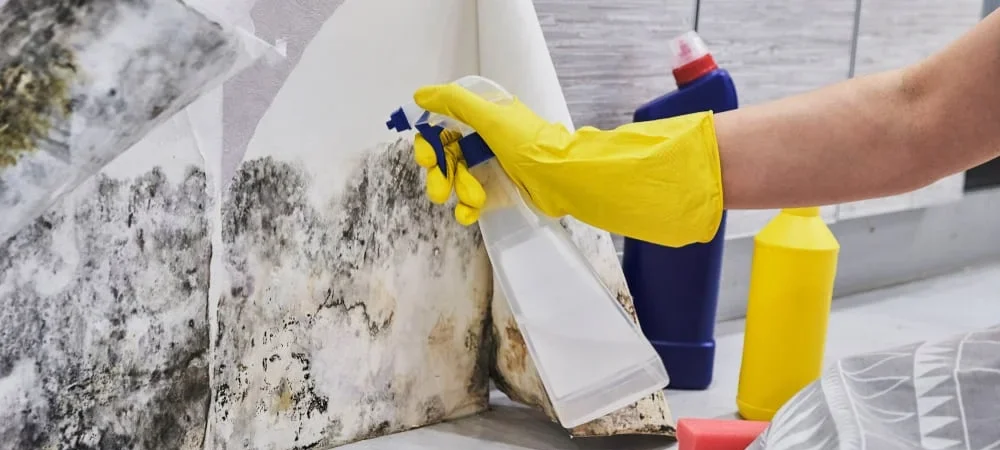
Bottom Line Up Front: Scrubbing mold off a surface and watching it return three weeks later isn’t bad luck — it’s a sign you treated the symptom and left the cause completely intact. The real reason why mold keeps coming back has almost nothing to do with cleaning technique, and almost everything to do with one thing most people never address: the vapor cycle hidden inside your walls, furniture, and daily habits.
Here’s the angle you won’t find in most mold articles: mold doesn’t “come back.” It never actually left. What you removed was the visible colony — the fruiting body. The underlying mycelium, the network of thread-like roots, often stays embedded in porous materials even after aggressive cleaning. Add humidity above 60%, and you’ve essentially just watered a plant you thought you’d pulled out.
Understanding that distinction changes everything about how you approach the problem. Mold is a biological organism with a survival strategy — and a surface wipe-down isn’t part of its threat model. This article is about outthinking it.
Why Does Mold Keep Coming Back After Cleaning?
The short answer: cleaning removes what you can see, not what’s keeping mold alive. Most cleaning products — including bleach — are effective on non-porous surfaces like tile or glass. On drywall, grout, wood, caulk, or fabric, they don’t penetrate deeply enough to kill fungal roots embedded below the surface layer.
There’s also a chemistry problem with bleach specifically. Bleach is mostly water. On a porous surface, the chlorine component evaporates quickly while the water component soaks in — which can actually feed residual mold rather than eliminate it. That’s not a fringe claim; it’s why the EPA recommends against bleach for porous surface mold remediation.
The deeper issue is that even when cleaning works, returning the same moisture conditions gives any surviving spores — which are always present in indoor air — everything they need to establish a new colony within days. You didn’t fail at cleaning. You cleaned the wrong thing.
What Hidden Moisture Sources Are Causing Mold to Return?
Visible leaks are obvious. The hidden ones are what keep mold specialists employed. In most recurring mold cases, the moisture source isn’t a dripping pipe — it’s a slow, continuous vapor problem that the homeowner has never even noticed.
Consider a real scenario: a homeowner treats bathroom ceiling mold twice in six months and assumes the caulk is the problem. But the actual driver is an exhaust fan that vents into the attic instead of outside — a wiring shortcut that’s common in older construction. Every shower pumps warm, humid air directly into a cold attic space, where it condenses, saturates the insulation, and drips back down through the ceiling. No amount of caulk replacement fixes that.
Here are the hidden moisture sources most homeowners overlook:
- Thermal bridging at wall studs: Metal or wood studs conduct cold from outside, creating cold spots on interior drywall surfaces where indoor humidity condenses invisibly each night.
- Slab moisture vapor: Concrete slabs are rarely fully sealed and constantly emit water vapor upward — enough to raise indoor humidity by 5–10% in poorly ventilated ground-floor rooms.
- Appliance condensation: Refrigerators, HVAC drain pans, and even some dishwashers generate standing water or micro-drips that create sustained damp zones beneath or behind them.
- Exterior-grade caulk failures: Failed window or door caulk allows bulk water intrusion during rain, but the moisture migrates laterally inside wall cavities — showing up as mold feet away from the actual entry point.
- Clothes drying indoors: A single load of wet laundry evaporates roughly 2 liters of water into indoor air. In a poorly ventilated room, that can push relative humidity above 80% for hours.
Tracking these down requires a systematic approach, not just a visual inspection. A cheap digital hygrometer (under $20) placed in different rooms over 48 hours will tell you more than a walkthrough ever could.
What Humidity Level Actually Causes Recurring Mold?
The number most sources cite is 60% relative humidity — and that’s accurate as a threshold, but the framing misses something important. Relative humidity is an average. What matters for mold growth is the humidity at the surface, not the center of the room.
A surface that’s even 5°F cooler than the surrounding air will have a higher relative humidity at its face — sometimes dramatically higher. A room measured at 55% RH can have wall corners registering effective surface humidity above 80% if those corners are cold. That’s why mold loves corners, baseboards, and areas behind furniture: it’s not random, it’s thermodynamics.
The practical takeaway is that keeping your room’s air humidity at 50% isn’t a guarantee against surface mold if you have cold spots. Insulating those surfaces — or improving airflow across them — matters just as much as dehumidifying the air.
| Indoor RH Level | Mold Risk | What It Means in Practice |
|---|---|---|
| Below 50% | Low | Safe zone for most materials; mold growth inhibited |
| 50–60% | Moderate | Acceptable but cold surfaces can still sustain growth |
| 60–70% | High | Active mold growth likely on porous surfaces within days |
| Above 70% | Very High | Rapid colonization; structural damage risk increases significantly |
Why Is Mold Growing Behind Furniture and in Corners?
Pull a couch or wardrobe away from an exterior wall and you’ll find what a lot of people find: black patches that were completely invisible from the front of the room. It’s one of the most common — and most misunderstood — mold scenarios in residential homes. Mold Behind Furniture isn’t just a ventilation problem. It’s a microclimate problem.
When a large piece of furniture sits flush against an exterior wall, it blocks airflow to that wall surface. The wall stays colder than the rest of the room. Warmer room air drifts into that narrow gap, hits the cold surface, and deposits moisture — night after night, for months. You’d never know it was happening until you move the furniture.
The fix is deceptively simple: pull furniture at least 2–3 inches away from exterior walls. That gap allows air to circulate, keeps the wall surface temperature closer to room temperature, and breaks the condensation cycle. Most people don’t do it because it looks odd — but it works.
Does the HVAC System Spread Mold Through the House?
Yes — and this is one of the most underappreciated reasons mold keeps recurring in multiple rooms simultaneously. If mold establishes itself inside an HVAC system (in the air handler, on the evaporator coil, or inside ductwork), every time the system runs it aerosolizes spores and distributes them to every room in the house.
The evaporator coil is particularly vulnerable because it’s designed to pull moisture out of the air — which means it stays cold and wet by design. If there’s any organic material on or near it (dust, pet dander, debris), it becomes a perfect growth surface. Studies have found mold on HVAC components in roughly 25–30% of residential systems that haven’t been serviced in over two years.
Check your air filter first. A filter that’s clogged or improperly seated allows unfiltered air — full of dust and spores — to bypass filtration and contact the cold coil directly. Replacing the filter every 60–90 days and having the coil professionally cleaned annually is not optional maintenance if you’re fighting recurring mold.
Pro-Tip: Run your HVAC fan on “On” rather than “Auto” for 15–20 minutes after a shower or cooking session. Continuous airflow helps equalize humidity across rooms and prevents moisture from settling on cold surfaces — particularly in rooms that don’t have dedicated exhaust fans.
How Do Building Materials Keep Feeding Mold Growth?
Here’s a counterintuitive fact that most homeowners don’t know: modern drywall (introduced widely after the 1980s) is more mold-prone than older plaster walls. Standard drywall uses a gypsum core faced with paper — and paper is essentially a food source for mold. Older plaster-on-lath construction, while imperfect in other ways, doesn’t offer mold the same organic feast.
This matters because it means that even in a perfectly humidity-controlled home, drywall that got wet once — during a plumbing leak, a flood, even a roof drip — can support mold growth indefinitely if it was never fully dried out and the paper facing wasn’t replaced. The moisture content of the material, not just the air around it, is the critical variable.
The same principle applies to wood framing, OSB sheathing, and particleboard furniture. These materials absorb moisture like sponges and release it slowly — which means they can sustain a mold-friendly microenvironment long after the original water event has passed. If your mold keeps coming back in the same spot, the question worth asking isn’t “why is it humid?” but “what’s in the wall?”
“Recurring mold is almost always a material replacement problem disguised as a cleaning problem. Once porous building materials like drywall or OSB have sustained a moisture event above 19% wood moisture content for more than 48 hours, the probability of full remediation without physical removal drops significantly. Surface treatments buy time — they don’t solve the root cause.”
Dr. Patricia Nguyen, Environmental Microbiologist and Indoor Air Quality Consultant
What’s the Right Way to Actually Stop Mold From Returning?
Stopping recurring mold requires working through a sequence — not just applying the next product on the shelf. Most attempts fail because people treat steps in isolation rather than addressing the full chain of causes. Here’s the order that actually works:
- Identify and eliminate the moisture source first. Nothing else matters until this is done. Use a digital hygrometer to measure room humidity, and a moisture meter (available for under $30) to test wall and floor materials at the affected site. If you’re reading above 15% moisture content in wood or drywall, those materials are too wet to hold a remediation.
- Remove affected porous materials — don’t just treat them. Drywall, insulation, carpet, and ceiling tiles that have been colonized beyond a 10-square-foot area should be physically removed, not painted over or sprayed. This is where most DIY attempts fall apart.
- Treat remaining surfaces with an EPA-registered fungicide appropriate for the substrate. Concrobium, Benefect, and similar products penetrate porous surfaces more effectively than bleach solutions and leave an anti-microbial residue that inhibits re-colonization. Follow dwell times exactly — most products need 10–15 minutes of wet contact to work.
- Dry the area completely before closing it back up. Use a dehumidifier and fans for at least 48–72 hours after treatment. The interior of wall cavities should read below 12% moisture content before new drywall goes up.
- Control indoor humidity long-term, at the source level. A whole-home dehumidifier set to 45–50% RH is more reliable than portable units in most houses. If that’s not accessible, bathroom exhaust fans rated for the actual square footage of the room (not whatever was installed at build) and kitchen range hoods that vent outside are the two highest-impact ventilation upgrades you can make.
One honest nuance: the right approach genuinely depends on the extent of the problem and what materials are involved. Surface mold on a painted concrete floor after a single wet event is a completely different problem from recurring mold in a wall cavity above a chronic slow leak. One is DIY-manageable; the other almost always requires professional remediation — not because of danger, but because you cannot physically access and dry a wall cavity without opening it up.
Can Indoor Plants or Condensation on Windows Cause Recurring Mold?
Window condensation is a symptom, not a cause — but it’s a useful diagnostic. When you see water droplets forming on the inside of your windows in cold weather, it means your indoor air is holding more moisture than the window surface can accommodate. That same moisture is also condensing on every other cold surface in the room, just less visibly.
Persistent window condensation in a room correlates strongly with mold problems on exterior-facing walls, in closets on exterior walls, and behind furniture along those walls. So if you’re seeing it regularly, treat it as a warning that your humidity is running too high — not just a cosmetic issue to towel off each morning.
Indoor plants are a smaller factor but not zero. A collection of 15–20 tropical plants in a small room can add measurable humidity — especially if they’re overwatered and the soil stays saturated. The soil itself is also a potential mold reservoir. That doesn’t mean you have to choose between plants and air quality, but grouping large plant collections in rooms with better ventilation or lower baseline humidity makes practical sense.
How Do You Know If Mold Is Still Present After Cleaning?
Visual inspection is unreliable for confirming mold clearance — and that’s a problem, because it’s what most people rely on. A surface that looks clean after treatment can still harbor viable spores below the visible layer, particularly on porous materials. You need a different kind of evidence.
The most accessible option for homeowners is an air quality test — specifically a viable air sample collected during activity in the space (not while it’s been sitting undisturbed for 12 hours). These tests, available through certified labs for around $50–$100 per sample, measure both spore count and species. Elevated spore counts after remediation, or the presence of indicator species like Stachybotrys or Chaetomium, tell you the remediation is incomplete.
A lower-tech early warning system: trust your nose. Mold produces microbial volatile organic compounds (MVOCs) that have a distinct musty, earthy odor — and you’ll often smell active mold growth before you can see it. If a room smells musty after you’ve cleaned it, that’s not residual cleaning product smell. That’s mold still metabolizing somewhere nearby.
What Lifestyle Habits Keep Feeding Indoor Mold?
Everyday habits contribute more to recurring mold than most people realize — and some of the biggest offenders feel completely harmless. Long showers in bathrooms without functional exhaust fans, cooking without range hoods, and storing wet umbrellas or shoes in poorly ventilated closets all contribute to localized humidity spikes that compound over time.
Cooking produces a surprisingly large amount of water vapor — boiling pasta alone can release over a liter of steam into the air. A kitchen without adequate ventilation traps that moisture, and in a small apartment especially, it redistributes through the entire living space. You can verify this yourself: set up a hygrometer in your kitchen and check the reading before, during, and 30 minutes after cooking. The difference is often 15–20% RH.
Behavioral changes cost nothing and can make a measurable difference. Running exhaust fans for 20 minutes after showers (not just during), keeping closet doors open in dry weather to allow air circulation, and avoiding wall-to-wall carpet in below-grade rooms are all low-effort, high-impact adjustments. They don’t replace mechanical moisture control — but they reduce the load your ventilation and dehumidification systems have to handle.
When Should You Call a Professional for Recurring Mold?
The standard threshold most remediation guidelines use is 10 square feet — roughly a 3×3 foot area. Smaller than that, with a clear moisture source you can eliminate, is generally manageable as a DIY project. Larger than that, or in any situation where you can’t identify or stop the moisture source, is when professional remediation becomes the more sensible path.
There are also material-specific situations where professional involvement is worth it regardless of size. Mold inside an HVAC system, inside wall cavities you can’t access, on structural lumber, or in a home where an occupant has respiratory sensitivities — these all warrant a professional assessment before you start disturbing spore colonies. Disturbing mold without containment can spike airborne spore counts by 10,000x or more in an enclosed space.
A legitimate remediation contractor will perform a pre- and post-remediation air test, use negative air pressure containment during removal, and provide documentation of clearance. Any contractor who offers to “spray and wipe” without testing or containment is not offering remediation — they’re offering a temporary cosmetic fix with a recurring bill attached.
The long-term reality of indoor mold control is this: homes are not sealed environments, and mold spores are always present in indoor air at some level. The goal isn’t elimination — it’s management. Keep surface humidity below the growth threshold, keep porous materials dry, maintain your mechanical ventilation systems, and you’ll spend your time on things more interesting than bleaching bathroom grout. The homes where mold keeps winning are almost always the ones where the moisture source was never truly found — not the ones where the cleaning wasn’t thorough enough.
Frequently Asked Questions
Why does mold come back after cleaning?
Because cleaning removes mold but does not remove moisture or humidity.
Can mold keep returning without leaks?
Yes. High humidity and condensation are common causes.
Why does mold return in the same spots?
Those areas likely stay damp or poorly ventilated.
Does cleaning prevent mold from coming back?
Cleaning helps temporarily but does not change indoor conditions.
Is recurring mold common in apartments?
Yes. Apartments often have limited airflow and temperature differences that support regrowth.
Disclaimer: This article is for informational purposes only and isn’t a substitute for professional mold inspection or remediation advice. Mold problems vary a lot depending on the material affected, the extent of growth, and your specific health situation. Always follow product label instructions when using cleaning chemicals, ensure proper ventilation, and consider consulting a certified mold remediation professional for anything beyond a small, surface-level patch. If you have respiratory conditions, allergies, or a compromised immune system, talk to a doctor before starting any DIY mold removal.