
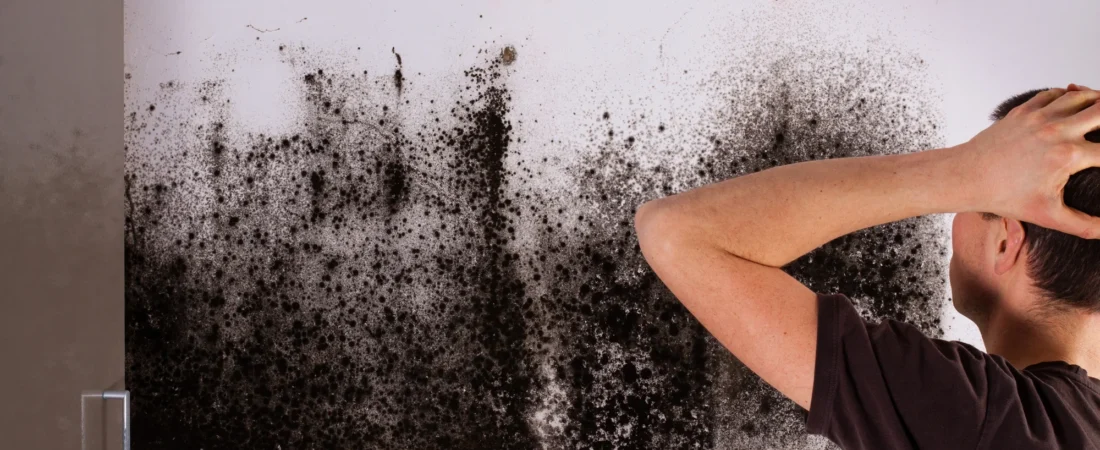
There are over 100,000 known species of mold, and roughly 1,000 of them are commonly found inside homes across North America. That number alone should reframe how you think about this problem — mold isn’t some rare invader that sneaks into poorly maintained houses. It’s everywhere, always, just waiting for the right conditions. The question isn’t whether mold spores are in your home right now (they are), but whether your home is giving them what they need to grow.
What Is Mold, Actually?
Mold is a type of fungus — not a plant, not a bacterium, not something in between. It reproduces by releasing microscopic spores into the air, which is why you can’t keep them out no matter how airtight your home feels. Those spores settle on surfaces and stay dormant until moisture shows up, at which point they begin to colonize and digest whatever organic material they’ve landed on.
Here’s the part most people miss: mold doesn’t need dirt or filth to grow. It feeds on the structural components of your home itself — drywall paper, wood framing, ceiling tiles, even the dust that accumulates on concrete. A clean-looking wall can be actively feeding a mold colony on its other side. That’s not a scare tactic; it’s just how mold biology works.
Scientifically, molds belong to the kingdom Fungi and grow as thread-like filaments called hyphae. These hyphae extend and branch to form a visible mass called mycelium — that’s the fuzzy, discolored patch you actually see on a surface. What you’re looking at when you spot mold is the colony, not the organism in its entirety; the root structure is often already embedded deeper into the material.
Why Mold Grows Indoors: The Real Conditions That Matter
Four conditions allow mold to grow: moisture, a food source, oxygen, and a temperature between roughly 40°F and 100°F (4°C–38°C). Your home almost always satisfies three of those four automatically. The only one you can actually control is moisture. This is why every serious mold conversation eventually comes back to humidity and water management — not cleaning products, not air fresheners, not paint.
Relative humidity above 60% is the threshold where indoor mold risk climbs sharply. At 70% or higher, mold can begin colonizing surfaces within 24 to 48 hours if a food source is present. That timeline is sobering when you consider how quickly humidity can spike after a slow pipe leak, a basement flood, or even a run of rainy days with poor ventilation.
Temperature matters too, but it’s often misunderstood. Cold surfaces — like an exterior wall in winter — don’t prevent mold. They cause condensation, which provides the moisture mold needs. That’s why uninsulated walls and cold corners behind furniture are such common problem spots. The mold isn’t growing because the space is warm; it’s growing because the cold surface is wet.
“People focus on visible mold and miss the underlying moisture problem entirely. Removing the mold without fixing the water source is like mopping the floor with the tap still running. The spore load in a home can return to problem levels within days if the humidity or leak isn’t addressed.”
Dr. Patricia Hemming, Environmental Mycologist and Indoor Air Quality Consultant
What Types of Mold Are Most Common in Homes?
Not all indoor molds are the same, and they don’t all behave the same way. The type of mold that grows in your home depends partly on what surface it’s colonizing and how wet that surface is. Some species thrive on damp drywall; others prefer wood or fabric. Knowing the difference helps you understand what you’re dealing with and whether a DIY approach is reasonable.
| Mold Type | Common Location | Risk Level |
|---|---|---|
| Cladosporium | Fabrics, wood, HVAC ducts | Low–Moderate (can trigger allergies) |
| Penicillium | Water-damaged insulation, wallpaper | Moderate (respiratory irritant) |
| Aspergillus | Dust, walls, food | Moderate–High (some strains produce mycotoxins) |
| Stachybotrys chartarum | Chronically wet drywall, ceiling tiles | High (the infamous “black mold”) |
Stachybotrys — widely known as black mold — gets the most media attention, but it actually requires sustained wetness over weeks or months to establish. It’s not the mold that shows up after a single humid week. Penicillium and Aspergillus are far more common household culprits and are just as capable of causing respiratory problems, especially in people with asthma or compromised immune systems. Don’t let fear of black mold distract you from taking other species seriously.
What Health Risks Does Indoor Mold Actually Cause?
The health effects of mold exposure sit on a wide spectrum, and that’s worth being honest about. For a healthy adult in a well-ventilated space with a small, isolated mold patch, the practical risk is low. For an infant, an elderly person, someone with asthma, or anyone with a weakened immune system, even moderate mold exposure can trigger significant symptoms. Context matters enormously here.
Common symptoms of mold exposure include chronic nasal congestion, sneezing, itchy or watery eyes, coughing, and skin irritation. These often get misdiagnosed as seasonal allergies — and it’s entirely possible to spend months treating “hay fever” when the real problem is a slow leak behind your bathroom tiles. If your symptoms reliably improve when you’re away from home for several days, that’s a meaningful clue worth investigating.
Some molds produce mycotoxins — secondary metabolites that can cause more serious effects with prolonged exposure. The mechanism is direct: you inhale or ingest the toxin, and it interferes with cellular processes. This isn’t theoretical, but it also isn’t a guarantee that every mold patch is toxic. Mycotoxin production depends on the specific strain, the surface it’s growing on, and environmental conditions. Testing matters when exposure is significant or prolonged.
Where Does Mold Hide in a House?
Visible mold is almost never the full picture. The patch you see on a bathroom ceiling or window sill is typically the surface expression of a larger colony that has already embedded into the material behind it. By the time mold is visible, it’s been growing for a while — often days to weeks, sometimes longer.
These are the locations where mold establishes itself most reliably, and where most inspections should start:
- Behind bathroom tiles and shower surrounds — grout cracks let moisture reach the wall substrate, which then stays wet for hours after each shower
- Under sinks and around supply lines — slow drips can go undetected for months in enclosed cabinet spaces
- Inside HVAC systems and ductwork — condensation on coils creates a perfect environment, and the airflow then distributes spores throughout the home
- In attic spaces near roof penetrations — inadequate ventilation causes moisture to accumulate on sheathing, often invisibly
- Crawl spaces and basement rim joists — ground moisture migrates upward and condenses on cooler structural wood
- Behind exterior walls with insufficient insulation — thermal bridging creates cold spots where interior humidity condenses
A musty smell without visible mold is a reliable sign that something is growing somewhere hidden. That smell comes from microbial volatile organic compounds (MVOCs) released as mold metabolizes its food source. If a room consistently smells musty even after cleaning and airing it out, don’t dismiss it.
Why Does Mold Come Back After You Clean It?
This is the core frustration most homeowners run into, and it’s where the common understanding of mold breaks down completely. Cleaning mold off a surface removes the visible colony, but it doesn’t change the conditions that allowed it to grow. If the humidity is still high, if the leak is still leaking, if the condensation is still forming — the spores already present in your air will simply recolonize the same spot within days to weeks.
There’s also a subtler problem: many cleaning methods kill the mold but leave dead spores and hyphae behind. Dead mold can still trigger allergic reactions in sensitive individuals. And on porous materials like drywall or unsealed wood, cleaning the surface may not reach the roots of the colony embedded in the material. Mold keeps returning in these cases not because cleaning failed, but because the underlying problem — moisture — was never resolved.
The fix isn’t a stronger cleaner. It’s identifying and eliminating the moisture source, then ensuring the affected material is actually dry before any surface treatment. In cases where mold has penetrated porous materials, replacement is more effective than cleaning. Repainting over mold — even with “mold-resistant” paint — is almost always a temporary cosmetic fix, not a solution.
How to Prevent Mold Growth in Your Home
Prevention is not complicated, but it does require consistency. The entire strategy reduces to one principle: deny mold the moisture it needs. Everything else follows from that. Here’s what actually works, ranked roughly by impact:
- Keep indoor relative humidity between 30% and 50%. Use a hygrometer to measure — don’t guess. In humid climates or during summer months, a properly sized dehumidifier or air conditioner running consistently is often necessary to stay in this range.
- Fix leaks immediately, not eventually. A slow drip under a sink or around a toilet base will saturate the surrounding materials in days. Water damage that dries within 24 to 48 hours rarely results in mold growth; water damage left for longer almost always does.
- Ventilate high-moisture areas during and after use. Bathroom exhaust fans should run for at least 20 minutes after a shower. Kitchen range hoods should vent to the exterior, not just filter and recirculate air. Leaving interior doors open helps prevent humidity from concentrating in one area.
- Insulate cold surfaces to prevent condensation. Pipes, exterior walls, and cold-floor edges where condensation forms need adequate insulation — not more heating. Heating a cold, humid room raises the moisture capacity of the air but doesn’t necessarily prevent condensation on the coldest surfaces.
- Control ground moisture in crawl spaces and basements. A ground-level vapor barrier in a crawl space dramatically reduces the moisture load entering the structure above it. Basement walls below grade should be properly waterproofed, not just sealed on the interior surface.
Pro-Tip: Place an inexpensive digital hygrometer in each area of your home that you suspect is humid — basement, bathroom, bedroom — rather than relying on a single whole-house reading. Humidity varies room by room, and a basement can be sitting at 75% while your living room reads a comfortable 45%. That hidden pocket of moisture is exactly where mold gets its start.
Can You Test for Mold Yourself, or Do You Need a Professional?
DIY mold test kits exist and are widely available, but they’re largely not worth your money for diagnostic purposes. Most work by exposing a petri dish to air for a set period and then mailing it to a lab. The result tells you that mold spores are present — which they always are — without telling you whether concentrations are elevated, where the source is, or what species you’re dealing with. A positive result from a DIY kit is essentially guaranteed in any building.
A professional inspection makes sense when you have persistent symptoms that resolve outside the home, a strong musty odor without visible mold, recent water damage that wasn’t fully dried within 48 hours, or you’re buying or selling a property. A qualified inspector will use air sampling, moisture meters, and thermal imaging to locate colonies that aren’t visible and measure spore counts against outdoor baseline levels. That data is actually useful.
For small, clearly visible patches on non-porous surfaces — a tile grout line, a caulked corner — you don’t need a professional test. You need to clean it, find out why it’s wet, and fix that. The species identification doesn’t change the remediation approach for small, accessible colonies on surfaces you can actually clean and dry.
How Much Mold Requires Professional Remediation?
The EPA’s general guidance — and it is a guideline, not a law — is that mold covering more than 10 square feet of contiguous area should be handled by a professional remediator. That’s roughly a 3-foot by 3-foot patch. Anything smaller on a cleanable, non-porous surface can generally be handled by a careful homeowner using appropriate protective equipment.
Size isn’t the only criterion, though. Location matters as much as area. Mold inside an HVAC system, inside wall cavities, under flooring, or in attic sheathing requires a professional approach regardless of size — because accessing and containing those areas safely requires equipment and training most homeowners don’t have. Disturbing a contained mold colony without proper containment can spike airborne spore levels throughout the home.
Protective equipment for DIY cleanup on small patches should include an N95 respirator at minimum (not a basic dust mask), nitrile gloves, and eye protection without ventilation holes. Seal off the work area with plastic sheeting, bag all debris before carrying it through other rooms, and run an air purifier with a HEPA filter during and after the work. That’s not overcautious — it’s the actual difference between cleaning mold and spreading it.
Does Outdoor Humidity Make Indoor Mold Worse?
Yes, directly and in ways most people don’t account for. When outdoor humidity is high, opening windows — counterintuitively — can raise indoor humidity rather than lower it. Warm, humid outdoor air flows in and then cools slightly as it contacts interior surfaces, depositing moisture on walls, floors, and furnishings. This is a common summer mistake in humid climates: ventilating with outside air when the outside air is the problem.
The fix is to keep windows closed during humid outdoor conditions and rely on mechanical cooling or dehumidification to manage indoor moisture. Save natural ventilation for days when outdoor dew point is below 55°F (13°C) — at that level, outdoor air will genuinely help dry your interior. Dew point is a more reliable measure than relative humidity because it doesn’t change with temperature the way relative humidity does.
Seasonal changes create predictable high-risk windows. In humid climates, late spring through early fall is when outdoor moisture load peaks. In cold climates, the risk shifts toward winter when indoor air is heated and people produce moisture from cooking, bathing, and breathing without adequate exhaust ventilation. Knowing which season is your home’s vulnerable period lets you monitor and respond before mold has a chance to establish.
One Overlooked Factor: Building Tightness and Mold Risk
Modern energy-efficient homes are built tight — and that tightness creates a hidden mold risk that older, drafty homes don’t face to the same degree. When a building envelope is sealed to reduce air infiltration, moisture generated indoors (from people, cooking, plants, and appliances) has fewer pathways to escape. Without a mechanical ventilation system designed to handle that moisture load, it accumulates. Tight homes need purpose-built ventilation; they can’t rely on gaps and cracks the way older construction did.
The counterintuitive result is that a well-built, energy-efficient home can develop mold problems faster than a leaky older home under the same occupant behavior — simply because the moisture stays trapped inside. Heat recovery ventilators (HRVs) and energy recovery ventilators (ERVs) exist specifically to solve this problem by exchanging stale interior air for fresh exterior air without losing the thermal energy you’ve paid to heat or cool.
If your home was built or significantly renovated in the last two decades and you’re dealing with persistent indoor humidity problems or recurring mold, this is one of the first things worth examining. It’s not a flaw in the design philosophy — it’s an incomplete installation. Tight-building standards without matched ventilation standards is where a lot of modern mold problems originate.
A Final Word on Getting Ahead of Mold
Mold is a moisture problem wearing a mold costume. Every spray bottle of mold remover, every coat of mold-resistant paint, every scented candle masking a musty odor — none of it addresses the actual mechanism at work. The homes that stay mold-free aren’t necessarily cleaner or newer; they’re drier. As building science continues to improve and homes become tighter and better insulated, the conversation about mold will increasingly become a conversation about intentional ventilation design — not just remediation after the fact. The homeowners who understand that shift early are the ones who won’t be dealing with this problem again in six months.
Frequently Asked Questions
What exactly is mold?
Mold is a fungus that grows from spores in moist indoor environments.
Can mold grow without leaks?
Yes. High humidity and condensation alone can support mold growth.
Why does mold appear in clean apartments?
Cleanliness does not prevent mold if moisture conditions are present.
Is mold always visible?
No. Mold often grows in hidden or poorly ventilated areas first.
Does mold grow quickly?
Mold usually develops gradually over time rather than overnight.
Disclaimer: This article is for informational purposes only and isn’t a substitute for professional mold inspection or remediation advice. Mold problems vary a lot depending on the material affected, the extent of growth, and your specific health situation. Always follow product label instructions when using cleaning chemicals, ensure proper ventilation, and consider consulting a certified mold remediation professional for anything beyond a small, surface-level patch. If you have respiratory conditions, allergies, or a compromised immune system, talk to a doctor before starting any DIY mold removal.