
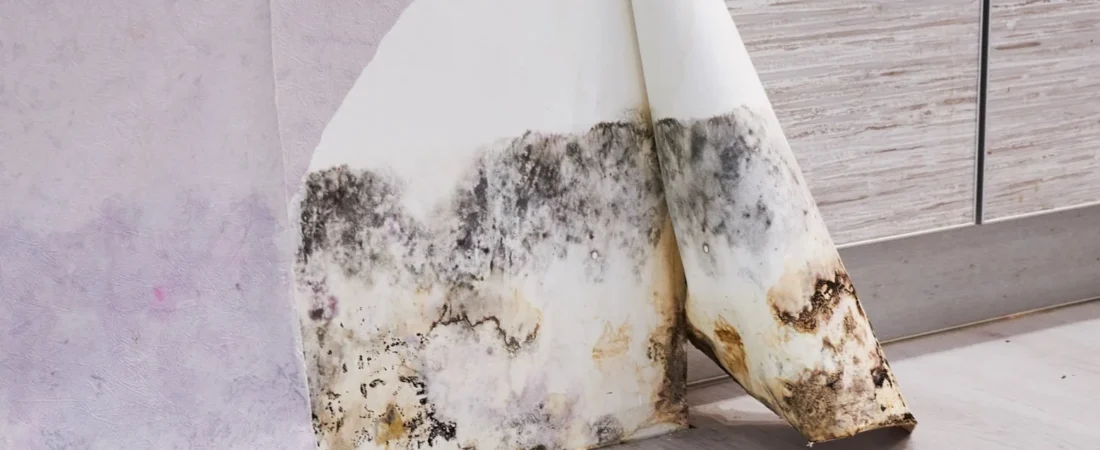
Mold under wallpaper is one of the most unsettling moisture problems in a home. The wall may look clean and intact, yet once wallpaper is peeled back, dark spots, stains, or musty odors appear. Often, there were no visible warning signs beforehand.
Mold under wallpaper develops because wallpaper traps moisture against the wall, creating conditions where dampness cannot evaporate. Understanding why this happens helps explain why mold can grow unseen for long periods.
Why Wallpaper Creates a Hidden Moisture Zone
Wallpaper covers wall surfaces tightly. Unlike painted walls, it limits air contact and slows evaporation.
When humidity rises or moisture enters the wall, wallpaper prevents it from drying efficiently. Moisture becomes trapped between the wall and the wallpaper layer, forming a hidden pocket of dampness.
This enclosed environment is ideal for mold growth.
Moisture Can Enter Walls Without Leaks
Mold under wallpaper is often blamed on leaks, but many cases occur without any direct water intrusion.
Moisture can enter walls through condensation, humidity, or temperature differences. Exterior walls are especially vulnerable, as cool surfaces encourage moisture accumulation behind coverings.
Even small, repeated moisture exposure can build up over time.
Why Mold Grows Without Visible Wall Damage
Walls affected by mold under wallpaper often appear normal from the outside. This is because moisture remains behind the surface rather than saturating the visible layer.
Wallpaper masks early warning signs. Mold develops quietly until it reaches a stage where odors, discoloration, or peeling become noticeable.
By the time symptoms appear, moisture has often been present for a long time.
Condensation Behind Wallpaper
Condensation is a common cause of mold under wallpaper. Warm, humid indoor air reaches a cooler wall surface, releasing moisture.
When wallpaper is present, this moisture cannot evaporate freely. Instead, it remains trapped, repeatedly wetting the wall surface.
Over time, this repeated condensation creates persistent dampness behind the wallpaper.
Why Exterior Walls Are More Affected
Mold under wallpaper is more common on exterior walls. These walls are cooler, especially during colder seasons.
When indoor air meets the cooler surface, moisture condenses more easily. Wallpaper slows drying, allowing moisture to remain long enough for mold to develop.
Corners and areas near windows are particularly vulnerable.
Humidity and Wallpaper Materials
Different wallpaper materials interact with moisture differently. Some wallpapers are less breathable than others.
Less breathable materials block moisture movement entirely, making drying extremely slow. This increases the likelihood of mold growth behind the surface.
Even breathable wallpapers can trap moisture if humidity remains elevated for long periods.
Why Mold Under Wallpaper Smells Musty
Musty odors often appear before visible mold is discovered. These odors come from microbial activity in damp materials behind the wallpaper.
Because the mold is hidden, smells may seem unexplained or spread throughout the room rather than coming from a specific spot.
Odor is often the first noticeable symptom.
Mold Under Wallpaper vs Surface Mold
Mold under wallpaper behaves differently from surface mold. Surface mold forms where moisture is visible and airflow exists.
Behind wallpaper, mold grows in a low-airflow, enclosed environment. This makes it harder to detect and easier to ignore.
Hidden growth can persist longer because it is protected from drying conditions.
When Mold Under Wallpaper Is More Likely
Mold under wallpaper is more likely when:
- humidity remains elevated
- walls are cool or poorly insulated
- airflow is limited
- wallpaper covers exterior walls
These conditions allow moisture to persist long enough for mold to develop.
Is Mold Under Wallpaper Dangerous?
Mold under wallpaper does not automatically indicate a serious health risk, but it does signal ongoing moisture imbalance.
Hidden mold can spread quietly and may eventually affect wall materials. Addressing moisture behavior early reduces the risk of larger problems.
The concern is not panic — it is persistence.
Why Mold Under Wallpaper Often Goes Undetected
Because wallpaper hides the wall surface, mold can grow unnoticed for months or years.
Without visible stains or peeling, there is little reason to suspect a problem. This delayed detection is what makes wallpaper-related mold so frustrating.
By the time it is discovered, moisture has often been present for a long period.
Mold under wallpaper forms because moisture becomes trapped between the wall and the wallpaper surface. Limited airflow, condensation, and persistent humidity prevent proper drying, allowing mold to grow unseen.
Understanding why wallpaper creates a hidden moisture zone helps explain why mold can develop without obvious leaks or surface damage. Recognizing the role of trapped moisture makes it easier to identify early warning signs and prevent long-term wall deterioration.
Frequently Asked Questions
Why does mold grow under wallpaper?
Because moisture becomes trapped and cannot evaporate.
Can mold form without visible water damage?
Yes, condensation and humidity are enough.
Is mold under wallpaper always visible?
No, it often remains hidden for long periods.
Does wallpaper cause mold?
Wallpaper does not cause mold, but it can trap moisture.