
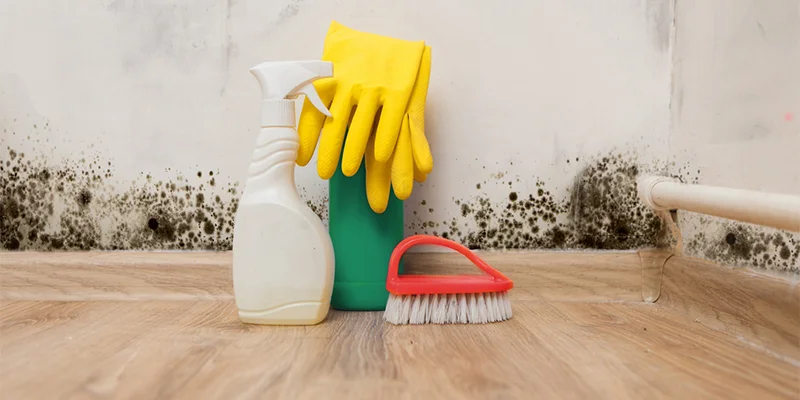
When mold appears in a rental apartment, questions about responsibility often arise quickly. Tenants may wonder whether the landlord must fix the issue, while landlords may try to determine whether the situation is caused by building conditions or daily use of the apartment.
The reality is rarely simple. Mold and landlord responsibility usually depend on the cause of moisture, the condition of the property, and how the apartment is used over time. This article explains how responsibility is commonly understood in rental situations, what factors usually matter most, and why mold disputes often involve gray areas rather than clear answers.
Note: This article is informational and not legal advice. Responsibilities may vary by country, region, and rental agreement.
Why Mold Responsibility Is Often Unclear
Mold responsibility is often unclear because mold itself is not the root problem. Mold is a result of moisture, and moisture can come from many sources.
Responsibility becomes difficult to define when:
- There are no visible leaks
- Mold appears gradually
- Daily activities contribute moisture
- Ventilation is limited by building design
As a result, mold disputes often focus on conditions, not just visible mold.
General Principle: Who Is Responsible for What?
In many rental situations, responsibility is generally divided like this:
- Landlords are usually responsible for the structure and systems of the building
- Tenants are usually responsible for daily use and basic care of the apartment
Mold issues often fall somewhere between these two roles, depending on the cause.
Mold Caused by Building or Structural Issues
Landlords are commonly responsible when mold is linked to issues beyond the tenant’s control.
Examples include:
- Roof leaks
- Plumbing failures inside walls
- Poor insulation causing persistent condensation
- Faulty windows or building envelopes
- Chronic moisture intrusion from the structure
In these cases, mold is usually seen as a result of a property condition, not tenant behavior.
Mold Related to Moisture and Daily Use
Tenants are often considered responsible for mold when it is linked primarily to daily activities and apartment use.
Examples include:
- Moisture from showers without ventilation
- Cooking steam not being vented
- Drying clothes indoors
- Blocking airflow with furniture
- Keeping windows closed for long periods
In these situations, mold is often viewed as a result of indoor humidity management rather than a defect.
Mold Without Leaks: A Common Gray Area
Many mold cases occur without leaks or obvious building damage. This is where responsibility becomes less clear.
Mold without leaks is often caused by:
- High indoor humidity
- Condensation on cold surfaces
- Poor airflow patterns
Responsibility in these cases may depend on:
- Whether ventilation systems function properly
- Whether insulation meets standards
- How the apartment is used
These situations rarely have a single, clear answer.
Mold and Ventilation Responsibility
Ventilation often sits at the center of mold responsibility discussions.
Common questions include:
- Does the apartment have adequate ventilation by design?
- Are exhaust fans present and functional?
- Is airflow limited due to building layout?
If ventilation systems are missing or defective, responsibility may lean toward the landlord. If ventilation exists but is not used, responsibility may shift toward the tenant.
Mold After Renovation or Repairs
Mold After Renovation or Repairs – Mold that appears after renovation can further complicate responsibility.
Possible causes include:
- Moisture trapped in new materials
- Changes in insulation or airflow
- Reduced drying after repairs
Responsibility may depend on:
- Who performed the renovation
- Whether drying time was adequate
- Whether the renovation altered moisture behavior
Post-renovation mold is often difficult to assign to one party without examining conditions.
Mold Appearing Over Time vs Suddenly
Timing often plays a role in responsibility discussions.
- Sudden mold after a known event (leak, repair) often points to property issues
- Gradual mold over months or years often points to humidity, condensation, or usage patterns
Gradual mold development is one reason many disputes remain unresolved or shared.
Mold Documentation and Communication
When mold appears, documentation often becomes important for both parties.
Common steps include:
- Noting when mold first appeared
- Identifying where it appears
- Observing whether it returns after cleaning
- Tracking seasonal patterns
Clear communication can help distinguish between structural issues and everyday moisture problems.
Mold and Habitability Standards
In many regions, rental properties must meet basic habitability standards. Mold may become relevant when it:
- Covers large areas
- Continues spreading
- Makes rooms difficult to use
- Indicates unresolved moisture damage
Small or localized mold does not always mean a property is uninhabitable, but widespread mold may raise concerns.
Why Mold Disputes Are Common
Mold disputes are common because:
- Mold is visible but moisture is not
- Causes are often indirect
- Responsibility is shared
- Conditions change seasonally
Without a clear leak or defect, responsibility is often debated rather than obvious.
Mold as a Shared Responsibility Issue
In many cases, mold is best understood as a shared responsibility issue.
Examples include:
- Buildings with cold walls and limited ventilation
- Apartments used normally but prone to condensation
- Older properties with modern living patterns
In such cases, neither party may be entirely at fault.
Why Mold Responsibility Varies by Location
Laws and expectations regarding mold vary widely depending on:
- Country and region
- Local housing regulations
- Lease agreements
- Building age and standards
What applies in one location may not apply in another, which is why general guidance often feels inconsistent.
Interpreting Mold Responsibility Calmly
Rather than viewing mold as a fault-finding issue, it is often more helpful to see it as:
- A moisture management problem
- A building-and-use interaction
- A condition that develops over time
This perspective reduces conflict and supports clearer understanding.
Mold and landlord responsibility is rarely a simple question of blame. In most rental apartments, responsibility depends on the source of moisture, building conditions, ventilation, and how the apartment is used. Mold caused by structural defects or system failures often falls under landlord responsibility, while mold linked to daily moisture and airflow may involve tenant responsibility.
Because many mold cases exist in gray areas—especially when no leaks are present—understanding mold as a moisture-related condition rather than a single failure helps explain why responsibility is often shared. Viewing mold through this lens allows for clearer communication and more realistic expectations on both sides.
Frequently Asked Questions
Is a landlord always responsible for mold?
No. Responsibility depends on the cause of moisture and conditions.
Does mold always mean the apartment is defective?
Not necessarily. Mold often reflects humidity or condensation issues.
Who is responsible if there are no leaks?
Responsibility may be shared, depending on ventilation and use.
Is mold common in rental apartments?
Yes. Many apartments experience moisture-related mold.
Do mold rules vary by country?
Yes. Laws and responsibilities differ widely by location.
Is a landlord always responsible for mold?
No. Responsibility depends on the cause of moisture and conditions.
Does mold always mean the apartment is defective?
Not necessarily. Mold often reflects humidity or condensation issues.
Who is responsible if there are no leaks?
Responsibility may be shared, depending on ventilation and use.
Is mold common in rental apartments?
Yes. Many apartments experience moisture-related mold.
Do mold rules vary by country?
Yes. Laws and responsibilities differ widely by location.