
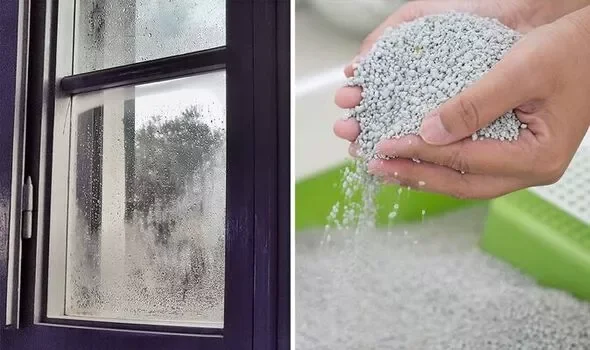
Bottom line up front: Condensation doesn’t form because your home is cold — it forms because your home holds too much moisture-laden air and not enough airflow to move it out. Fix the moisture source first. Everything else is secondary.
That’s the part most guides quietly skip. They hand you a checklist — open a window, buy a dehumidifier, wipe down your walls — without ever explaining why condensation keeps coming back even after you’ve done all that. The real problem isn’t the droplets on your window. It’s the invisible vapor pressure building up inside your home every time someone cooks, showers, breathes, or dries laundry indoors.
This article is built around that gap. You’ll learn how to reduce condensation by addressing what’s actually driving it — not just mopping up the symptoms.
Why does condensation keep coming back even after I’ve tried fixing it?
Here’s the mechanism that most people never get told: warm air holds more water vapor than cold air. When that warm, humid air inside your home contacts a cold surface — a window, an exterior wall, a corner behind furniture — the air cools rapidly and can no longer hold its moisture. It releases it as liquid water. That’s condensation.
The reason it keeps returning is that most people treat the surface, not the air. Wiping a window dry or painting over a damp wall doesn’t reduce the amount of moisture vapor circulating through your home. Within hours, the cycle repeats. You need to either reduce the moisture being added to the air, raise the surface temperature so the dew point isn’t reached, or move the humid air out before it contacts cold surfaces — ideally, all three.
Think of your home as a sealed container. Every activity that releases water vapor — a ten-minute shower produces roughly 200ml of water vapor, a gas hob meal can release up to 400ml — fills that container a little more. If there’s no consistent route for that vapor to escape, the pressure builds until it finds the coldest surface available and condenses there.
What actually causes high indoor moisture levels in the first place?
Daily living generates a staggering amount of water vapor — most people dramatically underestimate it. A single person breathing overnight releases around 300ml of moisture into a bedroom. A family of four doing laundry indoors can add 2 liters of water vapor to the air in one load. These aren’t rare events; they happen every single day.
The sources stack on top of each other. You shower in the morning, cook breakfast, dry clothes on a radiator, and breathe all day — and if your home is well-insulated with minimal ventilation (as many modern homes are), that moisture has nowhere to go. This is actually the counterintuitive reality of energy-efficient homes: the very features that keep heat in also trap moisture in.
Older, draughty homes rarely had serious condensation problems for this reason — gaps around windows and doors provided accidental ventilation. Seal a home properly without planning for controlled airflow, and you’ve essentially created a humid box.
How to reduce condensation: the steps that actually work
Reducing condensation effectively means working on three fronts simultaneously: limiting moisture at source, improving ventilation, and keeping surface temperatures above the dew point. None of these works especially well alone. Together, they break the cycle.
Here’s the sequence that makes sense to follow, starting with the highest-impact changes:
- Control moisture at the source. Use extractor fans in the kitchen and bathroom every time you cook or shower — and leave them running for at least 15–20 minutes after you’ve finished. Put lids on pots while cooking. Dry laundry outside or use a vented tumble dryer rather than draping clothes over radiators, which can release up to 2 liters of moisture per load directly into your living space.
- Ventilate consistently, not just reactively. Opening a window after condensation appears is closing the barn door too late. Trickle vents, if your windows have them, should be kept open year-round. In rooms that accumulate moisture overnight — especially bedrooms — aim for a small but continuous air exchange rather than periodic blasts of cold air.
- Keep heating steady rather than intermittent. A common mistake is heating a home in short bursts. When the heating goes off, surfaces cool rapidly, and the dew point is hit much faster. A lower but more consistent temperature — even 16–17°C overnight — keeps wall and window surfaces warm enough to avoid condensation far more effectively than heating a cold house to 22°C for a few hours.
- Move furniture away from external walls. This one surprises people, but it’s significant. When a sofa or wardrobe sits flush against an external wall, it blocks airflow across that surface. The wall behind cools below the dew point, and you end up with mold growing in a spot you’d never think to check. A gap of 50mm is enough to let air circulate and keep the surface temperature stable.
- Use a dehumidifier strategically, not as a standalone fix. A dehumidifier set to maintain 50–55% relative humidity can meaningfully reduce condensation — but it works best as a complement to ventilation, not a replacement for it. If you’re pumping moisture into the air faster than the dehumidifier can extract it, you’ll just run up your electricity bill.
- Address cold bridges in your building fabric. Cold bridges are areas where insulation is interrupted — around window frames, in corners, or where a steel lintel runs through a wall. These spots are almost always where condensation appears first, because the surface temperature there drops below the dew point well before the rest of the wall does. Thermal paste, additional insulation, or secondary glazing can help, though some cold bridges require professional remediation.
What’s the right indoor humidity level to prevent condensation?
The target range for indoor relative humidity is 40–60%, with 50% being a practical sweet spot. Below 40%, the air gets uncomfortably dry — you’ll notice it in your skin, your sinuses, and your wooden furniture. Above 60%, you’re in condensation territory: moisture starts settling on cooler surfaces and mold begins to find conditions it likes.
A cheap digital hygrometer (usually under £15) is one of the most useful things you can put in a problem room. Without one, you’re guessing. With one, you can see in real time whether your ventilation and heating changes are actually moving the needle.
It’s worth noting that relative humidity readings change with temperature — the same amount of moisture in the air will show a higher relative humidity reading when the room cools down at night. This is why a bedroom that reads 55% at 20°C in the evening might read 70% at 3am when the heating has been off for hours and the air has cooled.
| Relative Humidity Level | What It Means for Condensation Risk | Recommended Action |
|---|---|---|
| Below 40% | Too dry — not a condensation risk, but uncomfortable and damaging to wood and skin | Consider a humidifier or reduce mechanical ventilation |
| 40–55% | Ideal range — low condensation risk at typical indoor temperatures | Maintain current ventilation and heating habits |
| 55–65% | Elevated risk — condensation likely on cold surfaces overnight or in poorly ventilated corners | Increase ventilation, check moisture sources, consider dehumidifier |
| Above 65% | High risk — active condensation and mold growth probable | Identify and reduce moisture sources urgently; professional advice may be needed |
Does better insulation reduce condensation or make it worse?
This is where things get interesting — and where a lot of well-meaning home improvement advice goes quietly wrong. Better wall insulation raises the surface temperature of internal walls, which reduces condensation on those walls. That part is accurate and useful.
But insulation also makes your home more airtight, which traps moisture inside if you haven’t upgraded your ventilation at the same time. This is exactly why condensation indoors often gets worse after a retrofit — homeowners insulate the walls, fit double glazing, and seal draughts, then wonder why they suddenly have mold behind the wardrobe and running water on the bedroom windows. The insulation worked. The ventilation was never updated to compensate.
The honest answer is that insulation and ventilation must be planned together. Insulate without ventilating and you trade heat loss for a moisture problem. The building physics community calls this the “airtightness paradox” — the more you seal a building, the more deliberate your ventilation strategy needs to be.
“Condensation is almost always a ventilation problem wearing the mask of a temperature problem. People see wet windows and assume the house is too cold — but often the house is actually too airtight. You can heat a poorly ventilated home to 25°C and still have condensation in the corners, because the moisture has nowhere to go.”
Dr. Sarah Henley, Building Physics Consultant and Member of the Chartered Institution of Building Services Engineers (CIBSE)
Which rooms get the worst condensation and why?
Bathrooms and kitchens are the obvious offenders — they generate large amounts of steam in a short period of time. But bedrooms are often worse in practice, because people don’t think of them as moisture sources. A couple sleeping in a room with the door closed and no ventilation can raise relative humidity above 70% overnight through breath and body heat alone.
Corner rooms and north-facing walls are disproportionately affected because they receive less solar warming and often have two exposed exterior surfaces instead of one — meaning surface temperatures are consistently lower. A north-facing bedroom corner in a poorly insulated home might sit 4–6°C colder than a south-facing wall in the same building. That temperature difference is often all it takes to tip the surface below the dew point.
Utility rooms where laundry is dried deserve a mention too. If you regularly hang wet clothes in an unventilated room, you’re essentially running a humidifier on maximum. The moisture load from a single load of wet laundry drying indoors is equivalent to someone boiling a kettle continuously for about 90 minutes.
Do extractor fans actually help reduce condensation?
Yes — but most people use them wrong. Turning on an extractor fan when condensation is already forming on the mirror means you’re extracting moisture that’s already dropped out of the air. The fan should be running before and during the activity that generates steam, not just after.
Fan capacity matters too. UK building regulations recommend a minimum extraction rate of 15 litres per second for bathrooms and 30 litres per second for kitchens. Many older installed fans fall below these figures, especially if they’re partially blocked with dust or grease. A fan that sounds like it’s working may be moving far less air than it needs to.
Humidity-controlled extractor fans — which switch on automatically when relative humidity rises above a set threshold and run until it drops back down — are considerably more effective than manual fans in practice, because they don’t rely on anyone remembering to switch them on. The upfront cost difference is usually recovered in reduced damage from condensation and mold within a year or two.
Pro-Tip: Before replacing an underperforming extractor fan, clean the grille and the ducting path first. A fan clogged with lint or grease can lose 50–70% of its rated airflow capacity without showing any obvious external signs of blockage — and cleaning costs nothing.
What are the signs condensation is becoming a structural problem?
Surface condensation that’s wiped away and managed through ventilation rarely causes lasting damage on its own. The problem escalates when condensation persists long enough to support mold growth or — in more serious cases — when moisture migrates into the building fabric itself.
Watch for these warning signs:
- Black spot mold in corners or on external walls — particularly at ceiling level or behind furniture — indicates sustained moisture at that surface. This is mold that grows on condensation, not rising damp.
- Paint bubbling or peeling on external walls — this suggests moisture is penetrating the plaster or pushing through from behind, which can indicate interstitial condensation forming within the wall structure itself.
- Persistent cold spots on internal walls — particularly in areas that feel noticeably colder than surrounding surfaces even after heating, pointing to cold bridges or insulation voids where condensation will preferentially form.
- Musty smell without visible mold — mold can grow inside wall cavities, behind plasterboard, or under flooring without being visible at all. A persistent musty smell despite a visually clean room is a strong indicator something is happening out of sight.
- Window frames rotting or metal frames showing rust — long-term condensation pooling at window sills causes material degradation that goes beyond cosmetic damage and can compromise the window installation.
Any of these signs warrant more than a surface-level fix. A damp and condensation survey from a qualified surveyor — not just a mold remediation company who has a financial interest in telling you the problem is worse than it is — can diagnose whether you’re dealing with surface condensation, interstitial condensation, or something else like penetrating damp, which requires completely different solutions.
How does condensation differ from rising damp or penetrating damp?
This distinction genuinely matters because the fix for each is completely different — and misdiagnosis is surprisingly common. Condensation forms from indoor air moisture; rising damp and penetrating damp are both about water entering from outside or below.
Rising damp — ground moisture wicking upward through a wall — typically shows a tide mark at a consistent height, often around 1 metre from the floor, with white salt deposits on the wall surface. Condensation doesn’t follow this pattern; it appears where surfaces are coldest, which is usually at ceiling level, in corners, or on north-facing walls. Penetrating damp appears after heavy rain and often follows the profile of an external defect — a cracked render, a failed flashing, a blocked gutter.
The scenario that catches people out: they treat a wall for rising damp, replaster, and repaint — only for the mold to return in the same spot within months. The damp wasn’t rising from the ground; it was condensation forming on a cold bridge at that point in the wall. The correct fix (better insulation and ventilation) was never applied because the problem was misidentified from the start.
Are dehumidifiers worth buying to reduce condensation?
They can be — with some important caveats. A refrigerant dehumidifier works well at normal indoor temperatures (above 15°C) and can extract significant moisture: a mid-range model might remove 10–12 litres per day. A desiccant dehumidifier performs better in cooler rooms and unheated spaces like garages or utility rooms, though it uses more energy.
The honest caveat is this: if your moisture problem is being continuously fed by inadequate ventilation or ongoing high-moisture activities (like drying laundry indoors every day), a dehumidifier is essentially bailing a leaky boat. It’ll reduce relative humidity — which is real progress — but you’ll be running it constantly and the moment it’s off, humidity will climb back. It works best when your moisture sources are under control and you need a secondary line of defense.
Dehumidifiers also need to be sized correctly for the room. Running a small 8-litre model in an open-plan kitchen-diner where moisture is generated constantly throughout the day is unlikely to make a meaningful dent. Check the manufacturer’s claimed extraction rate and square footage guidance, then go slightly bigger than you think you need.
What’s a realistic timeline for reducing condensation after making changes?
This depends heavily on how much moisture has accumulated in the building fabric before you start making changes. In a home where condensation is primarily a recent or seasonal problem with no structural moisture buildup, consistent changes to ventilation and heating habits can show results within 2–4 weeks.
Where walls have absorbed moisture over months or years, or where there’s mold growth embedded in plaster, the timeline extends significantly. The building fabric needs to dry out — and in a cold, damp autumn or winter, that drying process can take months even with correct conditions maintained consistently. This is genuinely frustrating, but it’s the reality of physics: evaporation takes time.
Track progress with a hygrometer rather than visual inspection alone. If your daily average relative humidity is falling week-on-week, you’re on the right track even if you can still see moisture on windows in the morning. Morning window condensation is often the last symptom to disappear, because windows are the coldest surface and respond last to improved conditions.
What’s the one change that makes the biggest difference?
If you can only do one thing, address ventilation before anything else. You can dehumidify, heat, and insulate all you like — but without a reliable route for humid air to leave the building, you’re fighting an unwinnable battle. The moisture will always find a cold surface eventually.
Consistent background ventilation — trickle vents open, extractor fans working properly, door undercuts allowing air movement between rooms — costs very little to establish and has an outsized effect on relative humidity levels throughout the home. If you’ve been keeping trickle vents closed because “they let cold air in,” try leaving them open for two weeks and measure the difference with a hygrometer. The result usually surprises people.
The deeper point is that condensation control isn’t a one-time fix — it’s a habit system. The homes that don’t have condensation problems aren’t necessarily better built; they’re often just occupied by people who’ve internalized a few consistent behaviours: run the fan, put the lid on the pan, crack a window overnight, don’t dry clothes on the radiator. Small habits, maintained consistently, outperform expensive interventions applied inconsistently every time.
As homes continue to get more airtight in pursuit of energy efficiency, deliberate ventilation strategy is going to matter more, not less — the gap between a well-managed and poorly managed home will keep widening, and condensation will be one of the clearest places you see it.
Frequently Asked Questions
How can I reduce condensation indoors?
By improving airflow, balancing temperature, and reducing moisture build-up.
Does wiping condensation help?
Only temporarily. It does not change the underlying conditions.
Can condensation be reduced without renovations?
Yes. Small changes in airflow and moisture management often help.
Is condensation worse in winter?
Yes. Cold surfaces make condensation more likely.
Will condensation ever disappear completely?
Not always. The goal is usually reduction, not elimination.