
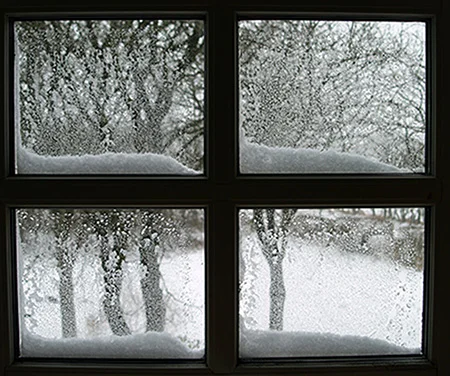
Here’s what nobody tells you about windows sweating in winter: the window isn’t the problem. Your house is. That single reframe changes everything about how you respond to those foggy, dripping panes every cold morning — and whether you spend money fixing the wrong thing.
What Does It Actually Mean When Windows Sweat in Winter?
Window sweating is condensation — water vapor from your indoor air hitting a cold surface and turning into liquid. Glass is almost always the coldest surface in a room during winter, so that’s where moisture shows up first. It’s essentially your home doing a visible humidity test on the surface you can see most clearly.
The mechanism is simple physics: warm air holds more moisture than cold air. When humid indoor air contacts your cold glass, it cools rapidly and can no longer hold its water vapor in suspension. That vapor becomes the droplets you’re wiping off every morning with a dish towel.
Here’s the counterintuitive part most people miss entirely: windows sweating isn’t a window failure. It’s a humidity readout. The window is just the messenger, and replacing it without addressing your indoor moisture levels is one of the most common — and expensive — mistakes homeowners make.
Why Do Windows Sweat More in Winter Than Any Other Season?
Cold outdoor temperatures drive glass surface temperatures down dramatically, even with double-pane windows. A single-pane window in cold weather can have a glass surface temperature near outdoor ambient — sometimes 20°F or lower — while the air inside your home sits at a comfortable 70°F. That’s an enormous temperature differential happening inches from where you’re eating breakfast.
Winter also seals your home tighter. You’re running the furnace, cooking more hot meals, taking long hot showers, and keeping windows closed — all of which push indoor humidity up while fresh air exchange drops to nearly nothing. Your home becomes a moisture trap, and the windows are the first surface to tell you.
Heating systems add their own wrinkle. Forced-air furnaces don’t just heat the air — they also dry it out significantly. So some homeowners run humidifiers to compensate, which is smart in principle, but easy to overdo. Running a whole-home humidifier at 45% relative humidity when outdoor temperatures are below 20°F is almost guaranteed to produce window condensation.
What Humidity Level Causes Windows to Sweat in Winter?
The dew point is where condensation happens — and your window glass has its own dew point threshold based on how cold it gets. At indoor humidity around 30–35% and a room temperature of 70°F, most standard double-pane windows stay dry when outdoor temps are above 20°F. Push that humidity to 45–50% and you’ll see sweating start even on mild winter nights.
The table below shows approximate condensation risk at common indoor/outdoor temperature combinations. These are real-world estimates for a double-pane window with a U-factor around 0.30 — typical for a mid-range window installed in the last decade.
| Outdoor Temp (°F) | Max Safe Indoor RH (at 70°F indoor) | Condensation Risk Above This RH |
|---|---|---|
| 20°F | ~25–30% | High — sweating likely above 30% |
| 30°F | ~35% | Moderate — watch for corner sweating |
| 40°F | ~40–45% | Low on quality double-pane glass |
These numbers shift depending on your window quality, how much air circulates near the glass, and whether you have heavy curtains blocking warm air from reaching the pane. That last factor is genuinely underappreciated — thick thermal curtains that keep the cold out also trap cold air against the glass, making condensation significantly worse.
Is Window Sweating in Winter Normal or a Sign of a Bigger Problem?
Light condensation on the interior surface of your windows — a thin fog that clears as the day warms up — is normal and isn’t cause for alarm. It just means your indoor humidity is on the higher end for your outdoor temperatures. No damage is happening yet, and a small adjustment to your humidifier or ventilation will usually resolve it.
Heavy, persistent sweating that leaves puddles on your sill every morning is a different situation. That volume of condensation means your indoor relative humidity is probably running above 50% consistently, which is the threshold where you start worrying about more than just wet windows. Sustained moisture on wood frames, sills, and drywall creates real conditions for mold growth around windows — and that’s a problem that doesn’t stay contained to the window area for long.
There’s also a third scenario that’s often misread: condensation between the panes of a double or triple-pane window. That’s not the same issue at all — it means the gas seal has failed and the insulating gas has escaped. You can’t fix that with a dehumidifier. The sash or full window needs to be replaced.
“Most homeowners interpret window condensation as a window defect and call the installer. But in the majority of residential cases I assess, the window is performing exactly as designed — the issue is that indoor relative humidity is running 15 to 20 percentage points higher than it should be for that outdoor temperature. Fixing the source of moisture almost always resolves the condensation without touching the window.”
Dr. Marcus Ellery, Building Science Consultant and Certified Indoor Environment Professional (CIEP)
Where Condensation Appears First Tells You Something Important
Sweating in the center of the glass pane is generally the least worrying location. The corners and edges of a window are where sweating becomes a red flag — those spots are colder because they’re closest to the frame and to any thermal bridging in the wall structure. Edge condensation that drips down into the frame repeatedly is the fastest path to frame rot and mold, even if the total moisture volume looks small.
Low-corner sweating in particular tends to show up first on north-facing windows and on windows adjacent to exterior walls with poor insulation. It’s one of those things that looks like a minor annoyance in November but turns into a damaged sill and a mold assessment bill by March if you don’t address the underlying humidity.
Sweating concentrated on one or two windows in a house — while others stay dry — usually points to a localized moisture source rather than whole-home humidity. A bedroom window soaked every morning almost always traces back to two people sleeping in a closed room with the door shut. Respiration alone adds about a pint of moisture to a small bedroom over eight hours.
What Causes High Indoor Humidity That Makes Windows Sweat?
The sources of indoor moisture in winter are more numerous than most people realize, and many of them are invisible in the day-to-day routine. Understanding which ones are active in your home is what lets you fix the actual problem rather than just chasing symptoms.
- Cooking without ventilation — Boiling water, simmering soups, and running a dishwasher can add significant moisture to kitchen air in under an hour. A pot of pasta releases more water vapor into your kitchen than most people expect. Running the range hood to the outside (not a recirculating filter) makes an immediate difference.
- Bathroom steam without proper exhaust — A standard shower in a small bathroom generates roughly a half-pint of water vapor. If your exhaust fan vents into an attic or crawlspace instead of outside the building envelope, that moisture is going somewhere it shouldn’t — and some of it finds its way back into living spaces.
- Unvented gas appliances — Combustion produces water vapor as a byproduct. A gas range, unvented fireplace, or improperly vented dryer can quietly raise your indoor humidity by 10 percentage points or more over the course of a winter day without any obvious visible sign.
- Overactive humidifiers — Whole-home humidifiers tied to your HVAC system are calibrated at installation but rarely recalibrated as outdoor temperatures drop deeper into winter. The humidistat often reads room temperature, not the outdoor dew point, which means it keeps adding moisture long after you’ve crossed the condensation threshold for your window type.
- Moisture from below the house — Crawlspaces and basements with inadequate vapor barriers pump ground moisture up through your floor system and into your living space year-round. In a sealed winter house, there’s nowhere for that moisture to go except into your air — and eventually onto your windows.
Does Installing New Windows Fix Window Sweating in Winter?
This is the question that costs homeowners thousands of dollars a year in unnecessary upgrades. The short answer: better windows raise the surface temperature of your glass, which raises the threshold at which condensation forms — but they don’t reduce indoor humidity. If your home is running at 55% relative humidity in January, you’ll still get condensation on triple-pane windows. It’ll just take a colder night to get there.
There’s actually a documented paradox here: homeowners who install new windows sometimes experience more condensation in the first winter, not less. Tighter-sealing windows reduce air infiltration, which reduces the passive exchange of dry outdoor air with humid indoor air. The net result is higher indoor humidity — and condensation on windows that are technically better than the old ones.
Better windows are worth installing for energy efficiency, comfort, and noise reduction. But they’re not a fix for a moisture problem, and they shouldn’t be sold — or bought — as one.
How to Stop Windows Sweating in Winter Without Replacing Them
The fix almost always starts with reducing indoor humidity rather than upgrading the glass. Getting your whole-home relative humidity into the 30–40% range during cold months will eliminate most condensation on standard double-pane windows — without spending a dollar on windows themselves.
- Turn down the humidifier and adjust seasonally — If you’re running a whole-home humidifier, drop the target humidity by 5 percentage points for every 10°F drop in outdoor temperature below 20°F. Most humidistats have a manual adjustment knob that rarely gets touched after installation.
- Run bathroom and kitchen exhaust fans longer — Don’t turn them off the moment you step out of the shower. Run the bathroom fan for at least 20 minutes post-shower and keep the range hood on for 10 minutes after cooking finishes.
- Open a window slightly during the coldest part of the morning — Even a 10-minute micro-ventilation window, where you crack a window in a dry area of the house, flushes humid air out and brings drier outside air in. It sounds backward in winter, but it works.
- Move houseplants away from windows — Transpiration from plants raises local humidity near glass significantly. A cluster of plants on a windowsill can maintain a humidity microclimate 10–15% higher than the rest of the room.
- Open curtains and blinds during daytime — Allowing warm room air to circulate freely against the glass surface raises glass temperature a few degrees, which reduces condensation risk without changing humidity levels at all.
Pro-Tip: Buy a digital hygrometer (under $15 at most hardware stores) and place it in the room with the worst window sweating. Check it first thing in the morning before the house warms up — that’s when relative humidity peaks. If it reads above 45% consistently, you have a ventilation or moisture-source problem that needs addressing, not a window problem.
When Should You Worry About Window Condensation Causing Damage?
Condensation becomes genuinely damaging when it’s both heavy and chronic — not when it shows up occasionally on a cold snap morning. The threshold to watch for is liquid water pooling on the sill or running down into the frame consistently over weeks. At that point, you’re looking at a material moisture exposure that wood, paint, and drywall weren’t designed to handle repeatedly.
Wood window frames are especially vulnerable. Painted wood can absorb moisture through micro-cracks in the finish, and once the wood itself is cycling between wet and dry repeatedly, paint adhesion fails, the wood swells and contracts, and rot can begin within a single season of heavy condensation. Aluminum and vinyl frames are more moisture-resistant but aren’t immune — water pooling in track channels can corrode hardware and warp vinyl frames over time.
The honest nuance here is that timing matters as much as volume. A home that sees heavy condensation for two weeks during an unusual cold snap is in far less danger than one with moderate, sustained sweating every single morning from November through March. Cumulative exposure over months is what drives structural damage, not any individual cold morning.
What’s the Right Indoor Humidity for Winter to Prevent Window Sweating?
The target isn’t a single number — it scales with outdoor temperature. Chasing a fixed 45% relative humidity all winter long is a mistake, even though 45% feels comfortable and is often cited as the ideal indoor humidity. That number assumes mild outdoor conditions; on genuinely cold days, it will push condensation onto your windows regardless of their quality.
A simple working guideline: drop your target indoor humidity by about 2–3 percentage points for every 10°F that outdoor temperatures fall below freezing. At 32°F outside, 40% indoor RH is usually safe. At 10°F, you want to be closer to 30–35%. At 0°F or below, some condensation on even quality windows may be unavoidable without active dehumidification, and accepting a slightly drier indoor environment is the trade-off.
Comfort doesn’t disappear at 30% humidity. Many people find that range perfectly comfortable once they’ve acclimatized to it — and it’s considerably less damaging to your home’s envelope than running at 50% all winter.
Does Outside Condensation on Windows Mean Something Different?
Yes — exterior condensation is actually a sign your windows are working well. When the outside surface of a window is colder than the outdoor dew point at dawn or dusk, condensation forms on the outside face of the glass. This happens most often with high-performance, well-insulated windows, because they lose so little heat through the glass that the outer pane stays near outdoor air temperature.
It’s one of those genuinely counterintuitive facts in building science: you install better windows, and now the outside is fogging up on clear mornings. That’s not a defect — it’s actually a thermal performance indicator. The fix is nothing at all; outdoor condensation clears within an hour as the sun rises and outdoor air warms.
The confusion between interior and exterior condensation sends plenty of homeowners down the wrong diagnostic path. Interior sweating is a humidity problem. Exterior fogging is an efficiency feature. They look nearly identical from inside the house when you’re still half-asleep with a coffee mug, which is probably why the mix-up is so common.
Can Condensation on Windows Cause Mold in Winter?
It can, and it does — though not as quickly as people fear when they first notice sweating windows. Mold needs sustained moisture, an organic food source, and the right temperature range to establish itself. A cold window in winter actually suppresses mold growth on the glass itself because most mold species go dormant or grow very slowly below 50°F.
The real mold risk sits just beyond the window — on the wall below the sill, inside the frame cavity, and on the drywall around the trim. Water that runs off the glass and wicks into painted drywall or wood trim stays wet longer than the glass does, and those materials often sit in a temperature range where mold thrives. That’s why condensation-related mold almost always appears first at the bottom corners of windows and on the wall directly beneath them.
Catching and addressing heavy window condensation before February is smarter than waiting to see whether mold appears. By the time it’s visible, it’s been growing for weeks. Getting indoor humidity under control eliminates the moisture that feeds the whole chain of events.
A Practical Winter Morning Scenario That Changes How You See This
Picture this: it’s 7 a.m. on a 15°F morning, and your bedroom window is dripping. You’ve got a 6-month-old in a bassinet, a partner who showers at 6 a.m. with the bathroom door open, and a whole-home humidifier that was set at 45% last September and never touched since. That single room is generating three simultaneous moisture loads overnight — respiration from two adults and an infant, steam from an open-door shower, and an overworked humidifier — and all of it is landing on the coldest surface in a sealed room: the window.
The fix in that scenario isn’t new windows. It’s closing the bathroom door, running the exhaust fan for 20 minutes, and dropping the humidifier to 30%. Total cost: zero dollars. The condensation disappears within three days. That’s not a hypothetical — it’s exactly the pattern that plays out in homes everywhere each winter, and it illustrates why diagnosing the source before spending money is always the right sequence.
The window was never the problem. The window was the evidence.
Understanding that distinction — that your windows are a diagnostic surface rather than a broken component — is what separates people who spend the winter wiping glass from people who actually solve the problem. The homes that manage condensation well aren’t the ones with the most expensive windows. They’re the ones where someone paid attention to where the moisture was actually coming from and dealt with it at the source. That kind of intervention keeps your home healthier for decades — not just through one cold season.
Frequently Asked Questions
Why do windows sweat in winter?
Because warm, moist indoor air meets cold window glass.
Is window sweating in winter normal?
Yes, especially during cold weather and overnight.
Does sweating mean my windows are leaking?
No. Most winter sweating is caused by condensation, not leaks.
Why is sweating worse in the morning?
Overnight cooling and reduced airflow increase condensation.
Can heating make window sweating worse?
Yes. Heating warms air and increases moisture capacity.