
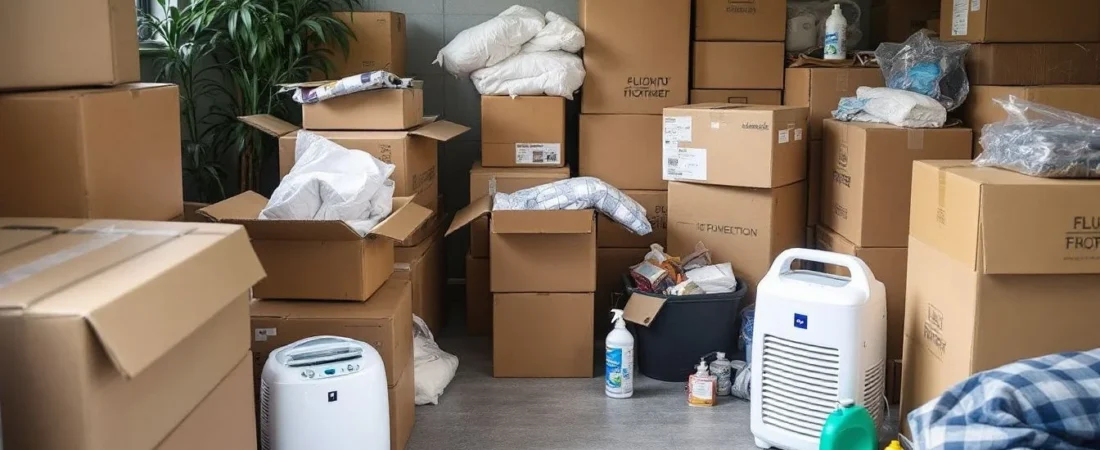
Many storage rooms feel damp even when no water is visible. Walls may feel cool, boxes may seem slightly soft, and the air often feels heavy or stale. This sensation can appear suddenly or develop gradually over time, especially in basements, utility rooms, or rarely used closets.
Storage rooms feel damp because moisture enters easily but leaves very slowly. Enclosed design, limited airflow, and moisture-absorbing materials create conditions where humidity lingers quietly, making the space feel persistently humid even without obvious leaks.
Enclosed Spaces Trap Moisture
Storage rooms are designed to be closed most of the time. Doors stay shut, windows are rare, and ventilation is minimal. This enclosure prevents air exchange and allows moisture to accumulate.
When humid air enters the room — from nearby spaces or seasonal changes — it becomes trapped. Without airflow to carry moisture away, humidity remains suspended in the air and settles onto surfaces.
This trapped moisture is the main reason storage rooms feel damp.
Poor Airflow Slows Drying
Drying depends on air movement. In storage rooms, air remains still for long periods. Walls, floors, and stored items dry very slowly compared to open living spaces.
Even small amounts of moisture can linger for days or weeks when airflow is limited. Over time, this creates a consistently damp environment that never fully resets.
The absence of airflow is often more important than the amount of moisture itself.
Cool Surfaces Encourage Moisture Retention
Storage rooms are often cooler than the rest of the home. Cooler air holds moisture differently, making humidity feel heavier and more noticeable.
Cool walls and floors attract condensation when warmer, humid air enters the space. This condensation may not form visible droplets, but it dampens surfaces enough to create a persistent sense of moisture.
Cool temperatures slow evaporation, reinforcing the damp feeling.
Moisture From Nearby Rooms
Storage rooms do not exist in isolation. Moisture from kitchens, bathrooms, or basements can migrate into them through air movement or shared walls.
Once moisture enters, it becomes trapped due to poor ventilation. This makes storage rooms a collection point for humidity generated elsewhere in the home.
The room may feel damp even though the source of moisture is external.
Stored Items Absorb and Release Moisture
Items commonly stored in storage rooms — cardboard boxes, paper, fabrics, furniture — absorb moisture easily. These materials act like sponges, holding humidity and releasing it slowly over time.
Even if the air feels slightly drier, stored items continue releasing moisture back into the space. This prolongs the damp feeling and prevents the room from fully drying.
The more items stored, the stronger this effect becomes.
Why Dampness Persists Without Leaks
Many people assume dampness means water intrusion. In storage rooms, this is often not the case. Humidity alone can create damp conditions without any leaks or spills.
Moist air condenses on cool surfaces and remains trapped. Over time, this repeated exposure creates a persistent damp environment without visible water.
This makes storage room dampness easy to overlook or misinterpret.
Seasonal Effects on Storage Room Dampness
Storage rooms often feel damper during certain seasons. In warm, humid weather, moisture enters easily and condenses on cool surfaces. In colder months, reduced airflow and cooler temperatures slow drying.
These seasonal shifts explain why storage room dampness can appear and disappear without obvious changes inside the room.
Damp Feeling vs Actual Wetness
A damp-feeling room is not necessarily wet. The sensation often comes from elevated humidity and cool surfaces rather than liquid water.
This distinction matters because it explains why wiping surfaces or removing visible moisture rarely solves the problem. The issue lies in air moisture behavior, not surface water.
When a Damp Storage Room Is Normal
Some dampness in storage rooms is common, especially in basements or older buildings. Light dampness that does not worsen or cause odors may simply reflect environmental conditions.
Normal dampness usually:
- remains stable over time
- clears with air exchange
- does not affect stored items
- does not produce strong odors
In these cases, dampness is part of the room’s natural behavior.
When Dampness Signals a Moisture Problem
Storage room dampness deserves attention when it becomes persistent or intensifies.
Warning signs include:
- musty smells developing
- stored items becoming affected
- dampness spreading to adjacent spaces
- visible condensation on surfaces
These patterns suggest moisture is accumulating faster than it can dissipate.
Damp Storage Rooms and Mold Risk
Persistent dampness increases the risk of mold development, especially in enclosed and poorly ventilated spaces. Mold often begins in hidden areas and may not be visible at first.
This makes dampness an important early indicator rather than a minor inconvenience.
Storage rooms feel damp because moisture enters easily but escapes very slowly. Enclosed design, poor airflow, cool surfaces, and moisture-absorbing items combine to create a space where humidity lingers quietly.
Understanding why storage rooms behave this way helps distinguish normal environmental dampness from patterns that indicate a growing moisture issue. Recognizing dampness early allows moisture problems to be addressed before odors, damage, or mold develop.
Frequently Asked Questions
Why does my storage room feel damp without leaks?
Because humidity becomes trapped and dries slowly.
Is dampness in storage rooms normal?
Some dampness is common, especially in basements.
Why do stored items feel slightly damp?
They absorb moisture and release it slowly.
Can damp storage rooms lead to mold?
Yes, if dampness persists over time.