
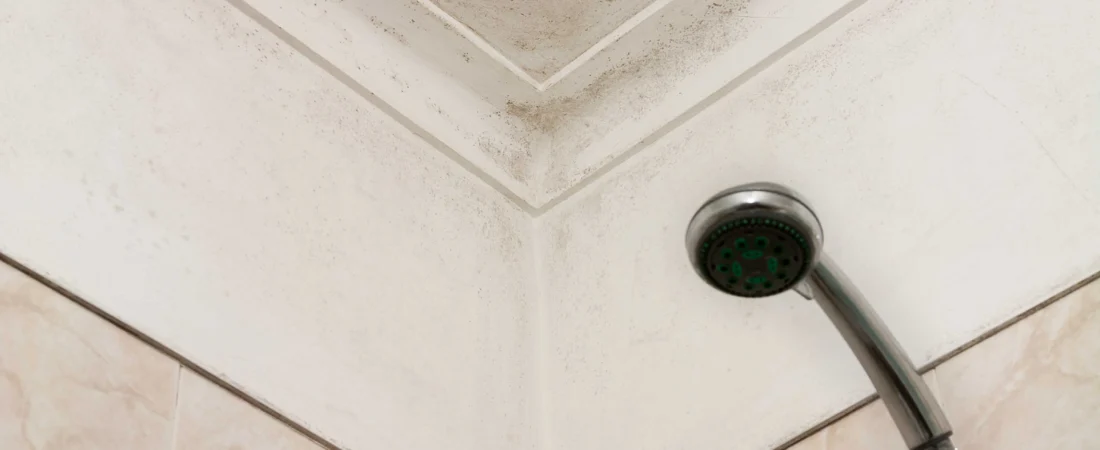
Your bathroom ceiling is probably the most mold-prone surface in your entire home — and the reason almost nobody talks about is that it’s not really a cleaning problem. It’s a physics problem.
Most articles on mold in bathroom ceiling situations will tell you to run your fan and wipe things down. That advice isn’t wrong, but it skips the part that actually matters: why the ceiling specifically, and why does the mold keep coming back even when you do everything “right”? The answer has everything to do with where heat moves, where moisture hides, and why your bathroom ceiling is almost always the last surface to dry.
This article is going to fix that gap. By the end, you’ll understand the mechanism well enough to actually stop the cycle — not just bleach it back temporarily.
What Actually Causes Mold to Form on Bathroom Ceilings?
Here’s the part most people get wrong: they assume bathroom mold is caused by the amount of moisture in the air. It’s not — at least not directly. It’s caused by where that moisture lands, how long it stays, and what temperature it meets when it gets there.
When you take a hot shower, steam rises and fills the room. That steam is looking for a place to condense — and it finds the ceiling first, because the ceiling is almost always cooler than the air billowing up from the shower. The temperature difference between your steamy shower air (often 85–95°F near the floor) and your bathroom ceiling (which may be sitting at 65–70°F) is enough to trigger condensation every single time.
That condensed moisture doesn’t evaporate quickly. The ceiling is poorly ventilated, minimally heated, and often painted with a finish that traps water rather than shedding it. Mold spores — which are airborne in virtually every indoor environment — settle onto that wet surface and, given the right conditions, begin colonizing within 24 to 48 hours.
Why Does the Ceiling Get Mold Before the Walls or Floor?
This is the question that unlocks everything. The walls get wet too. The floor gets wet. So why is the ceiling consistently the first place you see black spots forming?
Two reasons work together here. First, warm moist air rises — that’s basic thermodynamics. The highest concentration of steam in your bathroom is always at the ceiling level. Second, and this is the part most articles ignore entirely: heat loss from ceilings is disproportionately high. If your bathroom is above an uninsulated space, or if your ceiling simply lacks the thermal mass that your tile walls have, it loses heat faster. A cooler surface condenses moisture more readily, and a surface that condenses more moisture stays wet longer.
Your tile walls, by contrast, are dense, often warmer (especially near the shower where hot water runs against them), and they drain. Water on a vertical tile surface sheets downward and reaches the drain. Water on a ceiling just sits there, slowly soaking in.
“The ceiling is the perfect mold incubator because it combines three factors simultaneously: consistent moisture supply, limited air movement, and a surface temperature that’s almost always below the dew point of bathroom air during and after a shower. People focus on humidity levels in the room, but the localized surface temperature is what determines whether condensation actually forms.”
Dr. Patricia Hollis, Indoor Environmental Quality Specialist and Certified Industrial Hygienist
What Is the Dew Point and Why Does It Explain Everything About Bathroom Ceiling Mold?
You don’t need a meteorology degree for this, but you do need to understand one thing: moisture in the air doesn’t become liquid again just because there’s “a lot” of it. It becomes liquid when it hits a surface that’s at or below the dew point temperature.
During a typical hot shower, the bathroom air can reach 80–90% relative humidity. At those levels, the dew point of the air climbs to roughly 70–75°F. Your ceiling might be sitting at 62–68°F, especially in winter or in homes with minimal ceiling insulation. That gap — even just 5 to 10 degrees — is enough for condensation to form every time someone showers.
Here’s the counterintuitive insight: in summer, you may actually see less bathroom ceiling mold than in winter, even though humidity is higher overall. Why? Because in summer, your ceiling temperature is warmer — closer to or above the dew point of the bathroom air — so condensation is less likely to form. Winter, when your ceiling is cold and your showers are hot, is actually the worst time for mold development on bathroom ceilings. Most people assume summer is mold season. For bathroom ceilings specifically, that assumption is backwards.
How Long Does a Bathroom Ceiling Stay Wet After a Shower?
This is where the real problem lives. One shower is rarely the issue. The issue is that the ceiling doesn’t fully dry before the next shower — and over weeks or months, average surface moisture slowly creeps up until mold has a permanent foothold.
Without mechanical ventilation running, a bathroom ceiling can remain measurably wet for 2 to 4 hours after a shower ends. With a standard bathroom exhaust fan running during and for 20 minutes after the shower, that drying time drops to roughly 30 to 60 minutes. But here’s the real-world scenario that catches people off guard: if two or three people shower in the same morning within 30–40 minutes of each other, the ceiling never fully dries between sessions. That kind of cumulative exposure — even with a fan running — is often enough to sustain mold growth long-term.
The other issue is that “wet” doesn’t always mean visibly wet. Once the ceiling looks dry to the eye, moisture content in the paint and drywall beneath can still be elevated. Mold doesn’t need a puddle — it needs a surface moisture level above roughly 70% relative humidity at the surface, which can persist long after the ceiling appears dry.
| Ventilation Scenario | Estimated Ceiling Drying Time |
|---|---|
| No fan, door closed | 3–5 hours |
| Fan running during shower only | 1.5–2.5 hours |
| Fan running during + 30 min after | 30–60 minutes |
| Fan running + door open afterward | 15–30 minutes |
Does Bathroom Fan Size Actually Matter for Preventing Mold?
Yes — and most bathroom fans are undersized for the job they’re supposed to do. Bathroom exhaust fans are rated in CFM (cubic feet per minute), and the general recommendation is 1 CFM per square foot of bathroom floor space. A 60 square foot bathroom technically needs a 60 CFM fan. But that baseline doesn’t account for shower steam, high ceilings, or back-to-back showers.
A practical upgrade is to size up by 20–30% beyond the minimum calculation, especially if your bathroom has an 8-foot or higher ceiling, or if multiple people use it in the morning. A fan rated at 80–110 CFM in a typical family bathroom is rarely overkill — it just runs quietly, moves more air, and drops ceiling moisture levels meaningfully faster.
Fan placement matters just as much as fan size. A fan installed directly over the shower captures steam at the source, before it ever reaches the ceiling. A fan installed near the bathroom door on the opposite wall from the shower is pulling air that has already risen, condensed, and deposited moisture — it’s cleaning up after the damage instead of preventing it.
Pro-Tip: If your bathroom fan seems to work fine but you still get ceiling mold, check where the exhaust duct actually exits. Fans that vent into an attic space rather than directly outside can deposit moisture into insulation and cause mold problems that are far worse — and far more expensive — than anything happening on your bathroom ceiling.
What Role Does Ceiling Insulation Play in Bathroom Mold?
This is the silent variable that almost every bathroom mold article completely skips over, and it’s genuinely one of the most important factors in whether your ceiling molds consistently or rarely at all.
An uninsulated or poorly insulated bathroom ceiling loses heat to the space above it — whether that’s an attic, a room above, or a crawl space. That heat loss keeps the ceiling surface cooler, which drives condensation. Adding insulation between the ceiling drywall and the floor or roof above raises the ceiling surface temperature, sometimes by 8–12°F, which can push that surface temperature above the dew point of the bathroom air and dramatically reduce condensation frequency.
This doesn’t mean you need to rip out the ceiling. In many cases, improving insulation in an adjacent attic space above the bathroom is enough to make a measurable difference. It’s worth acknowledging, though, that in condos or multi-story homes where the bathroom is below another living space, insulation options are limited — and in those cases, ventilation and surface treatment matter even more.
Why Does Mold Keep Coming Back After You Clean It?
Cleaning bathroom ceiling mold with bleach and seeing it return within a few weeks is one of the most demoralizing home maintenance cycles there is. Here’s why it happens: bleach kills surface mold, but it doesn’t change the conditions that created it. The ceiling is still cold, still condensing moisture, still staying wet for too long — and mold spores in the air repopulate the surface almost immediately.
There’s also a structural problem that develops over time. Repeated moisture exposure causes drywall to absorb water more readily — the paint seal degrades, the paper facing of the drywall becomes porous, and mold eventually begins growing inside the drywall rather than just on the surface. At that point, surface cleaning doesn’t reach the colony at all. You’re wiping the leaves while the roots are growing deeper.
If you’ve cleaned the same spot three or more times and it returns within a month, that’s a strong signal the drywall itself is compromised and needs to be replaced rather than treated. This is one of those situations where the honest answer is: it depends on how long the moisture problem has been going on. Early-stage surface mold on intact paint is cleanable. Mold that’s penetrated the substrate is a different problem entirely.
How to Actually Stop Mold From Forming on a Bathroom Ceiling
Treating the condition, not just the symptom, requires addressing the three-part chain: moisture generation, moisture accumulation, and drying time. Tackle all three and bathroom ceiling mold becomes genuinely rare. Focus on just one and you’ll keep fighting it indefinitely.
- Upgrade or relocate your exhaust fan. Size it for at least 1 CFM per square foot, ideally more. Position it directly above or adjacent to the shower enclosure, not at the far end of the room. Verify it vents to the exterior, not into an attic cavity.
- Run the fan for at least 30 minutes after every shower. A timer switch or humidity-sensing fan controller removes the guesswork and ensures the fan runs long enough even when everyone forgets. Humidity-sensing models turn off automatically once the air drops below a set threshold — typically 50–60% relative humidity.
- Check and improve ceiling insulation. If your bathroom is below an attic or unconditioned space, adding insulation above can raise ceiling surface temperatures enough to meaningfully reduce condensation. An R-19 minimum is a reasonable target for bathroom ceilings in most climates.
- Use mold-resistant paint or primer on the ceiling. Standard paint offers no resistance to mold growth. Mold-resistant paints contain antimicrobial additives that slow colonization even if condensation does occur. They won’t fix a ventilation problem, but they buy meaningful time and reduce severity.
- Lower shower steam at the source. Marginally cooler shower temperatures — even 5°F lower — generate significantly less steam. This isn’t about suffering through cold showers. It’s about recognizing that the hottest showers are generating the densest steam clouds and giving your ventilation less chance to keep up.
What Are the Signs You Already Have a Mold Problem in Your Bathroom Ceiling?
Visible black or green spots are the obvious one, but bathroom ceiling mold often gives earlier warnings that are easy to dismiss. Knowing what to look for lets you intervene before the problem becomes structural.
- Persistent musty smell — especially noticeable when the bathroom warms up from a shower. Mold produces volatile organic compounds (VOCs) called microbial VOCs, and a musty odor without visible growth often means mold is already established inside or behind the ceiling surface.
- Paint peeling or bubbling at the ceiling edge — this is moisture working its way under the paint film, a reliable early sign that condensation is regularly saturating the surface.
- Yellow or brown staining — sometimes mold presents as discoloration before it presents as fuzzy growth, particularly when it’s colonizing from within the drywall outward.
- Visible mold at ceiling corners or where the ceiling meets the wall — corners are the coldest spots on a bathroom ceiling (two exterior surfaces meeting), so they tend to condense the most moisture and mold first. If you see mold there, it’s nearly always spreading inward even if you can’t see it yet.
- Soft or spongy drywall when pressed — this indicates moisture saturation and likely mold growth through the substrate. At this stage, cleaning the surface won’t resolve the problem.
Is Bathroom Ceiling Mold Dangerous to Your Health?
The health impact of mold in bathroom ceiling situations depends heavily on the species involved and the degree of exposure — and this is one of those places where the honest answer is: it varies considerably. Not all bathroom mold is equally hazardous.
The most common bathroom ceiling mold species is Cladosporium, followed by Penicillium and Aspergillus. These are classified as common environmental molds and, while they can aggravate allergies and respiratory conditions — especially in children, elderly people, and anyone with asthma — they’re not in the same category of risk as Stachybotrys chartarum (black mold), which requires sustained, severe water damage to establish.
That said, prolonged exposure to any mold in a small, enclosed space like a bathroom — where you’re breathing the air daily at close range — is worth taking seriously. The dose makes the poison, and a bathroom is a room most people spend time in at least once or twice a day, often first thing in the morning when immune defenses are naturally lower. Getting the mold out and the conditions fixed is the right move regardless of species.
When Should You Call a Professional Instead of Cleaning It Yourself?
DIY cleaning with a diluted bleach solution (1 cup bleach to 1 gallon water) or a commercial mold remover is appropriate for surface mold covering less than 10 square feet on intact, non-porous surfaces. That’s the EPA’s general guideline, and it’s a reasonable threshold for most bathroom ceiling situations caught early.
Beyond that threshold, or if the mold is recurrent despite corrected ventilation, professional remediation becomes the right call. Professionals can identify the mold species, assess whether drywall needs replacement, contain the work area to prevent spreading spores through the rest of the home, and address root causes that aren’t visible from below — like moisture intrusion from above the ceiling or failed vapor barriers.
The cost of professional remediation for a bathroom ceiling typically ranges from $500 to $3,000 depending on extent of damage — a number that sounds significant until you compare it to the cost of delayed treatment, which can mean structural repairs to joists and subfloor above the bathroom running into five figures.
Does Bathroom Paint Type Make a Difference for Mold Prevention?
Significantly, yes — and this is an underrated factor that costs almost nothing extra to get right during a repaint. Standard flat ceiling paint is the worst possible choice for a bathroom ceiling. It’s porous, absorbs moisture readily, and offers zero antimicrobial protection. Most people use it anyway because it’s cheap and it’s what’s used on every other ceiling in the house.
Semi-gloss or satin finishes are meaningfully better — they shed water instead of absorbing it, they’re easier to wipe down, and they maintain an intact film longer under repeated moisture exposure. Mold-resistant paints or primers (look for products containing zinc oxide or other EPA-registered antimicrobials) add another layer of protection by creating an inhospitable surface for mold colonization even when condensation does occur.
The real-world difference: a bathroom ceiling painted with standard flat paint and a standard primer in a poorly ventilated bathroom may show mold spots within 6 months. The same ceiling with mold-resistant primer and semi-gloss topcoat, same ventilation conditions, may stay clean for 2–3 years. That’s not an argument for ignoring ventilation — it’s an argument for not leaving easy wins on the table.
Can You Prevent Bathroom Ceiling Mold Without Renovating?
Yes, and for renters or anyone not ready to invest in structural changes, there are practical steps that actually move the needle without touching the walls or ceiling.
Opening a window during and after showering — even just 2–3 inches — dramatically increases air exchange and helps dislodge the warm humid air that’s settling on the ceiling. In winter this feels counterproductive, but cold dry outdoor air has very low absolute moisture content; mixing it with bathroom air reduces relative humidity quickly and drops the dew point. You’ll lose some warmth, but you’ll gain a dry ceiling.
Leaving the bathroom door open after showering (assuming privacy allows) is similarly effective. It allows drier house air to enter, displaces the humid bathroom air, and speeds ceiling drying by 30–50% compared to keeping the door closed. Combined with a properly running exhaust fan, this approach comes close to matching the performance of a higher-end fan upgrade — without spending a dollar.
Bathroom ceiling mold is ultimately a problem that compounds slowly and reveals itself dramatically. The conditions that create one small mold spot in month three are the same conditions that will create a full ceiling colony by month eighteen — the growth doesn’t stay small on its own. Fixing the conditions now, even imperfectly, creates a ceiling that stays clean for years rather than seasons, and avoids the kind of remediation costs that nobody budgets for until it’s too late.
Frequently Asked Questions
Why does mold appear on the ceiling and not the walls?
Because warm moisture rises and ceilings dry more slowly. Hot, humid air from showers naturally moves upward and gets trapped against the ceiling surface, where it condenses and lingers for hours. Walls receive better air circulation and dry 3-4 times faster than ceiling surfaces.
Can mold grow even with a bathroom fan?
Yes, if moisture condenses before reaching the fan. Standard bathroom fans remove only 60-70% of shower-generated moisture and can’t address water that’s already condensed on surfaces. If humidity hits the ceiling before the fan captures it, mold can still develop despite proper ventilation use.
Is ceiling mold always dangerous?
Small areas are common, but persistent growth should not be ignored. Occasional spots in humid bathrooms are normal, but mold that spreads beyond 10 square feet, returns quickly after cleaning, or produces strong odors may indicate larger moisture problems requiring professional assessment.
Why does mold return after cleaning?
Because moisture conditions remain unchanged. Cleaning removes visible growth but doesn’t address the underlying humidity, condensation, or ventilation issues that caused the mold initially. Without improving moisture control, mold typically returns within 2-4 weeks of cleaning.