
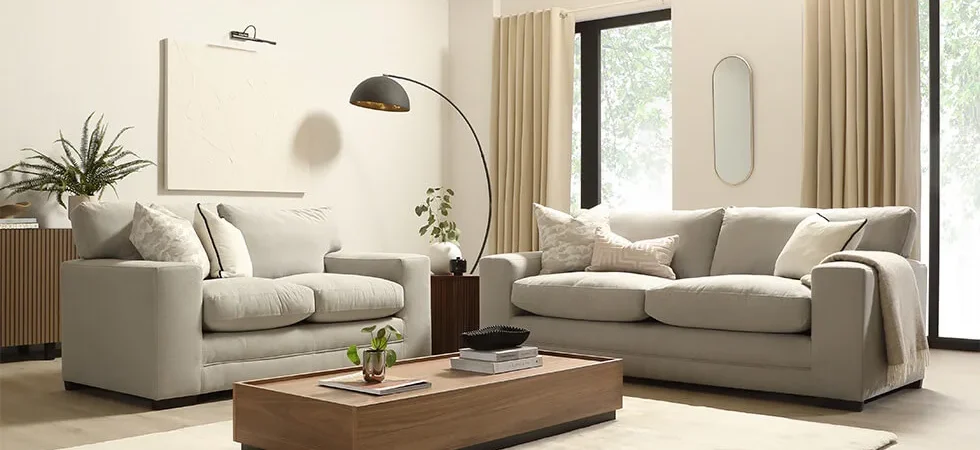
The living room is the humidity problem nobody talks about — and that’s exactly why it keeps getting worse. While homeowners obsess over bathroom ventilation and basement waterproofing, the room where everyone spends the most waking hours quietly accumulates moisture from half a dozen overlooked sources. Understanding why your living room specifically acts as a humidity sink — not just a passive victim of whole-house conditions — changes everything about how you fix it.
What Is the Ideal Humidity Level for a Living Room?
The target range is 40–50% relative humidity (RH) for most living spaces. Below 30% and you’ll start noticing dry skin, static electricity, and wood furniture beginning to crack at the joints. Above 60% and you’re in territory where dust mites thrive and mold can establish itself on porous surfaces within 24 to 48 hours.
That 40–50% range isn’t arbitrary — it’s the band where human respiratory comfort, furniture preservation, and air quality all overlap reasonably well. In practice, most living rooms hover somewhere between 45% and 65% depending on the season, the number of occupants, and how many moisture-generating activities happen in adjacent rooms.
A hygrometer — the cheap digital kind you can pick up for under $15 — will tell you exactly where you stand. Don’t guess. The numbers matter more than the feel, because humidity above 55% can feel perfectly comfortable until the damage is already done.
Why Does the Living Room Collect More Moisture Than Other Rooms?
Here’s what most humidity guides get wrong: they treat the living room as a passive space. It’s not. It’s the connective tissue of your home — thermally, structurally, and socially — and that position makes it uniquely vulnerable to moisture accumulation from multiple directions simultaneously.
First, consider air circulation. Living rooms typically connect to kitchens, hallways, and sometimes open stairwells. Cooking steam, shower humidity migrating down the hall, and the natural convection patterns of your HVAC system all funnel moisture through the living room before it disperses. Your kitchen exhaust fan helps, but if it’s venting into the ceiling cavity rather than outside (common in older construction), it’s just relocating the problem.
Second, living rooms almost always have the largest interior volume of any room in the house. Bigger volume sounds like it would dilute humidity — and it does, slightly — but it also means more surface area for moisture to settle on. Sofas, curtains, rugs, and upholstered chairs are all hygroscopic materials that absorb and re-release moisture in response to temperature swings throughout the day.
Third, and this is the one almost nobody mentions: occupant density. When four people watch a movie together for two hours, they’re collectively exhaling roughly 400–600 milliliters of water vapor into that room. That’s before accounting for drinks, snacks being cooked, or anyone who just showered. The living room is where people gather, and people are remarkably effective humidifiers.
“The living room is particularly susceptible to what I call ‘layered humidity loading’ — where multiple moderate sources stack on top of each other in a short time window. No single source seems significant, but together they can push relative humidity 15 to 20 percentage points higher than baseline within an hour. Most moisture meters people check once a day are missing these daily spikes entirely.”
Dr. Marisa Kellner, Building Science Consultant and IAQ Specialist
What Are the Most Common Living Room Humidity Problems?
Condensation on windows is the one everyone notices first. You’ll see it as foggy glass or water droplets on the interior pane, usually in the morning. It happens because warm, moist room air contacts the cooler glass surface and loses its capacity to hold water vapor — the moisture has to go somewhere, and it goes onto the window.
Musty odors are the second major sign, and they’re more telling than people realize. A living room that smells slightly “off” — not dirty, just stale — is often running at sustained humidity above 55%. That smell is microbial activity: mold and mildew producing volatile organic compounds (VOCs) as they metabolize the moisture and organic materials in your soft furnishings.
The third problem is structural, and it’s slow. Wood flooring, baseboards, and furniture frames absorb moisture over months and begin to warp, buckle, or develop soft spots. By the time the damage is visible, it’s been building for a long time. This is why living room humidity problems are expensive — they’re not dramatic events, they’re slow degradation.
Dust mite populations also explode in humid living rooms. These microscopic creatures can’t survive below about 50% RH, but at 60% and above they thrive in upholstered furniture, rugs, and curtains. If someone in your household has allergies or asthma that’s worse at home than outside, elevated living room humidity is worth investigating as a primary trigger.
How Do Houseplants, Aquariums, and Décor Contribute to Living Room Humidity Problems?
This is where the conversation gets uncomfortable for plant lovers. A single large tropical houseplant — a monstera, a bird of paradise, a fiddle-leaf fig — can transpire anywhere from 50 to 300 milliliters of water per day depending on its size, pot drainage, and watering frequency. A curated collection of eight to ten plants near the window, which has become genuinely fashionable interior design, can add meaningful humidity to a room year-round.
That’s not automatically a problem. In dry winter months when forced-air heating drops indoor humidity to 25–30%, your plant collection might actually be helping. But in humid summer months when outdoor humidity is already high, those same plants push a living room that was borderline into the problematic zone. The honest nuance here is that plant-related humidity is seasonal: beneficial in winter, potentially harmful in summer.
Aquariums are underappreciated humidity sources. A 50-gallon tank with an open top evaporates roughly 1–2 gallons of water per week directly into the surrounding air. That’s about 4–8 liters of water vapor entering your living room on a continuous basis. A well-fitting glass lid reduces this dramatically — down to roughly 20–30% of the open-top rate — and it’s one of the simplest fixes available to aquarium owners.
Decorative water features, though less common, are even more aggressive. A tabletop fountain running continuously can add moisture equivalent to a small humidifier. If you have one and you’re struggling with humidity, it’s worth an experiment: turn it off for a week and re-check your readings.
Why Is the Living Room Humidity Worse in Winter Than Summer?
The counterintuitive fact here is worth understanding: cold air holds less moisture than warm air at the same relative humidity. When outdoor air at 30°F and 70% RH enters your home and gets heated to 70°F, its relative humidity drops to around 15–20%. That makes winter feel very dry — and it often is.
But this dynamic also means that any moisture source indoors has an outsized effect in winter. Cooking, breathing, showering, and even the moisture in firewood you bring inside all add water vapor to an environment where the baseline is already dry — creating wild swings between too dry and borderline too humid depending on activity levels and ventilation.
The living room sees this most acutely because it’s where the fireplace or wood stove often lives. Burning wood releases combustion byproducts, but it also dries the air significantly near the source — while the rest of the room, further from the heat, stays cooler and holds moisture more readily. You can have genuinely different microclimates within a single living room in winter.
Summer is a different mechanism. Warm outdoor air is humid, and every time you open a door or window, you’re importing that moisture. Air conditioning helps by cooling air below its dew point and draining condensate, but window AC units are less effective at this than central systems, and undersized units cool the air without fully dehumidifying it. A living room that feels cool but still uncomfortable in summer is often this exact scenario.
How Does Living Room Layout and Furniture Placement Affect Humidity?
Air doesn’t move through a room evenly. Furniture arrangement creates dead zones — areas where air circulation is minimal — and these pockets tend to accumulate both moisture and the particulates that mold spores feed on. A sofa pushed flush against an exterior wall is the classic example: the wall stays cooler, the air between the sofa and wall barely moves, and you get a persistent mold-friendly microclimate behind furniture you rarely see.
Pulling large furniture even 2–4 inches away from exterior walls makes a measurable difference. It allows air to circulate behind the piece, equalize temperature, and prevents the cool wall surface from acting as a condensation point. It’s a small change that most humidity guides skip over entirely because it sounds too simple to matter — but it does.
Heavy curtains and window treatments trap moisture differently than most people expect. A thick velvet drape pulled closed over a cold window creates a pocket of cool, humid air between the fabric and the glass. The moisture condenses on the window, wicks into the bottom hem of the curtain, and that damp fabric becomes a slow-release mold incubator. Keeping curtains partially open — especially overnight — disrupts this process significantly.
| Humidity Level (RH%) | Living Room Risk | Primary Impact |
|---|---|---|
| Below 30% | Too Dry | Wood cracking, static electricity, dry respiratory passages |
| 30–50% | Optimal Range | Comfortable and low risk for most homes |
| 50–60% | Borderline | Dust mites begin to thrive; monitor closely |
| Above 60% | High Risk | Mold growth, furniture damage, air quality decline |
What Is the Real Root Cause of Persistent Living Room Humidity Problems?
This is the angle that changes the way you approach the problem. Most people — and most articles — treat living room humidity as a ventilation issue. Add a fan, open a window, run a dehumidifier. Those are symptom treatments. The actual root cause in the vast majority of persistent cases is thermal bridging combined with inadequate air sealing.
Thermal bridging means that structural elements — studs, joists, window frames — conduct cold from the outside to the interior surface at a different rate than the insulated cavities between them. That creates spots on your walls and ceiling that are measurably colder than the surrounding surface. Warm, humid room air contacts those cold spots, hits the dew point, and deposits moisture — not visibly, but into the drywall and framing behind the paint.
By the time you see a stain or bubbling paint, the moisture has been accumulating in the wall assembly for months. A dehumidifier running in the room will slow the process but won’t stop it, because the cold surface keeps drawing moisture out of the air regardless of what you do. The fix is thermal: more insulation, better air sealing, or correcting the building envelope — which is not a weekend project, but it’s what actually solves it.
Air sealing matters because infiltration (uncontrolled outside air entering through gaps) is the largest single driver of humidity variation in most homes. A living room with gaps around electrical outlets on exterior walls, gaps at the baseboard where it meets the floor, or a poorly sealed fireplace damper is effectively breathing the outdoor humidity directly into the room regardless of what your HVAC does.
How to Fix Living Room Humidity Problems Step by Step
Fixing this properly means working through a sequence — not grabbing a dehumidifier and calling it done. Start with measurement, then address sources, then look at airflow, and finally consider equipment only if the first three steps don’t get you to the target range.
- Measure first, act second. Place a digital hygrometer in your living room and log readings at three points during the day — morning, mid-afternoon, and evening. Do this for at least five days. You’re looking for patterns: Does humidity spike during meals? After everyone’s home in the evening? The pattern tells you the source.
- Identify and reduce moisture sources. Based on your log, address the highest-impact sources first. Use exhaust fans in adjacent kitchens and bathrooms every time those rooms are in use, run aquarium lids, pull back on plant watering frequency in humid months, and turn off decorative water features during your trial period.
- Improve air circulation in the room itself. Rearrange furniture away from exterior walls, open curtains to prevent cold window condensation zones, and use a ceiling fan on low to keep air moving and prevent moisture from settling on cooler surfaces.
- Air seal visible infiltration points. Check and seal gaps around electrical outlets on exterior walls (foam gaskets cost about $1 each and take 30 seconds to install), weatherstrip exterior doors, and make sure your fireplace damper closes fully when not in use. This step is unglamorous but genuinely effective.
- Run a dehumidifier strategically, not continuously. If your living room consistently reads above 55% after completing steps 1 through 4, a portable dehumidifier set to maintain 45–50% RH is appropriate. Size it correctly: a 30-pint unit for rooms up to 1,500 square feet, a 50-pint unit for larger spaces. Empty the reservoir daily or connect a drain hose.
- Investigate the building envelope if the problem persists. If you’ve done everything above and humidity remains stubbornly high, especially with signs of wall staining or persistent musty odor, the issue is structural. A building performance audit — infrared camera inspection plus blower door test — will locate the thermal bridges and air leaks that are driving persistent moisture accumulation.
Pro-Tip: Run your living room ceiling fan on the lowest setting in reverse (clockwise in winter) — this pushes warm, drier air that accumulates near the ceiling back down along the walls, keeping surface temperatures more uniform and reducing the cold spots that attract condensation. It’s one of the few adjustments that simultaneously improves comfort and reduces moisture risk without any equipment cost.
How Is Living Room Humidity Different From Humidity in Other Rooms?
The comparison is worth making explicitly because the source profile is so different. In bathrooms, the moisture source is concentrated and intermittent — steam from showers, usually 15–30 minutes at a time, with a clear ventilation solution. In bedrooms, the dominant source is occupant respiration during sleep, which is continuous but relatively low-intensity, and the fix often involves simply cracking a window at night.
The living room is fundamentally different because its humidity comes from multiple sources simultaneously that overlap in unpredictable ways. There’s no single “fix the exhaust fan” solution because there’s no single source. This multi-source nature is exactly why generic advice — just open a window, just buy a dehumidifier — lands flat for so many people with living room humidity problems specifically.
Living rooms also tend to have more varied surface materials than other rooms: wood floors, upholstered furniture, rugs, curtains, books, plants. Each of these materials buffers humidity differently. Wool rugs can absorb 30% of their weight in moisture without feeling damp. That buffering can mask how humid your room actually is — right up until conditions change and all that stored moisture releases at once.
Which Dehumidifier Settings Work Best for a Living Room?
Set your dehumidifier’s target humidity to 45%, not the default setting that many units ship with (which is often 65% — essentially useless for comfort or mold prevention). At 45%, the unit cycles on and off rather than running continuously, which extends the compressor life and keeps electricity costs reasonable.
Placement matters more than most people think. Put the unit in the center of the room if possible, away from walls and corners. Dehumidifiers pull air in and exhaust it after extracting moisture — they need at least 12 inches of clearance on all sides to operate efficiently. Shoving one into a corner behind a chair reduces its effective output by 20–30%.
In an open-plan space — living room connected to dining room or kitchen without a wall — you’ll need to size up. A room that’s technically 1,200 square feet but connects to a 400-square-foot kitchen should be treated as a 1,600-square-foot space for dehumidifier sizing purposes. Undersizing is the most common reason people buy a unit, run it constantly, and still can’t get below 60%.
What Signs Tell You the Living Room Humidity Problem Is Getting Worse?
Watch for these specific indicators — they appear in a rough sequence from early warning to serious problem:
- Morning window condensation that doesn’t clear by 10 a.m. — persistent fog means overnight humidity is staying elevated even as temperatures rise, which indicates the room isn’t drying out between evening activity and the next morning.
- A faint musty smell that appears after the room is closed up for several hours — this is microbial activity beginning in upholstery or wall cavities, often before any visible mold appears.
- Wood floor boards that feel slightly soft or spongy in a localized area — this indicates moisture is wicking up from below or from a cold exterior wall, and the subfloor may already be affected.
- Paint bubbling or peeling near the baseboard on an exterior wall — this is almost always a sign of moisture moving through the wall assembly, not just surface humidity, and it means the problem is structural.
- Increased allergy or asthma symptoms in occupants who are fine elsewhere — if someone in the household consistently feels worse in the living room, elevated dust mite populations from chronic humidity above 55% is a plausible cause worth investigating.
Does Running the HVAC Fix Living Room Humidity Problems?
Partially, and understanding the limitation is useful. Your central air conditioning system dehumidifies as a side effect of cooling — it cools the air below its dew point, moisture condenses on the evaporator coil, and the condensate drains outside. During the cooling season this is genuinely helpful, and a properly sized central AC system can maintain 45–50% RH on its own in most climates.
The problem arrives in the shoulder seasons — spring and fall — when it’s not hot enough to need cooling but humidity is high. The system isn’t running, and nothing is actively removing moisture. This is when living room humidity problems often peak, because occupant activity continues at its normal level but the HVAC isn’t compensating.
Some whole-home systems include a dedicated dehumidifier module that runs independently of the cooling function — this solves the shoulder-season gap completely. If you have persistent living room humidity problems year-round and your HVAC system is being replaced anyway, it’s worth asking your contractor about this option. It adds cost upfront but eliminates the need for portable units in every room.
One observation worth making: an HVAC system that’s oversized for your home cools the living room too quickly, shutting off before it’s had time to dehumidify adequately. The room feels cool but the humidity stays elevated — often called “short cycling.” If your AC runs for less than 10–12 minutes before reaching the set temperature, oversizing might be contributing to your humidity problem more than the system is solving it.
Conclusion
Living room humidity problems resist easy fixes because the room itself resists easy categorization — it’s not a high-moisture zone like a bathroom, not a sealed sleep environment like a bedroom, and not a storage space you can just isolate. It’s where your household actually lives, which means it absorbs moisture from every direction the house produces it. The homeowners who finally resolve persistent living room humidity are almost always the ones who stopped chasing symptoms and started mapping sources — using a
Frequently Asked Questions
Why does my living room feel humid?
Because moisture from other rooms accumulates and dries slowly.
Is living room humidity normal?
Some variation is normal, but persistent dampness is not.
Why does condensation appear in the living room?
Because cool windows and walls attract moisture from warm air.
Can living room humidity affect comfort?
Yes, heavy air reduces freshness and comfort.