
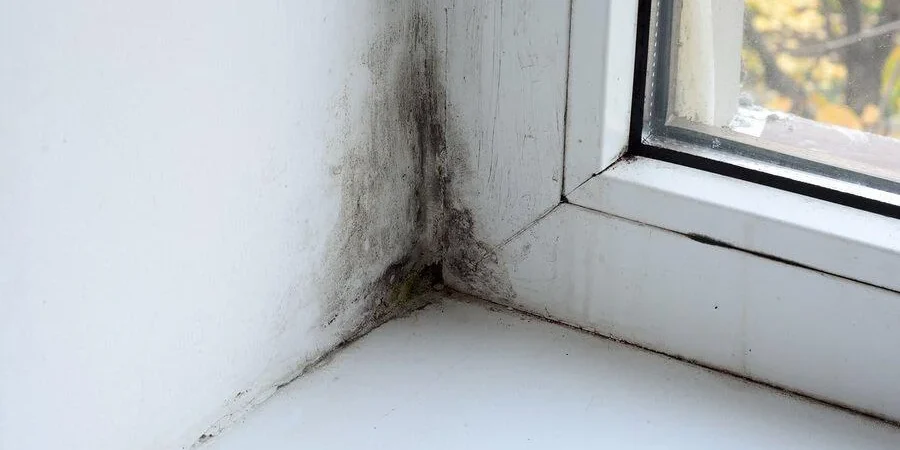
Mold around windows is one of the most common mold problems in apartments. It often appears on window frames, seals, corners, or the surrounding wall area. In many cases, there are no leaks, no visible water damage, and the windows themselves seem intact—yet mold still develops and may keep coming back.
This article explains why mold grows around windows, which indoor conditions cause it, why it often appears in the same spots, and what window mold usually indicates about humidity, condensation, and airflow indoors.
Why Windows Are a Common Place for Mold
Windows are especially vulnerable to mold because they are one of the coldest surfaces in an apartment. They separate warm indoor air from colder outdoor temperatures, creating ideal conditions for moisture to settle.
Windows are prone to mold because they:
- Cool down faster than walls
- Collect condensation easily
- Often have limited airflow around frames and corners
This makes the area around windows a frequent moisture hotspot.
Condensation as the Main Cause of Window Mold
Condensation is the leading cause of mold around windows.
When warm, moist indoor air contacts a cold window surface, water vapor turns into moisture. This condensation may:
- Appear as water droplets
- Form briefly and evaporate
- Occur overnight or early in the morning
Even when condensation is not always visible, repeated moisture cycles can keep window frames and surrounding areas damp long enough for mold to grow.
Mold Around Windows Without Leaks
A common assumption is that mold around windows means water is leaking inside. While leaks can cause mold, most window mold cases occur without leaks.
Instead, mold develops due to:
- Indoor humidity
- Repeated condensation
- Cold glass and frames
- Poor air circulation near windows
This explains why mold can appear even when windows are properly installed and sealed.
Why Mold Forms on Window Frames and Seals
Window frames and seals often trap moisture.
Reasons include:
- Small gaps that hold condensation
- Materials that cool quickly
- Limited airflow in tight corners
Moisture dries more slowly in these areas, making them ideal for mold growth over time.
Mold on Walls Around Windows
Mold on walls around windows often spreads to the surrounding wall area.
This happens because:
- Condensation runs or evaporates unevenly
- Cold zones extend beyond the glass
- Moisture settles on adjacent wall surfaces
As a result, mold may appear not only on the frame but also on nearby walls or ceilings.
Seasonal Patterns of Mold Around Windows
Window mold often follows clear seasonal trends.
Winter
- Cold outdoor temperatures cool window surfaces
- Condensation increases overnight
- Windows remain closed, reducing airflow
Summer
- Warm, humid air enters the apartment
- Air conditioning cools glass surfaces
- Condensation forms on the interior side of windows
Seasonal mold around windows usually points to condensation rather than structural problems.
Mold Around Windows and Indoor Humidity
High indoor humidity significantly increases the risk of window mold.
When humidity stays elevated:
- More moisture condenses on glass
- Frames remain damp longer
- Drying becomes less effective
This is why window mold is often worse in apartments with consistently high indoor humidity.
Poor Airflow Near Windows
Airflow around windows is often limited, especially when:
- Curtains or blinds block air movement
- Furniture is placed close to windows
- Windows remain closed for long periods
Poor airflow prevents condensation from drying quickly, allowing moisture to linger around frames and corners.
Why Mold Around Windows Keeps Coming Back
Mold around windows frequently returns after cleaning because the underlying conditions remain unchanged.
Common reasons include:
- Continued condensation
- High indoor humidity
- Cold window surfaces
- Limited airflow
Cleaning removes visible mold but does not stop condensation from forming again.
Mold Around Windows vs Dirt or Stains
Not all dark marks around windows are mold.
Some may be caused by:
- Dust buildup
- Condensation stains
- Aging seals or paint
Mold usually appears irregular, may spread over time, and is often associated with dampness or musty odors.
Hidden Mold Around Windows
Mold around windows is not always fully visible.
Hidden growth may exist:
- Behind window trim
- Under seals
- Inside wall cavities near windows
This is why odors or recurring mold can persist even when visible areas are cleaned.
Mold Around Windows and Indoor Air
Window mold can affect indoor air when spores are released, especially when:
- Mold growth is extensive
- Condensation persists daily
- Airflow is limited
Small, localized mold does not automatically mean poor air quality, but persistent window mold usually reflects ongoing moisture imbalance.
Why Window Mold Is Often Misunderstood
Window mold is often misunderstood because:
- Leaks are assumed but not found
- Condensation is seen as “normal”
- Mold appears gradually
- Windows look dry most of the time
As a result, humidity and airflow issues are often overlooked.
How Mold Around Windows Develops Over Time
Window mold typically develops through a slow process:
- Indoor humidity rises
- Condensation forms on cold window surfaces
- Moisture remains near frames and corners
- Drying is limited by airflow
- Mold begins to grow
This gradual development explains why mold around windows often seems to appear unexpectedly.
Mold around windows is a common indoor issue in apartments and is usually caused by condensation, high indoor humidity, cold window surfaces, and limited airflow—not leaks or poor window installation. Because windows are among the coldest surfaces indoors, moisture naturally settles there first, creating ideal conditions for mold growth.
Understanding window mold as a moisture and airflow issue rather than a structural failure helps explain why it often returns and why it appears in specific spots. Recognizing patterns such as seasonal recurrence and morning condensation makes mold around windows easier to interpret and far less confusing.
Frequently Asked Questions
Can mold grow around windows without leaks?
Yes. Condensation and humidity are the most common causes.
Why is mold worse around windows in winter?
Cold glass causes condensation when warm indoor air contacts it.
Does window mold mean windows need replacing?
Not usually. Most cases are caused by indoor conditions.
Why does mold return after cleaning?
Because condensation and humidity continue to occur.
Is mold around windows common in apartments?
Yes. Apartments often have limited airflow and cold window surfaces.