
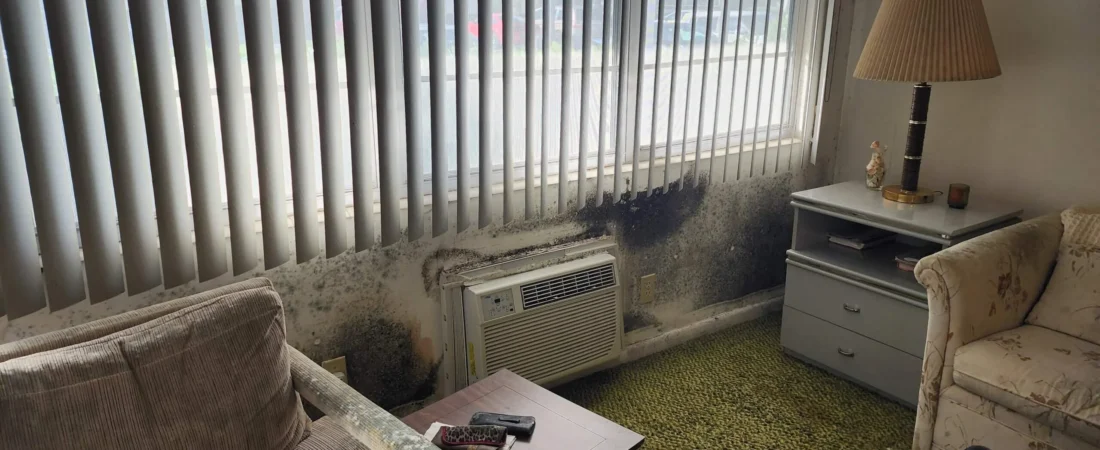
Living with mold in your apartment isn’t just uncomfortable — depending on the species, the concentration, and your own health baseline, it can be genuinely dangerous. But here’s what almost every article on this topic gets wrong: they treat mold exposure as a binary problem, as if you’re either safe or in immediate danger. The truth is messier, and understanding that messiness is what actually helps you make the right call.
The focus keyword can you live in an apartment with mold gets searched thousands of times a month by people who are scared, confused, and often getting contradictory advice from landlords, doctors, and random Reddit threads. This article cuts through that noise with specifics — not just “mold is bad, call your landlord,” but the actual mechanisms, thresholds, and decision points that determine whether your situation is manageable or a genuine emergency.
Can You Live in an Apartment With Mold? The Direct Answer
Short answer: sometimes, temporarily, with conditions — but never comfortably, and never safely for extended periods without active remediation. Whether you can live there is a different question from whether you should, and conflating those two is where most tenants get stuck. The answer depends on three variables: the mold species present, the square footage affected, and your personal health status.
Small patches of surface mold — say, less than 10 square feet — on a non-porous surface like a bathroom tile are genuinely low-risk for healthy adults if ventilated properly and addressed within days. The EPA itself uses 10 square feet as a rough threshold below which homeowners can typically handle cleanup themselves. Anything larger, anything on porous materials like drywall or carpet, or any presence of black mold (Stachybotrys chartarum) puts you in different territory entirely.
The honest nuance here: immunocompromised individuals, young children, elderly tenants, and people with respiratory conditions like asthma or COPD face risks at exposure levels that a healthy 30-year-old might shrug off. Your neighbor in 4B might be fine while you’re having chronic sinus infections — and both of you are right about your own experience.
What Does Mold Actually Do to Your Body?
Mold produces two primary threats: spores and mycotoxins. Spores are the reproductive particles that float through air — inhaling them triggers allergic responses and respiratory inflammation in sensitive individuals. Mycotoxins are the chemical compounds certain mold species produce, and they’re what gives “toxic mold” its reputation, because they can cause neurological symptoms, immune suppression, and pulmonary hemorrhage at high concentrations.
Here’s the counterintuitive fact that most people don’t hear: you don’t have to see mold to be affected by it. Mold colonies hidden inside walls, under flooring, or above ceiling tiles release spores into your air supply constantly, often at higher concentrations than visible surface mold because the enclosed space amplifies spore density. A tenant who can’t find any mold but is experiencing persistent symptoms may actually have a worse problem than someone with a visible patch on the bathroom ceiling.
Symptoms from mold exposure range widely and mimic other conditions — which is why it so often goes undiagnosed. Persistent coughing, runny nose, eye irritation, fatigue, and headaches are the most common complaints. The tell-tale sign that mold is the culprit: symptoms improve noticeably when you spend extended time away from the apartment, then return within 24-48 hours of coming home.
“The symptom-pattern that raises my suspicion most is cyclical — patients feel better on weekends or vacations and worse within a day or two of returning home. That temporal relationship between environment and symptoms is a red flag I take very seriously, regardless of whether mold has been visually confirmed.”
Dr. Sandra Kowalski, MD, Occupational and Environmental Medicine, Urban Health Associates
Which Types of Mold Are Most Dangerous in Apartments?
Not all mold is equally dangerous — and knowing the difference saves you from both panic and complacency. There are over 100,000 known mold species, but a handful account for the vast majority of indoor apartment infestations. Each carries a different risk profile.
| Mold Type | Common Location | Risk Level | Key Concern |
|---|---|---|---|
| Stachybotrys chartarum (Black Mold) | Drywall, wood after sustained water damage | High | Mycotoxin production; requires professional remediation |
| Aspergillus | HVAC systems, insulation, dust | Moderate–High | Dangerous for immunocompromised individuals; 180+ species |
| Cladosporium | Bathroom grout, window sills, fabrics | Low–Moderate | Allergic reactions; rarely toxic |
| Penicillium | Wallpaper, carpet, water-damaged materials | Moderate | Fast-spreading; strong musty odor; can trigger asthma |
Black mold gets the most press, but Aspergillus is arguably more commonly dangerous because it thrives in HVAC systems and gets distributed throughout the entire apartment — not just one room. If your unit has central air and you smell mildew every time the system kicks on, that’s a specific warning sign worth acting on immediately.
Visual identification alone isn’t reliable. Black-colored mold isn’t always Stachybotrys, and Stachybotrys isn’t always black. If you’re trying to assess risk accurately, a professional air quality test or surface swab test (typically $200–$600 depending on scope) is the only way to confirm species and concentration.
Why Mold Keeps Coming Back Even After Cleaning
This is the part most guides skip, and it’s the reason tenants end up in an exhausting cycle of cleaning, re-growth, cleaning, re-growth. Wiping down a moldy surface with bleach kills the surface colony, but it does nothing to address the moisture source that caused it — and mold is entirely moisture-driven. Without fixing the underlying humidity or water intrusion problem, you’re just resetting the clock.
Mold needs four things to grow: moisture, a food source (nearly any organic material), oxygen, and temperatures between 40°F and 100°F. Your apartment provides three of those unconditionally. The only variable you can actually control is moisture. Indoor relative humidity above 60% is enough to sustain mold growth even without any visible leak, which is why Mold in apartment situations with no obvious water source are so common and so confusing for tenants.
Bleach also has a specific limitation people often don’t know: it’s effective on non-porous surfaces but largely ineffective on porous ones. On drywall or wood, bleach kills the surface organism but the roots (hyphae) penetrate deeper into the material and regrow within weeks. Porous materials with mold colonization typically need to be physically removed and replaced — not cleaned.
Pro-Tip: Before you clean any mold yourself, pick up a digital hygrometer (under $20 at most hardware stores) and check the relative humidity in the affected room. If it reads above 55%, no cleaning method will produce lasting results until you address the humidity source — whether that’s a dehumidifier, better ventilation, or a repaired leak. Fix the moisture first, then clean.
How to Know When Mold Is Actually Making You Sick
The trickiest part of mold-related illness is that the symptoms are generic enough to be dismissed as seasonal allergies, stress, or a persistent cold. Doctors who aren’t specifically looking for environmental causes often miss it. Knowing what pattern to watch for gives you better information when you talk to a physician or a landlord.
Here’s a real scenario that plays out constantly: a tenant moves into a new apartment in the fall. By winter, she’s dealing with what she assumes is recurring colds — congestion, fatigue, the occasional headache. She visits her GP twice, gets antihistamines and a nasal spray. She improves slightly. Then she takes a two-week trip to visit family and feels noticeably better by day three. She returns home and within 48 hours, the congestion is back. That pattern — location-dependent symptoms with clear improvement during absence — is the diagnostic signal that warrants a serious look at the apartment environment.
Symptoms that specifically suggest mold exposure rather than general illness include: respiratory symptoms that worsen at night (when you’re home longest), skin rashes without other explanation, unexplained nosebleeds, and cognitive fog that clears after time away. None of these are definitive alone, but clustered together with a location-dependent pattern, they warrant air quality testing at minimum.
What Are Your Legal Rights as a Tenant With Mold?
Most landlords count on tenants not knowing their rights — and most tenants oblige them. The law, in most U.S. states, is more on your side than you probably think. The implied warranty of habitability, recognized in nearly every state, requires landlords to maintain rental units in livable condition, and mold infestations — particularly those caused by structural issues like leaks, poor ventilation, or inadequate waterproofing — generally qualify as habitability violations.
Specific rights vary by state, but the framework most tenants can rely on includes:
- Written notice requirement: Document the mold in writing (photos plus a dated written notice to your landlord) before any remediation or conversation. This creates a legal record and triggers your landlord’s duty to respond.
- Reasonable repair timeline: Most states give landlords 14–30 days to address habitability complaints after written notice, though emergency conditions (like active water intrusion) may require faster response.
- Rent withholding or repair-and-deduct: Many states allow tenants to withhold rent or hire repairs independently (deducting from rent) if a landlord fails to act after proper notice. California, New York, Texas, and most northeastern states explicitly recognize this right.
- Lease termination: A mold infestation that makes the unit uninhabitable can constitute constructive eviction, legally allowing you to break your lease without penalty. Courts have ruled in tenants’ favor specifically on mold grounds in multiple states.
- Retaliation protection: If your landlord retaliates against you — raises rent, threatens eviction, reduces services — after you formally complain about mold, that retaliation is illegal in virtually every U.S. jurisdiction.
A few states, including California, Indiana, New Jersey, and Texas, have specific mold disclosure laws requiring landlords to disclose known mold problems before you sign a lease. If you weren’t told about a pre-existing mold issue and discovered it after moving in, that may give you additional legal standing beyond the standard habitability claim.
Safety Tips for Living With Mold While You Wait for Remediation
Remediation takes time — landlords need to be contacted, contractors need to be scheduled, disputes sometimes need to be resolved. During that waiting period, there are concrete steps that reduce your exposure without pretending the problem doesn’t exist. These aren’t permanent solutions; they’re damage-limitation strategies.
- Reduce indoor humidity aggressively. A portable dehumidifier in the affected room, targeting 45–50% relative humidity, slows active mold growth. It won’t eliminate an established colony, but it starves new growth and reduces airborne spore concentration.
- Seal off affected areas. If mold is confined to one room, close that room off with plastic sheeting and tape over vents leading to it. This prevents spores from circulating through your HVAC system and contaminating the rest of the unit.
- Run a HEPA air purifier. True HEPA filters capture particles as small as 0.3 microns — mold spores range from 1–100 microns, squarely within HEPA range. Place the unit in the rooms where you spend the most time, particularly your bedroom.
- Don’t disturb the mold colony. Scrubbing, sweeping, or blowing air across mold significantly increases airborne spore counts — sometimes by a factor of 10 or more. If you need to be in the affected area, wear an N95 respirator, not a dust mask.
- Ventilate strategically. Open windows in mold-affected areas when outdoor humidity is below 50% to dilute indoor air. Avoid opening windows during rain or high-humidity conditions, which introduce moisture that compounds the problem.
None of these measures substitute for actual remediation — that’s worth saying plainly. They reduce your risk during a waiting period; they don’t resolve the underlying problem. If your landlord is unresponsive after 30 days of written notice, the gap between “temporary mitigation” and “permanent living arrangement” becomes a health decision, not just a housing one.
When Should You Actually Leave the Apartment?
This is the question people are really asking when they search “can you live in an apartment with mold” — and most articles dance around it with vague language about “serious mold problems.” Here are the specific conditions under which leaving is the right call, not a panic response.
Leave immediately — or sleep elsewhere — if the mold covers more than 25 square feet, if it’s confirmed or suspected to be Stachybotrys (black mold with a water-damaged substrate), if you have a household member with asthma, an autoimmune condition, or who is under 5 or over 70, or if you’re experiencing respiratory symptoms that worsen at night and improve when away. These aren’t arbitrary thresholds — they reflect points where the risk-to-benefit calculation shifts decisively against staying.
There’s also an often-overlooked scenario: active remediation itself temporarily worsens air quality. Professional mold remediation involves physical removal of contaminated materials, which releases enormous quantities of spores before negative air pressure systems and containment barriers can control them. Reputable remediation contractors will tell you not to be in the unit during work — if yours doesn’t, that’s a red flag about their protocols.
The harder question is what to do when leaving isn’t financially straightforward. Breaking a lease, finding short-term accommodation, and pursuing legal remedies simultaneously is genuinely difficult. Document everything meticulously — photos with timestamps, all written communications with your landlord, any medical visits related to symptoms — because that documentation is your leverage if the situation escalates to formal complaints or small claims court.
How to Prevent Mold From Coming Back After Remediation
Remediation fixes the existing problem; prevention is what keeps it from returning. And most people who’ve been through a mold situation once are highly motivated to not go through it again. The good news is that mold prevention is largely about controlling two things: moisture and airflow.
Keep indoor relative humidity between 30% and 50% year-round. This single habit addresses the root cause of the majority of apartment mold problems — more than fixing leaks, more than cleaning surfaces, more than any other single action. A combination hygrometer-thermostat lets you monitor this passively without thinking about it daily. If you’re consistently above 55%, a dehumidifier isn’t a luxury.
Run exhaust fans during and for 20 minutes after every shower or cooking session — not just occasionally. Bathroom and kitchen humidity spikes are responsible for an enormous proportion of apartment mold, especially in units with limited ventilation. If your exhaust fan is weak or nonexistent, ask your landlord to replace it; inadequate ventilation is typically a landlord maintenance responsibility, not a tenant one.
Check window frames, under-sink cabinets, and the area behind large appliances every few months. These are the spots where small leaks go undetected for months, creating the sustained moisture conditions that mold needs. Catching a dripping pipe fitting or a failing window seal early — before mold establishes — is infinitely easier than dealing with it afterward.
Can Mold Testing Actually Tell You What You’re Dealing With?
Mold testing is more useful in some situations than others — and there’s a cottage industry of testing services that are happy to sell you more certainty than the tests actually deliver. Understanding what different test types can and can’t tell you helps you spend wisely and interpret results accurately.
Air quality testing measures the concentration of spores in your indoor air compared to an outdoor baseline sample. A significantly elevated indoor count — particularly of species like Stachybotrys or Aspergillus that are uncommon outdoors — strongly suggests an indoor source. This type of test is most useful when you suspect hidden mold (inside walls, for example) that you can’t locate visually.
Surface swab or tape lift tests identify the species present at a specific visible location but don’t tell you anything about air quality or hidden colonization. They’re useful for confirming whether a visible growth is actually mold (versus efflorescence or dirt) and for species identification when you need to know what you’re dealing with for health reasons. Neither test type tells you whether remediation was successful — post-remediation clearance testing is a separate process done by independent inspectors after the remediation company has finished.
DIY test kits sold at hardware stores (the kind where you leave a petri dish open for 48 hours) are largely unreliable for anything beyond confirming mold exists somewhere in your environment — which you already know if you can see or smell it. They don’t give you species identification, can’t tell you concentration, and have no meaningful baseline comparison. Save the $30 and put it toward a professional assessment if you genuinely need answers.
The Real Reason Mold Problems in Rentals Are So Hard to Resolve
Here’s the observation that most tenant guides won’t tell you: the core difficulty with apartment mold isn’t biological — it’s structural. The incentive misalignment between landlords and tenants makes mold one of the most commonly underfixed problems in rental housing. Remediation is expensive (typically $1,500–$30,000 depending on scope), and many landlords have discovered that tenants will tolerate a lot before taking legal action.
The landlord who repaints over a mold stain rather than investigating the moisture source behind it isn’t being incompetent by accident. That approach costs $50 instead of $5,000, delays the tenant’s visible evidence, and resets the clock on their complaint timeline. It’s a rational response to a bad incentive structure, and it explains why “my landlord keeps painting over the mold” is one of the most common complaints in tenant forums everywhere.
What changes the math is documentation and escalation. Filing a formal complaint with your local housing authority or health department — not just telling your landlord — creates a record that increases the cost of inaction. Local housing inspectors have authority that tenants don’t: they can cite landlords, issue orders, and in severe cases, condemn units. One inspector visit often accomplishes more than six months of tenant emails.
The tenant who understands this — who moves from “please fix this” to “I’ve filed a complaint with the city housing department and am documenting my medical costs” — operates from a fundamentally different position. Mold disputes in rentals are ultimately resolved by whoever is more persistent and better documented, and that’s almost always something a motivated tenant can be.
Mold in apartments will keep being a problem as long as buildings age, plumbing degrades, and ventilation remains an afterthought in residential construction. What’s changing is tenant awareness — and the growing body of case law making clear that landlords who ignore habitability complaints do so at real financial and legal risk. The tenant who knows their rights, documents their situation, and understands the biology of what they’re dealing with is in a far stronger position than one who simply hopes the problem resolves itself. Mold never resolves itself.
Frequently Asked Questions
Can you live in an apartment with mold?
Yes, many people do, especially when mold is limited or seasonal.
Does mold always mean the apartment is unsafe?
No. Safety depends on extent, duration, and conditions.
When does mold become a serious concern?
When it spreads, returns constantly, or affects multiple rooms.
Is living with mold common in apartments?
Yes. Apartments often experience humidity and airflow issues.
Should mold always be treated as an emergency?
No. Many cases reflect manageable indoor conditions rather than immediate danger.
Disclaimer: This article is for informational purposes only and isn’t a substitute for professional mold inspection or remediation advice. Mold problems vary a lot depending on the material affected, the extent of growth, and your specific health situation. Always follow product label instructions when using cleaning chemicals, ensure proper ventilation, and consider consulting a certified mold remediation professional for anything beyond a small, surface-level patch. If you have respiratory conditions, allergies, or a compromised immune system, talk to a doctor before starting any DIY mold removal.