
Three months into your lease, you’ve finally made the apartment feel like home. Your furniture is arranged perfectly, artwork adorns the walls, and everything seems ideal—until you wake up one January morning to find every window in your bedroom covered in condensation. Or perhaps it’s August, and despite running the AC constantly, the air feels thick and oppressive. You check the thermostat: 72°F. So why does it feel like 80°F? The answer lies not in temperature, but in something many apartment dwellers overlook: indoor humidity levels.
Unlike homeowners who can modify ventilation systems and building envelopes, apartment residents face unique constraints. Shared walls concentrate moisture. Limited airflow traps humidity. Small enclosed spaces amplify the effects of every shower, cooking session, and breath you take. Understanding the normal indoor humidity level for apartments—and how to maintain it within the optimal 40-60% range, which is considered the ideal humidity level for most apartments and the best humidity level for apartment living—transforms uncomfortable living spaces into healthy, comfortable homes. Achieving the right comfort level and overall home comfort depends on proper humidity control. This comprehensive guide reveals why apartments face distinctive humidity challenges, how to accurately measure moisture levels in your specific space, and most importantly, practical solutions that work within the limitations of rental living.
Understanding Relative Humidity: What the Numbers Actually Mean
Before discussing normal indoor humidity levels for apartments, you need to understand what “relative humidity” actually measures—because the science reveals why that 50% reading means something entirely different in January versus July.
Relative humidity (RH) expresses the current amount of water vapor in the air as a percentage of the maximum amount that air could hold at that specific temperature. This “relative” aspect is critical: warm air can hold dramatically more moisture than cold air. Understanding both temperature and humidity is essential when assessing indoor air quality, as these two factors work together to determine comfort and health.
Here’s a concrete example demonstrating why this matters:
Winter scenario:
- Indoor temperature: 68°F (20°C)
- Relative humidity: 40%
- Actual moisture content: Approximately 6 grams per cubic meter
Summer scenario:
- Indoor temperature: 75°F (24°C)
- Relative humidity: 60%
- Actual moisture content: Approximately 13 grams per cubic meter
Despite the summer reading being only 20 percentage points higher, the air contains more than double the actual water vapor. This explains why summer humidity feels so oppressive—you’re breathing air saturated with moisture molecules.
Why Temperature Changes Affect RH Readings
When you heat cold air without adding moisture, relative humidity drops dramatically. Conversely, when warm air cools—such as when it contacts a cold window—relative humidity skyrockets, often reaching 100% (the dew point), causing condensation.
This temperature-RH relationship creates particular challenges in apartments where you control interior temperatures but have limited influence over wall surface temperatures, especially on shared walls and exterior-facing surfaces. Outdoor temperatures also play a significant role in influencing indoor humidity levels, as colder outdoor temperatures can lead to drier indoor air when ventilation or air exchange occurs.
Expert Insight: The dew point temperature—the point where air becomes saturated and condensation forms—is often more informative than relative humidity alone. According to ASHRAE (American Society of Heating, Refrigerating and Air-Conditioning Engineers), maintaining dew points below 59°F (15°C) prevents most moisture problems, which corresponds to approximately 50% RH at typical room temperatures.
The Normal Indoor Humidity Range for Apartments
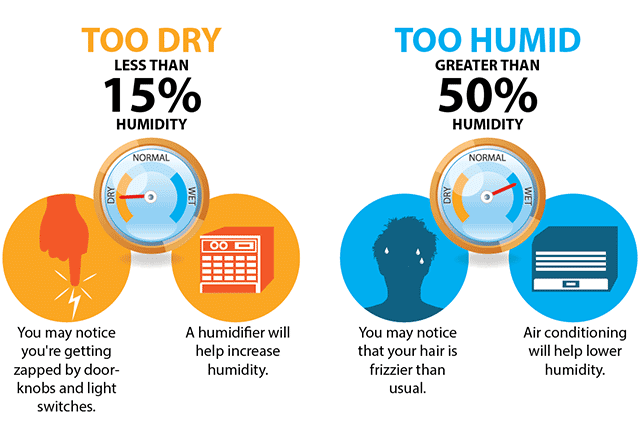
The EPA, Consumer Product Safety Commission, and ASHRAE all recommend maintaining residential humidity between 30-60% relative humidity, with the optimal comfort zone being 40-60% RH for most living spaces. Maintaining the proper humidity level within these ranges is essential for both health and comfort, as it helps prevent issues like mold growth, respiratory problems, and discomfort caused by air that is too dry or too damp.
For apartments specifically, target these ranges:
General living spaces: 40-50% RH Bedrooms: 40-50% RH Bathrooms: 40-60% RH (spikes to 70-80% during showers are normal if ventilated afterward) Kitchens: 40-55% RH (temporary increases during cooking are acceptable)
The Goldilocks Zone: Why 40-60% Works
This range represents the sweet spot where multiple factors align:
Dust mite suppression: Research demonstrates that dust mite populations—a primary asthma and allergy trigger—decline significantly below 50% RH. Above 50%, populations explode.
Mold prevention: Most common indoor mold species require sustained surface relative humidity above 60% for germination and growth. Keeping bulk air below 60% helps ensure surfaces stay below critical thresholds.
Virus survival rates: Fascinating research on airborne virus transmission shows that enveloped viruses (including influenza and coronaviruses) exhibit dramatically reduced survival and infectivity in the 40-60% RH range. Both very dry air (below 30%) and very humid air (above 60%) increase transmission risk.
Human comfort: Your mucous membranes, skin, and respiratory system function optimally in this range. Below 30%, you experience dryness and irritation. Above 60%, air feels heavy and breathing becomes labored.
Material preservation: Wood furniture, floors, musical instruments, and even electronics perform best when humidity stays stable within this zone. Extremes in either direction cause damage.
Maintaining a normal indoor humidity level in the 40-60% range has a major impact on both comfort and overall health, making humidity control just as important as temperature management in modern, energy-efficient homes.
Pro-Tip: Rather than obsessing over achieving a specific number like exactly 45%, focus on maintaining consistency within the 40-60% range. Stability matters more than precision—wild swings cause more problems than levels slightly outside the ideal range.
Why Apartments Face Unique Humidity Challenges
Apartments aren’t simply smaller houses—they’re fundamentally different environments with distinctive moisture dynamics. Limited ventilation and fewer moisture escape routes often mean that apartments have a lower air exchange rate, which can cause humidity to build up more easily compared to single-family homes. Understanding these unique challenges explains why maintaining normal indoor humidity levels in apartments often requires more vigilance than in single-family homes.
Reduced Air Volume
The most obvious difference: apartments contain far less air than houses. A typical 800-square-foot apartment with 8-foot ceilings contains approximately 6,400 cubic feet of air. A modest 2,000-square-foot house contains 16,000 cubic feet—2.5 times more.
What this means for humidity: Every moisture-generating activity—showering, cooking, even breathing—affects apartment humidity dramatically faster. A 15-minute shower in an apartment can raise relative humidity by 10-20 percentage points, while the same shower in a house might increase RH by only 5-10 points.
Four people sleeping in an apartment release approximately 4-8 liters of water vapor overnight through respiration and perspiration alone. In a small apartment, this moisture accumulates rapidly with nowhere to go.
Limited Natural Ventilation
Most apartment buildings prioritize security and energy efficiency over natural ventilation. Unlike houses where you might open multiple windows to create cross-ventilation, apartments often have:
- Limited exterior walls: Interior apartments may have only one exterior wall
- Window restrictions: Sealed or limited-opening windows for safety/security
- Stack effect: High-rise apartments experience pressure differentials that can pull humid air from corridors or adjacent units
- Shared ventilation systems: HVAC systems designed for the building, not your specific unit’s needs
The result? Moisture has fewer escape routes. That humidity from your morning shower doesn’t dissipate naturally—it lingers for hours unless mechanically ventilated.
Thermal Bridging Through Shared Walls
Here’s something most apartment dwellers don’t realize: shared walls and floors create unique condensation risks through differential heating.
When your neighbor keeps their apartment at 65°F while you maintain 72°F, the shared wall between units becomes a thermal bridge—cooler than your room temperature but warmer than their space. If your side of this wall drops below the dew point (which varies with your humidity level), condensation forms inside your apartment on a wall that’s not even an exterior wall.
Real-world example: Ground-floor apartments above unheated parking garages, crawl spaces, or storage areas face severe thermal bridging. Floor surfaces can be 10-15°F colder than room air, making them prime condensation zones when humidity rises above 50%.
Bathroom and Kitchen Ventilation Inadequacy
Apartment bathrooms and kitchens typically have:
- Undersized exhaust fans (50-80 CFM instead of the recommended 100+ CFM)
- Shared ventilation shafts reducing effective exhaust capacity
- No makeup air systems to replace exhausted air
- Limited windows or no windows at all in interior bathrooms
Research by building scientists reveals that typical apartment exhaust fans remove only 60-70% of shower-generated moisture before residents turn them off. The remaining 30-40% enters living spaces, accumulating over time.
Laundry Challenges
Many apartments lack in-unit washers and dryers. Residents who air-dry clothes indoors introduce massive moisture loads—a single load of laundry can release 2-4 liters of water into apartment air over 12-24 hours. In a small apartment with limited ventilation, this single activity can maintain elevated humidity for days.
Seasonal Humidity Adjustments: Winter vs. Summer
Maintaining normal humidity levels in apartments requires seasonal flexibility. The same 50% RH that feels comfortable in October becomes problematic in January—here’s why outdoor climate dictates indoor humidity management. During winter, dry winter air enters apartments and is further dried out by heating systems, which can worsen indoor humidity problems and spread airborne allergens and germs.
Winter: The Battle Against Dryness and Window Condensation
Cold outdoor air contains virtually no moisture. When this air infiltrates your apartment (through gaps, ventilation, or simply when you open doors), your heating system warms it dramatically. Remember: warm air’s capacity to hold moisture increases exponentially with temperature.
The condensation dilemma:
- Indoor air at 70°F and 50% RH has a dew point of approximately 50°F
- Single-pane windows in winter might have interior surface temperatures of 30-40°F
- Result: Heavy condensation, ice formation, potential mold growth around windows
This is why winter humidity recommendations drop to 30-45% RH in cold climates. The colder your winter, the lower your safe indoor humidity level. Maintaining the right humidity not only prevents condensation but also helps keep your home warm and comfortable during the cold months.
Winter humidity targets by outdoor temperature:
| Outdoor Temperature | Recommended Indoor RH |
|---|---|
| Above 50°F | 40-50% |
| 40-50°F | 40-45% |
| 30-40°F | 35-40% |
| 20-30°F | 30-35% |
| 10-20°F | 25-30% |
| Below 10°F | 20-25% |
These reduced targets prevent window condensation, ice damming on building exteriors, and moisture accumulation in wall cavities—all while still maintaining relative comfort indoors.
Pro-Tip: If you experience window condensation despite humidity below 40%, your windows have severe thermal performance problems. Document this with photos and relative humidity readings, then notify your landlord—this indicates either single-pane windows or seal failures requiring replacement.
Summer: Fighting the Humidity Battle
Summer presents the opposite challenge: outdoor air arrives saturated with moisture. Your air conditioning system must both cool and dehumidify incoming air—and many apartment AC systems struggle with the latter. An air conditioner plays a crucial role in controlling indoor humidity during hot and humid weather by reducing excess moisture indoors throughout the summer months.
Target range: 45-60% RH in summer months
Why summer humidity feels worse: Cooling is easy; dehumidification requires sustained operation. Many apartment AC systems are:
- Oversized (cooling rooms too quickly, preventing adequate dehumidification runtime)
- Old or poorly maintained (reduced dehumidification capacity)
- Undersized for humidity loads (adequate for cooling but insufficient moisture removal)
Air conditioners dehumidify by condensing water vapor on cold evaporator coils. This requires:
- Sufficient runtime (at least 15-20 minutes per cycle)
- Proper refrigerant charge
- Clean coils for heat exchange
- Adequate condensate drainage
When AC units short-cycle (running for only 5-10 minutes before shutting off), they cool the air but remove minimal moisture, leaving you with that clammy, uncomfortable feeling despite appropriate temperatures.
Spring and Fall: Transition Periods
Shoulder seasons often prove most challenging for humidity control because:
- Heating/cooling systems are off (no mechanical dehumidification)
- Windows remain closed (limited natural ventilation)
- Outdoor humidity fluctuates wildly (50% one day, 85% the next)
- Temperature swings cause unpredictable indoor moisture behavior
Target range: 40-55% RH during spring/fall
These seasons demand the most active humidity management—strategic window opening when outdoor dew points are favorable, running dehumidifiers during humid spells, and monitoring levels daily.
The Hidden Costs of Abnormal Humidity Levels
When apartment humidity ventures outside the normal 40-60% range for extended periods, consequences extend far beyond simple discomfort. Improper humidity can negatively affect your family’s health, leading to issues such as respiratory problems, allergies, and the growth of mold or dust mites. Understanding these impacts motivates proactive humidity management.
Health Effects of High Humidity (Above 60%)
Respiratory compromise: Elevated humidity creates ideal conditions for:
- Dust mite proliferation: Populations double in weeks when humidity exceeds 50%
- Mold spore release: Active mold colonies release thousands of spores per square centimeter
- Bacterial growth: Humid surfaces support bacteria that release endotoxins
- Sinus infections: High humidity can increase the risk of sinus infections by promoting the growth of allergens and irritants that inflame sinus passages
People with asthma, allergies, or COPD experience significantly worsened symptoms. Research published in Indoor Air journal found that occupants of high-humidity apartments (>60% RH) reported respiratory symptoms at 2.3 times the rate of those in properly controlled spaces.
Heat stress: Your body cools itself through evaporative cooling—sweat evaporating from skin. When ambient humidity exceeds 60%, evaporation slows dramatically. You continue sweating (losing fluids) without effective cooling, risking dehydration and heat exhaustion even at moderate temperatures.
Sleep disruption: High humidity interferes with thermoregulation during sleep. Core body temperature must drop for sleep onset; humid environments impede this process, causing:
- Difficulty falling asleep
- Frequent waking
- Reduced REM sleep
- Morning fatigue despite adequate sleep duration
Health Effects of Low Humidity (Below 30%)
Respiratory irritation: Dry air desiccates mucous membranes lining your nose and throat. These membranes serve as your first-line defense against pathogens—when dried out, they:
- Crack and bleed (nosebleeds)
- Lose ciliary function (reduced pathogen clearance)
- Allow easier viral penetration
Research demonstrates increased influenza transmission in very dry environments (below 30% RH). Dried mucous membranes provide less effective barriers, while virus particles remain airborne longer in dry air.
Skin problems: Low humidity draws moisture from your skin, causing:
- Dry, flaky patches
- Itching and irritation
- Itchy skin (a common symptom of dry indoor air)
- Worsening of eczema and psoriasis
- Accelerated skin aging (reduced elasticity)
- Cracked, painful lips
Eye discomfort: Dry air evaporates tear film faster than your eyes can replenish it, causing:
- Gritty, scratchy sensations
- Redness and inflammation
- Contact lens discomfort
- Increased infection risk
Property Damage from Humidity Extremes
High humidity damage (Above 60%):
- Wood swelling: Floors, doors, furniture absorb moisture and expand, causing warping, cracking, and permanent deformation
- Paint/wallpaper failure: Moisture penetrating walls causes paint to blister and peel, wallpaper to bubble and separate
- Electronics malfunction: Condensation inside electronic devices causes corrosion, short circuits, and failure
- Rust and corrosion: Metal surfaces oxidize rapidly in humid environments
- Fabric mildew: Clothes, curtains, upholstery develop musty odors and visible mold
Low humidity damage (Below 30%):
- Wood shrinking: Floorboards separate (gaps appear), furniture joints loosen, wood cracks
- Static electricity: Damaging electronic components, causing uncomfortable shocks
- Finish degradation: Dried-out wood finishes crack and peel
- Paper brittleness: Books, documents become fragile
- Musical instrument damage: Soundboards crack, joints separate (particularly problematic for guitars, pianos, violins)
Financial impact: While many renters assume property damage isn’t their responsibility, lease agreements typically hold tenants liable for damage resulting from negligence—including humidity-related damage from failure to ventilate, report leaks, or operate provided exhaust fans.
How to Accurately Measure Apartment Humidity
Achieving and maintaining normal humidity levels in apartments requires accurate measurement. “Feeling” humid or dry is unreliable—human perception varies wildly based on temperature, air movement, and individual factors.
Advanced hygrometers and air quality sensors not only measure humidity but may also monitor other parameters, such as carbon dioxide levels, to provide a more complete picture of indoor air quality.
Selecting the Right Hygrometer
Digital hygrometers (also called humidity meters or RH meters) measure relative humidity electronically. Quality ranges from $15 cheap models to $200+ laboratory-grade instruments.
For apartment use, purchase a hygrometer with:
- ±3% accuracy or better (many cheap models are ±5-10%, essentially useless)
- Temperature display (understanding the temp-humidity relationship is crucial)
- Dew point calculation (more advanced models calculate this critical value)
- Data logging capability (optional but valuable for tracking patterns)
Recommended models:
- Budget option ($15-30): ThermoPro TP50, AcuRite units
- Mid-range ($30-60): Govee WiFi units (app connectivity), SensorPush (data logging)
- Professional ($100+): Onset HOBO loggers, Extech instruments
Pro-Tip: Purchase 2-3 inexpensive hygrometers and place them in different rooms. Humidity varies significantly between spaces—your bathroom after showering might read 70% while your bedroom is 35%. Multiple readings reveal your apartment’s actual moisture distribution.
Proper Hygrometer Placement
Placement dramatically affects readings. Follow these guidelines:
Avoid:
- Near windows or exterior doors (readings affected by outdoor air leakage)
- In direct sunlight (sensor heating causes false readings)
- Near HVAC vents (readings reflect ductwork conditions, not room air)
- In bathrooms or kitchens (only during measurement periods; don’t leave permanently)
- On cold exterior walls (surface temperature affects local humidity)
Optimal placement:
- Room center (if possible)
- 3-5 feet above floor (breathing zone, not floor-level or ceiling)
- Away from moisture sources (at least 6 feet from sinks, plants, aquariums)
- Out of direct airflow (ceiling fans, heaters create localized conditions)
Reading and Interpreting Your Data
Single readings mean little. Humidity fluctuates constantly. Instead:
Establish baseline patterns:
- Measure at the same times daily (morning, midday, evening)
- Record readings for 1-2 weeks before taking action
- Note activities that spike humidity (showers, cooking, laundry)
Identify problematic patterns:
- Consistently above 60%? You need dehumidification
- Consistently below 30%? You need humidification
- Wild swings (30% to 70%)? You need better ventilation and moisture management
Track dew point, not just RH: If your hygrometer calculates dew point, monitor this value. Dew points above 60°F (15°C) indicate uncomfortable, potentially problematic moisture levels regardless of RH reading. Dew points below 35-40°F (2-4°C) indicate uncomfortably dry conditions.
Signs Your Apartment Humidity Is Outside Normal Range
Sometimes you don’t need a hygrometer—observable symptoms clearly indicate humidity problems. Recognizing these signs enables faster intervention.
Improper humidity can negatively affect the respiratory tract, leading to increased irritation or a higher risk of infection due to reduced mucociliary clearance.
High Humidity Indicators (Above 60%)
Condensation:
- Water droplets on windows, especially mornings
- Foggy bathroom mirrors that stay fogged for hours
- Wet spots on walls near windows
- Water collecting on window sills
Musty odors:
- Damp, earthy smell in closets
- Mildew scent in bathrooms that persists despite cleaning
- Stale odor in bedrooms upon waking
- Musty smell on clothes stored in closets
Visible mold growth:
- Black or green spots in shower corners, around tubs
- Fuzzy growth on window frames
- Discoloration on walls, especially in corners
- Mold on shoes or items stored in closets
Physical sensations:
- Air feeling “heavy” or oppressive
- Clammy, sticky skin
- Difficulty cooling down despite adequate AC
- Sweat not evaporating effectively
Material changes:
- Doors swelling and sticking
- Wood floors feeling slightly soft or showing gaps
- Wallpaper edges lifting or bubbling
- Books or papers feeling damp
Low Humidity Indicators (Below 30%)
Static electricity:
- Frequent shocks when touching metal
- Clothes clinging together out of dryer
- Hair standing on end, flyaway hair
- Sparks visible when touching doorknobs in darkness
Skin and respiratory symptoms:
- Chronic dry, flaky skin despite moisturizing
- Frequent nosebleeds
- Waking with dry, sore throat
- Lips constantly chapped and cracking
- Dry, irritated eyes, especially upon waking
Material indicators:
- Gaps appearing between floorboards
- Wood furniture joints becoming loose
- Paint or wallpaper cracking
- Books and papers feeling crispy, brittle
Plant behavior:
- Houseplants requiring water more frequently
- Leaf tips turning brown despite adequate watering
- Soil drying out very rapidly
Expert Insight: Pay particular attention to window condensation patterns. Slight condensation at window edges during very cold weather with indoor humidity at 35-40% is normal and unavoidable with older windows. Heavy condensation covering entire window surfaces or running down walls indicates either humidity above 50% or window failure requiring landlord attention.
Solutions for High Humidity in Apartments
When humidity consistently exceeds 60%, active intervention becomes necessary. While apartment living constrains some solutions (you can’t upgrade HVAC systems or add a whole house dehumidifier), homeowners can consider installing a whole house dehumidifier for comprehensive humidity control. Numerous effective strategies remain available to renters.
Immediate Actions (Days 1-3)
1. Maximize exhaust fan usage Run bathroom fans for 30-45 minutes after every shower—not just during. Most moisture release occurs during the 20-30 minutes post-shower as steam condenses on surfaces and re-evaporates into room air.
Run kitchen exhaust fans during and for 20-30 minutes after cooking, especially when boiling water or steaming food.
Pro-Tip: Many apartment bathroom fans are timer-equipped or can be upgraded to timers (usually $20-40 and renter-installable). This ensures fans run long enough even when you forget.
2. Strategic ventilation Open windows to create cross-ventilation only when outdoor dew point is lower than indoor dew point. Opening windows when it’s humid outside makes problems worse, not better.
Check weather apps for dew point data (not just humidity). If outdoor dew point exceeds 60°F, keep windows closed and use mechanical dehumidification instead.
3. Reduce moisture generation
- Take shorter, cooler showers
- Keep lids on cooking pots
- Avoid boiling water unnecessarily
- Don’t air-dry laundry indoors (use laundromat dryers)
- Cover aquariums or fountains if present
Short-Term Solutions (Weeks 1-4)
1. Deploy portable dehumidifiers For persistently humid apartments, portable dehumidifiers provide the most effective solution.
Sizing guidance:
- Studio/1BR (< 600 sq ft): 30-40 pint capacity
- 1BR/2BR (600-1000 sq ft): 50-60 pint capacity
- 2BR+ (> 1000 sq ft): 70 pint or multiple units
Features worth paying for:
- Continuous drainage hose option (empties to sink/drain automatically)
- Auto-shutoff when full (prevents overflow)
- Adjustable humidistat (maintains target humidity automatically)
- Energy Star certification (reduces operating costs)
Placement strategy:
- Position in highest-humidity room (usually bedroom or living room)
- Ensure adequate airflow around unit (6-12 inches clearance)
- Elevate slightly if draining to container (improves drainage)
- Run continuously for first 3-5 days to reduce ambient humidity, then switch to humidistat control
Expected costs:
- Equipment: $200-400
- Electricity: $20-40/month during peak usage (summer)
- Lower humidity saves AC costs, often offsetting dehumidifier electricity
2. Improve air circulation Stagnant air creates localized humidity spikes. Deploy ceiling fans and oscillating fans to keep air moving constantly. Moving air prevents moisture from accumulating in corners, closets, and behind furniture.
Position fans to create circulation patterns that pull bathroom and kitchen moisture toward living spaces where it disperses more readily.
3. Address moisture sources Inspect for and report to landlord:
- Plumbing leaks under sinks, around toilets, behind appliances
- Roof leaks causing water intrusion (common in top-floor units)
- HVAC condensate line blockages (causes water backup into unit)
- Seal failures around windows and doors allowing humid outdoor air infiltration
Long-Term Management
1. Seasonal adjustments Accept that summer humidity may reach 55-60% despite best efforts in humid climates. This is normal and acceptable if not sustained above 60%.
Winter humidity should naturally decline to 35-45% without dehumidifier operation in most climates.
2. Regular maintenance
- Clean exhaust fan grilles monthly (reduces airflow obstruction)
- Replace AC filters monthly during cooling season
- Clean dehumidifier filters weekly
- Periodically verify exhaust fans actually exhaust outdoors (some apartment fans recirculate, providing no dehumidification)
3. Lifestyle modifications Permanently adopt practices that minimize moisture generation:
- Shower with bathroom door closed, fan on
- Use lids while cooking
- Wipe down shower walls after use (reduces evaporation)
- Store fewer hygroscopic items (items that absorb/release moisture)
Solutions for Low Humidity in Apartments
Winter dryness below 30% RH causes different but equally problematic issues. Solutions for apartment dwellers include using humidifiers or other methods to add moisture to the indoor air, helping to maintain a normal indoor humidity level:
Immediate Relief (Days 1-3)
1. Temporary moisture addition
- Place water bowls near heat sources (radiators, baseboard heaters) to increase evaporation
- Air-dry one load of laundry indoors weekly
- Keep bathroom door open after showers (reverses summer strategy)
- Briefly boil water on stove (10-15 minutes releases significant moisture)
These aren’t long-term solutions but provide immediate relief while implementing permanent fixes.
2. Reduce moisture loss
- Lower thermostat 2-3 degrees (cooler air naturally holds less moisture, raising RH)
- Use humidifier on forced-air heater vents (inexpensive units available)
- Keep interior doors open to distribute moisture evenly
Long-Term Solutions
1. Portable humidifiers For sustained low humidity, invest in quality humidification:
Types:
- Cool mist ultrasonic: Quiet, energy-efficient, but requires distilled water to avoid white dust
- Warm mist/steam vaporizers: More hygienic (boiling kills bacteria), but higher energy use
- Evaporative: Use wicking filters and fan, self-regulating (can’t over-humidify)
Sizing:
- Small rooms (< 300 sq ft): 1-2 gallon capacity
- Medium rooms (300-500 sq ft): 2-3 gallon capacity
- Large spaces (> 500 sq ft): 3-6 gallon capacity or multiple units
Critical maintenance: Clean humidifiers every 3 days minimum. Dirty humidifiers become bacterial breeding grounds, distributing pathogens throughout your apartment. Use manufacturer-recommended disinfectants or white vinegar solutions.
2. Add houseplants strategically Plants release moisture through transpiration. Certain species are particularly effective:
- Boston ferns
- Spider plants
- Peace lilies
- English ivy
However, don’t overdo it—excessive plants can swing humidity too high. Start with 3-5 plants in a typical apartment and monitor RH changes.
3. Negotiate with landlord If humidity consistently falls below 25% despite humidification efforts, your heating system may be oversized or inadequately humidified. Request landlord install:
- Whole-building humidification (in buildings with central HVAC)
- Upgraded heating controls
- Air sealing to reduce infiltration of dry outdoor air
Document extreme dryness (< 20% RH) with hygrometer readings and correlate with health symptoms if present—landlords may be obligated to address under habitability standards.
Room-by-Room Humidity Expectations
Understanding that normal humidity varies by room prevents unnecessary alarm and helps target interventions effectively.
Bedrooms: 40-50% RH
Characteristics:
- Typically driest rooms in apartment (lowest moisture generation)
- Humidity rises overnight from occupant respiration (2-4 people can raise RH by 5-10%)
- Morning readings 5-10% higher than evening
Target range: 45% ±5%
Common problems:
- Winter: Excessive dryness (below 35%) from heating without humidification
- Summer: Moderate elevation (55-60%) if AC inadequate
Solutions:
- Ensure bedroom door stays open during day (allows humidity equalization with rest of apartment)
- Consider small bedroom-specific humidifier in winter
- Use fans to prevent stagnant air accumulation around sleeping occupants
Bathrooms: 40-60% RH (Baseline)
Characteristics:
- Highest temporary humidity spikes in apartment
- Can reach 80-95% during showers (normal and unavoidable)
- Should return to 50-60% within 30-60 minutes post-shower with proper ventilation
- Baseline (non-use periods) should match apartment average
Target range: Match apartment baseline; tolerate spikes to 80% if ventilated afterward
Common problems:
- Persistently elevated humidity (70%+ hours after use) indicates inadequate exhaust fan
- Mold growth around shower, tub, toilet despite regular cleaning suggests chronic high humidity
Solutions:
- Run exhaust fan for minimum 30 minutes after showers
- Wipe down shower walls immediately post-shower (reduces moisture release)
- Keep door closed while fan runs (increases exhaust effectiveness)
- Report inadequate exhaust fan performance to landlord
Kitchens: 40-55% RH
Characteristics:
- Moderate moisture generation from cooking, dishwashing
- Temporary spikes to 60-70% during cooking (especially boiling, steaming)
- Should return to baseline within 20-30 minutes
Target range: 45% ±5%
Common problems:
- Insufficient exhaust fan capacity (many apartment kitchen fans exhaust only 50-70 CFM vs. recommended 100+ CFM)
- Recirculating range hoods (filter grease but don’t remove humidity)
Solutions:
- Use exhaust fan continuously while cooking
- Keep lids on pots to contain steam
- Wash dishes using minimal water, avoid long steam-generating activities
- Report to landlord if exhaust fan is recirculating rather than exhausting outdoors
Living Rooms: 40-50% RH
Characteristics:
- Typically most stable humidity in apartment
- Acts as “buffer zone” averaging moisture from bedroom, bathroom, kitchen
- Large furniture, rugs, curtains absorb and release moisture, dampening swings
Target range: 45% ±5%
Common problems:
- Humidity concentration if adjacent to bathroom or kitchen without adequate ventilation
- Dryness if largest room with highest heating
Solutions:
- This is your reference room—if living room humidity is normal, other room variations are likely acceptable
- Deploy portable humidifier/dehumidifier in living room to control apartment-wide humidity
When to Notify Your Landlord About Humidity Problems
Apartment residents often wonder: which humidity issues are landlord responsibilities versus tenant management? Understanding this distinction protects your rights while maintaining good landlord relationships.
Landlord Responsibilities (Document and Report Immediately)
1. Building system failures:
- Non-functional exhaust fans in bathroom or kitchen
- HVAC system failures causing inability to control temperature or humidity
- Missing or inadequate ventilation in interior bathrooms
- Blocked exterior vents preventing air exchange
2. Building envelope defects:
- Water intrusion through roof, walls, or windows
- Plumbing leaks in building systems (not caused by tenant)
- Condensation problems from single-pane windows or seal failures
- Poor insulation causing extreme surface temperatures
3. Visible mold growth exceeding 10 square feet
- Landlords are legally responsible for professional remediation of significant mold
- Document with photos, humidity readings, timeline
- Send formal written notice via certified mail
4. Structural moisture issues:
- Rising damp from foundation
- Moisture in walls from exterior sources
- Groundwater infiltration
- Shared-wall moisture from adjacent units
Tenant Responsibilities (Manage Yourself)
1. Daily moisture management:
- Running exhaust fans during/after showers and cooking
- Opening windows appropriately for ventilation
- Managing laundry drying
- Controlling temporary humidity spikes from activities
2. Portable equipment:
- Purchasing and operating dehumidifiers or humidifiers
- Maintaining equipment (cleaning, filters)
3. Lifestyle adjustments:
- Reasonable shower durations
- Proper use of provided ventilation equipment
4. Minor surface mold:
- Small mold patches (< 10 sq ft) from condensation on cold surfaces
- Mold in shower grout, tub caulking (unless resulting from building defect)
Gray Areas: When to Discuss with Landlord
Persistent problems despite tenant efforts: If you’ve deployed dehumidifiers, run exhaust fans religiously, and adjusted behaviors but humidity remains above 65% or below 25%, underlying building issues may exist. Document your efforts and request landlord investigation:
- Provide hygrometer readings (2-4 weeks of data)
- Describe mitigation attempts
- Request professional HVAC assessment
- Inquire about building-wide patterns (are other units affected?)
Inadequate equipment capacity: If bathroom exhaust fans clearly don’t remove moisture (steam fills bathroom, mirror stays fogged for hours, walls remain damp), the fan is undersized or malfunctioning. Request upgrade or repair.
Cost-sharing for upgrades: Some landlords will split costs for upgrades like better dehumidifiers, HVAC improvements, or additional ventilation if they understand the problem protects their property. Worth requesting, especially if you’re a long-term tenant.
Comparison Table: High vs. Low Humidity Problems
| Factor | High Humidity (Above 60%) | Low Humidity (Below 30%) |
|---|---|---|
| Primary Causes in Apartments | Inadequate ventilation, oversized AC, humid climate, moisture generation exceeding removal capacity | Winter heating, air infiltration of dry outdoor air, over-ventilation, low outdoor humidity |
| Immediate Comfort Effect | Air feels heavy, sticky, oppressive; difficulty cooling | Air feels dry, scratchy; static electricity; skin dryness |
| Respiratory Impact | Breathing feels labored; exacerbates asthma, promotes allergens | Nasal passages dry and crack; increased cold/flu transmission |
| Visible Signs | Window condensation, musty odors, visible mold, foggy mirrors | Static shocks, cracking wood, dust accumulation, dry plants |
| Health Risks | Dust mite proliferation, mold spore exposure, heat stress, sleep disruption | Nosebleeds, skin irritation, respiratory infection, eye discomfort |
| Property Damage | Wood swelling, paint peeling, rust, fabric mildew, electronics corrosion | Wood shrinking (gaps in floors), finish cracking, static damage to electronics |
| Measurement Range | RH > 60% consistently | RH < 30% consistently |
| Primary Solution | Dehumidification (portable units), enhanced ventilation, reduce moisture generation. For optimal comfort, solutions should address both humidity and temperature control. | Humidification (portable units), reduced ventilation, controlled moisture addition. Effective results often require both humidity and temperature control. |
| Seasonal Pattern | Worse in summer and humid seasons | Worse in winter with heating |
| Landlord Responsibility | Provide functional exhaust fans, repair leaks, ensure adequate HVAC dehumidification. Integrated humidity and temperature control is recommended for best indoor comfort. | Ensure heating system doesn’t over-dry air, provide adequate building envelope. Both humidity and temperature control should be considered. |
| Tenant Responsibility | Use exhaust fans properly, deploy portable dehumidifiers if needed, manage activities | Use humidifiers if needed, adjust thermostat, prevent over-ventilation |
| Relative Urgency | High—mold can develop within 24-48 hours above 70% RH | Moderate—discomfort develops gradually over days to weeks |
Mastering Humidity for Healthier Apartment Living
Maintaining a normal indoor humidity level in your apartment—that crucial 40-60% range—transforms more than just comfort. It protects your health, preserves your belongings, prevents costly property damage, and creates a living space that genuinely feels like home rather than a constant battle against excessive moisture or oppressive dryness. Most people benefit from maintaining proper indoor humidity, as it supports better sleep, reduces allergy symptoms, and helps protect investments in their home environment.
Unlike homeowners with unlimited renovation options, apartment residents work within constraints: you can’t replace building HVAC systems, install whole-house dehumidifiers, or redesign ventilation. But these limitations don’t mean accepting poor air quality. Armed with accurate measurement tools, understanding of apartment-specific humidity challenges, and proven management strategies, you can achieve optimal humidity regardless of building age, climate, or unit limitations.
Your action plan starts today:
- Measure first: Purchase a quality hygrometer and establish your apartment’s actual humidity patterns over 1-2 weeks
- Identify problems: Compare readings against normal ranges and seasonal adjustments
- Implement solutions: Start with zero-cost behavioral changes, then add equipment (dehumidifiers, humidifiers) if needed
- Monitor continuously: Check readings weekly once stability is achieved
- Communicate appropriately: Report building defects to landlord while managing tenant responsibilities yourself
Throughout this article, we’ve provided helpful tips to make it easier to maintain the ideal indoor humidity level for your comfort and health.
Remember that seasonal variations are normal and expected. Winter humidity of 35% isn’t a problem requiring intervention if you’re comfortable—it’s appropriate for cold climates. Summer readings of 55-60% in humid regions are acceptable if not exceeding 60% long-term.
The goal isn’t perfection—it’s consistent, healthy conditions within the normal range. Small variations matter far less than wild swings or sustained extremes. Focus on patterns over weeks and months, not daily fluctuations.
Your apartment is where you sleep, work, relax, and live your life. Don’t accept uncomfortable, unhealthy conditions simply because you rent rather than own. Take control of your indoor environment, starting with that invisible but critical factor: humidity. Your respiratory system, your skin, your belongings, and your overall well-being will thank you.
Take the first step today: Order a hygrometer, measure your apartment humidity, and begin the journey toward optimal indoor air quality. Your healthier, more comfortable living space awaits.
Frequently Asked Questions
What is considered a normal indoor humidity level for apartments?
Normal indoor humidity for apartments falls between 40-60% relative humidity (RH), with seasonal adjustments recommended. In winter, target 30-45% RH to prevent window condensation in cold climates. In summer, aim for 45-60% RH for optimal comfort and mold prevention. This range balances health, comfort, material preservation, and mold prevention. Apartments face unique challenges from limited ventilation and smaller air volumes, making humidity control more critical than in single-family homes. Monitor with a digital hygrometer and adjust based on your specific climate and seasonal conditions.
Why does my apartment feel humid even when the humidity reading shows 50%?
Sixty percent represents the upper threshold of the normal range. Sustained humidity at or above 60% increases condensation risk on cold surfaces, accelerates dust mite population growth, and raises mold development probability. However, brief spikes to 60-65% during showers or cooking are normal and acceptable if humidity returns to 50% or below within 30-60 minutes. If your apartment consistently measures 60% or higher for days at a time, implement dehumidification through portable dehumidifiers, enhanced ventilation, and reduced moisture generation. Monitor for condensation on windows, musty odors, or mold growth—all indicators that 60% is too high for your specific conditions.
Is 60% humidity too high for an apartment?
Sixty percent represents the upper threshold of the normal range. Sustained humidity at or above 60% increases condensation risk on cold surfaces, accelerates dust mite population growth, and raises mold development probability. However, brief spikes to 60-65% during showers or cooking are normal and acceptable if humidity returns to 50% or below within 30-60 minutes. If your apartment consistently measures 60% or higher for days at a time, implement dehumidification through portable dehumidifiers, enhanced ventilation, and reduced moisture generation. Monitor for condensation on windows, musty odors, or mold growth—all indicators that 60% is too high for your specific conditions.
Can I maintain the same humidity level in my apartment year-round?
No. Attempting to maintain identical humidity levels across seasons causes significant problems. Winter heating dramatically reduces indoor humidity, and trying to maintain 50% RH in cold climates causes heavy window condensation, ice formation, and moisture accumulation in wall cavities. Conversely, summer’s naturally high outdoor humidity makes achieving low humidity levels extremely difficult and energy-intensive. Successful humidity management requires seasonal flexibility: 30-45% in winter, 45-60% in summer, with spring and fall as transition periods. Accept that your apartment’s ideal humidity varies with outdoor temperature and climate—this is normal and healthy, not a failure.
My landlord says high humidity in my apartment is my fault for not ventilating enough. Is this true?
Partially—but not entirely. Tenants are responsible for basic humidity management: running exhaust fans during showers and cooking, opening windows appropriately, and avoiding excessive moisture generation. However, if you’re diligently using provided ventilation and humidity remains above 65%, building system inadequacies likely exist. Undersized exhaust fans, malfunctioning HVAC dehumidification, water intrusion, or poor building envelope performance are landlord responsibilities. Document your ventilation practices (photos of running fans, open windows, portable dehumidifiers), maintain a humidity log for 2-4 weeks, and provide this evidence to your landlord demonstrating you’re fulfilling tenant responsibilities while building systems are inadequate. Many jurisdictions’ habitability laws require landlords to maintain conditions preventing mold growth regardless of tenant behaviors.