

You bought a hygrometer, stuck it on a shelf, and now you’re second-guessing whether the reading is even accurate. Is 68% RH real, or is the sensor drifting? Should you trust it enough to decide whether to run a dehumidifier? Most people don’t think about sensor accuracy until they’ve already made a decision based on a bad reading — and that’s exactly the problem this article tackles. Govee, ThermoPro, and SensorPush are three of the most searched hygrometer brands, and they serve genuinely different needs. This is a proper best hygrometer brand comparison: what each brand actually does well, where each one falls short, and how to pick the right one for your specific situation.
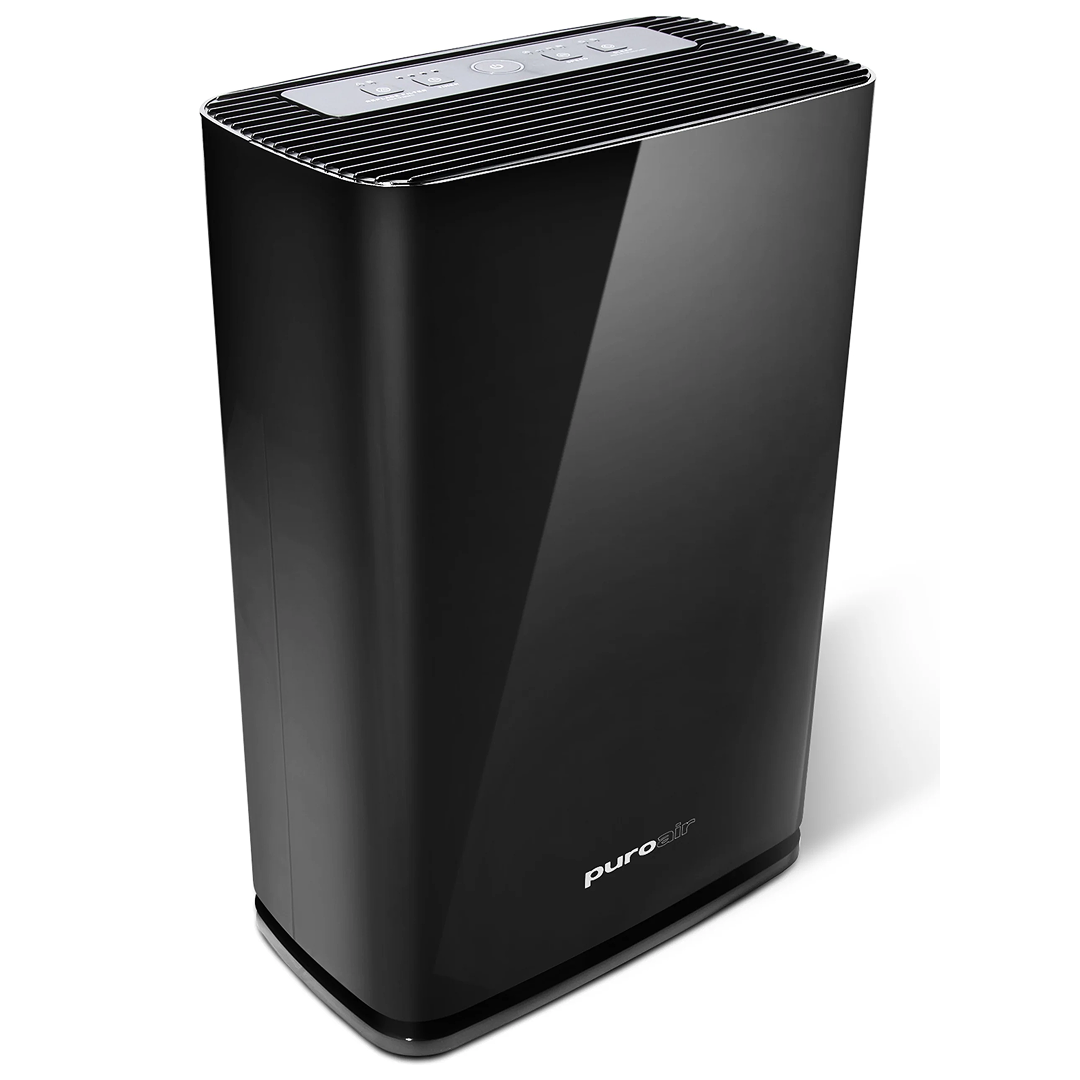
PuroAir 400 — HEPA 14 Air Purifier
- Covers large rooms up to 2,145 sq ft
- World’s first HEPA 14 filter — removes 99.995% of particles
- Auto air quality sensor · whisper-quiet · free shipping
- 100-day money-back guarantee · trusted by 900,000+ customers
We may earn a small commission if you buy through this link — at no extra cost to you.
How Hygrometer Accuracy Actually Works (And Why It Matters More Than the Price)
Here’s something most product reviews skip entirely: the sensor type inside a hygrometer matters far more than the brand name on the case. Almost all consumer hygrometers use capacitive polymer sensors, which detect humidity by measuring how much a thin film absorbs moisture from the air. The problem is that sensor quality varies dramatically. A cheap capacitive sensor can drift by ±5% RH over 12 months of normal use — meaning a reading of 55% RH could actually be anywhere from 50% to 60%. That gap is the difference between a healthy apartment and one that’s quietly incubating dust mites, which thrive above 60% RH. At the upper end of that range, you’re also getting close to the threshold where condensation becomes a daily problem on cold surfaces.
Govee, ThermoPro, and SensorPush all use capacitive sensors, but they source and calibrate them differently. Govee’s budget devices typically advertise ±3% RH accuracy, ThermoPro’s mid-range models claim ±2% to ±3% RH, and SensorPush’s dedicated sensors are rated at ±3% RH but are factory-calibrated against NIST-traceable references before shipping. That calibration step is the key difference. An uncalibrated sensor at ±3% can read anywhere in a 6-point band; a factory-calibrated one at ±3% is consistently centered on the true value. For most home users this distinction feels academic — until you’re monitoring a wine cellar that needs to stay between 55% and 65% RH, or a nursery where you want the humidity locked between 45% and 55% RH.


PuroAir 240 — HEPA Air Purifier
- Ideal for bedrooms and rooms up to 240 sq ft
- Captures 99.9% of airborne pollutants including mold spores
- Whisper-quiet sleep mode — won’t disturb your rest
- 100-day money-back guarantee · trusted by 900,000+ customers
We may earn a small commission if you buy through this link — at no extra cost to you.
Govee: The Best Value Brand — With Real Trade-Offs
Govee has built its reputation on affordable, app-connected sensors that look good on a shelf and are genuinely easy to set up. Their Bluetooth hygrometers sync to the Govee Home app, log data every 10 minutes by default, and let you export a CSV of readings over time — which is actually more useful than it sounds. If you’re trying to figure out why your bathroom hits 80% RH after a shower but drops to 55% within 20 minutes, a timestamped log tells the story clearly. Govee’s Wi-Fi gateway models extend that same logging capability across your whole apartment, letting you monitor up to 20 sensors from a single app dashboard. Price-wise, individual Govee sensors typically run between $10 and $20, and their gateway adds another $20 to $30 on top — making a full multi-room setup achievable for under $80.
The honest trade-offs with Govee are worth naming. First, app dependency: if Govee’s servers go down or the company discontinues the app, your data logging stops working. This has happened with other IoT brands and it’s a legitimate concern for anyone investing in a permanent monitoring setup. Second, the sensors themselves are less consistent unit-to-unit than SensorPush. Buy four Govee sensors and put them all in the same room — you’ll often see readings spread across a 4% to 6% RH range rather than clustering tightly. That spread isn’t a dealbreaker for casual home monitoring, but it means you shouldn’t assume the absolute number is perfectly accurate. Use it for trends and relative changes rather than treating the number as gospel. Third, Govee’s temperature accuracy (±0.54°F / ±0.3°C on better models) is genuinely solid, but their humidity specs on cheaper models slip to ±5% RH — so check the exact product before buying.
ThermoPro: The Mid-Range Sweet Spot for Everyday Home Use
ThermoPro occupies a comfortable middle ground that makes it the easiest recommendation for the average apartment dweller. Their standalone digital hygrometers — the TP49, TP50, and TP55 series — don’t require an app, don’t need Wi-Fi, and show you temperature and humidity on a clear backlit display the moment you pull them out of the box. That simplicity isn’t a limitation; it’s a deliberate design choice that works incredibly well for people who just want to know if their bedroom is running too humid at night or whether their hallway storage area needs a desiccant. ThermoPro devices typically carry a ±2% to ±3% RH accuracy rating and use Swiss-made Sensirion sensors on their higher-end models — Sensirion is one of the most respected sensor manufacturers in the industry, used in laboratory instruments and industrial HVAC systems.
Where ThermoPro genuinely earns its place is in the reliability-to-price ratio. Their sensors tend to stay accurate longer than budget alternatives, partly because Sensirion sensors have better long-term stability — drift rates under 0.5% RH per year are typical, compared to 1% to 2% RH per year for lower-quality capacitive sensors. ThermoPro also offers several Bluetooth-connected models with app logging if you want that feature, though the app is functional rather than polished. One thing I’d call out: ThermoPro’s comfort level indicator (the little face icon that shows “comfortable,” “dry,” or “wet”) is programmed using fixed thresholds — it considers 40% to 70% RH as the comfortable range, which is wider than what most humidity researchers recommend. The ideal zone for respiratory health, mold prevention, and dust mite control is tighter: roughly 40% to 55% RH. Don’t rely on the icon; watch the actual number.
SensorPush: Built for Precision, Priced for Serious Use
SensorPush is a different category of product, and it’s worth being upfront about that. Their sensors start at roughly $50 to $60 each — three to five times the cost of a Govee unit — and you’ll need a separate Wi-Fi gateway ($99 or so) if you want cloud data logging rather than just Bluetooth range. That’s a real investment. But SensorPush sensors are factory-calibrated with certificates, use high-accuracy capacitive elements rated to ±3% RH and ±0.3°C, and store up to 20 days of data on the sensor itself even when out of Bluetooth range. The accompanying app is well-designed, reliable, and — critically — has a paid cloud subscription model rather than relying on ad revenue or data monetization, which gives it a better chance of long-term support. For people monitoring wine storage, musical instruments, server rooms, or any space where humidity control is genuinely consequential, SensorPush is the serious choice.
The alerting system is where SensorPush pulls away from the competition. You can set custom high and low thresholds — say, alert me if humidity goes above 58% RH or below 42% RH — and receive push notifications within minutes of a breach. Govee and ThermoPro offer alerts too, but SensorPush’s alerting has proven more reliable in practice: faster response times (under 3 minutes versus 5 to 10 minutes for Govee), and better resilience during Wi-Fi disruptions because the sensor buffers data locally. If you’re the kind of person who’s already done research on which dehumidifier brand performs best for serious moisture control, you’re probably the target customer for SensorPush. It’s a tool for people who’ve moved past casual monitoring and want data they can actually trust for decision-making.

PuroAir HVAC Mega Filter — MERV 13
- Captures dust mites, mold spores and allergens
- MERV 13 + activated carbon — dual filtration
- Designed for optimal airflow · fits any HVAC system
- Free shipping always · easy DIY installation
We may earn a small commission if you buy through this link — at no extra cost to you.
How to Choose the Right Brand for Your Specific Situation
The right hygrometer brand depends entirely on what you’re actually monitoring and how you plan to use the data. A sensor that’s perfect for a cigar humidor is overkill for a bathroom, and a budget Bluetooth unit that’s fine for casual whole-home logging would be a poor choice for a climate-controlled storage room. Here’s a structured way to think through the decision:
- Casual apartment monitoring (1-2 rooms): A ThermoPro TP49 or TP50 standalone unit at $10 to $15 each is the most sensible choice. No app required, accurate enough for everyday use, and the battery lasts 12 to 18 months on two AAA batteries. Just put it where you actually look — bedside table, kitchen counter — and check it daily.
- Multi-room logging with app alerts: Govee’s Bluetooth sensor kit with their Wi-Fi gateway is a strong value play. For under $80 you can cover a 3-bedroom apartment, get historical charts, and set humidity alerts at whatever threshold you choose — 55% RH is a good upper limit for mold prevention.
- Climate-sensitive storage (instruments, wine, cigars, art): SensorPush with the Wi-Fi gateway is the right call. The factory calibration, local data buffering, and fast alerting justify the higher cost when the contents of the space have real value or are genuinely sensitive to humidity swings of even 5% RH.
- Renter investigating a damp problem: Any of the three brands will work for documenting humidity over time, but ThermoPro or Govee makes more sense since you’re unlikely to take the sensors with you permanently. The goal here is building a timestamped record — readings above 70% RH consistently, for example — that supports a conversation with your landlord or a formal complaint.
- HVAC optimization or dehumidifier control: If you’re running a smart dehumidifier or want sensors tied into a home automation system, check compatibility first. SensorPush integrates with Home Assistant; Govee has IFTTT support; ThermoPro’s smart models work with Alexa and Google Home. The integration depth matters more than sensor brand at this point.
- Budget under $15 total: ThermoPro wins outright. Their entry-level standalone units offer better out-of-the-box accuracy than Govee’s cheapest models and don’t require a phone to function. Simple, honest, reliable.
One honest caveat here: sensor placement affects readings more than sensor brand does, in most real-world situations. A perfectly calibrated SensorPush placed directly above a radiator or inside a cabinet will give you worse useful data than a basic ThermoPro placed at breathing height in the middle of a room. Spend as much thought on where you put the sensor as on which sensor you buy.
Brand Comparison at a Glance: Accuracy, Features, and Price
It helps to see the core specs side by side rather than hunting through product pages. The table below summarizes the key differences across the three brands based on their representative mid-range models — Govee H5075 (Wi-Fi), ThermoPro TP55 (Bluetooth), and SensorPush HT1 with G1 gateway. Prices fluctuate, but the relative positioning is consistent.
| Feature | Govee H5075 | ThermoPro TP55 | SensorPush HT1 |
|---|---|---|---|
| Stated humidity accuracy | ±3% RH | ±2–3% RH | ±3% RH (factory calibrated) |
| Temperature accuracy | ±0.54°F (±0.3°C) | ±0.5°F (±0.3°C) | ±0.3°C |
| Data logging | App (cloud), 2 years history | App (local Bluetooth) | On-device (20 days) + cloud |
| Alert speed | 5–10 minutes | 5–15 minutes | Under 3 minutes |
| Approx. sensor cost | $15–$20 | $18–$25 | $50–$60 |
| Gateway required for Wi-Fi | Yes (~$25) | No (Bluetooth only) | Yes (~$99) |
| Works without phone/app | No | Yes (display) | No |
A few things stand out from this comparison. ThermoPro is the only brand of the three that works fully standalone — no phone, no Wi-Fi, no subscription. That’s a meaningful advantage in spaces where you want a passive, always-on display: a basement, a utility room, a storage area you visit occasionally. SensorPush’s alert speed advantage becomes significant when you’re protecting something time-sensitive; a 10-minute alert delay versus a 3-minute one sounds trivial, but if your dehumidifier has failed and humidity is climbing at 2% RH per hour, that gap matters. Govee’s value proposition is strongest when you want multiple sensors covering several rooms — the per-sensor cost is low enough that you can build a genuinely useful multi-point monitoring network for a realistic budget.
Pro-Tip: Before trusting any new hygrometer — regardless of brand — do a simple salt calibration test. Place the sensor in a sealed bag with a small container of saturated sodium chloride solution (table salt dissolved in a minimal amount of water) for 6 to 8 hours. At equilibrium, the reading should be 75% RH ±2% at room temperature. If your sensor reads 68% or 82%, you know it’s drifting and need to apply a manual offset correction in the app settings, or replace it. This takes 10 minutes of prep and saves months of trusting bad data.
PuroAir 240
HEPA Air Purifier
Best for
Bedrooms, nurseries, small offices
PuroAir 400
HEPA 14 Air Purifier
Best for
Living rooms, mold & allergy sufferers
We may earn a small commission if you buy through these links — at no extra cost to you.
What the Best Hygrometer Brand Actually Gets Right: Ecosystem and Long-Term Reliability
Sensor accuracy is only part of the story. The other part is whether the ecosystem around the sensor — the app, the alerts, the data export — continues to work six months or two years from now. This is where the three brands diverge most sharply, and it’s a dimension that almost no hygrometer review covers properly. Govee is a consumer electronics company that releases dozens of products per year; their app is updated frequently, but older product support can get dropped without much notice. ThermoPro is more conservative — they update their product line slowly, which means their app support tends to last longer, but you also won’t see cutting-edge features quickly. SensorPush operates more like a B2B instrument company that also sells to consumers; their firmware and app updates are infrequent but stable, and their API access lets technically inclined users pull data into their own systems.
For most people, the app reliability question comes down to one practical concern: will my historical data still be accessible in two years? Govee stores cloud data for up to two years on their free tier, which is generous but not unlimited. SensorPush’s cloud subscription costs around $3 per month per gateway for unlimited history — that’s a recurring cost worth factoring in. ThermoPro’s Bluetooth app stores data locally on your phone, which means you control it entirely but also means if you get a new phone or delete the app, the history is gone. None of these setups is perfect. Just like choosing between different types of air purifiers — where the ongoing filter cost matters as much as the upfront price, as anyone who’s compared brands like Levoit, Coway, and Blueair for long-term air quality management will recognize — the total cost of ownership for a hygrometer ecosystem includes the app, the gateway, and any subscription fees, not just the sensor price.
Here are the key ecosystem factors to check before you commit to any hygrometer brand:
- Data export capability: Can you download your readings as a CSV or JSON file? Govee and SensorPush both support this; ThermoPro’s app export is more limited. If you ever need to show a landlord or a surveyor a documented history of humidity readings above 70% RH, exportable data is the only kind that matters.
- Alert customization: Can you set both high and low thresholds independently? Govee and SensorPush both allow this; some ThermoPro app versions only alert on high humidity. For mold prevention, high alerts matter most (above 60% RH); for protecting wooden instruments or dry goods, low alerts matter too (below 35% RH).
- Multi-sensor grouping: If you’re running four sensors across an apartment, can you view them all on one screen and compare readings simultaneously? Govee’s dashboard does this well; SensorPush handles it cleanly; ThermoPro’s app is weaker on multi-sensor overview.
- Third-party integration: Does the sensor work with Home Assistant, Apple HomeKit, or other platforms you already use? SensorPush has the strongest integration story here. Govee supports IFTTT and some Alexa routines. ThermoPro’s smart models support Alexa and Google but not local home automation platforms.
- Battery life and type: Govee sensors typically run 6 to 12 months on two AAA batteries; ThermoPro standalone units last 12 to 18 months; SensorPush HT1 runs 1 to 2 years on a single CR2477 coin cell. Longer battery life matters more than it sounds when sensors are in hard-to-reach places like attic hatches or crawl space entry points.
“Consumer hygrometers are only as useful as the calibration behind them. A sensor that reads consistently 4% high isn’t broken in any obvious way — it just silently misleads you into thinking conditions are safer than they are. For any space where humidity control is genuinely protective, I always recommend a salt calibration check within the first week of use and again every six months.”
Dr. Nadia Vasquez, Environmental Sensor Technology Researcher, Department of Built Environment Sciences
Ultimately, this best hygrometer brand comparison doesn’t have a single winner — and any article that tells you it does is oversimplifying. Govee earns its place as the best value option for multi-room app-connected monitoring, especially if you want to watch several areas of an apartment without spending much. ThermoPro is the most practical everyday choice: accurate enough, simple to use, no app required, and reliable over years of use. SensorPush is for people who need precision and accountability — factory calibration, fast alerts, and data they can trust for consequential decisions. Figure out which category you’re in, and the right choice becomes obvious. What you don’t want is to spend months watching a number on a screen and assuming it’s accurate — because with humidity, a 5% error isn’t just a rounding issue. It’s the difference between a space that’s fine and one that’s slowly becoming a problem.
Frequently Asked Questions
Which hygrometer brand is the most accurate — Govee, ThermoPro, or SensorPush?
SensorPush is the most accurate of the three, with sensors certified to ±1.5% RH and ±0.3°F accuracy — it’s built for serious use cases like wine cellars, server rooms, and humidors. ThermoPro is a solid middle ground at ±2-3% RH, while Govee hovers around ±3% RH and is better suited for casual home monitoring than precision work.
Is Govee a reliable hygrometer brand for home use?
Govee’s reliable enough for everyday home use — tracking humidity in a bedroom, living room, or grow tent won’t require lab-grade precision. That said, don’t expect consistent readings below ±3% RH, and a few users have noted sensor drift after extended use, so calibrating it occasionally against a known reference is a smart habit.
What’s the difference between ThermoPro and SensorPush hygrometers?
The biggest difference comes down to connectivity and data logging — SensorPush uses Bluetooth and optional WiFi gateway to store continuous data in the cloud, which you can access remotely and export as CSV files. ThermoPro relies on simpler Bluetooth or direct display readouts without persistent cloud storage, making it a better fit if you just want a straightforward reading without a subscription or app dependency.
Do any of these hygrometer brands require a subscription?
SensorPush’s basic Bluetooth monitoring is free, but if you want remote WiFi access, you’ll need their HT1 WiFi Gateway hardware (around $99) — there’s no ongoing subscription fee beyond that. Govee and ThermoPro don’t charge subscriptions either, though Govee’s app does push upsells for premium features occasionally.
Which hygrometer brand is best for a cigar humidor or wine cellar?
SensorPush is the clear winner for high-stakes storage like humidors or wine cellars, where staying within a tight 65-72% RH range can mean the difference between preserved and ruined product. Its ±1.5% RH accuracy and continuous logging let you catch fluctuations before they cause damage, which neither Govee nor ThermoPro can match at the same confidence level.