
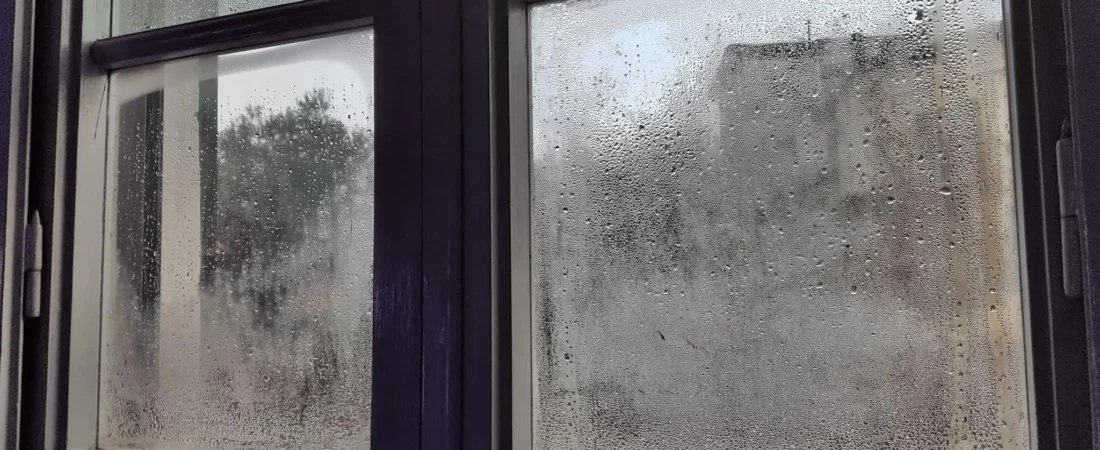
One room collecting condensation while the rest of the house stays dry isn’t bad luck — it’s a diagnostic signal, and most people misread it completely.
The standard advice you’ll find everywhere is “ventilate more” or “buy a dehumidifier.” That’s not wrong exactly, but it skips over the real question: why is moisture concentrating in that specific room and not the others? The answer almost never comes down to humidity alone. It comes down to surface temperature, airflow isolation, and how that room sits within the thermal envelope of your home.
This article is built around that underexplored angle. Once you understand why one room becomes a condensation target, the fix becomes obvious — and it’s usually simpler than ripping out windows or installing expensive ventilation systems.
Why Does Condensation Only Appear in One Room?
Condensation forms when warm, moisture-laden air hits a surface that’s cooler than the dew point of that air. That’s the physics. But here’s what most explanations miss: the humidity level inside your home is broadly shared across rooms, yet condensation picks favorites. The reason is almost always surface temperature, not humidity concentration.
One room can have surfaces running 4–6°C colder than the rest of the house, and that’s enough to push those surfaces below the dew point while identical humidity levels cause zero problems elsewhere. This can happen because of a north-facing wall, a single-glazed window, a room above an unheated garage, or even a poorly insulated corner that nobody thinks about.
The humidity isn’t higher in that room — the surfaces are colder. That distinction matters because it changes everything about how you fix it.
What Makes One Room’s Surfaces Colder Than the Rest of the House?
Thermal bridging is the first culprit most people walk straight past. A thermal bridge is any part of a building’s structure where heat escapes faster than through the surrounding insulated area — think steel lintels above windows, concrete floor slabs that extend to the outer wall, or uninsulated cavity wall ties. These spots can be 3–8°C colder than the surrounding surface, which is more than enough to trigger condensation on an otherwise unremarkable wall.
Room orientation plays a major role too. North-facing rooms receive almost no direct solar gain in the northern hemisphere, which means walls and windows never get that passive warming that south-facing rooms enjoy for free. A north-facing bedroom can sit 2–3°C colder on average throughout winter compared to a south-facing living room, even with identical heating schedules.
The room’s position within the building matters as well. Corner rooms have two external walls instead of one, which doubles the heat-loss surface. Rooms above garages or outbuildings lose heat through the floor. Rooms at the end of a terrace have one wall fully exposed to weather. Each of these factors compounds, and the worst-affected room in your house ends up sitting in a kind of thermal disadvantage that no amount of wiping down windows will permanently fix.
Is the Problem Really Humidity — Or Is the Room Just Underheated?
Here’s the counterintuitive fact that reshapes how you should think about this: a room with limited heating doesn’t just feel colder — it actively becomes more vulnerable to condensation even if nobody is producing moisture in it. Relative humidity rises as air cools, because cooler air can hold less moisture. So a bedroom that’s kept at 14°C while the rest of the house sits at 19°C will have noticeably higher relative humidity, even with the same absolute moisture content in the air.
This is why turning a spare room’s radiator off to save money is so often the actual cause of the condensation problem the homeowner then can’t explain. The room gets colder, relative humidity climbs, and the coldest surfaces — usually the external wall or the window — drop below the dew point. You end up with black mould in a room that “nobody even uses.”
Keeping an unoccupied room at a background temperature of around 15–16°C is usually enough to prevent this cycle. It costs less than most people assume, and it prevents the kind of damp damage that ends up costing significantly more to repair.
“In my experience, roughly 70% of single-room condensation cases I assess come down to an undertreated thermal defect — either a cold bridge, inadequate background heating, or a room that’s thermally isolated from the rest of the house. People assume they have a ventilation problem when they actually have a heat-loss problem.”
Dr. Rachel Hennessy, Building Physics Consultant and Chartered Member of CIBSE
Which Room Characteristics Make Condensation Most Likely?
Not all rooms are equally at risk. Some combinations of features almost guarantee you’ll see condensation before the first frost of winter. Here are the characteristics that stack risk the fastest:
- North or east-facing aspect — minimal solar gain, surfaces stay colder throughout the day
- Two or more external walls — corner rooms lose heat from multiple directions simultaneously
- Single-glazed or older double-glazed windows — glass surface temperatures can drop to 5–10°C on cold nights, well below most indoor dew points
- Radiator sized for an older, less insulated version of the building — heating capacity hasn’t kept up with changes to the room’s use or insulation losses
- Rooms with a lot of soft furnishings or stored items against external walls — sofas, wardrobes, and mattresses pushed against cold walls block airflow and trap moisture against the surface
- Poor or missing trickle ventilation — older windows retrofitted with draught seals often lose the background air exchange that used to prevent moisture buildup
The honest nuance here is that the same room might have zero condensation problems in a mild winter and serious mould growth in a cold one. Risk stacks with conditions, not just with room features alone. A corner bedroom with decent heating and a gap behind the wardrobe might perform perfectly well until you have two weeks of below-zero temperatures — then suddenly it’s a problem.
How Does Airflow Isolation Turn One Room Into a Moisture Trap?
Your home moves air between rooms more than you probably realise. Gaps under doors, trickle vents, extractor fans, and even the simple act of opening doors create a slow but continuous circulation that helps distribute both heat and humidity relatively evenly throughout the house. When one room gets cut off from that circulation — intentionally or not — it starts behaving like a separate small building with its own microclimate.
A real-world scenario: imagine a back bedroom used as a home office where someone works with the door closed for eight hours a day. That person is breathing, and every breath exhales moisture — roughly 40–60 grams of water vapour per hour during light activity. With the door closed and no trickle vent open, that moisture has nowhere to go. The room’s relative humidity climbs steadily through the day, and by late afternoon the coldest surface in the room — usually the corner of the external wall or the window frame — starts showing the first signs of condensation.
Opening the door for just 30 minutes in the morning and afternoon, or cracking a trickle vent, would change that outcome entirely. The fix isn’t always a fan or a dehumidifier — sometimes it’s just not sealing yourself into a room for hours at a time.
Pro-Tip: Leave a 10mm gap at the bottom of room doors in your home. It sounds minor, but it allows continuous low-level air exchange between rooms, which helps equalise humidity and prevents any single room from becoming a closed moisture trap. This costs nothing and makes a measurable difference in rooms that currently have their radiator turned down or their door kept shut.
What Humidity Levels Are Safe Versus Risky in a Single Room?
Relative humidity between 40% and 60% is the safe operating band for most rooms. Once you push above 70% consistently, you’re in territory where condensation becomes likely on any surface that drops below around 12–14°C, and mould spores — which are always present in indoor air — start activating. Above 80%, the risk accelerates fast.
| Room Relative Humidity | Risk Level | Likely Surface Temperature Threshold for Condensation |
|---|---|---|
| Below 60% | Low — condensation unlikely unless surfaces are very cold | Below 8°C |
| 60–70% | Moderate — condensation possible on cold nights | Below 12°C |
| 70–80% | High — condensation probable on external walls and windows | Below 15°C |
| Above 80% | Very high — mould growth likely within 24–48 hours on affected surfaces | Below 18°C |
A cheap hygrometer — available for under £10 — placed in the affected room will tell you within a day or two whether you’re dealing with elevated humidity or a cold surface problem. If the hygrometer reads under 60% and you’re still getting condensation, your surfaces are colder than they should be, and that’s a heating or insulation issue, not a ventilation one.
How to Diagnose Why Only One Room Has the Problem
Before spending money on any fix, spend 20 minutes diagnosing. A systematic approach saves you from treating the wrong variable — and almost everyone who’s tried four different solutions with no result has been treating the wrong variable.
- Measure the room temperature and humidity — Place a combined thermometer-hygrometer in the room for 48 hours, ideally during cold weather. Note the readings at different times of day. If the room consistently sits 3°C or more below the rest of the house, underheating is likely contributing.
- Run your hand across the external walls and windows — On a cold day, feel for noticeably cold patches, especially in corners, around window frames, and on outside-facing walls near the floor. Cold patches that feel dramatically colder than the central wall surface indicate a thermal bridge or insulation gap.
- Check what’s against the cold walls — Furniture, curtains, or stored items pushed flush against an external wall can reduce air circulation against that surface to near zero, concentrating moisture. Pull anything touching the wall at least 50mm away and see if the problem shifts.
- Assess the room’s moisture sources — Even “dry” rooms generate moisture. One sleeping person produces around 40 grams of water vapour per hour. A room used for drying clothes indoors can add 1,500–2,000 grams of moisture to the air over a drying cycle. Identify what’s generating moisture in that room specifically.
- Check ventilation openings — Are trickle vents present and open? Is there a passive vent or extractor in the room? If the room has had its draught gaps sealed without replacing that ventilation capacity, you’ve effectively sealed moisture inside.
- Compare heating schedule to other rooms — Is the radiator in the affected room on the same schedule as the rest of the house, or has its thermostatic valve been turned down? Even 2–3 hours less daily heating compared to adjacent rooms can be the entire explanation.
What Are the Most Effective Fixes for Single-Room Condensation?
The fix you need depends entirely on what the diagnosis reveals — which is exactly why the generic advice of “open a window” often achieves nothing. Here’s how to match the solution to the actual cause.
If the problem is surface temperature — cold walls, cold corners, single glazing — the fix is either improving insulation or raising the room temperature enough that surfaces stay above the dew point. Internal wall insulation using 50–75mm of insulated plasterboard can raise surface temperatures by 3–5°C, which is often the entire margin between “condensation every winter” and “no problem at all.” It’s more involved than opening a window, but it’s a permanent fix rather than a management strategy.
Upgrading glazing from single to double — or from older double to modern low-emissivity glass — makes a substantial difference on windows. Modern low-e double glazing keeps the inner glass surface around 14–16°C even when it’s freezing outside, compared to 5–8°C for older single-glazed units. That alone can eliminate window condensation in most cases.
If the problem is moisture generation — a bedroom used for clothes drying, a home office with the door always closed — the fix is either moving the moisture source or adding ventilation targeted at that room. A small positive input ventilation (PIV) unit or a humidity-controlled extractor fan can exchange the room’s air several times per hour, removing moisture before it builds to problematic levels. These units cost between £80–£250 and use very little electricity.
If the problem is underheating — a spare room with a radiator turned right down — the answer is maintaining background heat. You don’t need to heat the room to 20°C all day. A background temperature of 15°C is typically enough to prevent relative humidity from climbing to dangerous levels and keep surfaces above the critical threshold.
Why Furniture Placement and Soft Furnishings Make Things Worse
There’s a specific pattern that appears in condensation-affected bedrooms that nobody ever attributes correctly: a large rectangular mould patch behind the wardrobe. The wardrobe is pushed against the external wall, creating a sealed airspace behind it. That space gets no warm air circulation, the wall behind cools even further than the rest of the room, and the trapped air in that pocket becomes saturated with moisture from the rest of the room migrating through gaps.
The solution is straightforward: move the wardrobe at least 50–75mm from the external wall. If you can’t do that due to space constraints, drilling 3–4 holes of around 25mm diameter through the wardrobe’s back panel, top and bottom, allows the trapped air to circulate. It sounds like an oddly specific fix, but it resolves a problem that many people have repainted over three times without ever understanding the cause.
Heavy curtains on cold windows create the same trap on a smaller scale. They block warm room air from reaching the glass surface, so the glass gets even colder and more moisture condenses on it overnight. Thermal curtains with sealed edges actually make window condensation worse for this reason — they insulate the room from the cold glass, but they also stop warm air from keeping that glass surface above the dew point.
Does Occupancy Pattern Explain Why One Room Gets It and Others Don’t?
Occupancy is the variable that changes everything — and it’s almost never mentioned in standard condensation guides. The same house with the same heating system and the same insulation will produce condensation in completely different locations depending on how people use the space.
A room used only for sleeping — occupied for 8 hours at night, unheated during the day — gets a concentrated burst of moisture from breathing and perspiration precisely when room temperature is at its lowest. The heating tends to come on in the morning or early evening, but the condensation damage happens between 2am and 6am when temperatures drop to their minimum and moisture from hours of sleeping has accumulated on cold surfaces.
Compare that to a living room that’s actively heated from mid-afternoon through the evening, used by multiple people, and has a fire or secondary heat source — that room rarely has condensation problems despite generating more overall moisture, because the surfaces stay warm enough and air gets exchanged regularly through normal use. The issue isn’t total moisture; it’s moisture relative to surface temperature and timing.
Can Rising Damp or Penetrating Damp Mimic Single-Room Condensation?
This matters because the fixes are completely different — and getting it wrong is expensive. Condensation appears on the inside surface of walls and windows and tends to be worst in cold weather when indoor-outdoor temperature differences are greatest. Rising damp creeps up from floor level and is often associated with tide marks, salting of the wall surface (efflorescence), and damp that persists regardless of the time of year or how much you ventilate.
Penetrating damp enters from outside and is typically linked to specific weather — appearing after rain hits a particular wall, or dripping from a specific point that suggests a failed seal or cracked render. Unlike condensation, penetrating damp doesn’t follow temperature patterns; it follows rainfall patterns. A room on a windward wall that gets worse after westerly rain and dry spells in summer is almost certainly penetrating damp, not condensation.
The simplest field test: wipe the affected area dry and tape a piece of kitchen foil over it, sealing the edges. Check it after 24–48 hours. If moisture appears on the room side of the foil, it’s condensation. If moisture appears on the wall side, moisture is coming through the structure — which points toward penetrating or rising damp and requires a different investigation entirely.
What Long-Term Damage Can Single-Room Condensation Cause If Left Untreated?
The visible mould patch is often the last thing to appear, not the first. By the time you can see black mould on a wall, moisture has typically been penetrating the plaster and wall structure for weeks or months. Paint bubbles and peels first. Plaster becomes soft and eventually crumbles. Timber elements behind plasterboard — battens, window frames, floor joists near external walls — can develop wet rot if sustained moisture exposure continues.
Health effects are real and documented. Persistent mould growth in a bedroom — where someone spends 6–8 hours in an enclosed space — has been associated with worsened respiratory symptoms, increased asthma episodes, and allergic reactions. Children and older adults are more vulnerable. The NHS lists damp and mould as a serious housing hazard precisely because the exposure hours in sleeping rooms are so high.
Structural costs add up quickly. Replastering a condensation-damaged bedroom wall typically costs £500–£1,500 depending on the size and extent of damage. Replace a rotted window frame and the figure climbs further. By comparison, a humidity-controlled extractor fan or a small improvement to background heating costs a fraction of that — and prevents the damage rather than repairing it after the fact.
When Should You Call a Professional About Single-Room Condensation?
DIY diagnosis gets you a long way — but there are situations where a professional assessment is worth the cost. If you’ve addressed heating, ventilation, and furniture placement and the problem continues, a thermal imaging survey can reveal cold bridges and insulation defects invisible to the naked eye. These surveys typically cost £150–£400 and can identify problems that would otherwise take years of guesswork to locate.
If mould has already established itself on a large scale — more than about a square metre — professional mould remediation is safer than DIY cleaning, which can release large quantities of spores into the room air. A CIBSE or RICS-accredited surveyor can also formally separate condensation from rising or penetrating damp, which matters enormously if you’re dealing with a landlord, insurance claim, or property sale.
For newer homes still within their warranty period, unexplained condensation in one room is worth reporting to the developer. Modern building regulations require U-values
Frequently Asked Questions
Why is condensation only in one room?
Because local conditions favor moisture release there.
Does this mean the room has a leak?
Usually no — condensation is driven by humidity and temperature.
Why is it often a bedroom?
Because airflow slows and moisture accumulates overnight.
Can condensation move to other rooms?
Yes, if conditions change or moisture persists.