
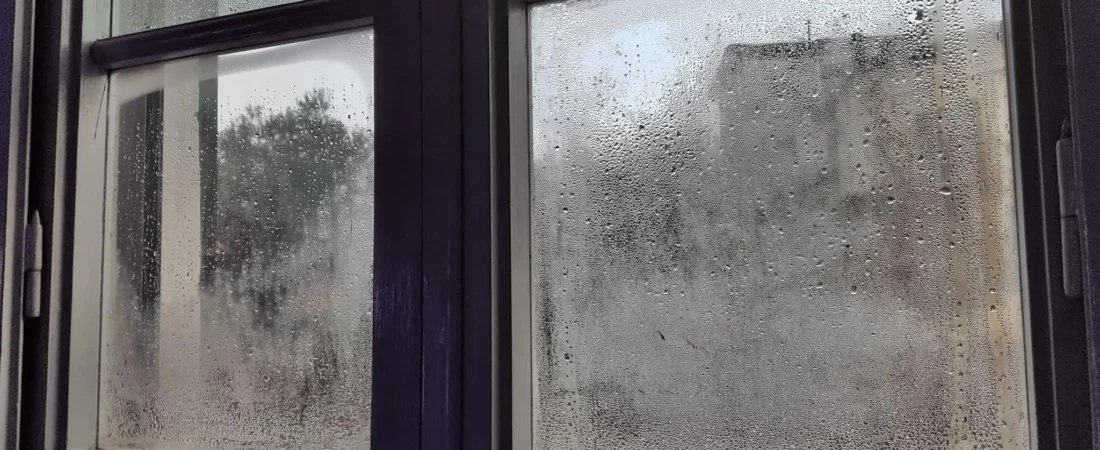
It can be confusing to see condensation forming in only one room while the rest of the home feels dry. Windows fog up in a bedroom, water appears on walls in a corner room, or damp patches develop in a single space — even though all rooms share the same building and weather conditions.
Condensation appearing only in one room happens because condensation is driven by local conditions, not whole-home humidity alone. Differences in airflow, temperature, room usage, and surface exposure cause moisture to settle unevenly across the home.
Homes Do Not Share Moisture Evenly
Although a home feels like one enclosed space, each room behaves differently. Air moves unevenly, surfaces cool at different rates, and moisture accumulates locally.
Condensation forms where conditions allow moisture to release from the air. This means one room can experience condensation while another remains unaffected, even at similar humidity levels.
Condensation is a local response, not a global one.
Cooler Rooms Attract Condensation
Temperature is one of the strongest drivers of condensation. Rooms with exterior walls, large windows, or limited heating often remain cooler than others.
When warm, humid air enters a cooler room, moisture condenses on cold surfaces. Even small temperature differences are enough to trigger condensation in one space only.
This is why condensation often appears in bedrooms, corner rooms, or north-facing rooms first.
Airflow Differences Between Rooms
Airflow varies significantly from room to room. Some rooms receive constant air movement, while others remain still for long periods.
Rooms with closed doors, blocked vents, or heavy furniture dry slowly. Moisture lingers longer and condenses more easily.
In contrast, open or frequently used rooms dry faster, preventing condensation from forming.
Room Usage Creates Local Moisture
How a room is used strongly influences condensation. Bedrooms accumulate moisture overnight through breathing. Living rooms collect moisture from adjacent spaces. Storage rooms retain moisture due to enclosure.
Even without direct moisture sources, rooms can become condensation hotspots simply because moist air passes through and settles there.
The source and the symptom often occur in different rooms.
Why Condensation Often Appears on Windows in One Room
Windows are usually the coldest surfaces in a room. If one room has older windows, larger glass areas, or exterior exposure, condensation will appear there first.
This makes it seem like only that room has a problem, when in reality it is revealing moisture that exists throughout the home.
Windows act as indicators, not causes.
Furniture Placement Can Create Condensation Zones
Large furniture blocks airflow and traps humid air against walls. Condensation may form behind wardrobes, beds, or cabinets in one room while other rooms remain unaffected.
Because these areas are hidden, condensation often goes unnoticed until moisture damage or mold appears.
This makes the problem feel isolated and unexpected.
Nighttime Effects in One Room
Condensation often appears overnight in a single room. At night, airflow slows, temperatures drop, and moisture accumulates.
Bedrooms are particularly affected due to closed doors, breathing moisture, and cooler windows. By morning, condensation may be visible only in that room.
This daily cycle reinforces the impression of a room-specific issue.
Seasonal Amplification of Room Differences
Seasonal changes magnify room differences. In winter, cooler rooms show condensation sooner. In humid seasons, enclosed rooms retain moisture longer.
Seasonal effects explain why condensation may appear only in one room during certain times of year.
Condensation Without Leaks or Damage
Condensation in one room is often mistaken for a leak or structural issue. In most cases, it reflects humidity behavior interacting with local conditions, not water intrusion.
Condensation forms gradually and repeatedly rather than suddenly. Its presence alone does not indicate damage.
Understanding this distinction prevents unnecessary concern.
When Condensation in One Room Is Normal
Occasional condensation in a single room is common and often harmless.
Normal patterns include:
- condensation appearing during cold nights
- moisture clearing during the day
- no odors or staining
- no spread to other areas
In these cases, condensation reflects normal room-specific behavior.
When Condensation Signals a Moisture Imbalance
Condensation deserves attention when it appears frequently in the same room or worsens over time.
Warning signs include persistent dampness, musty odors, peeling paint, or mold appearing in that room. These patterns suggest moisture is not dissipating efficiently there.
The issue is local moisture retention, not overall humidity alone.
Condensation as a Clue, Not a Fault
Condensation in one room is best viewed as a clue to how moisture moves indoors. It highlights where air slows, surfaces cool, and humidity settles.
Understanding this behavior helps explain why moisture problems often start in specific rooms rather than everywhere at once.
Condensation appearing only in one room happens because temperature, airflow, and moisture behavior differ from space to space. Cooler surfaces, limited ventilation, and local humidity buildup create conditions where condensation forms selectively.
Recognizing condensation as a room-specific response rather than a whole-home problem helps explain why it appears in isolated spaces. Understanding these patterns makes it easier to distinguish normal condensation from moisture imbalance that may require attention.
Frequently Asked Questions
Why is condensation only in one room?
Because local conditions favor moisture release there.
Does this mean the room has a leak?
Usually no — condensation is driven by humidity and temperature.
Why is it often a bedroom?
Because airflow slows and moisture accumulates overnight.
Can condensation move to other rooms?
Yes, if conditions change or moisture persists.
Why is condensation only in one room?
Because local conditions favor moisture release there.
Does this mean the room has a leak?
Usually no — condensation is driven by humidity and temperature.
Why is it often a bedroom?
Because airflow slows and moisture accumulates overnight.
Can condensation move to other rooms?
Yes, if conditions change or moisture persists.