
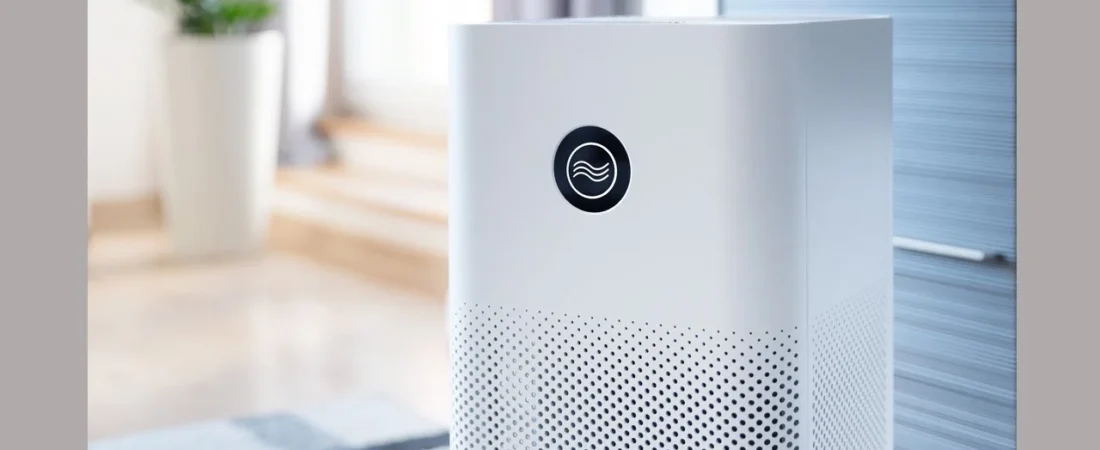
Bottom line for most homes: two or three well-placed portable purifiers will clean your air just as effectively as a whole-home system — and cost a fraction of the price. That’s not what the HVAC industry wants you to hear, but it’s what the data actually supports. The decision between whole-home air filtration and portable purifiers isn’t really about performance — it’s about how your home is built, how your family lives in it, and whether you’re willing to pay $3,000–$8,000 upfront to avoid swapping a filter every few months.
Whole-Home Air Filtration vs Portable Purifiers: What Most Comparisons Get Completely Wrong
Almost every article comparing these two options frames the question as “which cleans air better?” That’s the wrong question entirely. The real issue is where your polluted air actually is, and whether your home’s ductwork moves air through those places efficiently enough to matter.
Here’s the thing most people don’t account for: a whole-home filtration system is only filtering air that passes through your HVAC system. If your ducts are leaky — and the EPA estimates that 20–30% of conditioned air in a typical home escapes through duct leaks — you’re paying premium prices to filter air that never reaches the rooms your family occupies. That’s a significant efficiency loss that showroom salespeople rarely volunteer.
Portable units, by contrast, pull in room air directly, process it through a filter and sometimes UV or ionization stages, and return clean air to the same space within minutes. They’re inefficient across an entire house, but surgically effective in a single room. Understanding that distinction changes everything about this decision.
“The CADR rating on a portable purifier tells you how quickly it cleans a defined space — and in a bedroom or office, that number matters far more than whether your furnace filter is rated MERV-13 or MERV-16. People fixate on whole-home systems because they feel more permanent and serious, but a $350 portable unit running in the room where you sleep eight hours a night will reduce your personal pollutant exposure more meaningfully than a $5,000 central system filtering air you’re not breathing.”
Dr. Amanda Fenwick, Certified Indoor Environmental Professional (CIEP) and former air quality consultant for residential building certification programs
How Does Whole-Home Air Filtration Actually Work?
A whole-home filtration system integrates directly into your existing HVAC setup — either as an upgraded filter in your air handler or as a dedicated filtration unit installed inline with your ductwork. Every time your heating or cooling system runs, it draws return air through the filter before recirculating it. The better the filter’s MERV rating, the smaller the particles it captures.
Standard forced-air systems typically ship with MERV-4 or MERV-6 filters — those cheap fiberglass things that mostly protect the equipment, not your lungs. Upgrading to MERV-13 captures particles down to 0.3 microns, including most bacteria, smoke, and fine particulate matter (PM2.5). Going above MERV-13 with a MERV-16 or HEPA-grade media filter captures even finer particles but creates enough airflow restriction that many residential systems can’t handle it without a blower motor upgrade.
Premium whole-home systems often add secondary technologies: electronic air cleaners that use electrostatic charge to trap particles, UV-C germicidal lights that neutralize biologicals like mold spores and viruses, or activated carbon modules that adsorb volatile organic compounds (VOCs) from cooking, furniture off-gassing, and cleaning products. Each add-on bumps the cost and the maintenance schedule.
How Do Portable Air Purifiers Work and Why Are They More Effective in Bedrooms?
Portable air purifiers use a fan to pull room air through a series of filtration stages, then push cleaned air back out. Most quality units lead with a true HEPA filter — not “HEPA-type” or “HEPA-style,” those are marketing terms for filters that haven’t met the standard — which captures 99.97% of particles at 0.3 microns. Many also include a pre-filter for larger particles and an activated carbon layer for odors and VOCs.
The key metric to understand is CADR: Clean Air Delivery Rate. A CADR of 200 cubic feet per minute (CFM) means the unit delivers 200 CFM of air that’s been cleaned of a specific pollutant — smoke, dust, or pollen. For a 200-square-foot bedroom with 8-foot ceilings, you want a CADR of at least 107 CFM for the room to be effectively cleaned. Most mid-range portables comfortably exceed that for a single bedroom, which is exactly why they punch above their weight in the spaces where your family spends the most time sleeping, working, or recovering from illness.
The honest nuance here: portables do struggle with open-concept living spaces. A great room that’s 800 square feet with cathedral ceilings that open to a kitchen and dining area is genuinely difficult to cover with a single unit. You’d need a high-capacity unit rated for 400+ CADR or multiple units staged thoughtfully — which starts to feel less elegant than a whole-home solution.
What Does Whole-Home Air Filtration Actually Cost to Install and Run?
Installation costs vary significantly based on your existing HVAC setup and the system tier you choose. A basic upgrade to a high-quality MERV-13 media filter cabinet runs $300–$700 installed. Step up to a whole-home electronic air cleaner and you’re looking at $800–$1,500 installed. Add a UV-C germicidal system and activated carbon module, and a fully featured whole-home setup lands between $2,500 and $8,000 depending on your home’s square footage and whether your duct system needs any modifications to handle the increased air resistance.
Running costs are often underestimated. High-efficiency media filters need replacement every 6–12 months at $40–$120 each. Electronic air cleaner collection cells need cleaning every 1–3 months and eventual replacement. UV-C bulbs degrade in effectiveness and need replacement every 1–2 years at $100–$300 per bulb. Across a decade, add $1,500–$3,000 to your total cost of ownership on top of the installation price.
There’s also an energy consideration that nobody talks about in sales conversations. A high-MERV filter restricts airflow, which makes your HVAC blower work harder. A system not matched to the filter resistance can see energy use increase by 5–15% and experience accelerated wear on the blower motor. Some contractors will install a high-MERV system and simply not mention that your equipment wasn’t designed for the additional static pressure.
What Does It Really Cost to Run Portable Air Purifiers Long-Term?
A solid portable air purifier — something in the Coway, Winix, Blueair, or Austin Air tier — costs between $150 and $700 per unit. Running two units in a home (one in the primary bedroom, one in the main living area) puts your upfront spend at $300–$1,400. Even adding a third for a child’s room, you’re looking at $450–$2,100 for complete coverage of the spaces your family actually uses.
HEPA replacement filters typically run $30–$80 per unit, per year, depending on usage and air quality. Electricity draw on most mid-size units is 30–60 watts on medium speed, which translates to roughly $25–$60 per unit annually at average US electricity rates. For three units running continuously, your annual operating cost lands around $150–$420 — less than the yearly filter bill on many whole-home systems alone.
The counterintuitive reality is that over a ten-year period, a well-chosen set of portable purifiers often costs less in total — upfront plus operating — than a mid-tier whole-home system without even including installation labor. The math only tips toward whole-home when you’re trying to cover a large, open, heavily connected floor plan where you’d need five or more portable units to achieve equivalent coverage.
| Cost Category | Whole-Home System | Portable Purifiers (3 units) |
|---|---|---|
| Upfront / Installation | $1,000–$8,000 | $450–$2,100 |
| Annual Operating Cost | $300–$600 | $150–$420 |
| 10-Year Total (midpoint estimate) | $7,500–$14,000 | $2,300–$6,300 |
Which System Removes More Types of Indoor Air Pollutants?
Both systems can handle the major categories of indoor air pollution if properly specified — particulate matter, biologicals, and chemical pollutants — but they each have natural strengths. Whole-home systems with UV-C components have a genuine edge on biologicals because the germicidal light can continuously irradiate air moving through your ducts, which is useful during cold and flu season or if someone in your home has a compromised immune system.
For VOCs — the off-gassing from paints, adhesives, synthetic carpets, and cleaning products that represent a surprisingly large share of indoor air pollution — activated carbon is your weapon of choice. Both system types can include activated carbon, but the volume of carbon matters enormously. Many portable units include a thin carbon pre-filter that’s really just a deodorizer, not a true VOC remover. Meaningful VOC reduction requires dense, granular activated carbon, which you’ll find in specialized units like Austin Air or IQAir and in well-designed whole-home carbon modules.
Fine particulate matter — PM2.5, the stuff that causes cardiovascular and respiratory damage — is where true HEPA filters, in either format, are equally effective at the filter itself. The delivery mechanism is what differs: a portable unit runs that HEPA filter in the room you’re breathing in right now, while a whole-home system filters air in the duct and hopes your living space doesn’t add more pollution before it reaches you. For wildfire smoke events or high-pollution days, a bedroom portable unit with a real HEPA filter wins on response time every single time.
Does Your Home’s Layout Determine Which Option Makes Sense?
Yes — and this is the most underweighted factor in most purchasing decisions. Homes with compartmentalized floor plans (traditional layouts with separate rooms, mostly closed doors, distinct living spaces) are almost ideal for portable purifiers. Each room is essentially a contained air volume, and a right-sized portable unit can clean that volume multiple times per hour without difficulty.
Open-concept homes tell a different story. A single continuous air space that flows from kitchen to dining to living room — common in newer construction — can easily represent 600–1,000+ cubic feet of air that you’d need one or two high-capacity portables to address. That’s manageable but starts to feel like a compromise. Homes built this way, especially if they also have high ceilings and second-floor lofts that share air with the main level, genuinely benefit from a whole-home approach.
There’s one more layout factor that almost nobody mentions in these comparisons: homes without central HVAC — which includes a significant share of older housing stock in the Northeast and Pacific Northwest that relies on radiator heat or mini-splits — can’t use a whole-home duct-based filtration system at all. If your home doesn’t have ductwork, portable purifiers aren’t just the better option, they’re the only option.
Pro-Tip: Before pricing out either system, sketch your floor plan and calculate the total square footage of the spaces where your family actually spends time during a typical day — bedrooms, kitchen, living area, home office. If those “occupied zones” sum to less than 1,200 square feet and are reasonably separated, three quality portable units will match or beat whole-home performance at roughly half the long-term cost. Only expand that plan when your occupied zones are large, open, and connected.
When Does Whole-Home Air Filtration Justify the Price Premium?
There are situations where spending $3,000–$8,000 on a whole-home system is genuinely the right call, and they’re more specific than most salespeople let on. Here are the scenarios where the investment makes real sense:
- Severe allergies or asthma across multiple household members. When your whole family needs air quality control in every room simultaneously — and you don’t want to manage multiple units — a whole-home system with MERV-13 or higher filtration provides consistent protection without behavioral friction.
- Large, open-concept homes over 2,500 square feet. When your primary living areas are one large connected air volume, the number of portable units required to provide real coverage starts to approach or exceed the cost and complexity of a properly installed whole-home system.
- Homes in areas with chronic outdoor air quality issues. Wildfire-prone regions, high-pollen zones, or homes near industrial areas where you’re running HVAC year-round anyway benefit most from whole-home filtration — the system is running constantly, so the filter gets consistent use.
- New construction or full HVAC replacement. Adding a premium filtration system when you’re already paying for new ductwork or a new air handler significantly reduces the marginal installation cost. The labor is already there.
- Households with someone immunocompromised. When a family member is undergoing chemotherapy, recovering from a transplant, or managing a condition that makes infection risk serious, a whole-home UV-C and HEPA-grade system running continuously provides the kind of consistent biological protection that portable units can’t quite match throughout an entire home.
What Are the Hidden Drawbacks of Each System Nobody Warns You About?
Every technology has failure modes, and both of these have ones that are rarely highlighted in buying guides. For whole-home systems, the biggest practical problem is that most homeowners stop maintaining them. The filter is out of sight in the mechanical room or attic, the reminder to change it gets ignored, and within 18 months the system is running with a clogged filter that’s actually making your HVAC work harder while providing diminishing filtration. A neglected whole-home system can become worse than no system at all.
Electronic air cleaners (EACs) — those whole-home systems that use electrical charge to capture particles — produce small amounts of ozone as a byproduct. In most installations it’s within acceptable limits, but homes with poor ventilation or units that aren’t regularly cleaned can see elevated ozone levels that irritate airways, particularly in people with asthma. It’s a real trade-off that deserves a direct conversation with your installer.
Portable units have their own honest drawbacks. They’re not silent — even quality units are audible on medium and high settings, which some people find disruptive during sleep. They take up floor or surface space. They need to be positioned correctly to work (not tucked in a corner behind furniture). And the lower-cost segment of the portable market is riddled with units that use loosely defined “HEPA-like” filter language to sell products that simply don’t perform to the standard. Verifying true HEPA certification before purchase requires actually reading the product specs, not just the packaging headline.
How Do You Choose the Right Portable Air Purifier If You Go That Route?
The specs that matter most are CADR rating (match it to your room size — the Association of Home Appliance Manufacturers recommends a CADR that’s at least two-thirds your room’s square footage), true HEPA certification, and the quality and volume of any activated carbon stage. Everything else — the app connectivity, the air quality lights, the sleep mode — is secondary.
Brands with consistent real-world performance and transparent filter specifications include Coway (excellent value-to-performance ratio), Blueair (strong CADR numbers, quiet operation), IQAir (top-tier if VOC control is a priority — their carbon stage is genuinely substantial), and Austin Air (designed for serious health needs, heavy carbon load, long filter life). Avoid any unit that advertises ionization as its primary filtration mechanism without also including a true HEPA stage — ionizers alone don’t capture particles, they just charge them so they stick to walls and furniture.
Here’s what to look for when comparing units:
- CADR rating for smoke, dust, and pollen — look for all three numbers, not just one
- True HEPA filter (not “HEPA-style” or “HEPA-type”) with explicit 0.3-micron particle capture rating
- Actual weight of activated carbon — a few grams is cosmetic, 5+ pounds is functional
- Filter replacement cost and availability — some brands lock you into expensive proprietary replacements
- Noise level at the speed you’ll actually run it — manufacturer specs are for max speed; ask for mid-speed dB ratings
- Energy Star certification — meaningful for units you’ll run continuously for years
Can You Combine Both Systems for Better Results?
You can, and in some situations it’s genuinely the smartest approach. A thoughtful combination looks like this: upgrade your HVAC filter to MERV-13 (something most systems can handle without modification, and a meaningful baseline improvement across your whole home) and place a single high-quality portable unit in the room where your family member with allergies or asthma sleeps. You get broad baseline coverage from the whole-home upgrade and targeted, high-performance air cleaning where it matters most — at a combined cost that’s often less than a fully featured whole-home system.
This hybrid approach also builds in redundancy. During wildfire season or a high-pollution week, you can run the portable units on high and lean on your upgraded whole-home filter to handle the broader air volume. In normal conditions, the portables can run on low or medium, extending filter life while still providing a continuous clean air benefit in occupied spaces.
Real-world scenario: a family in a 1,800-square-foot 1970s ranch home with compartmentalized rooms and a daughter with moderate asthma spent $5,200 on a whole-home electronic air cleaner. A year later, her pulmonologist noted that her bedroom — where she spent 9 hours a day — had intermittently elevated ozone readings from the EAC. They added a $280 portable HEPA unit for her room, which resolved the issue. If they’d started with a MERV-13 filter upgrade ($400 installed) and two quality portables ($600 total), they’d have achieved equal or better results at roughly 80% less cost. That’s not hypothetical — it’s the pattern that plays out often enough to be worth planning around.
What Questions Should You Ask Before Making This Decision?
Before committing to either path, the answers to a few specific questions will do more to guide your decision than any spec comparison:
- Does your home have existing ductwork? If not, whole-home duct-based filtration is off the table regardless of budget.
- What’s your home’s dominant layout — compartmentalized or open-concept? This single factor does more to determine the right system than almost anything else.
- Who in your household has air quality sensitivity — and which rooms do they occupy most? The answer should drive where you concentrate filtration resources, not just how much you spend overall.
- What are your primary pollutants? Allergens and dust call for excellent HEPA filtration. VOCs from a recent renovation or synthetic carpet call for serious activated carbon. Biologicals call for UV-C. Matching your solution to your actual problem matters more than buying the most expensive system.
- Are you the kind of person who will maintain this system? Be honest. A whole-home system with a forgotten filter becomes a liability. A portable unit in your bedroom that you actually remember to service because you see it every day can outperform a neglected whole-home setup.
Frequently Asked Questions
Is whole-home air filtration worth it?
Is whole-home air filtration worth it?
Depends on HVAC compatibility and budget. If installing new HVAC, marginal $1,000-1,500 cost for MERV 13 whole-home filtration provides good value for uniform coverage. But if existing older system, $2,500-3,500 professional installation may not justify MERV 13 performance when $900-1,500 in portable HEPA purifiers (3-4 units) deliver superior 99.97% filtration in critical areas at similar 5-year total cost. Research confirms whole-home “costs $419 to $12,000, though most spend average $2,610” while portables provide “targeted solutions” and “flexibility” at $200-600 each.
Can portable air purifiers clean whole house?
Yes, but requires multiple units. Research confirms portables are “designed for single-room use and may not effectively purify air in large homes” and “for comprehensive coverage, multiple units would be required.” Calculate needs: 1,500 sq ft home requires 3 units (500 sq ft each), 2,500 sq ft requires 4-5 units. Total cost $900-2,500 approaches whole-home installation price but provides superior True HEPA filtration in equipped rooms versus MERV 13 throughout house. Portables can’t match uniform distribution of whole-home but offer targeted effectiveness where most needed.
Are whole-home HEPA filters worth the cost?
Rarely in residential settings. True whole-home HEPA costs $5,000-12,000 due to HVAC modifications required. Research notes “HEPA filters are so dense they slow airflow through standard HVAC” and “installing involves heavy modification,” making “HEPA filtration relatively uncommon in residential” applications. For equivalent investment, 8-15 portable HEPA purifiers ($400 each) provide True HEPA in every room with superior filtration. Whole-home HEPA only justified for commercial/medical facilities or individuals with extreme immune compromise requiring hospital-grade filtration throughout entire home.
How many portable air purifiers do I need?
One per major living space for best results. Calculate room volume (length × width × height) and select purifier with CADR providing 4-6 air changes hourly. Typical needs: bedroom (200-400 sq ft) = $200-300 unit; living room (400-600 sq ft) = $300-500 unit; open-concept space (600-1,000 sq ft) = $500-800 unit. Most homes benefit from 2-4 portables: master bedroom, children’s room(s), main living area. Prioritize bedrooms (8 hours nightly exposure) then high-occupancy spaces. Don’t need purifier in every room—target areas where family spends most time.
Can you run portable air purifiers and whole-home filtration together?
Yes—hybrid approach often optimal. Use MERV 11-13 whole-home as baseline capturing large particles throughout house, preventing rapid portable filter loading. Add portable HEPA units in critical spaces (bedrooms, nursery, home office) providing 99.97% overnight protection or targeted relief for allergy sufferers. Combined cost: $2,500 whole-home + $600 (2 bedroom portables) = $3,100 initial. Annual operating: $250 whole-home + $240 portables = $490. Hybrid leverages strengths of both—uniform MERV 13 baseline plus True HEPA where most beneficial—without whole-home HEPA’s $8,000+ modification cost.
Is whole-home air filtration worth it?
Is whole-home air filtration worth it?
Depends on HVAC compatibility and budget. If installing new HVAC, marginal $1,000-1,500 cost for MERV 13 whole-home filtration provides good value for uniform coverage. But if existing older system, $2,500-3,500 professional installation may not justify MERV 13 performance when $900-1,500 in portable HEPA purifiers (3-4 units) deliver superior 99.97% filtration in critical areas at similar 5-year total cost. Research confirms whole-home “costs $419 to $12,000, though most spend average $2,610” while portables provide “targeted solutions” and “flexibility” at $200-600 each.
Can portable air purifiers clean whole house?
Yes, but requires multiple units. Research confirms portables are “designed for single-room use and may not effectively purify air in large homes” and “for comprehensive coverage, multiple units would be required.” Calculate needs: 1,500 sq ft home requires 3 units (500 sq ft each), 2,500 sq ft requires 4-5 units. Total cost $900-2,500 approaches whole-home installation price but provides superior True HEPA filtration in equipped rooms versus MERV 13 throughout house. Portables can’t match uniform distribution of whole-home but offer targeted effectiveness where most needed.
Are whole-home HEPA filters worth the cost?
Rarely in residential settings. True whole-home HEPA costs $5,000-12,000 due to HVAC modifications required. Research notes “HEPA filters are so dense they slow airflow through standard HVAC” and “installing involves heavy modification,” making “HEPA filtration relatively uncommon in residential” applications. For equivalent investment, 8-15 portable HEPA purifiers ($400 each) provide True HEPA in every room with superior filtration. Whole-home HEPA only justified for commercial/medical facilities or individuals with extreme immune compromise requiring hospital-grade filtration throughout entire home.
How many portable air purifiers do I need?
One per major living space for best results. Calculate room volume (length × width × height) and select purifier with CADR providing 4-6 air changes hourly. Typical needs: bedroom (200-400 sq ft) = $200-300 unit; living room (400-600 sq ft) = $300-500 unit; open-concept space (600-1,000 sq ft) = $500-800 unit. Most homes benefit from 2-4 portables: master bedroom, children’s room(s), main living area. Prioritize bedrooms (8 hours nightly exposure) then high-occupancy spaces. Don’t need purifier in every room—target areas where family spends most time.
Can you run portable air purifiers and whole-home filtration together?
Yes—hybrid approach often optimal. Use MERV 11-13 whole-home as baseline capturing large particles throughout house, preventing rapid portable filter loading. Add portable HEPA units in critical spaces (bedrooms, nursery, home office) providing 99.97% overnight protection or targeted relief for allergy sufferers. Combined cost: $2,500 whole-home + $600 (2 bedroom portables) = $3,100 initial. Annual operating: $250 whole-home + $240 portables = $490. Hybrid leverages strengths of both—uniform MERV 13 baseline plus True HEPA where most beneficial—without whole-home HEPA’s $8,000+ modification cost.