
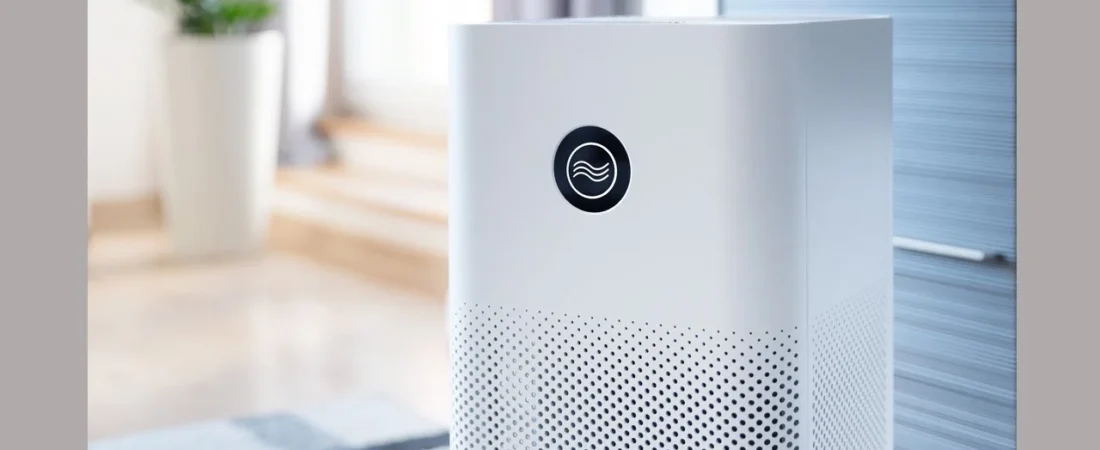
Your HVAC contractor quotes $3,500 for whole-home air filtration. Online you see portable purifiers for $300. Which actually delivers better air quality?
Whole-home systems integrate with existing HVAC, filtering all circulated air through MERV 11-16 filters or UV light systems. They cost $1,000-8,000 installed and operate automatically whenever heating/cooling runs. But they’re limited by HVAC compatibility—many systems can’t accommodate True HEPA without expensive modifications, and they only filter when the system operates (not 24/7 unless you run the fan continuously costing $30-50/month).
Portable purifiers cost $200-600, provide True HEPA filtration (99.97% at 0.3µm) exceeding what most HVAC systems can achieve, and run continuously targeting specific problem areas. Research confirms portables offer “targeted solutions for improving indoor air quality” with “flexibility and ease of use” but require multiple units for whole-house coverage creating higher total cost ($1,000-1,800 for 3-4 units) than single whole-home installation.
The optimal choice depends on five factors: existing HVAC system compatibility, home size and layout, specific air quality concerns, budget for upfront investment versus ongoing costs, and whether you need true HEPA-level filtration or MERV 13 suffices.
How Whole-Home Air Filtration Works
Whole-home systems integrate directly with existing HVAC infrastructure, filtering air as it circulates through heating/cooling cycles.
Integration Methods
Media cabinet filters: Installed in return air ductwork between air handler and living space. Air passes through 4-5 inch pleated MERV 11-16 filter before entering HVAC system. Common brands: AprilAire, Honeywell, Lennox.
In-duct air purifiers: Installed inside ductwork using UV light or ionization technology to neutralize contaminants. Don’t physically filter particles—instead sanitize passing air. Examples: REME HALO, Air Scrubber.
Standalone bypass systems: Separate unit installed in closet/attic with dedicated intake and exhaust connecting to main ductwork. Circulates and filters air independently. Most expensive option.
Operation Mechanics
Automatic operation: Filters whenever HVAC system runs for heating or cooling. No manual intervention required once installed.
Whole-house circulation: Research confirms whole-home purifiers “filter airborne particles, allergens, and odors as your central heating or cooling system circulates air” providing “broad coverage” throughout connected living spaces.
HVAC-dependent: Only operates when air handler runs. In mild weather with minimal HVAC use, filtration stops unless homeowner runs fan continuously (increasing energy costs).
How Portable Air Purifiers Work
Standalone units filtering air in specific rooms through independent fan and filter systems.
Core Components
Fan and motor: Draws room air through filters at rates measured in CFM (cubic feet per minute) or CADR (Clean Air Delivery Rate).
HEPA filter: Captures 99.97% of particles at 0.3 microns—standard in quality portable units.
Activated carbon filter: Adsorbs gases, odors, VOCs that HEPA can’t capture.
Housing and controls: Sealed enclosure preventing air bypass, with speed controls, timers, air quality sensors.
Operation Mechanics
Continuous operation: Runs 24/7 providing constant air cleaning independent of HVAC cycles.
Room-specific: Designed for single room or defined square footage. Research notes portables are “ideal for addressing air quality issues in specific rooms, such as bedrooms or home offices” providing “targeted air cleaning”.
Portable and flexible:“Easily movable, allowing you to place the unit where you need it most” unlike permanent whole-home installations.
Coverage: Whole House vs Single Room
Coverage represents the fundamental trade-off—comprehensive vs focused.
Whole-Home Coverage
All connected spaces: Filters air in every room connected to HVAC ductwork—typically all conditioned living spaces.
Uniform air quality: Maintains consistent filtration throughout home assuming adequate HVAC runtime and balanced ductwork.
Limitation: Doesn’t filter rooms without HVAC vents (garages, unconditioned basements, porches). Also, “portable air purifiers are designed for single-room use and may not effectively purify air in large homes”—inverse applies: whole-home systems may under-serve specific high-need areas.
Portable Coverage
Single room focus: Each unit covers specific square footage—typically 200-800 sq ft depending on CADR rating.
Multiple units required: Research confirms “for comprehensive coverage, multiple units would be required” which “can be less efficient and more costly than a centralized system” for true whole-house needs.
Targeted effectiveness: Excels at addressing localized issues—bedroom allergies, nursery air quality, home office stuffiness—where whole-home system provides diluted benefit.
Filtration Efficiency: MERV 13 vs True HEPA
Filtration capability differs significantly between typical whole-home and portable systems.
Whole-Home Filtration Limits
MERV 13 maximum (typically): Most residential HVAC systems accommodate MERV 11-13 filters. Higher ratings (MERV 14-16) create excessive pressure drop damaging systems not designed for them.
MERV 13 performance: Captures 90%+ of 3-10µm particles, 85%+ of 1-3µm particles, 50%+ of 0.3-1µm particles. Good but not HEPA-level.
True HEPA rare: Installing actual HEPA filters in residential HVAC requires significant modification. Research notes “HEPA filters are so dense that they slow airflow through a standard HVAC system” and “installing a HEPA filter involves heavy modification to a home’s HVAC”—making “HEPA filtration relatively uncommon in residential settings” for whole-home systems.
Cost barrier: Whole-home HEPA systems cost $2,000-5,000+ just for filter housing, plus installation, plus potential HVAC modifications totaling $5,000-12,000.
Portable HEPA Advantage
True HEPA standard: Quality portable purifiers include H13 HEPA filters (99.97% at 0.3µm) as baseline feature.
Superior particle capture: HEPA removes bacteria, viruses, mold spores, fine smoke particles at efficiency MERV 13 cannot match.
No HVAC limitations: Dedicated fan sized specifically for HEPA resistance—no compatibility concerns.
Installation Costs: $1,000-8,000 vs $200-600
Upfront investment differs dramatically.
Whole-Home Installation Costs
Filter-based systems (MERV 11-13): $1,000-3,000 installed
- Media cabinet: $600-1,500
- Professional installation: $400-1,500
- HVAC modifications (if needed): $0-2,000
UV light systems: $1,500-3,500 installed
- Equipment: $800-2,000
- Installation: $700-1,500
HEPA-capable whole-home: $5,000-12,000
- Specialized filter housing: $2,000-5,000
- HVAC modifications (blower upgrade, ductwork): $2,000-5,000
- Installation: $1,000-2,000
Research confirms: Whole-home air purifier installation “costs $419 to $12,000, though most homeowners spend an average of $2,610”.
Portable Purifier Costs
Single quality unit: $200-600
- Budget models (200-400 sq ft): $150-300
- Mid-range (400-600 sq ft): $300-500
- Premium large-space (600-1,000 sq ft): $500-800
Multiple units for whole-house coverage:
- 1,500 sq ft home: 3 units = $600-1,500
- 2,500 sq ft home: 4-5 units = $1,000-2,500
No installation cost: Plug-and-play—homeowner setup in minutes.
Operating Costs: Energy and Filter Replacement
Long-term costs determine true value.
Whole-Home Operating Costs
Filter replacement:
- MERV 11-13 (4-5 inch): $50-100 annually
- UV bulbs: $100-200 annually
- HEPA (if installed): $200-400 annually
Energy costs:
- Minimal added cost if only running during HVAC cycles
- Fan-only continuous operation: $30-50/month ($360-600/year)
- Pressure drop from filters increases HVAC energy use 5-10%
Annual total: $200-500 (HVAC-dependent operation) to $800-1,200 (continuous fan operation)
Portable Operating Costs
Filter replacement (per unit):
- HEPA filter: $50-100 annually
- Activated carbon: $30-60 annually
- Total: $80-160 per unit annually
Energy costs (per unit):
- Typical consumption: 30-80 watts
- 24/7 operation: $30-80 annually per unit
- 3-4 units: $90-320 annually total
Annual total (3-4 units): $330-800 combined filters and energy
Research notes: Portable air purifiers “consume very little energy when compared to other household appliances” with “certain models…consuming very little energy, even less than an LED bulb”.
HVAC System Compatibility Limitations
Whole-home filtration constrained by existing HVAC design—critical factor many overlook.
Ductwork Size and Design
Undersized returns: Many homes (especially older construction) have inadequate return air pathways. Adding restrictive MERV 13+ filter worsens existing airflow problems.
Filter slot limitations: Standard 1-inch slots accommodate MERV 8 maximum. MERV 11-13 requires 4-5 inch media cabinet installation—not all systems have space.
Pressure capacity: Single-speed blowers in older systems struggle with high-MERV filters. Variable-speed systems (post-2015) handle restriction better.
System Age and Condition
Older systems (pre-2010): Often incompatible with MERV 13+ without blower upgrades costing $1,500-3,000.
Budget/builder-grade systems: Minimal margin for additional pressure drop—whole-home filtration may damage equipment.
New high-efficiency systems: Designed to accommodate enhanced filtration—best candidates for whole-home upgrades.
The Portable Advantage
No HVAC dependency: Operates independently—works in any home regardless of HVAC age, type, or condition.
No compatibility concerns: Properly-sized portable purifier guaranteed to work as specified. No risk of HVAC damage or performance degradation.
When Whole-Home Makes Sense
Specific scenarios where centralized filtration provides optimal value.
Ideal Candidates
New HVAC installation: When replacing entire system, marginal cost of whole-home filtration is $800-1,500—reasonable upgrade.
Modern variable-speed systems: Post-2015 equipment designed to handle MERV 13-16 filters without performance impact.
Whole-house consistent needs: Family with allergies/asthma affecting multiple members in all rooms benefits from uniform filtration.
Large homes (2,500+ sq ft): Covering with portable purifiers requires 5+ units totaling $1,500-3,000—approaching whole-home cost while providing superior HEPA filtration only in equipped rooms.
Resale value consideration: Research indicates “installing a whole-house air purifier into an efficient, modern HVAC system will only help the house’s resale value” while “portable purifiers…will likely travel with you to your new home”.
Cost-Benefit Scenarios
$2,500 whole-home MERV 13 system:
- Covers 2,500 sq ft uniformly
- $300/year operating cost
- 5-year total: $4,000
Comparison: 4 portable HEPA purifiers ($1,600 initial + $500/year) = 5-year total $4,100 but provide superior HEPA filtration in 4 rooms while others get minimal benefit.
Verdict: If MERV 13 suffices (no severe allergies) and HVAC system compatible, whole-home offers modest value. If True HEPA needed, portables remain better despite similar 5-year cost.
When Portable Purifiers Are Better
Circumstances where standalone units provide superior outcomes.
Optimal Portable Scenarios
Targeted high-need areas: Bedroom for allergy sufferer, nursery for infant, home office for asthma patient. Research confirms portables are “especially beneficial for people with allergies or asthma, as they can reduce airborne pollutants in confined spaces”.
Renters: Cannot modify HVAC systems—portables only option for enhanced filtration.
Older/incompatible HVAC: Systems unable to accommodate MERV 13+ without damage.
True HEPA requirement: When 99.97% filtration necessary (severe allergies, immunocompromised individuals, wildfire regions), portable HEPA far exceeds MERV 13 whole-home capabilities.
Immediate need: Whole-home requires professional installation scheduled weeks out. Portables provide instant protection.
Flexibility Advantages
Room-to-room mobility: Research notes “flexibility—easily movable, allowing you to place the unit where you need it most” and ability to “circulate the air in corners and places where HVAC airflow may be suboptimal”.
Supplemental to HVAC: Even with whole-home system, portables in bedrooms provide overnight HEPA filtration when HVAC isn’t running.
Trial and adjustment: Purchase one unit, evaluate effectiveness, add more as needed. Whole-home is all-or-nothing commitment.
The Hybrid Approach: Combining Both Systems
Many optimal solutions involve both technologies—leveraging strengths of each.
Effective Hybrid Strategies
Strategy 1: Whole-home baseline + portable boost
- MERV 11-13 whole-home provides general filtration
- Portable HEPA in bedrooms for overnight protection
- Cost: $2,500 whole-home + $600 (2 portables) = $3,100 initial
Strategy 2: Portable primary + HVAC upgrade
- Quality MERV 8 in HVAC (inexpensive, HVAC-safe)
- Portable HEPA units in high-use rooms (3-4 units)
- Cost: $50 HVAC filters + $1,200 (4 portables) = $1,250 initial
Strategy 3: Portable immediate + whole-home future
- Purchase portables for immediate needs
- Add whole-home filtration when HVAC replacement due
- Spreads cost over time; portables continue supplementing
Synergistic Benefits
HVAC captures large particles: Prevents rapid portable filter loading, extending HEPA lifespan.
Portables provide HEPA where needed: Critical areas get 99.97% filtration while whole-home maintains baseline.
Operational efficiency: Portables run continuously in key spaces; HVAC filters during cycles—combined effectiveness exceeds either alone.
Maintenance Requirements Compared
Ongoing effort and cost differ significantly.
Whole-Home Maintenance
Filter replacement schedule:
- MERV 11-13 (4-inch): Every 6-12 months
- UV bulbs: Every 12-18 months
- Cost: $50-200 per replacement
Professional servicing: Annual HVAC maintenance includes filter check—$100-200 service call.
Complexity: Must access filter housing (often basement, attic, or closet). Some installations require HVAC technician for replacement.
Advantage: Single filter serves entire house—less frequent attention than multiple portable units.
Portable Maintenance
Filter replacement schedule (per unit):
- HEPA: Every 12-18 months ($50-100)
- Carbon: Every 6-12 months ($30-60)
- Pre-filter: Vacuum monthly; replace annually ($20)
DIY-friendly: Tool-free filter access on quality models—homeowner handles all maintenance.
Multiple units: 3-4 portables mean 3-4x maintenance events, though staggered timing spreads effort.
Disadvantage: More frequent attention required across multiple units vs single whole-home filter.
Real-World Cost Analysis: 5-Year Total Ownership
Complete financial picture including installation, operation, and maintenance.
Scenario 1: 1,500 sq ft home, moderate air quality needs
Whole-home MERV 13 system:
- Installation: $2,500
- Annual filters: $100
- Energy (HVAC cycles only): $50
- 5-year total: $2,500 + ($150 × 5) = $3,250
Portable HEPA strategy (3 units):
- Initial purchase: $900 (3 × $300)
- Annual filters (3 units): $240
- Energy (3 units 24/7): $180
- 5-year total: $900 + ($420 × 5) = $3,000
Verdict: Nearly identical 5-year cost, but portables provide True HEPA (superior filtration) in equipped rooms while whole-home provides MERV 13 (adequate but inferior) throughout house.
Scenario 2: 2,500 sq ft home, high air quality needs
Whole-home HEPA system:
- Installation (HVAC modification): $8,000
- Annual filters: $350
- Energy increase: $200
- 5-year total: $8,000 + ($550 × 5) = $10,750
Portable HEPA strategy (4-5 units):
- Initial purchase: $2,000 (5 × $400)
- Annual filters (5 units): $400
- Energy (5 units 24/7): $300
- 5-year total: $2,000 + ($700 × 5) = $5,500
Verdict: Portable strategy costs HALF of whole-home HEPA while providing equivalent filtration in equipped spaces. Additional portables cover specific needs cheaper than full HVAC modification.
Scenario 3: Existing whole-home + bedroom portables (hybrid)
Combined approach:
- Whole-home MERV 11 (existing): $0 additional
- 2 bedroom portables: $600 initial
- Annual whole-home filters: $80
- Annual portable filters (2 units): $160
- Energy (portables): $120
- 5-year total: $600 + ($360 × 5) = $2,400
Verdict: Lowest total cost—leverages existing HVAC for general filtration, adds targeted HEPA where most beneficial (bedrooms during sleep).
Comparison Table: Decision Matrix
| Factor | Whole-Home System | Portable Purifiers | Winner |
|---|---|---|---|
| Upfront Cost | $1,000-8,000 (avg $2,610) | $200-600 per unit; $900-2,000 for 3-4 units | Portable (single room); Tie (whole house) |
| Installation | Professional required; 4-8 hours | Plug-and-play; 5 minutes | Portable |
| Coverage | Entire HVAC-connected house | Single room per unit; multiple needed for whole house | Whole-home |
| Filtration Efficiency | MERV 11-13 (90%+ at 3-10µm) typical; HEPA rare ($8,000+) | True HEPA standard (99.97% at 0.3µm) | Portable |
| Operates 24/7 | Only when HVAC runs (unless continuous fan at $30-50/month) | Yes, continuously | Portable |
| Energy Cost | Minimal (HVAC cycles); high if continuous ($360-600/year) | $30-80/year per unit; $180-320 total (3-4 units) | Whole-home (HVAC-dependent); Portable (continuous) |
| Filter Cost | $50-200/year (entire house) | $80-160/year per unit; $240-640 total (3-4 units) | Whole-home |
| Maintenance | Single filter location; less frequent | Multiple units; more frequent attention | Whole-home |
| HVAC Dependency | Requires compatible system; may damage older systems | None—works in any home | Portable |
| Flexibility | Fixed installation; cannot move or adjust | Easily moved; target specific areas | Portable |
| Noise | Silent (integrated with HVAC) | Audible fan noise; 30-60 dBA typical | Whole-home |
| Resale Value | Increases home value if modern HVAC | None—portable and personal | Whole-home |
| Best For | New HVAC, modern systems, whole-house consistent needs | Targeted needs, renters, older HVAC, True HEPA requirement | Depends on scenario |
Frequently Asked Questions
Is whole-home air filtration worth it?
Depends on HVAC compatibility and budget. If installing new HVAC, marginal $1,000-1,500 cost for MERV 13 whole-home filtration provides good value for uniform coverage. But if existing older system, $2,500-3,500 professional installation may not justify MERV 13 performance when $900-1,500 in portable HEPA purifiers (3-4 units) deliver superior 99.97% filtration in critical areas at similar 5-year total cost. Research confirms whole-home “costs $419 to $12,000, though most spend average $2,610” while portables provide “targeted solutions” and “flexibility” at $200-600 each.
Can portable air purifiers clean whole house?
Yes, but requires multiple units. Research confirms portables are “designed for single-room use and may not effectively purify air in large homes” and “for comprehensive coverage, multiple units would be required.” Calculate needs: 1,500 sq ft home requires 3 units (500 sq ft each), 2,500 sq ft requires 4-5 units. Total cost $900-2,500 approaches whole-home installation price but provides superior True HEPA filtration in equipped rooms versus MERV 13 throughout house. Portables can’t match uniform distribution of whole-home but offer targeted effectiveness where most needed.
Are whole-home HEPA filters worth the cost?
Rarely in residential settings. True whole-home HEPA costs $5,000-12,000 due to HVAC modifications required. Research notes “HEPA filters are so dense they slow airflow through standard HVAC” and “installing involves heavy modification,” making “HEPA filtration relatively uncommon in residential” applications. For equivalent investment, 8-15 portable HEPA purifiers ($400 each) provide True HEPA in every room with superior filtration. Whole-home HEPA only justified for commercial/medical facilities or individuals with extreme immune compromise requiring hospital-grade filtration throughout entire home.
How many portable air purifiers do I need?
One per major living space for best results. Calculate room volume (length × width × height) and select purifier with CADR providing 4-6 air changes hourly. Typical needs: bedroom (200-400 sq ft) = $200-300 unit; living room (400-600 sq ft) = $300-500 unit; open-concept space (600-1,000 sq ft) = $500-800 unit. Most homes benefit from 2-4 portables: master bedroom, children’s room(s), main living area. Prioritize bedrooms (8 hours nightly exposure) then high-occupancy spaces. Don’t need purifier in every room—target areas where family spends most time.
Can you run portable air purifiers and whole-home filtration together?
Yes—hybrid approach often optimal. Use MERV 11-13 whole-home as baseline capturing large particles throughout house, preventing rapid portable filter loading. Add portable HEPA units in critical spaces (bedrooms, nursery, home office) providing 99.97% overnight protection or targeted relief for allergy sufferers. Combined cost: $2,500 whole-home + $600 (2 bedroom portables) = $3,100 initial. Annual operating: $250 whole-home + $240 portables = $490. Hybrid leverages strengths of both—uniform MERV 13 baseline plus True HEPA where most beneficial—without whole-home HEPA’s $8,000+ modification cost.