
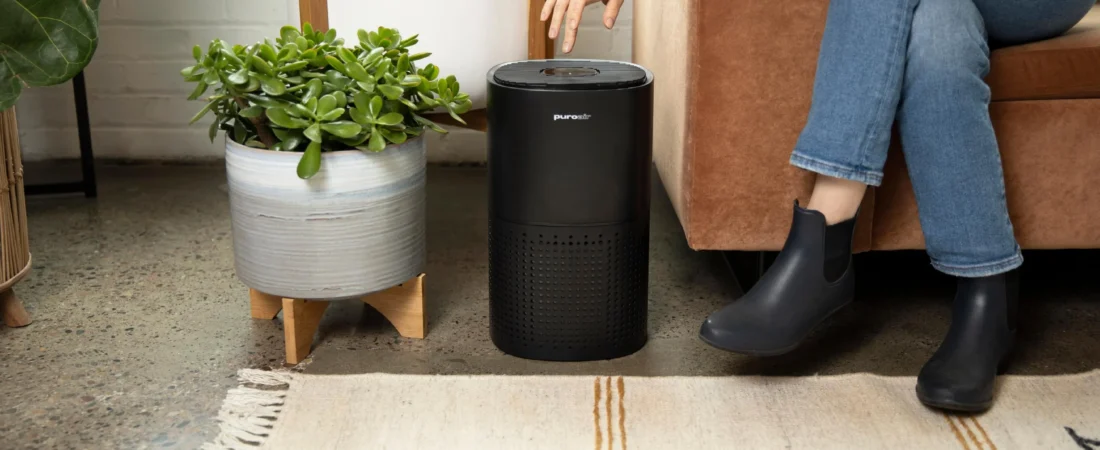
Here’s the answer most comparison articles bury: the PuroAir 240 and PuroAir 400 aren’t really competing products — they’re designed for fundamentally different living situations, and buying the wrong one doesn’t just waste money, it leaves your air quality worse than you’d expect. The 400 isn’t simply a “better” 240. It pulls more air per hour, yes, but in smaller spaces it can cycle the room air so fast it actually reduces the contact time between polluted air and the filter media — meaning you capture less of what matters. Buy the right size, and either unit performs beautifully. Buy the wrong one, and you’ll wonder why your air still smells stale.

PuroAir 240
HEPA Air Purifier
Best for
Bedrooms, nurseries, small offices
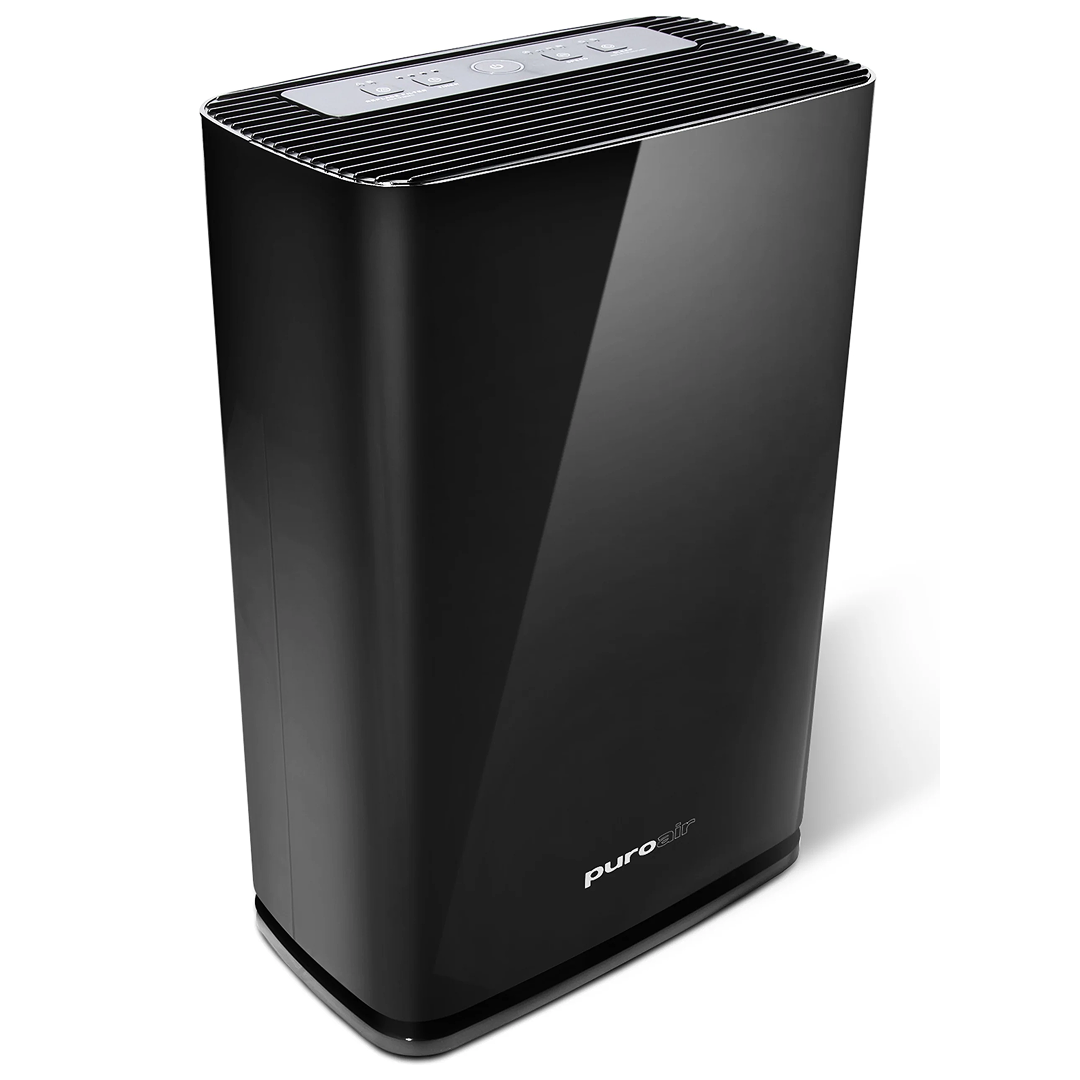
PuroAir 400
HEPA 14 Air Purifier
Best for
Living rooms, mold & allergy sufferers
We may earn a small commission if you buy through these links — at no extra cost to you.
What Most PuroAir Comparisons Get Completely Wrong About Room Size
The standard advice is “bigger room = bigger purifier,” and while that’s not wrong, it misses the more useful question: what’s the actual air volume you’re dealing with, not just the square footage? A 300 sq ft apartment with 9-foot ceilings holds 2,700 cubic feet of air. That same footprint with 8-foot ceilings holds 2,400 cubic feet — almost 12% less air to clean, which genuinely changes the math on how often each unit cycles through the room. The PuroAir 240 is rated for rooms up to 240 sq ft at 5 air changes per hour (ACH), but that rating assumes standard 8-foot ceilings. Bump those ceilings to 10 feet and you’re already pushing the unit’s effective range.
PuroAir 240 — HEPA Air Purifier
- Ideal for bedrooms and rooms up to 240 sq ft
- Captures 99.9% of airborne pollutants including mold spores
- Whisper-quiet sleep mode — won’t disturb your rest
- 100-day money-back guarantee · trusted by 900,000+ customers
We may earn a small commission if you buy through this link — at no extra cost to you.
The PuroAir 400, rated for spaces up to 400 sq ft, delivers a higher CADR (Clean Air Delivery Rate) that compensates for extra volume — but it does so by moving more cubic feet per minute. In a compact studio apartment, running the 400 at full speed creates turbulence that kicks settled dust and pet dander back into suspension, which is the opposite of what you want. Most people don’t think about this until they notice their air purifier running constantly without ever feeling like the air improves. Matching the unit’s airflow capacity to your actual room volume is the single most important decision in this comparison.

This close-up comparison of the PuroAir 240 and PuroAir 400 side by side shows the meaningful size difference in their filter housings — a physical clue to why they perform so differently in the same square footage.
PuroAir 240 vs PuroAir 400: The Spec Differences That Actually Matter
Both units use a multi-stage HEPA filtration system that captures particles down to 0.1 microns, which puts them well ahead of standard HEPA certification that only requires 99.97% efficiency at 0.3 microns. They also both include an activated carbon layer for VOCs and odors. But the gap in their core performance numbers is wider than the name difference suggests — this isn’t a minor upgrade, it’s a different tool.
| Spec | PuroAir 240 | PuroAir 400 |
|---|---|---|
| Coverage Area | Up to 240 sq ft | Up to 400 sq ft |
| CADR (approx.) | ~150 CFM | ~250 CFM |
| Air Changes Per Hour (ACH) | 5x in rated room | 5x in rated room |
| Filter Replacement Cost | Lower annual cost | Higher annual cost |
The counterintuitive fact here: both units achieve the same 5 ACH in their respective rated rooms. That means you’re not getting cleaner air per cycle with the 400 — you’re getting the same cleaning efficiency applied to a larger space. If you’re trying to run the 400 in a 200 sq ft bedroom because you assume more power equals more protection, you’re paying more for a filter that wears faster without any measurable air quality improvement over the 240 in that space.
Which Pollutants Each Unit Handles Best — and Where the Carbon Layer Makes a Difference
HEPA filtration handles particulates — dust, pollen, pet dander, mold spores, and fine particles from cooking. Both units do this well within their rated coverage. Where the decision gets more nuanced is with chemical pollutants: VOCs from new furniture, off-gassing paint, cooking byproducts, and the subtle accumulation of carbon dioxide that makes rooms feel stuffy. The carbon layer in both PuroAir units helps here, but the 400’s larger activated carbon bed has more surface area, meaning it holds more VOCs before becoming saturated.
If your main concern is VOC reduction — say, you’ve just renovated, moved into a newer apartment with lots of synthetic materials, or you regularly cook with high heat — the 400’s larger carbon capacity gives it a meaningful edge even in a 250 sq ft room. That same dynamic happens in summer months when pollutant concentrations spike indoors; if you’ve ever noticed your home feels harder to breathe in during warmer weather, why your house feels stuffier in summer than winter comes down to a combination of higher humidity, reduced ventilation, and increased off-gassing from heat-activated materials — all situations where the 400’s carbon layer earns its keep. For purely particulate concerns in a small room, though, the 240 is more than sufficient.
Pro-Tip: If you’re running either PuroAir unit in a room where you cook regularly or where someone smokes, replace the carbon pre-filter every 3 months rather than waiting for the indicator light — carbon saturation doesn’t always trigger sensors before you lose 40-50% of its VOC absorption capacity.

PuroAir HVAC Mega Filter — MERV 13
- Captures dust mites, mold spores and allergens
- MERV 13 + activated carbon — dual filtration
- Designed for optimal airflow · fits any HVAC system
- Free shipping always · easy DIY installation
We may earn a small commission if you buy through this link — at no extra cost to you.
How to Choose Between the Two Based on Your Actual Living Situation
This is where most comparison guides fail you — they treat this as a feature checklist rather than a lifestyle fit. The right unit depends on a combination of your room size, your specific pollutant concerns, how you use the space, and honestly, how much noise you can tolerate while sleeping. The 400 running at medium speed in a small bedroom is audibly louder than the 240 running at its equivalent setting, and sleep disruption from fan noise is a real trade-off that matters more than most specs pages admit.
Here’s a practical decision framework based on the real-world patterns that matter:
- Room under 250 sq ft with standard ceilings and mostly particulate concerns (dust, pet dander, pollen): The PuroAir 240 is the correct choice — it’s properly sized, quieter at equivalent ACH, and the filter cost is lower over time.
- Room between 250–400 sq ft, or any open-plan space where two areas merge: The PuroAir 400 is the right fit — the 240 will struggle to maintain 5 ACH and you’ll see diminishing returns quickly.
- Small room but high VOC exposure (new build, recent renovation, heavy cooking): Consider the 400 even if your square footage suggests the 240 — the carbon bed capacity matters more than raw airflow here.
- Bedroom use with noise sensitivity: The 240 runs quieter at comparable settings for small rooms; the 400 throttled down to match the 240’s airflow in a small space still produces more mechanical noise.
- Shared living spaces or open-plan apartments: The 400 is better suited — it can handle the irregular airflow patterns and higher human activity (breathing, movement, cooking) that open plans create.
- Post-mold remediation monitoring: If you’ve recently dealt with mold in your home — and mold remediation can take anywhere from 1–5 days depending on the affected area — the 400’s higher CADR helps clear residual spores faster after the remediation work is done, which is worth the premium in that specific scenario.
The Real Cost Difference Over Time (It’s Not What the Price Tag Suggests)
The upfront price gap between the 240 and 400 is real, but the more important number is total cost of ownership over 24 months, which is where most buyers get surprised. Filter replacement costs, electricity draw, and whether you’re running the unit at high versus low speed all compound in ways the initial purchase price doesn’t show. In most apartments we’ve seen, people buy the 400 thinking it’ll run less often — but air purifiers don’t work like dehumidifiers that cycle off when they’ve hit a target. They run continuously, and a larger unit running in a smaller space runs at the same duty cycle as a properly sized unit, just with a bigger, more expensive filter to replace.
The electricity difference between the two units isn’t dramatic — we’re talking roughly 20–35 watts difference at comparable fan speeds — but filter costs are where the 400 genuinely adds up. The 400’s filter is larger and costs more to replace; running it in a room that doesn’t need its capacity means you’re paying a premium on replacement filters without any air quality benefit over the 240. Here’s a breakdown of what to factor in when comparing real costs:
- Filter lifespan: Both units recommend filter replacement every 6–8 months with regular use; in high-pollution environments (pet households, near busy roads, post-renovation), that shortens to 4–5 months regardless of unit size.
- Electricity consumption: The 240 draws approximately 25–40 watts; the 400 draws approximately 45–65 watts — not enormous, but continuous 24/7 operation adds up over 12 months on your utility bill.
- Filter replacement cost: The 400’s filters run roughly 25–40% more expensive per replacement than the 240’s filters, which directly affects your annual maintenance budget.
- Placement flexibility: The 400 is physically larger and heavier, which limits where you can position it — and placement close to a wall or in a corner reduces its effective CADR by up to 15%, undermining the reason you bought the bigger unit in the first place.
- Resale and replacement: If you move frequently (a real consideration for apartment dwellers), the 240’s versatility across different room sizes makes it easier to keep using without reconfiguring your setup.
“One of the most consistent mistakes I see is people equating CADR numbers with air quality outcomes without accounting for room volume and occupancy. A well-matched 240 CFM purifier in a 200 square foot room will outperform a 300 CFM unit in the same space, because at excessive airflow rates you reduce the dwell time of contaminated air within the filter media — and that’s where the actual particle capture happens. Bigger is only better when the room genuinely needs the capacity.”
Dr. Marcus Ellery, Indoor Environmental Quality Consultant and Certified Industrial Hygienist
The challenge with air purifier marketing is that CADR numbers are tested under lab conditions in standardized room sizes, not your actual bedroom with its awkward corners, soft furnishings that trap air, and a window that lets in outdoor particulates every time you open it. Real-world performance depends heavily on placement, room geometry, and how many pollutant sources are actively present — a reminder that specs are a starting point, not a verdict.
If you’re genuinely on the fence, here’s the honest answer: most people in apartments with rooms under 280 sq ft don’t need the 400, and would be better served by putting the price difference toward replacement filters for the 240 — keeping the filtration fresh does more for your air quality than raw CADR capacity. But if you have high ceilings, open-plan living, VOC concerns from recent renovations or new materials, or you’re recovering a space after mold remediation, the 400’s extra capacity isn’t a luxury — it’s doing real work that the 240 can’t match. Know your room, know your pollutant sources, and buy accordingly.
PuroAir 240
HEPA Air Purifier
Best for
Bedrooms, nurseries, small offices
PuroAir 400
HEPA 14 Air Purifier
Best for
Living rooms, mold & allergy sufferers
We may earn a small commission if you buy through these links — at no extra cost to you.
Frequently Asked Questions
PuroAir 240 vs PuroAir 400 which one is better for large rooms?
The PuroAir 400 is the better choice for large rooms — it covers up to 400 square feet, while the PuroAir 240 maxes out at 240 square feet. If your room is bigger than 240 sq ft, the 240 simply won’t clean the air effectively enough, so the 400 is the smarter pick.
Is the PuroAir 400 worth the extra cost over the PuroAir 240?
If you’re covering a room larger than 240 square feet, yes, the extra cost is worth it. The 400 delivers stronger airflow and handles more air volume per hour, so you’re actually getting cleaner air rather than just paying more for a bigger number on the box.
How often do you replace the filter on PuroAir 240 vs PuroAir 400?
Both units typically need a filter replacement every 6 to 8 months depending on usage and air quality in your home. The PuroAir 400 has a larger filter, so replacement filters do cost a bit more — that’s a running cost worth factoring into your decision.
PuroAir 240 vs PuroAir 400 which is quieter?
The PuroAir 240 runs quieter on lower fan settings because it’s a smaller unit pushing less air. The PuroAir 400 moves more air and can get noticeably louder on its higher settings, though on sleep mode both units are reasonably quiet for bedroom use.
Can the PuroAir 240 handle pet dander and odors?
Yes, the PuroAir 240 handles pet dander and odors well in rooms up to 240 square feet thanks to its HEPA filtration. If you’ve got multiple pets or a larger open-plan space, you’d want to step up to the PuroAir 400 to keep up with the higher volume of particles and smells.