
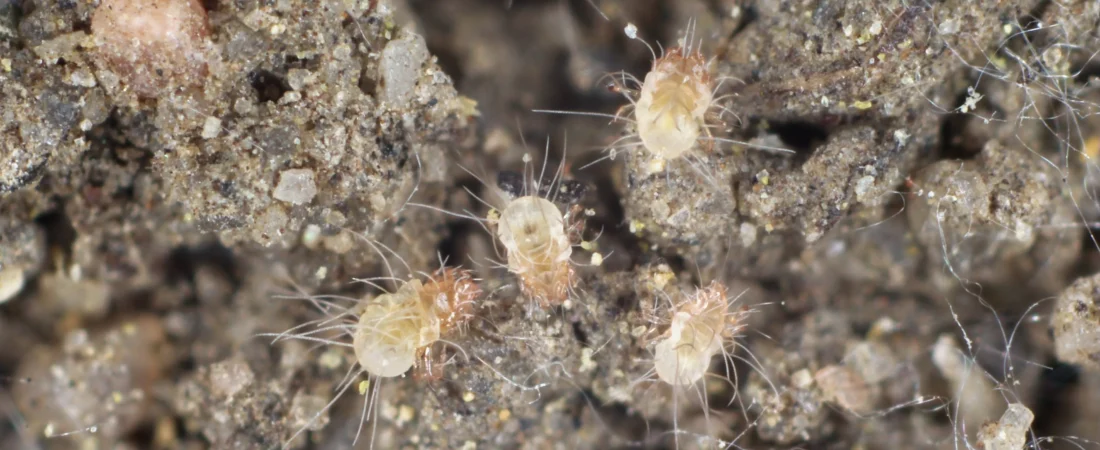
Your bedroom maintains 65% relative humidity. Within months, your mattress harbors millions of dust mites—microscopic arachnids feeding on shed skin cells and producing fecal pellets containing potent allergens triggering asthma attacks and allergic rhinitis in sensitized individuals.
Research tracking humidity manipulation in homes documents the dramatic impact of moisture control. Starting with 401 live mites per gram of dust at 70% humidity, maintaining indoor RH below 51% for 17 months reduced populations to just 8 live mites per gram—a 98% decline. Allergen levels dropped even more dramatically: from 17 µg Der p 1 (dust mite allergen) per gram to 4 µg—a reduction making the environment 10 times less allergenic than homes maintaining 60-70% humidity experiencing seasonal peaks of 500-1,000 mites and 40-70 µg allergen per gram.
The 50% relative humidity threshold represents a biological crisis point for dust mites. Their bodies contain 70-75% water by weight requiring constant replenishment, yet they live in environments with no liquid water to drink. Below 50% RH, active mites cannot extract sufficient moisture from air to compensate for water lost through respiration and cuticle permeability—they desiccate and die within 6-11 days. Above 65-70% RH, specialized supracoxal glands extract adequate water vapor enabling reproduction, growth, and explosive population increases when temperature also favors them (68-77°F).
This guide explains the water balance physiology determining why humidity control is the single most effective intervention for dust mite allergies, reveals the time-dependent relationship between humidity reduction and population collapse, and provides evidence-based strategies maintaining the critical <50% RH threshold eliminating mite populations while preserving human comfort.
Dust Mite Biology: Why Water Determines Everything
House dust mites (Dermatophagoides farinae, D. pteronyssinus, Euroglyphus maynei) are microscopic arachnids measuring 0.2-0.3 mm—invisible to naked eye but prevalent in homes worldwide.
Moisture-Dependent Metabolism
Critical fact: Mite bodies contain 70-75% water by weight which must be maintained to reproduce.
No access to liquid water: Unlike most organisms, dust mites live in carpets, bedding, upholstered furniture—environments with no liquid water to drink.
Water vapor extraction required: Their primary source of water is water vapor actively extracted from unsaturated air through specialized physiological mechanisms.
Consequence: Indoor humidity directly determines whether mites can maintain water balance—and thus whether they survive and reproduce or desiccate and die.
Life Cycle and Reproduction
Development timeline: Egg to adult takes approximately 30-35 days at optimal conditions (75-80% RH, 70-77°F).
Adult lifespan: Females live 1-2 months, males shorter.
Reproduction rate: Females lay approximately 50 eggs during lifetime when conditions favorable.
Population potential: Research confirms it is not uncommon to find thousands of mites in a single gram of house dust—and infested mattress can contain millions of dust mites.
The Water Extraction Mechanism at 65-70% RH
Understanding how mites extract moisture clarifies why specific humidity thresholds matter so critically.
Supracoxal Glands: The Moisture Harvesting System
Active uptake mechanism: At relative humidities above 65-70%, mites actively extract adequate water from unsaturated air to compensate for losses.
Specialized anatomy:Active uptake is associated with ingestion of a hyperosmotic solution secreted by supracoxal glands—specialized structures enabling water vapor extraction from air.
Osmotic gradient: Glands secrete highly concentrated saline solution (hyperosmotic). When exposed to humid air, this solution absorbs water vapor from atmosphere. Mite then ingests diluted solution, extracting pure water while excreting excess salts.
Energy-intensive: This active process requires metabolic energy—mites cannot extract water passively below critical humidity.
Critical Humidity Level
Minimum viable humidity: Research establishes 65-70% RH as critical threshold where water vapor concentration in air allows adequate extraction rates.
Above 70% RH: Water extraction exceeds water loss—mites maintain positive water balance, survive, and reproduce normally.
Below 65% RH: Water extraction insufficient to offset losses—mites gradually desiccate despite active uptake attempts.
Below 50% RH: Water extraction completely inadequate—rapid desiccation and death within days.
The 50% Threshold: Where Mites Begin Dying
The 50% relative humidity line represents the survival boundary below which active dust mites cannot persist.
Survival Timeline at Low Humidity
Research documentation:Active mites do not survive longer than 6-11 days at RHs ≤ 50%.
Mechanism of death: Without adequate water intake, mites desiccate—body water content drops below viable levels, metabolic processes fail, death occurs.
Rapidity varies: Younger mites (with higher surface-area-to-volume ratios) desiccate faster than adults. 6 days represents typical survival at 50% RH; 11 days may occur at humidity just barely above threshold or in protected microenvironments.
The 40-50% Marginal Zone
Intermediate range: Humidity between 40-50% is marginal for dust mite control.
What happens: Some mites survive briefly, reproduction heavily suppressed, populations cannot sustain themselves long-term.
Research consensus: While not instant kill-zone, prolonged maintenance below 50% RH results in population collapse over weeks to months.
Below 40%: Rapid Population Elimination
Accelerated desiccation: At 35-40% RH, survival times drop to 4-7 days for active mites.
Winter indoor conditions: Many heated homes in cold climates naturally achieve 25-40% RH in winter—creating seasonal population crashes.
Year-round control: Maintaining <40% RH consistently ensures dust mite populations cannot establish or persist.
Population Dynamics: From 401 to 8 Mites Per Gram
Field research tracking homes over 17 months provides dramatic real-world evidence of humidity control effectiveness.
Study Design and Baseline
Three home groups compared:
- Low RH group (n=23): Maintained RH <51% using dehumidifiers and AC
- Group A (n=24): Used AC only, RH not controlled
- Group C (n=24): Natural ventilation (windows), RH >51%
Baseline conditions (June start): Low RH group homes contained 401 ± 124 live mites per gram dust and 17 ± 3 µg Der p 1 allergen per gram.
Results After 17 Months
Low RH group (<51% maintained):
- Live mites: 8 ± 3 per gram (from 401) = 98% reduction
- Allergen (Der p 1): 4 ± 1 µg/g (from 17) = 76% reduction
- Statistical significance: P = 0.004 for mites, P <0.001 for allergen
Comparison groups (RH >51%):
- Seasonal peaks: 500-1,000 live mites per gram
- Allergen peaks: 40-70 µg Der p 1 per gram
Critical finding: After 17 months, allergen levels were more than 10 times lower in low RH homes compared to humid homes.
Timeline to Effectiveness
Month 1-3: Gradual decline begins as existing mites die without replacement reproduction
Month 4-8: Accelerating decline as reproductive-age females die out
Month 9-17: Populations stabilize at minimal levels (<10 mites/gram)—representing residual mites in protected microenvironments periodically exposed to brief higher humidity
Practical implication:Significant improvement visible within 3-6 months, but maximum benefit requires 12-17 months of consistent humidity control.
Allergen Production and Humidity Relationship
Mite populations and allergen concentrations don’t correlate perfectly—understanding why informs control strategies.
Allergen Sources
Three components create allergen load:
- Live mite feces: 20 fecal pellets per mite daily, each containing Der p 1 and Der f 1 allergens
- Dead mite carcasses: Allergenic proteins in mite bodies
- Shed exoskeletons: Mites molt between life stages, leaving allergenic skins
Accumulation over time: Allergens accumulate faster than they degrade—homes with historic high mite populations retain elevated allergen even after populations decline.
Why Allergen Declines Slower Than Populations
Population reduction: 98% (401 to 8 mites/gram) over 17 months
Allergen reduction: 76% (17 to 4 µg/gram) same period
Explanation: Dead mites and historic fecal deposits continue contributing allergen load while gradually degrading. New allergen production stops immediately when mites die, but existing allergen persists requiring months to years for complete clearance through cleaning and natural degradation.
Clinical Threshold
Sensitization threshold: Research suggests >2 µg allergen per gram dust sufficient to sensitize susceptible individuals.
Symptom threshold:>10 µg allergen per gram commonly triggers symptoms in sensitized individuals.
Low RH achievement: Final levels of 4 µg/gram fall below symptom threshold for most sensitized individuals, explaining clinical improvement reported in studies.
Optimal Mite Conditions: 70-80% RH and 68-77°F
Peak reproduction occurs at specific environmental parameters—knowing these helps identify and correct problem conditions.
Humidity Optimum
Ideal range:70-80% relative humidity
Population growth: At 75% RH continuous exposure, mite populations increase exponentially—doubling times measured in weeks.
Water balance: At this humidity, water extraction via supracoxal glands far exceeds losses—mites maintain maximum hydration supporting rapid growth and reproduction.
Temperature Optimum
Ideal range:68-77°F (20-25°C)
Development rate: Egg-to-adult cycle completes in 30-35 days at optimal temperature.
Lower temperatures (60-65°F): Development slows—mites become sluggish, reproduction decreases, but don’t necessarily die.
Higher temperatures (>85°F):Excessive—mites experience heat stress, reproduction impaired, survival reduced at extreme heat.
Combined Optimal Conditions
Peak scenario:75% RH and 72°F—conditions supporting maximum population growth.
Where this occurs:
- Coastal humid climates (summer)
- Basements without dehumidification
- Bedrooms with poor ventilation and multiple occupants (human respiration adds moisture)
- Bathrooms adjacent to sleeping areas
Consequence: Homes with these conditions experience rapid mite colonization and sustained high populations year-round.
The Desiccation Process: What Happens Below 50%
Understanding physiological failure during low humidity clarifies why threshold is so sharp.
Water Loss Pathways
Three routes of water loss:
- Cuticular transpiration: Water diffuses through body surface (cuticle)—inevitable even with waxy coating
- Respiratory water loss: Water vapor exhaled during gas exchange
- Fecal water loss: Moisture in waste products
Normally compensated: At >65% RH, supracoxal gland extraction exceeds all three loss pathways.
Progressive Desiccation Below 50%
Hour 1-24: Mites continue attempting water extraction, but intake insufficient to match losses. Body water content begins declining.
Day 1-3: Mites reduce activity (conserving water), feeding rate decreases, reproduction stops.
Day 3-6:Critical dehydration—body water drops below 65% (from normal 70-75%). Metabolic dysfunction accelerates.
Day 6-11:Death from desiccation—proteins denature, cellular membranes fail, critical tissues cease functioning.
Microenvironment Pockets
Survival extensions: Some mites survive slightly longer than 6-11 day average by occupying protected microenvironments (deep carpet pile, mattress cores) where local humidity slightly higher than ambient.
Limitation: These pockets insufficient for reproduction—population still collapses even if scattered individuals persist weeks longer.
Protonymphal Dormancy: The Survival Strategy
Mites possess remarkable adaptation allowing survival during extended dry periods—the desiccation-resistant protonymphal stage.
The Dormancy Mechanism
Life stage specificity: Mites entering protonymphal stage (developmental stage between larva and adult) can form desiccation-resistant state.
Survival capability: Dormant protonymphs can survive for months at RHs below critical humidity for active stages—enduring conditions that kill active mites in days.
Metabolic suspension: Dormant mites enter profound metabolic depression—reduced respiration, no feeding, minimal water loss.
Reactivation Upon Humidity Increase
Recovery potential: When humidity rises above 65% again, dormant protonymphs reactivate, resume development, complete maturation to adults.
Population resurgence: This explains why mite populations can rebound rapidly when humidity control lapses—dormant individuals waiting for favorable conditions.
Control Implications
Extended low humidity required: To eliminate mites including dormant stages, humidity must remain <50% for minimum 6-12 months.
Brief humidity spikes problematic: Even short periods at high humidity can reactivate dormant mites and sustain minimal populations capable of explosive growth when conditions fully favorable again.
Fluctuating Humidity: Can Brief Moisture Support Populations?
Real homes experience humidity fluctuations—cooking, showering, ventilation create temporary spikes. Research examined whether brief daily high-humidity periods sustain mite populations.
Experimental Design
Daily alternating regimens tested:
- 2, 4, 6, or 8 hours at 75-85% RH
- Remaining 22, 20, 18, or 16 hours at 35% or 0% RH
Purpose: Determine if short daily moisture exposure sufficient for population maintenance despite long dry periods.
Critical Findings
2 hours daily at 75% RH: Populations declined—insufficient moisture for sustained reproduction.
4+ hours daily at 75% RH: Mites survived and reproduced, populations increased, though growth was dramatically reduced (98.2% smaller than continuous 75% RH).
Minimum viable exposure:4 hours daily at 75% RH represents approximate minimum enabling slow population growth.
Practical Implications
Good news: Maintaining mean daily RH below 50% even when RH rises above 50% for 2-8 hours daily effectively restricts population growth.
Daily activities acceptable: Brief humidity spikes from cooking, showering (1-2 hours) do not sabotage overall low-humidity strategy if baseline remains <50% majority of time.
Chronic elevation problematic: Homes where humidity remains >60% for 6+ hours daily (poor ventilation, chronic moisture sources) can sustain mite populations despite periodic low humidity.
Geographic Patterns: Where Dust Mites Thrive
Climate determines baseline mite risk—understanding regional patterns informs control strategies.
High-Risk Regions
Coastal humid climates: Southeast U.S., Gulf Coast, Pacific Northwest (portions), coastal Europe, Southeast Asia, coastal Australia.
Characteristics: Year-round humidity >60%, summer peaks 70-90%—ideal for mites.
Population levels:Severe infestations common without active humidity control—mattresses harboring millions, carpets heavily contaminated.
Moderate-Risk Regions
Temperate humid summers: Northeast U.S., Midwest, Central Europe.
Characteristics: Summer humidity 60-80%, winter humidity 30-50% (heated indoor air).
Seasonal pattern:Summer population explosions, winter crashes—resulting in fluctuating allergen levels.
Low-Risk Regions
Arid climates: Southwest U.S., Mountain West, Mediterranean dry regions, inland Australia.
Characteristics: Year-round outdoor humidity 20-40%, indoor similar unless humidification added.
Natural control:Mites cannot establish without artificial humidification—populations naturally suppressed.
Exception: Even arid climates can have microenvironment problems (poorly ventilated bathrooms, over-humidified bedrooms).
Seasonal Cycles in Temperate Climates
Homes in four-season climates experience dramatic seasonal mite fluctuations—understanding cycles optimizes intervention timing.
Summer: Population Explosion (May-September)
Conditions: Outdoor humidity 60-80%, indoor similar without AC/dehumidification.
Mite response:Exponential population growth—populations increase 10-20x from spring baseline.
Peak timing:Late summer (August-September) reaches maximum populations—500-1,000 mites/gram common.
Allergen accumulation: Fecal pellet production peaks, allergen levels climb to 40-70 µg/gram.
Fall: Population Plateau (October-November)
Conditions: Declining outdoor humidity, cooling temperatures.
Mite response:Reproduction slows, populations stabilize, some natural die-off begins.
Allergen levels: Remain elevated from summer accumulation despite slowing population growth.
Winter: Population Crash (December-March)
Conditions: Heated indoor air drops to 25-40% RH—well below mite survival threshold.
Mite response:Rapid population collapse—active mites die within 1-2 weeks of heating season start.
Nadir:Late winter (February-March) reaches minimum populations—often <50 mites/gram.
Dormancy: Some protonymphs enter desiccation-resistant state, surviving to spring.
Spring: Recovery Beginning (April-May)
Conditions: Humidity rising, temperatures warming.
Mite response: Dormant protonymphs reactivate, surviving adults resume reproduction, population rebuilding begins.
Pattern restart: Cycle repeats annually in homes without active humidity control.
The Allergen Problem: Why Dead Mites Still Matter
Killing mites doesn’t eliminate allergic triggers—a critical limitation of any control strategy.
Allergenic Components
Three allergen sources remain after mites die:
Dead mite bodies: Contain allergenic proteins—remain allergenic for months as they slowly decompose.
Fecal pellets: Most potent allergen source—Der p 1 and Der f 1 proteins in feces remain allergenic indefinitely until physically removed or degraded.
Shed exoskeletons: Molted skins accumulate in environment, contributing ongoing allergen load.
Why Humidity Control Alone Insufficient
Population elimination: Reducing humidity kills live mites—stops new allergen production.
Historic contamination:Existing allergen persists in carpets, mattresses, upholstery for months to years.
Required combination:Humidity control + physical cleaning = effective allergen reduction. Humidity alone leaves residual allergen requiring removal via washing, HEPA vacuuming, and material replacement.
Allergen Degradation Timeline
Rapid decline: First 3-6 months after humidity reduction, allergen drops 40-60% as loose fecal matter removed by cleaning.
Slow decline: Subsequent 6-18 months, allergen declines another 20-40% through natural degradation and continued cleaning.
Baseline: After 2+ years of low humidity + regular cleaning, allergen levels stabilize at minimums (often 2-5 µg/gram)—below clinical threshold for most individuals.
Evidence-Based Humidity Control Strategies
Research documenting 98% mite reduction employed specific interventions—replicating their approach ensures success.
Target Humidity: <50% RH Year-Round
Goal: Maintain indoor RH consistently below 50%—ideally 40-45% for optimal control while preserving human comfort.
Measurement: Install hygrometers in bedrooms (highest occupancy) and main living areas—monitor daily.
Consistency critical: Effectiveness depends on sustained low humidity, not sporadic attempts.
Dehumidification (Primary Tool)
Portable dehumidifiers:
- 50-70 pint capacity for bedrooms/living rooms
- Run continuously during humid seasons
- Empty daily or connect continuous drainage
- Target: Maintain 40-45% RH
Whole-house dehumidifiers:
- Integrated with HVAC or standalone
- 70-135 pint capacity typical
- Professional installation: $1,500-3,500
- Most effective for comprehensive control
Cost: $200-500 portable, $30-50/month electricity (continuous operation)
Air Conditioning (Supplemental)
Dehumidification benefit: AC removes moisture as byproduct of cooling—helpful but not primary dehumidification tool.
Limitation: AC only runs when cooling needed—provides no humidity control in spring/fall when temperatures comfortable but humidity high.
Combined strategy:AC + dedicated dehumidifier = comprehensive year-round humidity control.
Ventilation Optimization
Bathroom/kitchen exhaust: Run 20-30 minutes after showers, during cooking—prevents humidity spikes.
Whole-house ventilation: ERV/HRV systems exchange humid indoor air with drier outdoor air (when outdoor humidity lower).
Avoid: Over-ventilating when outdoor humidity higher than indoor—worsens problem.
Beyond Humidity: Integrated Mite Management
Humidity control is most effective intervention, but comprehensive programs incorporate additional measures for maximum allergen reduction.
Allergen-Proof Encasings
Mattress and pillow encasings: Zippered covers creating physical barrier between mites (in mattress core) and sleeper.
Effectiveness: Research shows significant allergen reduction when combined with humidity control.
Maintenance: Wash covers monthly; replace every 2-3 years.
Hot Water Washing (≥130°F)
Weekly bedding washing: Kills mites and removes allergen from sheets, pillowcases, blankets.
Temperature critical:130°F (54°C) minimum required to kill mites—lower temperatures ineffective.
Energy cost: May require water heater adjustment or separate sanitize cycle.
HEPA Vacuuming
Carpet and upholstery: Vacuum with True HEPA filter capturing allergen particles rather than re-dispersing them.
Frequency: 2-3 times weekly in high-mite-risk homes.
Limitation: Removes surface allergen only—doesn’t reach mites deep in carpet pile or mattress cores.
Flooring Changes
Remove carpets: Hard flooring (wood, tile, vinyl) eliminates primary mite habitat—dramatic allergen reduction.
Reality: Expensive, impractical for many homes.
Alternative: Limit carpeting to bedrooms only; use low-pile carpet; maintain <45% RH.
Freezing (Limited Utility)
Theory: Freezing kills mites.
Reality: Kills surface mites but doesn’t remove allergen. Time-consuming, limited to small items (stuffed animals, pillows).
Verdict:Not primary strategy—humidity control far more practical and effective.
Frequently Asked Questions
What humidity level kills dust mites?
Dust mites die at relative humidity ≤50% within 6-11 days when sustained continuously. Research documents active mites do not survive longer than 6-11 days at RHs ≤50% because they cannot extract sufficient water vapor from air to compensate for losses through respiration and cuticle. At 40-45% RH, die-off accelerates to 4-7 days. However, some mites enter dormant protonymphal stage surviving months—requiring 6-12 months of sustained low humidity for complete population elimination including dormant forms. Optimal control: maintain 40-45% RH year-round.
How long does it take to get rid of dust mites by reducing humidity?
3-6 months for significant reduction; 12-17 months for maximum effect. Research tracking homes maintaining <51% RH showed populations declining from 401 live mites/gram to 8 mites/gram (98% reduction) over 17 months. Timeline: months 1-3 (gradual decline as existing mites die), months 4-8 (accelerating decline as reproductive females die), months 9-17 (stabilization at minimal levels). Allergen levels declined 76% same period but remain elevated longer than populations due to historic fecal deposits requiring physical removal through cleaning.
Can dust mites survive in 50% humidity?
Marginally—but cannot sustain populations long-term. Research shows 50% RH is critical threshold where mites survive 6-11 days before desiccating. While brief survival occurs, reproduction heavily suppressed and populations cannot maintain themselves at this humidity. Studies document that even when mean daily RH maintained just below 50% (e.g., 48-49%), populations effectively collapse over weeks to months. For reliable control, target 40-45% RH providing safety margin below critical threshold ensuring rapid desiccation preventing population establishment.
What is the best humidity for dust mite control?
40-45% relative humidity provides optimal balance between mite elimination and human comfort. This range maintains humidity well below 50% critical threshold ensuring rapid mite desiccation (4-7 days) while avoiding excessive dryness (<30% RH) causing respiratory irritation, static electricity, wood damage. Research confirms maintaining <51% RH eliminated 98% of mites over 17 months. Target: 40-45% year-round—achieved through dehumidifiers (humid months) and controlled humidification (dry winter months in heated homes). Monitor with hygrometers; adjust equipment seasonally.
Do air purifiers help with dust mites?
Indirectly—but humidity control far more effective. Air purifiers with True HEPA filters capture airborne allergen particles (mite feces, shed skins) reducing inhalation exposure. However, purifiers do not kill mites or prevent reproduction—they only capture allergen AFTER it becomes airborne. Research shows humidity control addresses root cause (eliminating living populations), while purifiers manage symptoms (capturing allergen). Optimal strategy: Dehumidifier maintaining <50% RH (prevents reproduction) + HEPA purifier in bedrooms (captures residual airborne allergen) + allergen-proof mattress encasings (blocks exposure). Humidity control is foundation; purifiers are supplement.