
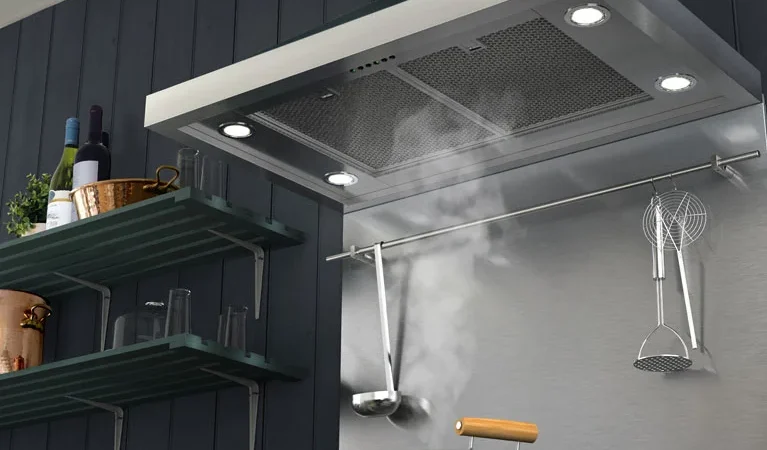
Bottom line up front: Cooking fumes aren’t just smoke and steam — they’re a cocktail of ultrafine particles, volatile organic compounds, and combustion byproducts that can exceed outdoor air pollution levels inside your kitchen within minutes of turning on a burner. Most ventilation advice focuses on whether you have a range hood. The real question is whether it’s actually doing anything.
Here’s what almost no one talks about: the problem isn’t just high-heat events like searing a steak or stir-frying at 500°F. Even low-and-slow cooking — simmering a pot of soup, toasting bread, or boiling water on a gas stove — generates pollutants at concentrations that would trigger air quality warnings if they occurred outdoors. Your kitchen is likely the single most polluted room in your home on a daily basis, and most people have no idea.
This article is going to change how you think about kitchen air — not by scaring you, but by giving you the actual mechanism behind what’s happening and what specifically fixes it.
What Are Cooking Fumes Actually Made Of?
The word “fumes” sounds vague, but the chemistry is pretty specific. When food heats up, it undergoes a series of chemical reactions — lipid oxidation, Maillard reactions, protein pyrolysis — that release a measurable range of airborne compounds. These aren’t just odors. They’re physical particles and reactive gases that enter your respiratory tract.
Ultrafine particles (UFPs) — defined as particles under 0.1 microns in diameter — are generated in enormous numbers during cooking. A single frying session can produce particle concentrations of 10,000 to 30,000 particles per cubic centimeter, which is 5 to 10 times higher than a busy urban intersection. What makes UFPs particularly concerning is that their tiny size allows them to bypass the upper respiratory system entirely and deposit deep in the alveoli of your lungs.
Beyond particles, cooking releases acrolein, formaldehyde, benzene, nitrogen dioxide, carbon monoxide, and polycyclic aromatic hydrocarbons (PAHs) — some of which are classified carcinogens. The specific mix depends on your cooking method, the oil you use, how hot you cook, and critically, what type of stove you have.
Why Gas Stoves Produce More Harmful Emissions Than Most People Realize
Gas stoves have had a complicated few years in public conversation, but the science here is worth understanding clearly. A gas burner doesn’t just produce combustion byproducts when something is burning in a pan — it releases nitrogen dioxide and carbon monoxide from the flame itself, even with nothing on the burner at all. Turn on a gas stove to boil water and you’re already generating NO₂.
Nitrogen dioxide is particularly insidious for lung health because it’s invisible, odorless at typical kitchen concentrations, and a well-established respiratory irritant. Long-term exposure is associated with reduced lung function and increased asthma severity. Studies measuring indoor NO₂ levels in homes with gas stoves have found concentrations regularly exceeding the EPA’s outdoor 1-hour standard of 100 ppb — sometimes two to three times over.
That doesn’t mean electric or induction stoves are entirely clean. They still generate cooking fumes from the food itself. But they eliminate the combustion-source pollutants entirely, which is a meaningful reduction in total indoor pollutant load — especially in smaller or poorly ventilated kitchens.
“Many of my patients with chronic respiratory conditions are surprised to learn that their kitchen habits are contributing more to their daily pollutant exposure than outdoor air quality. Ventilation during cooking isn’t optional for these individuals — it’s a clinical recommendation I make as routinely as prescribing medication.”
Dr. Priya Nambiar, MD, Pulmonologist and Indoor Air Quality Researcher
What Happens to Your Lungs When You Breathe Cooking Fumes Regularly?
Short-term exposure to cooking fumes typically causes irritation — a scratchy throat, watery eyes, minor coughing. Your body is reacting to particulate matter and reactive gases hitting mucous membranes. Most people dismiss this as “just the cooking smell” and don’t connect it to the mild respiratory discomfort they feel afterward.
Chronic exposure is the more serious concern. Repeated inhalation of ultrafine particles triggers low-grade inflammation in the airways. Over time, this contributes to reduced lung function, exacerbated asthma symptoms, and — in occupational settings where exposure is extreme, like commercial kitchen workers — an elevated risk of lung cancer. The World Health Organization has classified cooking fume exposure (specifically from high-heat cooking with certain oils) as a probable human carcinogen.
Children and people with pre-existing respiratory conditions are disproportionately affected. A child’s lungs are still developing, and their breathing rate per unit of body weight is higher than adults — meaning they inhale proportionally more pollutants per hour of exposure. If you’re cooking in an open-plan kitchen while kids are doing homework nearby, that’s not a neutral air environment.
Does Your Range Hood Actually Capture Cooking Fumes?
This is the part most people get wrong. Having a range hood does not mean you have effective ventilation. The capture efficiency of a range hood — the percentage of pollutants it actually removes before they spread into the room — varies enormously based on design, placement, and whether you’re using it correctly.
Wall-mounted ducted hoods positioned 24 to 30 inches above the burners, running at an appropriate fan speed for the cooking intensity, can achieve capture efficiencies of 70 to 90%. Recirculating (ductless) range hoods — the kind that filter air and blow it back into the kitchen — are dramatically less effective. They can reduce some particulate matter through their filters, but they do little to remove gases like NO₂ or CO, and they return heated, humidified air back into the space instead of exhausting it outside.
The other overlooked factor is fan speed. Research from Lawrence Berkeley National Laboratory found that most people run their range hood fans at the lowest setting to avoid noise — but low settings can reduce capture efficiency by 50% or more compared to high speed. A quiet hood running on low may be giving you false confidence while most of the fumes drift into the room.
Pro-Tip: Turn your range hood on before you start cooking, not after the fumes are already in the air. Running it for 2–3 minutes before the burner heats up establishes airflow that dramatically improves capture efficiency — the same way you’d run a bathroom exhaust fan before a hot shower, not halfway through.
How to Choose an Effective Kitchen Ventilation System
Ventilation capacity is measured in cubic feet per minute (CFM), and matching CFM to your cooking style and kitchen size matters more than most people realize. The Home Ventilating Institute recommends a minimum of 100 CFM for every 10,000 BTUs of gas stove output, or roughly 1 CFM per square foot of kitchen floor space for electric stoves.
For a typical home kitchen with a 4-burner gas range running around 40,000–60,000 BTUs total, that translates to a minimum of 400–600 CFM — significantly higher than the 200–300 CFM specs on many builder-grade range hoods. The gap between “technically has ventilation” and “ventilation that works” is larger than the appliance industry tends to advertise.
Here’s a numbered breakdown of what to look for when evaluating or upgrading your kitchen ventilation:
- Ducted vs. ductless: Always choose ducted if structurally possible. Ductless recirculating hoods reduce particulate matter but leave gaseous pollutants — including nitrogen dioxide and carbon monoxide — entirely in the room.
- CFM rating vs. actual performance: Manufacturer CFM ratings are often measured at zero static pressure — i.e., ideal conditions that don’t exist in a real duct run. Look for hoods tested at realistic static pressures, or budget for a CFM rating 20–30% higher than your calculated minimum.
- Hood coverage width: The hood should extend at least to the edge of all burners, ideally 3 inches beyond on each side. A narrow hood centered over a wide range leaves outside burners unprotected.
- Mounting height: The standard 24–30 inch range above the cooktop applies to most hoods. Mounting too high drops capture efficiency dramatically; too low creates a fire hazard over gas burners.
- Make-up air provision: High-CFM hoods (above 400 CFM) can depressurize your kitchen, pulling backdraft through fireplaces and water heaters. Homes with powerful hoods may need a make-up air system to replace exhausted air safely.
- Filter maintenance: Grease filters on ducted hoods should be washed every 1–3 months depending on cooking frequency. A clogged filter restricts airflow, reducing capture efficiency even on a well-rated hood.
Which Cooking Methods Generate the Most Dangerous Fumes?
Not all cooking is equally polluting, and understanding which methods are highest-risk helps you prioritize when ventilation matters most. High-heat, high-fat cooking consistently generates the worst air quality events inside the kitchen.
| Cooking Method | Primary Pollutants | Relative Fume Intensity |
|---|---|---|
| Deep frying / pan frying at high heat | UFPs, PAHs, acrolein, aldehydes | Very High |
| Gas burner use (any cooking) | NO₂, CO, UFPs | High |
| Broiling / oven roasting at high temp | UFPs, VOCs, PAHs | Moderate–High |
| Boiling / steaming / simmering | Steam, some VOCs | Low–Moderate |
The counterintuitive finding here: broiling in an oven can actually produce worse indoor air quality than stovetop cooking because the oven’s cavity traps and concentrates fumes, releasing them in a burst when you open the door. Opening the oven door without any exhaust fan running is essentially a direct injection of concentrated cooking pollutants into your breathing space.
Oil choice also matters. Oils with lower smoke points — unrefined flaxseed oil, butter, unrefined coconut oil — begin generating acrolein and other breakdown products at lower temperatures. Refined avocado oil and refined sunflower oil have smoke points above 450°F, which gives you more headroom before chemical decomposition begins.
Can an Air Purifier Help With Cooking Fumes When You Can’t Improve Your Ventilation?
Sometimes structural limitations make proper ducted ventilation impossible — rental apartments, kitchen layouts with no exterior wall access, or older buildings with strict modification rules. In those situations, a portable air purifier can reduce the residual pollutant load that ventilation doesn’t catch, but only if you choose the right type.
HEPA filtration handles particulate matter well — it’s rated to capture 99.97% of particles 0.3 microns and larger. But ultrafine cooking particles are often smaller than that, and HEPA filters do nothing for gaseous pollutants like NO₂, CO, or VOCs. For cooking fumes specifically, you need an air purifier that combines HEPA with a substantial activated carbon filter — not a token carbon layer, but a meaningful carbon bed of at least 4–6 pounds of carbon media to actually adsorb gaseous pollutants at reasonable concentrations.
Placement matters too. An air purifier sitting in the corner of a large kitchen will be fighting fumes that have already dispersed throughout the room. Positioning it 3–5 feet from the cooking area — close enough to capture fumes before they fully mix with room air — significantly improves its effectiveness.
Ventilation Habits That Reduce Cooking Fume Exposure Without Major Upgrades
Even without replacing your range hood or stove, there are specific behavioral adjustments that reduce your exposure to cooking fumes meaningfully. These aren’t vague suggestions — they’re actions that directly reduce the concentration of pollutants reaching your lungs.
- Use rear burners preferentially: Range hoods capture fumes from rear burners far more efficiently than front burners. Rear-burner cooking can improve capture efficiency by 20–40% compared to front-burner cooking under the same hood.
- Open a window in an adjacent room: Creating cross-ventilation by opening a window in a room connected to the kitchen helps dilute pollutants that escape the hood, without creating the pressure imbalances that opening a window directly in the kitchen can cause with high-CFM systems.
- Match fan speed to cooking intensity: Running the hood at medium or high during frying and searing, then dropping to low for simmering, matches extraction power to actual pollutant generation rate — better for air quality than keeping it on one fixed setting.
- Run the hood for 15 minutes after cooking ends: Pollutants continue off-gassing from hot surfaces, cooking residues, and residual heat after burners are turned off. Stopping the fan the moment cooking ends leaves that tail of emissions unaddressed.
- Use lids when possible: Keeping a lid on a pan during high-heat cooking reduces the surface area from which fumes escape into the room by a significant margin — though it doesn’t eliminate the need for ventilation, it reduces the load the hood needs to handle.
Who Is Most Vulnerable to Cooking Fume Exposure?
Vulnerability to cooking fumes isn’t evenly distributed, and acknowledging that honestly means recognizing that “adequate ventilation” means different things for different households. A healthy adult cooking occasionally has a very different risk profile than a person who cooks multiple meals daily in an open-plan space shared with family members.
Children under 12 face the highest relative risk because their lungs are still developing and their respiratory rate is higher — they simply inhale more air per hour than adults relative to their body size. People with asthma, COPD, or other chronic lung conditions can experience acute symptom exacerbation from a single high-fume cooking session. Pregnant women represent another high-risk group, as some cooking pollutants — particularly PAHs — have been associated with adverse developmental outcomes in animal studies.
There’s also an honest nuance worth acknowledging: professional chefs and home cooks who prepare multiple meals daily in commercial or semi-commercial kitchens represent a different risk category than a casual home cook making dinner three times a week. The occupational exposure literature, which documents elevated lung cancer rates in commercial kitchen workers, doesn’t directly translate to typical home cooking frequency — but it does establish that the dose-response relationship is real, and any reduction in exposure is directionally beneficial.
How to Test Whether Your Kitchen Ventilation Is Actually Working
You don’t have to guess whether your range hood is doing its job. An inexpensive air quality monitor — specifically one that measures PM2.5 (fine particulate matter) and ideally VOCs — can give you real data about what’s happening in your kitchen during cooking. Run a cooking session with the hood on, then repeat it with the hood off. The difference in peak PM2.5 readings tells you exactly what your ventilation is capturing.
A well-ventilated kitchen cooking a typical meal should see PM2.5 return to baseline levels within 15–20 minutes of the hood running. If levels are still elevated 30 minutes after cooking ends with the hood running, that’s a clear signal your ventilation capacity is undersized or the hood’s capture efficiency is poor. Readings staying above 35 µg/m³ (the EPA’s 24-hour average standard for outdoor air) for extended periods indicate a genuine air quality problem worth addressing.
Consumer-grade air quality monitors have limitations — they’re not laboratory-grade instruments — but for comparative before-and-after testing, they’re more than accurate enough to reveal whether your kitchen ventilation is working or just making noise.
The Long-Term Investment Case for Better Kitchen Ventilation
Upgrading kitchen ventilation tends to feel like a “nice to have” renovation item rather than a health necessity. That framing persists partly because the effects of cooking fume exposure accumulate slowly — there’s no single dramatic event, just a quiet chronic exposure that degrades respiratory function over years or decades.
A quality ducted range hood with appropriate CFM rating costs between $300 and $1,500 for most residential applications. Professional installation typically adds $200–$600 depending on duct run complexity. That’s a one-time cost that then functions for 15–20 years — during which it’s removing a measurable daily pollutant load from the air your family breathes. When you frame it against the cost of managing chronic respiratory conditions or the long-term productivity loss from persistent low-grade inflammation, the calculus shifts considerably.
The honest reality is that ventilation upgrades don’t fit neatly into any single budget or housing situation. Renters may have limited options. Households in older buildings face structural constraints. But even within those limits, the combination of behavioral adjustments, portable air filtration, and understanding which cooking events generate the worst fumes gives you tools to meaningfully reduce exposure — even if a full ducted hood isn’t possible right now.
As kitchen design continues to evolve toward open-plan layouts — where the cooking zone flows directly into living and dining spaces — the question of cooking fume management stops being a kitchen-specific problem and becomes a whole-home air quality issue. The architectural trend that makes kitchens feel more social and connected is simultaneously removing the physical barrier that used to contain cooking pollutants in a closed room. What that means for how we design, choose, and use ventilation systems in the next generation of homes is a conversation the industry is only beginning to seriously have.