

You don’t need to spend $400 to breathe cleaner air. That’s the honest truth that a lot of air purifier marketing doesn’t want you to hear. The under-$200 category has quietly gotten very good — real HEPA filtration, decent CADR ratings, and units that will genuinely make a difference in a bedroom, living room, or home office. The problem is that the market is also flooded with cheap imposters: “HEPA-type” filters, suspiciously low price tags, and specs that only tell part of the story. This guide cuts through all of that. We’re talking about what actually matters when you’re shopping on a budget, which models earn their keep, and a few things most buyers completely overlook until they’ve already made the wrong call.
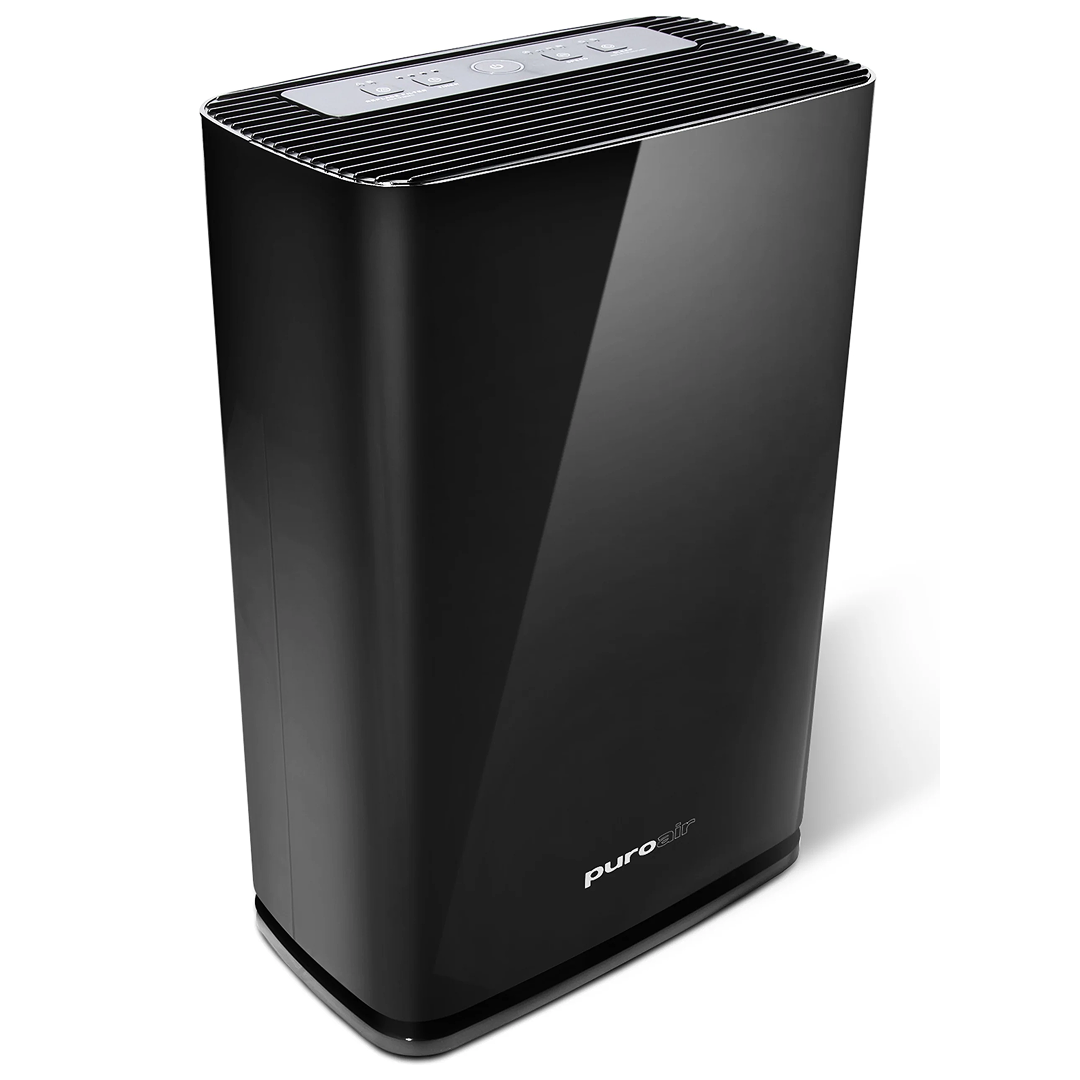
PuroAir 400 — HEPA 14 Air Purifier
- Covers large rooms up to 2,145 sq ft
- World’s first HEPA 14 filter — removes 99.995% of particles
- Auto air quality sensor · whisper-quiet · free shipping
- 100-day money-back guarantee · trusted by 900,000+ customers
We may earn a small commission if you buy through this link — at no extra cost to you.
Why Budget Air Purifiers Have a Bad Reputation (And When That’s Deserved)
The reputation problem is real, and it comes from one specific corner of the market: filtered fans masquerading as air purifiers. You’ve seen them — a $30 tower fan with a thin foam sheet labeled “HEPA-style” that captures maybe 40% of particles above 10 microns. That’s not air purification. True HEPA filtration, by definition, captures at least 99.97% of particles at 0.3 microns — the hardest size to trap because particles at that diameter are too small to settle by gravity but too large to follow airflow smoothly around a fiber. Cheap filters don’t come close to this, and the difference matters enormously if you’re dealing with fine dust, pet dander, or mold spores, which typically range from 1 to 30 microns but whose fragments can go much smaller.
That said, the under-$200 segment absolutely contains legitimate True HEPA units from reputable brands — Levoit, Coway, Winix, and Blueair’s entry-level line among them. Where budget units genuinely fall short compared to premium models is in room coverage, fan noise at higher speeds, and the quality of activated carbon layers for VOC and odor absorption. A $150 purifier might have a thin carbon pre-filter that addresses light cooking smells but won’t tackle a serious VOC load the way a 5-pound granular carbon bed can. That’s an honest limitation worth knowing upfront, not a reason to avoid the category entirely.
[SECONDARY_IMAGE]
PuroAir 240 — HEPA Air Purifier
- Ideal for bedrooms and rooms up to 240 sq ft
- Captures 99.9% of airborne pollutants including mold spores
- Whisper-quiet sleep mode — won’t disturb your rest
- 100-day money-back guarantee · trusted by 900,000+ customers
We may earn a small commission if you buy through this link — at no extra cost to you.
The Specs That Actually Matter Under $200
Most people don’t think about this until they’ve already bought the wrong unit and wondered why the air doesn’t feel any different: CADR — Clean Air Delivery Rate — is the single most important number on the box, and it’s almost always buried in tiny print. CADR measures how many cubic feet of air per minute the purifier cleans at a specific particle size (dust, smoke, pollen), so a unit with a CADR of 200 for dust can deliver 200 cubic feet of dust-free air every minute. The general rule is that your purifier’s dust CADR should be at least two-thirds of your room’s square footage for one complete air change per hour. For meaningful air quality improvement, you want 4–5 air changes per hour, which means the CADR requirement goes up fast in larger rooms.
Beyond CADR, here’s what to evaluate before spending your money on any budget air purifier:
- True HEPA certification, not “HEPA-type”: The label must say True HEPA or H13 HEPA. “HEPA-type,” “HEPA-like,” or “99% HEPA” are marketing terms with no standardized performance requirement. H13 is actually the medical-grade tier — capturing 99.95% of particles at 0.3 microns — and several sub-$200 units now include it.
- CADR relative to your room size: A CADR of 150–200 is appropriate for a 150–200 sq ft bedroom. For a 350 sq ft open-plan living area, you need a CADR of at least 230, and many budget units simply don’t get there. Don’t guess — check the AHAM-certified CADR number specifically.
- Annual filter replacement cost: This is where budget units quietly get expensive. A $100 purifier with a $60 filter that needs replacing every 6 months costs more over two years than a $160 model with a $30 filter lasting 12 months. Do the math before you buy.
- Pre-filter washability: A washable pre-filter captures large particles (hair, lint, larger dust) before the HEPA layer, extending HEPA life significantly. Budget units that skip a proper pre-filter will burn through their main filter 30–40% faster.
- Noise level at sleep speed: Budget units are often tested at their lowest fan setting for noise ratings — usually around 25–30 dB — but that lowest setting may move so little air it barely qualifies as filtration. Check whether the unit’s rated coverage is achievable at a noise level you can actually sleep through (under 35 dB).
- No ozone generation: Some budget purifiers include ionizers or UV lamps that produce ozone as a byproduct. Ozone is a lung irritant, and the EPA has explicitly flagged ozone-generating purifiers as health risks. Look for units that are ozone-free certified, or simply disable the ionizer function if the unit includes one.
The Best Budget Air Purifiers Under $200 Worth Buying
There are a handful of models in this price range that consistently perform well in independent testing, maintain reasonable filter costs, and have genuine True HEPA filtration verified by AHAM. Whether the right one for you depends on your room size, your primary concern (allergens, odors, particles, or all three), and how much noise you’re willing to tolerate at night — which is genuinely a personal threshold that varies a lot. Here are the standout options across different use cases:
Each of these has meaningful trade-offs, which is why the “best” answer isn’t one-size-fits-all in this category:
- Coway AP-1512HH Mighty: The closest thing to a consensus pick for bedrooms up to 360 sq ft. CADR of 246 for dust, washable pre-filter, and a pollution indicator light that’s surprisingly useful. Filter replacement runs around $20–25 and lasts 6–12 months depending on air quality. Its ionizer can be switched off — do that.
- Winix 5500-2: Better carbon layer than most budget units, making it more effective for cooking odors and light chemical smells. CADR of 243, covers up to 360 sq ft. The PlasmaWave feature generates trace ozone — turn it off. With it off, this is a clean, effective filtration unit with a solid build quality that punches above its price.
- Levoit Core 300-S: Compact cylinder design, genuinely quiet at sleep mode (around 24 dB), and smart app connectivity. Best suited to rooms under 200 sq ft — the CADR of 145 isn’t enough for larger spaces. Filter cost is reasonable at around $20, but it’s a smaller filter surface, so replacement frequency is higher in dusty homes.
- Levoit Core 400S: The step-up version with a CADR of 260, covering up to 403 sq ft. App-controlled, has an auto mode that responds to air quality sensor readings, and the H13 HEPA filter is a genuine upgrade. Usually sits just under $200 at retail — worth the extra spend over the 300-S if you need to cover a living room or large bedroom.
- Blueair Blue Pure 411i Max: Unusually quiet for its CADR rating, with a fabric pre-filter that’s washable and comes in different colors (trivial, but people like it). Covers up to 190 sq ft effectively. Not the strongest choice for heavy odors, but for particulate filtration — dust, pollen, pet dander — it’s genuinely excellent and whisper-quiet.
- Honeywell HPA300: Largest room coverage in this list at up to 465 sq ft, with a CADR of 300 for dust. It’s not quiet and the filter costs are higher than competitors, but if raw coverage is your priority — say, an open-plan kitchen-living area — nothing under $200 moves more clean air. Just budget $50–60 annually for filters.

PuroAir HVAC Mega Filter — MERV 13
- Captures dust mites, mold spores and allergens
- MERV 13 + activated carbon — dual filtration
- Designed for optimal airflow · fits any HVAC system
- Free shipping always · easy DIY installation
We may earn a small commission if you buy through this link — at no extra cost to you.
Side-by-Side Comparison: Budget HEPA Air Purifiers Under $200
Comparing these models gets confusing fast because manufacturers don’t always list specs in the same format — some emphasize room coverage in square feet, others lead with CADR, and filter costs are rarely mentioned on the front of the box. The table below normalizes the key numbers so you can compare apples to apples. Approximate street prices fluctuate, but the relative positioning between models stays consistent. If your humidity regularly sits above 60% RH — which affects how quickly filters load up with mold spores and dust mite debris — expect filter life on the shorter end of the listed range. Keeping a close eye on your indoor humidity readings pays off here; if you need a reliable way to track that, a quality hygrometer makes a real difference. You can find our tested picks in our guide to the Best Smart Hygrometers with WiFi and App Alerts, which covers models that send alerts when conditions drift into the range that stresses your filters.
One thing worth noting: CADR for smoke is generally the most conservative of the three CADR ratings (dust, pollen, smoke) because smoke particles are the finest — typically 0.1–1 micron. If a unit has a high smoke CADR, it’s performing well across all particle sizes. Units where smoke CADR is dramatically lower than dust CADR are often compensating with fan speed rather than filtration quality.
| Model | True HEPA Grade | CADR (Dust) | Room Coverage | Annual Filter Cost (approx.) | Noise at Low (dB) | Ionizer / Ozone Risk |
|---|---|---|---|---|---|---|
| Coway AP-1512HH Mighty | True HEPA | 246 | Up to 360 sq ft | $20–30 | ~24 dB | Yes — turn off |
| Winix 5500-2 | True HEPA | 243 | Up to 360 sq ft | $25–35 | ~27 dB | Yes — turn off |
| Levoit Core 300-S | H13 HEPA | 145 | Up to 200 sq ft | $18–25 | ~24 dB | No |
| Levoit Core 400S | H13 HEPA | 260 | Up to 403 sq ft | $25–35 | ~26 dB | No |
| Blueair Blue Pure 411i Max | True HEPA | 190 | Up to 190 sq ft | $30–40 | ~17 dB | No |
| Honeywell HPA300 | True HEPA | 300 | Up to 465 sq ft | $45–60 | ~32 dB | No |
PuroAir 240
HEPA Air Purifier
Best for
Bedrooms, nurseries, small offices
PuroAir 400
HEPA 14 Air Purifier
Best for
Living rooms, mold & allergy sufferers
We may earn a small commission if you buy through these links — at no extra cost to you.
Getting More From a Budget Purifier: Placement, Usage Habits, and the Humidity Factor
A $150 purifier placed correctly will outperform a $300 unit placed badly. The physics here are simple: air purifiers clean the air that passes through them, so anything that restricts airflow to the intake reduces effectiveness dramatically. Placing a unit in a corner with 3 inches of clearance on two sides can cut actual airflow by 30–40% compared to placing it 18–24 inches from the nearest wall. For bedroom use specifically, the most effective position is typically 3–6 feet from the head of your bed, elevated slightly off the floor (a small stool or nightstand works), so the purifier is processing air in your actual breathing zone rather than recirculating floor-level particles upward. Budget units with 360-degree air intake — cylinders like the Levoit Core series — are more forgiving about placement than front-intake models.
High indoor humidity and air purification interact in ways that most buyers never consider. When relative humidity climbs above 60%, dust mite populations explode — their populations can increase 2–5 times higher than at 45% RH — and mold spore counts in the air rise substantially. Both of these are particle loads that your HEPA filter has to handle. So paradoxically, running an air purifier in a chronically humid apartment without addressing the humidity itself is like bailing out a boat without plugging the hole. The filter will load up faster, replacement costs go up, and you’re addressing symptoms rather than causes. If your apartment has persistent humidity problems alongside air quality concerns, it’s worth looking at dedicated moisture control — our breakdown of the Best 70-Pint Dehumidifiers for Large Rooms and Whole Floors covers the heavy-duty end of that solution. Getting humidity down to 40–50% RH before running your purifier consistently makes the purifier dramatically more effective at everything it’s designed to do.
Pro-Tip: Run your air purifier on its highest fan speed for 30–60 minutes after cooking, vacuuming, or any activity that kicks up particles — then drop to a lower sleep-friendly speed. This rapid initial cleanup prevents particle loads from settling into soft furnishings where they become a secondary source of contamination. Most budget units can clean a 300 sq ft room down to very low particle counts within 45 minutes at full speed, but it can take 3+ hours at the lowest fan setting to achieve the same result.
“The performance gap between a well-chosen $150 True HEPA unit and a $350 premium model is much smaller than the marketing suggests for standard residential use. Where budget units genuinely lose ground is in activated carbon mass for VOC reduction and in coverage area — a thin carbon pre-filter simply can’t adsorb the same volume of gaseous pollutants as 3–5 pounds of granular activated carbon. For particle filtration of allergens, mold spores, and fine dust, the filtration mechanism is essentially the same at both price points if you’re starting from a True HEPA or H13 filter. The key variable most consumers overlook is CADR relative to actual room volume — not floor area, but volume including ceiling height — which changes the calculation significantly in high-ceiling apartments.”
Dr. Melissa Harte, Indoor Environmental Quality Consultant and Certified Industrial Hygienist (CIH)
Breathing cleaner air at home doesn’t require a massive investment — it requires the right investment. A True HEPA unit with an appropriate CADR for your room size, an ozone-free design, and a realistic understanding of what it can and can’t do will make a genuine, measurable difference in your indoor air quality within days of running it consistently. The units covered here represent the honest best of what under $200 can get you: real filtration, reasonable running costs, and performance that holds up under scrutiny. Pick the one that fits your room size and noise tolerance, keep the humidity in check, and give it 48–72 hours to turn over the air in your space several times — you’ll likely notice the difference faster than you expect.
Frequently Asked Questions
What are the best air purifiers under $200?
Some of the top picks under $200 include the Levoit Core 300, Winix 5500-2, and Coway AP-1512HH — all of which use true HEPA filtration and have strong user ratings. The Winix and Coway models are especially solid for rooms up to 360 square feet, and they’re easy to find at major retailers. You don’t need to spend more than $150 to get a unit that genuinely cleans the air.
Do cheap air purifiers actually work?
They do, as long as they use a true HEPA filter rated to capture particles at 0.3 microns with at least 99.97% efficiency — that standard doesn’t change based on price. Budget units under $200 handle dust, pollen, pet dander, and smoke reasonably well in small to medium rooms. Where they tend to fall short is coverage area and noise levels compared to premium models, but for most people, they’re more than enough.
How often do you need to replace filters on budget air purifiers?
Most HEPA filters in budget units need replacing every 6 to 12 months, depending on how often you run the unit and your air quality. Pre-filters, which catch larger particles, should be cleaned or replaced every 2 to 4 weeks. Factor in replacement filter costs — usually $20 to $40 per set — when comparing models, because that adds up over time.
What room size can a $200 air purifier cover?
Most air purifiers in the $100 to $200 range are rated for rooms between 200 and 400 square feet, which covers a typical bedroom or small living room. For best results, look for a unit with a CADR (Clean Air Delivery Rate) of at least 200 for dust and smoke if you’re treating a room around 300 square feet. Running a unit in a smaller space than its rating actually speeds up how quickly it cleans the air.
Is a HEPA air purifier worth it for allergies?
Yes — true HEPA filters are one of the most effective tools for reducing airborne allergens like pollen, dust mites, and pet dander, which are common allergy triggers. Studies show that running a HEPA air purifier in a bedroom can meaningfully reduce allergy symptoms, especially overnight. Just make sure the unit you pick has a certified true HEPA filter, not just ‘HEPA-type,’ which doesn’t meet the same filtration standard.