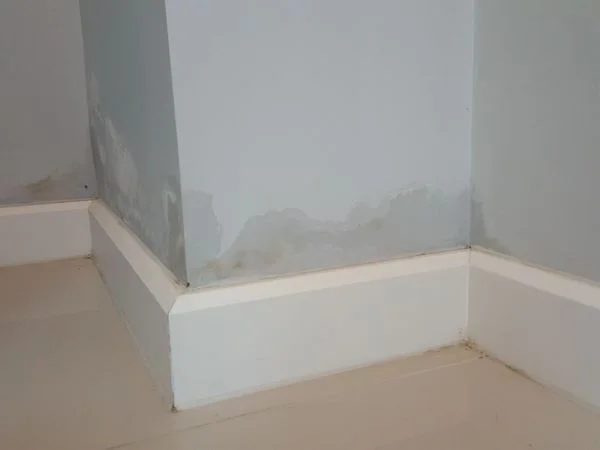
Bottom line: Treating condensation like rising damp — or vice versa — is the single most expensive mistake homeowners make with moisture problems. They look similar on the surface, but they come from completely different places, respond to completely different fixes, and the wrong treatment will waste hundreds of pounds while the real problem quietly gets worse.
Why Getting This Wrong Costs You More Than Fixing It Right the First Time
Treating the wrong problem is shockingly common — not because people are careless, but because both issues produce similar visible symptoms. You see dark patches, you feel a cold wet wall, maybe you spot some mold creeping along a corner. It all looks the same standing in your living room at 7am wondering what’s going on.
Here’s the thing most articles skip: the financial stakes aren’t equal. A condensation problem might cost you £20 in better ventilation. A misidentified penetrating damp case that gets “treated” with surface mold spray and a repaint? That’s a problem that comes back in six weeks, harder and wider, sometimes with structural consequences underneath.
That’s exactly the angle this article takes. Not just “here are the differences” — but why the distinction changes everything about what you do next, and which signs are actually reliable versus which ones mislead people every single day.
What Exactly Are Damp Walls and What Causes Them?
Damp walls are walls that carry moisture introduced from an external or structural source — not from the air inside your home. That distinction is everything. The moisture is entering the wall fabric itself, traveling through the building material, and showing up on the interior surface after the fact.
There are three main structural types: rising damp, penetrating damp, and damp from plumbing leaks. Rising damp moves upward through masonry via capillary action when a damp proof course has failed or was never properly installed — it typically shows up in a band across the lower 1 meter of a wall. Penetrating damp comes in horizontally, often through cracks, failed pointing, or defective flashings, and shows up wherever the breach is, not just at floor level.
Plumbing-related damp is often the most misread of the three because it can appear anywhere — behind a bathroom wall, under a kitchen cabinet — and gets mistaken for condensation because the source is invisible. If you’re seeing damp patches that don’t follow weather patterns or room temperature changes, hidden pipe leaks should be on your list before you call it condensation.
What Is Condensation and How Does It Actually Form?
Condensation is moisture from the air inside your home that deposits onto cold surfaces when warm humid air hits a surface below its dew point temperature. It’s not coming through the wall — it’s landing on the wall from your side of it. That’s the core mechanical difference people miss.
Every activity that generates water vapor contributes: cooking, showering, breathing, drying laundry indoors, even running a gas hob releases approximately 0.5 liters of water vapor per hour of use. A family of four generates between 10 and 20 liters of moisture per day through normal daily activity. That vapor has to go somewhere, and cold external walls are its preferred destination.
What most people don’t realize is that condensation often strikes on internal walls too — not just the cold exterior ones — when there’s a thermal bridge, a poorly insulated section of wall, or a cold pipe running behind plaster. Finding condensation on an internal partition wall doesn’t automatically mean it’s structural damp; it might mean the wall has a cold spot that’s hitting dew point because of something behind it.
Damp Walls vs Condensation: The Real Diagnostic Differences
The surface appearance of both problems overlaps more than people expect — staining, peeling paint, mold patches, a cold damp feel to the plaster. But the diagnostic clues that actually separate them are specific and learnable. You don’t need a damp meter to narrow it down significantly using observation alone.
Here are the key diagnostic differences, ranked from most reliable to least:
- Location pattern: Condensation forms on the coldest surfaces first — typically window reveals, external wall corners, and north-facing walls. Structural damp follows moisture pathways: upward from floor level (rising damp), inward from a specific breach point (penetrating), or trailing from a pipe route.
- Seasonality: Condensation worsens significantly in winter when indoor-outdoor temperature differentials are highest and ventilation drops. Penetrating damp also worsens in winter but tracks rainfall events rather than temperature — you’ll notice it gets worse after heavy rain, not just because it’s cold.
- The tissue paper test: Hold a single sheet of tissue against the affected wall area for 30 seconds. Condensation-affected walls will dampen tissue immediately on the surface. Structural damp pulls moisture from within — if you scratch back the plaster slightly, the moisture level increases rather than decreases.
- Salt staining (tidemark): Rising damp almost always leaves a visible tidemark — a yellowish or brownish horizontal band — because groundwater carries dissolved salts that crystallize as the water evaporates. Condensation doesn’t produce this effect. No tidemark strongly suggests condensation.
- Mold type and location: Condensation mold tends to grow in patches, often fuzzy and black, on or near the surface — behind furniture, in corners, around window frames. Damp-related mold tends to be embedded deeper in the material, sometimes with a musty smell even where no surface mold is visible.
None of these tests is 100% definitive on its own — which is worth acknowledging honestly. A wall with both condensation and rising damp simultaneously (more common in older terraced houses than people think) will confuse every individual test. In those cases, a calibrated damp meter reading at multiple depths is the only way to be certain.
The Underexplored Reason These Two Problems Get Confused So Often
Here’s the part that most people writing about this topic don’t get into — and it’s the core reason misdiagnosis is so persistent. Structural damp and condensation feed each other. They don’t just look alike; they actively create conditions that make the other worse.
A wall with penetrating damp will be significantly colder than a dry wall of the same construction — wet masonry conducts heat roughly 2 to 3 times faster than dry masonry. That colder surface dramatically lowers the dew point threshold needed for condensation to occur. So a room with mild penetrating damp will also develop condensation problems even at humidity levels that wouldn’t cause condensation on a dry wall.
The result is a homeowner who fixes the penetrating damp (replaces the failed flashing, repoints the brickwork) but still sees surface condensation — and concludes the first fix didn’t work, when actually the wall just needs time to dry out and recover its thermal properties. Conversely, a homeowner with severe condensation who never ventilates properly will keep the wall surface permanently damp, which can eventually start to degrade plaster and pointing in ways that look remarkably like early structural damp. Chasing causes in these situations requires patience and a systematic approach, not just a quick visual check.
“One of the most common errors I see is homeowners treating surface mold without investigating the moisture source. Condensation and structural damp both support mold growth, but they require fundamentally different remediation strategies — getting that wrong doesn’t just delay the fix, it can introduce new problems like trapped moisture behind new renders or sealants.”
Dr. Helen Marsh, Building Pathologist and member of the Chartered Institute of Building
How to Read Your Walls: A Quick Comparison
If you want a fast reference to run through when you’re standing in front of a problematic wall, this table cuts through the noise.
| Feature | Condensation | Structural Damp (Rising/Penetrating) |
|---|---|---|
| Moisture source | Indoor air vapor depositing on cold surface | External water entering wall structure |
| Typical location | Corners, behind furniture, window reveals | Low wall band (rising) or breach point (penetrating) |
| Tidemark / salt staining | Absent | Often present, especially with rising damp |
| Worsens with | Cold weather, poor ventilation, indoor moisture generation | Rainfall, failed external building elements, high water table |
What Does Condensation Actually Damage — and How Quickly?
People tend to underestimate condensation because it feels like a surface problem — a bit of mold you can wipe off, some foggy windows. But persistent condensation runs a longer game on your home than most realize, and the timeline is faster than expected once mold colonizes.
Mold spores need a surface moisture level of around 70–80% relative humidity to germinate and within 24 to 48 hours of that threshold being met, visible growth can begin. Once embedded in plaster, mold isn’t something you remove — you treat the surface while the colony continues in the substrate. Repeated condensation on plasterboard can cause the paper facing to delaminate, the board to soften, and eventually the wall surface to become structurally compromised even though the underlying masonry is technically fine.
Paint failure is usually the first visual signal — bubbling, peeling, or chalky white bloom on painted surfaces. After that comes staining, then mold. If that cycle repeats season after season without address, you’re eventually looking at plaster replacement, not just repainting. The cost trajectory goes from under £50 (improved ventilation) to potentially £500–£2,000 (full plaster strip and replacement) if condensation is ignored for several winters running.
What Does Structural Damp Damage — and Why Is It More Urgent?
Structural damp operates on a different threat level because it compromises the building fabric itself, not just the internal finish. Rising damp carries groundwater salts into masonry and plaster — those salts are hygroscopic, meaning they keep attracting moisture even after the primary damp source is addressed, which is why replastering with salt-resistant render is part of the proper repair process.
Penetrating damp that reaches timber elements — floor joists embedded in wet external walls, window frames, roof timbers near a leak — creates conditions for wet rot and, in cooler stagnant air, dry rot. Dry rot (Serpula lacrymans) can spread beyond the initial damp area into dry timber elsewhere in the structure and has caused extensive damage in older properties where a small roof leak went unaddressed for a couple of winters. A single failed lead flashing causing penetrating damp, left unrepaired for two to three years, can result in timber repair costs that are five to ten times the original flashing replacement cost.
Structural integrity aside, there’s also the issue of what chronic damp does to insulation. Wet insulation — whether mineral wool, EPS board, or any other type — loses most of its thermal performance. A wall cavity with moisture-laden insulation can have an effective U-value close to an uninsulated wall, meaning your heating costs rise even as you can’t quite figure out why the house feels cold despite the boiler running.
How to Fix Condensation: What Actually Works
The fix for condensation is always about reducing moisture in the air or increasing the surface temperature — and ideally both simultaneously. Ventilation is the backbone of any condensation strategy, but not all ventilation is equal. Opening a window in a room that’s also the source of moisture (a bathroom, a kitchen) is good. Opening windows in bedrooms while cooking with the kitchen door open achieves almost nothing and just heats the street.
Here’s what actually moves the needle on condensation:
- Extractor fans with humidistats: A humidistat-controlled fan in the bathroom and kitchen runs automatically when humidity rises above a set threshold — typically 70–75% RH — and doesn’t rely on people remembering to switch it on. This is the single most effective passive intervention for most homes.
- Heating pattern changes: Cold walls condense moisture more readily than warm ones. Low background heat maintained throughout the day outperforms high heat blasted for short periods when it comes to wall surface temperature stability. Letting rooms drop to 10°C or below overnight in winter invites condensation on the cold-up.
- Furniture positioning: Pushing furniture flush against external walls cuts air circulation against the wall surface to almost zero, creating a microenvironment that can be 5–8°C colder than the rest of the room. Leaving a 50mm gap behind large items against external walls makes a measurable difference.
- Dehumidifiers in high-risk rooms: A properly sized dehumidifier (aim for 10–20 liters/day capacity for average UK living rooms) pulls moisture out of the air before it reaches the wall. This is a temporary or supplementary tool — not a substitute for fixing ventilation at source.
- Internal wall insulation on persistently cold walls: Adding 25–50mm of insulated plasterboard to an external wall raises the inner surface temperature above dew point for most of the year, eliminating condensation on that surface. It does change room dimensions slightly and needs careful edge detailing to avoid creating new cold bridges at the perimeter.
Pro-Tip: Before spending anything on dehumidifiers or anti-condensation paint, buy a basic digital hygrometer (under £15) and measure your room’s relative humidity at different times of day. If it’s consistently above 60% RH in living spaces, you have a ventilation problem that no surface treatment will fix. If it’s below 55% RH and you’re still getting condensation, the issue is almost certainly wall surface temperature — which points toward insulation or heating pattern changes rather than ventilation.
How to Fix Structural Damp: Matching the Solution to the Source
Structural damp repairs are not interchangeable. The fix for rising damp is useless against penetrating damp, and vice versa. This is where the diagnostic work done earlier in the process pays off directly in money saved.
Rising damp treatment centers on reinstating a functioning damp proof course — either by chemical injection (drilling a line of holes at low level and injecting a silicone-based DPC cream) or by physical insertion of a new DPC membrane. Chemical injection is the more common modern approach and typically runs £60–£100 per linear meter including professional application. The replastering with salt-resistant renovation plaster is not optional — the old plaster is saturated with hygroscopic salts and will continue to show damp even after the source is blocked unless it’s removed.
Penetrating damp is a detective job. The repair is almost always external — repointing mortar joints, replacing failed flashings, fixing cracked render, clearing blocked gutters or downpipes. The internal surface can be addressed with water-resistant membrane systems or lime plaster, but those are containment, not cure. If you don’t address the external breach, no internal treatment lasts more than a season or two before the damp forces its way back through.
Plumbing-related damp has its own logic entirely — find the pipe, fix the leak, allow the wall to dry naturally (usually 1mm of plaster depth per week in reasonable conditions), then assess whether replastering is needed. Forcing drying with heat or sealants before the wall is properly dry risks trapping salts and moisture in the wall structure, which creates a new secondary damp problem.
When Should You Call a Professional — and Which Professional?
The honest answer is: call a professional when the diagnosis isn’t clear after a systematic look, or when the affected area is more than about 1 square meter and growing. Small condensation patches behind furniture you can manage yourself with the interventions above. A wall that’s consistently wet 40cm up from the floor with tidemarks and salt bloom needs a proper assessment.
Be careful about who you call, though. Many damp-proofing companies make their revenue from remediation work — there’s a documented pattern in the industry of rising damp being diagnosed where condensation is the actual problem, because the treatment is more profitable. A 2011 BRE (Building Research Establishment) report found that rising damp was over-diagnosed and that condensation was a more common cause of similar symptoms than professionals often acknowledged. An independent surveyor or a RICS-qualified building surveyor with no commercial interest in the treatment is a safer starting point than going directly to a remediation contractor.
For condensation-specific issues, a good ventilation installer or a building services engineer can assess your home’s air changes per hour and recommend a whole-home mechanical ventilation strategy if the problem is multi-room and persistent — which is often more cost-effective than treating each room individually.
Can You Have Both Condensation and Damp at the Same Time?
Yes — and it’s more common in older UK housing stock than people expect. A Victorian terrace or Edwardian semi often has solid brick walls with no cavity, no original DPC, and typically poor background ventilation. These homes are structurally prone to rising damp and also generate significant condensation because the occupants have inadvertently made them more airtight with draught-proofing improvements over the years.
A real scenario that illustrates the complexity: a homeowner in a pre-1919 terrace notices persistent damp on the corner wall of their back bedroom, worse in winter. They get a damp proofing survey, are told it’s rising damp, pay for chemical injection and replastering. Six months later the wall is damp again. They assume the treatment failed. But what actually happened is that the rising damp diagnosis was partly correct — there genuinely was some moisture ingress at low level — but the dominant problem in the upper half of the affected area was condensation, amplified by a cold thermal bridge at the corner where two external walls meet. The replastering fixed the rising damp. The condensation carried on regardless.
Separating the two required a secondary assessment with a thermal imaging camera during a cold spell, which showed a significant cold spot at the corner despite the adjacent wall surface being at normal temperature. The actual fix for that corner was 50mm of phenolic insulation board with taped joints and lime finish — not more damp proofing. The lesson: when a treatment doesn’t hold, the instinct should be to check whether there’s a second, different problem running concurrently rather than assuming the first fix failed.
A Forward Look: Why Getting the Diagnosis Right Matters More as Homes Get More Airtight
There’s a pattern emerging that’s worth watching: as homes get more energy-efficient — better glazing, improved draught-proofing, more insulation — they also get less naturally ventilated. Older homes relied on significant adventitious air leakage (through gaps, floorboards, old window frames) to dilute indoor humidity. Seal those paths and indoor moisture levels rise, often dramatically.
This means condensation problems are increasingly common in homes that have recently had energy efficiency upgrades — the very homes where people least expect moisture issues, because the improvement work feels like it should have made things better. Meanwhile, structural damp in those same homes gets harder to spot because the damp patches now compete visually with condensation-related staining on multiple surfaces.
The homeowners who handle this well in the long run are the ones who treat moisture management as an ongoing system to monitor — not a one-time repair to file away. A cheap hygrometer in each main room, annual gutter checks, and an awareness of how the house behaves across seasons will catch problems early, when they’re still the cheap version of themselves.
Frequently Asked Questions
Are damp walls the same as condensation?
No. Condensation is visible water; damp walls involve retained moisture.
Can condensation cause damp walls?
Yes, if it happens repeatedly and drying is slow.
Can walls feel damp without visible condensation?
Yes. Moisture may already be absorbed.
Which one leads to mold more often?
Damp walls, because moisture persists longer.
Are both common in apartments?
Yes. Apartments often experience both.

