
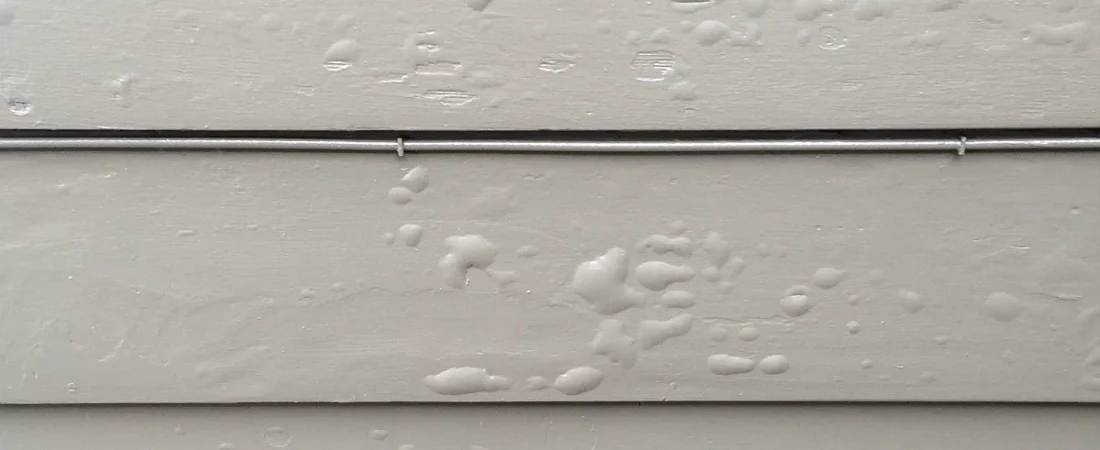
Bubbles under paint are a frustrating indoor wall problem that often appears without warning. The paint surface develops raised, swollen areas that feel soft or hollow when pressed, creating an uneven appearance across your walls. While many homeowners assume these blisters indicate leaks or poor paint quality, the real culprit is often indoor humidity and trapped moisture working beneath the surface.
What Paint Bubbles Actually Are
Paint bubbles, also called blisters, form when moisture disrupts the bond between paint and wall surfaces. Instead of peeling away completely, the paint lifts slightly and traps moisture or air underneath, creating those telltale raised areas. Unlike peeling paint, bubbling represents an earlier stage of moisture damage where adhesion weakens but hasn’t completely failed.
This process happens gradually as moisture builds pressure beneath the paint layer. The paint essentially becomes a barrier that traps humidity rather than allowing it to evaporate naturally, leading to localized swelling and blistering.
How Indoor Humidity Creates Paint Bubbles
Indoor humidity affects painted walls through a slow, often invisible process. When humid air contacts walls for extended periods, moisture penetrates the paint layer or becomes trapped beneath it. Since paint isn’t completely waterproof, this moisture can’t escape evenly, creating pressure that pushes the paint outward.
The process accelerates when humidity fluctuates repeatedly. Walls expand and contract with changing moisture levels while the paint layer struggles to adapt, eventually losing its grip on the surface. This explains why bubbles often appear during seasonal transitions or in rooms with variable humidity levels.
“Paint bubbling typically occurs when relative humidity exceeds 60% for extended periods, especially on exterior walls where temperature differentials create condensation cycles. We see this most commonly in homes with poor ventilation where moisture has nowhere to escape.”
Sarah Chen, Building Moisture Specialist
Why Bubbles Form Without Visible Water Damage
One of the most puzzling aspects of paint bubbling is how it occurs without any obvious leaks or water stains. This happens because humidity alone introduces enough moisture to disrupt paint adhesion over time. The moisture enters through multiple pathways that aren’t immediately visible.
- Humid indoor air penetrating through microscopic paint pores
- Brief condensation cycles that evaporate before being noticed
- Slow moisture absorption through paint layers over months
- Temperature differences creating micro-condensation on wall surfaces
- Seasonal humidity changes causing repeated expansion and contraction
Even walls that appear completely dry can harbor moisture beneath the paint surface. This hidden moisture slowly weakens the paint’s grip, leading to bubbling weeks or months after the initial moisture exposure.
Common Locations for Paint Bubbling
Paint bubbles aren’t random—they follow predictable patterns based on moisture behavior and air circulation. These problem areas typically combine cooler surface temperatures with limited airflow, creating perfect conditions for moisture accumulation.
- Exterior walls, especially north-facing surfaces that stay cooler and dry more slowly
- Room corners where air circulation is reduced and moisture can stagnate
- Areas behind furniture where airflow is blocked and humidity builds up
- Near windows where temperature variations create condensation cycles
- Bathrooms and bedrooms with higher moisture levels from daily activities
- Closets and storage areas with minimal ventilation and air movement
Seasonal Patterns in Paint Bubbling
Paint bubbling often follows seasonal cycles that reveal humidity as the underlying cause. Winter brings cold walls that slow evaporation and increase condensation risk, while summer’s higher humidity can overwhelm your home’s moisture management systems.
Air conditioning adds another layer of complexity by creating temperature differences between cooled indoor surfaces and humid outdoor air. If bubbles appear mainly during certain seasons and improve during others, humidity fluctuations are likely the primary factor.
Humidity-Related vs. Application-Related Bubbles
Not all paint bubbles stem from humidity issues. Poor surface preparation or application problems can also cause blistering, but these behave differently from moisture-related bubbles. Understanding these differences helps identify the real cause and appropriate solution.
| Characteristic | Humidity-Related | Application Issues |
|---|---|---|
| Appearance timing | Gradual over weeks/months | Often within days |
| Seasonal patterns | Common, especially winter/summer | Rare or inconsistent |
| Location preference | Exterior walls, corners | Random distribution |
| Recurrence after repainting | Often returns in same spots | Usually doesn’t repeat |
This distinction explains why simply repainting over bubbles often fails to solve humidity-related problems. The underlying moisture conditions remain unchanged, allowing new bubbles to form in the same locations.
When Paint Bubbles Signal Bigger Problems
Small, isolated bubbles that appear seasonally may represent minor, temporary humidity issues. However, certain patterns indicate more serious moisture imbalances that need attention before they progress to larger problems.
Bubbles deserve closer investigation when they spread across larger wall areas, appear in multiple rooms simultaneously, or return quickly after repairs. These patterns suggest ongoing moisture problems rather than isolated humidity spikes.
Progressive bubbling often sits between initial humidity exposure and more obvious damage like widespread peeling or wall deterioration. Recognizing this early warning sign allows homeowners to address moisture imbalances before they require extensive repairs.
Frequently Asked Questions
Can humidity cause bubbles under paint?
Yes. Indoor humidity is a common cause.
Do paint bubbles always mean leaks?
No. Many occur without any leaks.
Why do bubbles appear on exterior walls?
Because those walls stay cooler and dry more slowly. Exterior walls face outdoor temperature variations that create condensation cycles, and they often have less air circulation to help moisture evaporate. The temperature difference between indoor air and cold wall surfaces makes these areas particularly vulnerable to humidity-related paint problems.
Will repainting stop paint bubbles?
Only if moisture conditions improve. Simply painting over existing bubbles often traps moisture even more effectively, causing the problem to return within months. The underlying humidity issues must be addressed through better ventilation, moisture control, or wall preparation before repainting can provide lasting results.
Are paint bubbles serious?
Not always, but persistent bubbling should be observed. Small, seasonal bubbles may indicate minor humidity fluctuations that resolve naturally. However, bubbles that spread, return after repairs, or appear in multiple rooms often signal ongoing moisture imbalances that can lead to more extensive wall damage if left untreated.
Understanding paint bubbles as an early indicator of humidity problems helps homeowners address moisture issues before they escalate into more expensive repairs. While not every bubble represents a serious problem, recognizing the patterns and causes allows for better decisions about when to monitor, when to act, and when professional assessment might be needed.