
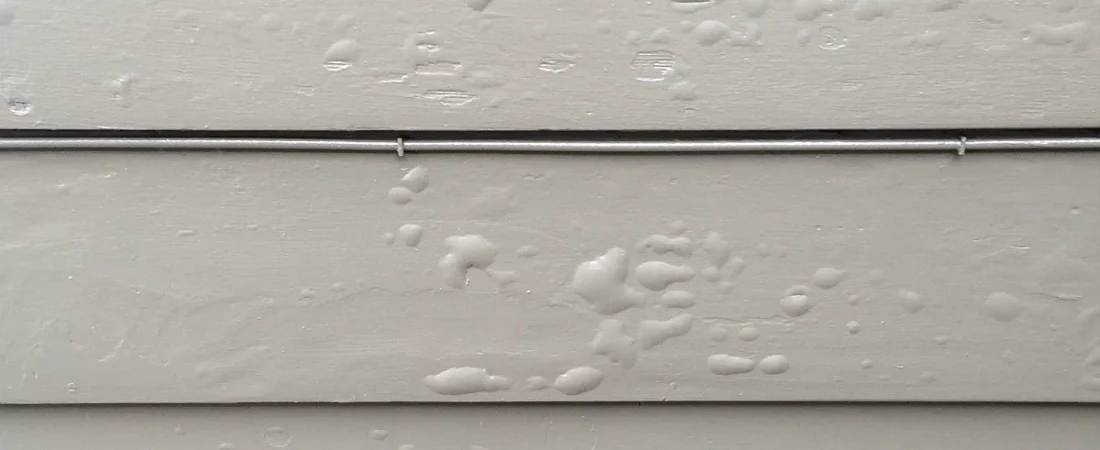
Bubbles under paint are a common indoor wall problem that often appears without warning. The paint surface may look uneven, swollen, or blistered, as if air is trapped underneath. When pressed, these bubbles may feel soft or hollow. Because the wall usually shows no visible water stains or leaks, the cause is often unclear.
In many apartments, bubbles under paint are caused by indoor humidity and trapped moisture, not by plumbing issues or poor paint quality. This article explains how humidity affects painted walls, why bubbles form beneath the surface, and how to understand whether this is a temporary reaction or part of a repeating moisture pattern.
What Paint Bubbles Actually Are
Paint bubbles, also called blisters, form when the bond between paint and wall weakens locally. Instead of peeling away completely, the paint lifts slightly and traps moisture or air underneath. This creates raised areas that look swollen or uneven.
Unlike peeling paint, bubbling often appears earlier in the moisture process. It is a sign that something is interfering with adhesion beneath the surface rather than on top of it.
How Humidity Causes Paint to Bubble
Indoor humidity affects painted walls gradually, not instantly. When humid air remains in contact with a wall for extended periods, moisture can move into the wall surface or remain trapped beneath the paint layer. Paint is not fully waterproof, and when moisture cannot escape evenly, pressure begins to build.
Over time, this pressure pushes the paint outward, forming bubbles. This process is especially common when humidity fluctuates—rising and falling repeatedly—because the wall expands and contracts while the paint layer struggles to adapt.
Why Bubbles Appear Without Leaks
One of the most confusing aspects of paint bubbling is that it often occurs without any leaks or visible water. This happens because humidity alone can introduce enough moisture to disrupt paint adhesion.
Moisture may enter the wall through:
- humid indoor air
- brief, invisible condensation
- slow absorption through paint layers
Even if the wall looks dry, moisture can still be present beneath the paint surface.
The Role of Condensation You Don’t See
Not all condensation forms visible droplets. On cooler walls, condensation can appear briefly and evaporate before it is noticed. Each time this happens, a small amount of moisture interacts with the paint layer.
When this process repeats regularly—overnight, seasonally, or in poorly ventilated rooms—the paint gradually loses its grip on the wall, leading to bubbling rather than immediate peeling.
Where Bubbles Under Paint Appear Most Often
Paint bubbles tend to appear in predictable locations. These areas usually combine cooler surfaces with limited airflow.
Common spots include:
- exterior walls
- corners of rooms
- behind furniture
- near windows
- bathrooms and bedrooms
These locations dry more slowly and are more exposed to humidity-related moisture.
Bubbles Under Paint in Winter vs Summer
Paint bubbling often follows seasonal patterns. In winter, cold walls slow evaporation and increase the chance of condensation forming beneath the paint layer. In summer, higher indoor humidity—sometimes combined with air conditioning—can trap moisture under paint on cooled surfaces.
If bubbles appear mainly during certain seasons and improve at other times, humidity is a likely contributing factor.
Bubbles vs Peeling Paint: How They’re Related
Paint bubbling and peeling are closely related but represent different stages of moisture damage. Bubbling usually appears first, when moisture is trapped but adhesion is only partially compromised. Peeling tends to occur later, when the paint bond has weakened more severely.
This progression explains why bubbling is often an early warning sign rather than a purely cosmetic issue.
Humidity-Related Bubbles vs Paint Application Issues
Paint bubbles are sometimes blamed on poor surface preparation or low-quality paint. While application issues can cause bubbling, humidity-related bubbles behave differently.
| Feature | Humidity-Related Bubbles | Paint Application Issues |
|---|---|---|
| Appear gradually | Yes | Often quickly |
| Seasonal pattern | Common | Rare |
| Linked to cold walls | Often | No |
| Reappear after repainting | Often | Less likely |
| Found in corners/exterior walls | Common | Unusual |
This comparison shows why repainting alone often does not prevent bubbling if humidity remains an issue.
Why Repainting Over Bubbles Often Fails
Repainting over bubbled paint may temporarily improve appearance, but it does not remove trapped moisture. New paint can seal moisture in even more effectively, causing bubbles to return in the same areas.
Unless the underlying moisture conditions change, bubbling may reappear months after repainting.
Bubbles Under Paint and Damp Walls
Paint bubbles are often linked to damp walls rather than isolated humidity spikes. Damp walls retain moisture and release it slowly, keeping the area beneath the paint consistently stressed.
This is why bubbling often appears in the same spots repeatedly and why it may coexist with damp smells or cold wall surfaces.
When Bubbles Under Paint Are Considered Minor
Small, isolated bubbles that appear seasonally and do not spread may be considered minor. These often reflect temporary humidity conditions and may stabilize when indoor air becomes drier or walls warm up.
When Bubbling Becomes a Pattern
Bubbles under paint deserve closer attention when they:
- spread across larger areas
- appear in multiple rooms
- return after repairs
- develop into peeling or flaking
Persistent bubbling usually indicates ongoing moisture imbalance rather than a one-time issue.
How Paint Bubbling Fits Into the Moisture Cycle
Paint bubbling often sits between:
humidity → condensation → damp walls → paint failure
Understanding this sequence helps explain why bubbling appears before more obvious wall damage.
Bubbles under paint are commonly caused by indoor humidity and trapped moisture rather than leaks or paint defects. Humid air, invisible condensation, and slow-drying wall surfaces allow moisture to build beneath the paint layer, weakening adhesion and causing blistering over time. This process often follows seasonal patterns and appears first on exterior walls, corners, or areas with limited airflow.
Bubbling paint becomes more significant when it spreads, returns after repainting, or progresses to peeling. Recognizing paint bubbles as an early sign of moisture imbalance helps explain why cosmetic fixes alone may not solve the problem.
Frequently Asked Questions
Can humidity cause bubbles under paint?
Yes. Indoor humidity is a common cause.
Do paint bubbles always mean leaks?
No. Many occur without any leaks.
Why do bubbles appear on exterior walls?
Because those walls stay cooler and dry more slowly.
Will repainting stop paint bubbles?
Only if moisture conditions improve.
Are paint bubbles serious?
Not always, but persistent bubbling should be observed.