
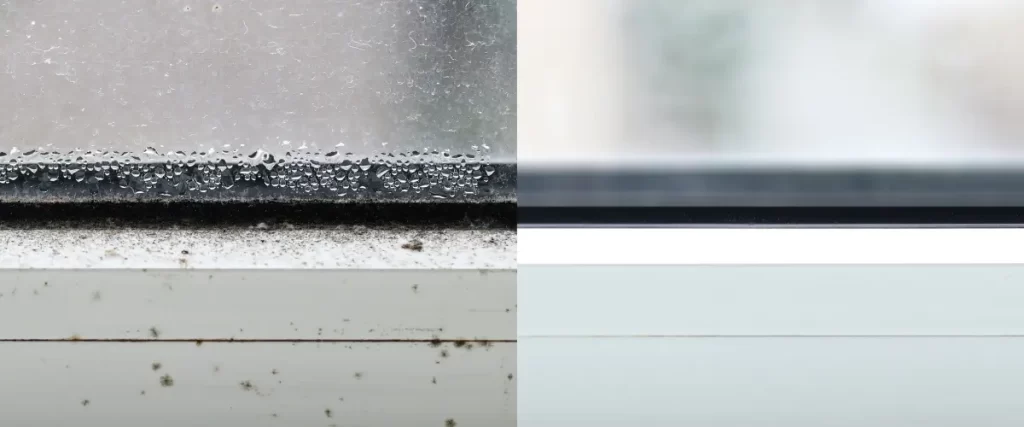
Condensation and humidity are often used as if they mean the same thing. Many people notice water on windows or damp walls and describe the problem simply as “high humidity.” Others experience musty smells or mold and assume condensation must be present somewhere.
In reality, humidity and condensation are related but fundamentally different indoor moisture processes. Understanding the difference between them helps explain why moisture appears in certain places, why problems repeat, and why some apartments feel damp even when nothing looks wet.
This article clearly explains the difference between condensation and humidity, how they interact indoors, and why confusing them often leads to misunderstandings.
What Humidity Is
Humidity refers to the amount of water vapor in the air. It is invisible and measured as a percentage, usually called relative humidity.
In apartments, humidity comes from everyday life:
- breathing
- showering
- cooking
- drying clothes indoors
Humidity is always present. The question is not whether humidity exists, but how much of it is in the air and how long it stays there.
What Condensation Is
Condensation is what happens after humidity interacts with temperature.
Condensation occurs when:
- warm, moist air touches a cold surface
- the air cools down at that surface
- excess moisture turns into liquid water
Unlike humidity, condensation is visible. It appears as droplets, damp patches, or moisture on surfaces like windows, walls, or ceilings.
The Key Difference Between Condensation and Humidity
The simplest way to understand the difference is this:
- Humidity is moisture in the air
- Condensation is moisture leaving the air and turning into water
Humidity is a condition.
Condensation is a result.
You can have high humidity without visible condensation, and you can sometimes see condensation even when overall humidity does not feel extreme.
Why Humidity Does Not Always Cause Condensation
Humidity alone does not guarantee condensation.
Condensation appears only when:
- surfaces are cold enough
- temperature differences are strong
- airflow is limited
An apartment can have high humidity but no visible condensation if:
- surfaces stay warm
- air circulates well
- moisture spreads evenly
This is why humidity problems can exist quietly without obvious signs.
Why Condensation Often Appears Suddenly
Condensation can feel sudden because it depends heavily on temperature.
For example:
- a cold night
- a drop in outdoor temperature
- heating turning on
- windows cooling overnight
Humidity may already be present, but condensation becomes visible only when surfaces cross a temperature threshold.
Condensation Without High Humidity
It is possible to see condensation even when indoor humidity does not seem very high.
This happens when:
- window glass is extremely cold
- exterior walls cool rapidly
- air contacts cold surfaces directly
In these cases, surface temperature matters more than overall humidity level.
Humidity Without Visible Condensation
The opposite situation is also common.
Apartments may have:
- elevated humidity
- damp-feeling air
- musty odors
but no visible water on surfaces. This usually happens when:
- surfaces are warm
- condensation evaporates quickly
- moisture remains suspended in the air
This type of humidity often goes unnoticed until secondary issues appear.
How Condensation and Humidity Work Together
Humidity and condensation are not separate problems — they are part of the same moisture cycle.
Typical indoor sequence:
- moisture is released into the air
- humidity level rises
- warm air moves through rooms
- air meets cold surfaces
- condensation forms
- moisture may evaporate back into the air
This cycle can repeat daily, especially in apartments with limited ventilation.
Condensation vs Humidity on Windows
Windows clearly show the difference between the two.
- Humidity is what builds up in the room
- Condensation is what appears on the glass
High humidity increases the likelihood of window condensation, but condensation appears only when glass becomes cold enough.
Condensation vs Humidity on Walls
Walls often blur the distinction.
Humidity may:
- be absorbed slowly by walls
- remain invisible
Condensation may:
- form briefly
- evaporate quickly
- leave walls feeling dry
Yet moisture can still remain within wall materials even when no droplets are visible.
Seasonal Differences Between Condensation and Humidity
Winter
- indoor air is warm
- surfaces are cold
- condensation is more visible
Summer
- air may be humid
- surfaces are cooler due to AC
- condensation may appear on cooled areas
Seasonal patterns often explain why problems feel worse at certain times of year.
Why Condensation Is Often Blamed Instead of Humidity
People notice condensation because it is visible. Humidity is invisible and harder to understand.
As a result:
- condensation gets blamed as the “problem”
- humidity remains unnoticed
- underlying moisture imbalance continues
In reality, condensation is usually a symptom, not the root cause.
Condensation, Humidity, and Mold
Both condensation and humidity influence mold growth, but in different ways.
- Humidity provides long-term moisture
- Condensation creates localized damp surfaces
Mold often develops where both are present repeatedly, especially in areas with limited airflow.
Which Is More Important to Control Indoors?
Neither condensation nor humidity exists alone.
However:
- controlling humidity reduces the chance of condensation
- reducing condensation does not always lower humidity
This is why indoor moisture discussions often start with humidity but focus on condensation when visible issues appear.
Common Misunderstandings
Some common misconceptions include:
- “Condensation means leaks”
- “No condensation means no moisture problem”
- “Humidity and condensation are the same thing”
These misunderstandings make indoor moisture issues harder to diagnose.
How to Think About Condensation vs Humidity Correctly
A more accurate way to think about them is:
- humidity = moisture potential
- condensation = moisture expression
Humidity sets the stage.
Condensation shows where conditions allow moisture to appear.
Condensation and humidity are closely connected but not the same. Humidity refers to moisture in the air, while condensation is the visible result of that moisture turning into liquid on cold surfaces. One can exist without the other, but they often work together in apartments where temperature differences and ventilation limitations are common.
Understanding the difference between condensation and humidity helps explain why moisture appears in specific locations, why problems may seem seasonal, and why visible water is not always present even when indoor air feels damp. When viewed as parts of the same moisture cycle, condensation and humidity become much easier to interpret.
Frequently Asked Questions
Is condensation the same as humidity?
No. Humidity is moisture in the air, condensation is liquid water on surfaces.
Can you have humidity without condensation?
Yes. Moisture can stay in the air without forming droplets.
Can condensation happen with low humidity?
Yes, if surfaces are cold enough.
Which causes mold more, humidity or condensation?
Both contribute, especially when they occur repeatedly.
Why is condensation more visible in winter?
Because cold surfaces make moisture condense more easily.