
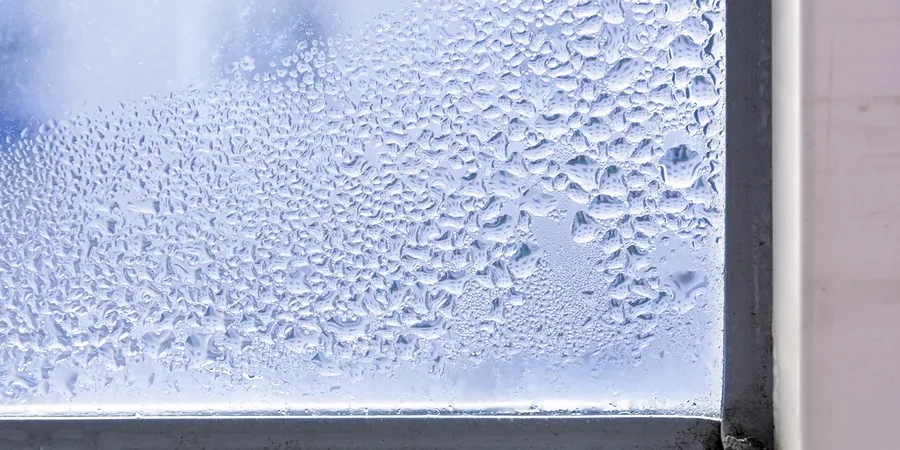
Glass doesn’t lie. When you see condensation on windows inside your apartment, the window itself is almost never the problem — and that misunderstanding is why most people waste money on “fixes” that don’t fix anything.
Bottom Line Up Front
Condensation on windows inside an apartment forms when warm, moisture-laden indoor air meets a glass surface cold enough to drop that air below its dew point. The water you’re seeing isn’t leaking in from outside — it’s coming out of your own indoor air. Whether that’s normal or a warning sign depends almost entirely on where the condensation forms, how much of it there is, and whether it’s happening seasonally or year-round.
Why Condensation on Windows Inside Is Blamed on the Wrong Thing
Here’s what most articles get wrong: they treat window condensation as a window problem. It’s not. Your windows are just the messenger — they’re the coldest surface in the room, so they’re the first place excess humidity decides to show up visibly. Blaming the window for condensation is like blaming your car’s windshield for morning fog.
The real variable is your indoor relative humidity. When indoor humidity climbs above roughly 40–50% during cold weather, and your window glass drops below the dew point temperature, condensation is a physical certainty — not a sign of defective windows or poor construction. This is basic thermodynamics, but it has a very practical implication: fixing the condensation means managing your air, not replacing your glass.
That said, the location of the condensation does matter. Interior condensation on the room-facing pane of a double or triple-glazed window is a humidity issue. Condensation between the panes is a failed seal. Condensation on the exterior surface is usually harmless and actually signals good insulation. Those three scenarios have completely different solutions, and mixing them up leads to expensive misdiagnoses.
What Actually Causes Condensation on Windows Inside Apartments
Air holds water vapor in proportion to its temperature — warmer air holds more, cooler air holds less. When warm indoor air touches the cold glass surface of a window, the air immediately adjacent to the glass cools rapidly. Once it cools past its dew point (the temperature at which it can no longer hold its current moisture load), that water vapor has nowhere to go but out — straight onto the glass as liquid water.
Apartments create this condition more readily than detached houses for a few specific reasons. Shared walls with heated neighbors mean you have less external surface area losing heat, which keeps your indoor air warmer and more able to hold humidity. You’re also often dealing with a smaller volume of air that gets saturated faster by everyday activities like cooking, showering, and even breathing.
The counterintuitive fact most people never hear: a well-insulated, energy-efficient apartment can actually produce more interior window condensation than an older, draftier one. Older buildings leaked air constantly, which flushed humidity out naturally. Modern airtight construction traps that moisture inside. So if you moved into a “better” apartment and suddenly have more condensation, that’s likely why.
What Are the Main Sources of Moisture in an Apartment?
Understanding where your indoor humidity comes from is the first step toward actually controlling it. You can’t address a problem you can’t locate, and in apartments, the sources are often surprising in their volume.
- Cooking: A pot of boiling pasta releases roughly 1–2 pints of water vapor into the air. If your kitchen exhaust fan vents into the apartment rather than outdoors (common in older buildings), all of that moisture stays with you.
- Showering: A 10-minute shower can add up to a pint of water vapor to indoor air, especially in bathrooms with poor or recirculating ventilation.
- Breathing and transpiration: Two people simply existing in a room release roughly 1–2 pints of water vapor per hour through breathing and skin perspiration. With multiple occupants, this adds up fast.
- Houseplants: A single large plant can transpire up to a cup of water per day into the surrounding air — a collection of 10 or 15 plants becomes a meaningful humidity source.
- Humidifiers: Often the single biggest contributor when condensation becomes severe. Portable humidifiers are frequently set too high, especially during winter, because people associate “more is better” with comfort.
- New construction materials: Freshly plastered or concrete walls in a new build or recent renovation can off-gas significant moisture for months — up to a year in some cases.
Condensation Patterns on Windows: What Each One Tells You
Where and how condensation appears on your window is diagnostic information, not just an annoyance. Treating every pattern the same way means ignoring what the condensation is actually trying to tell you.
| Condensation Location | What It Means | Action Required |
|---|---|---|
| Interior surface of inner pane (room-facing glass) | Indoor humidity too high for current outdoor temperature | Reduce indoor humidity; improve ventilation |
| Between the panes (inside the sealed unit) | Failed or degraded seal on double/triple glazing | Replace the glazing unit — this won’t resolve on its own |
| Exterior surface of outer pane | Window insulating well; outside air is humid and cool | None needed — this is a sign the window is performing correctly |
The between-pane scenario is worth emphasizing because it gets misidentified constantly. If you see a foggy or hazy look that never wipes off — because it’s sealed behind the glass — that’s a failed insulating unit. It won’t get better with humidity management because your indoor air isn’t actually touching that surface. You’ll need a glazier to replace the sealed unit, or eventually the entire sash.
Interior condensation that appears only on the bottom corners of windows is one of those patterns that seems alarming but is usually benign. The corners are where the glass is coldest and airflow is lowest, so they hit the dew point first. If it clears by mid-morning on cold days, you’re looking at normal seasonal behavior rather than a humidity crisis.
When Is Condensation on Windows Inside Actually Normal?
Seasonal, light condensation on single-pane windows during the coldest months is genuinely normal — and telling tenants otherwise sets unrealistic expectations. Single-pane glass has almost no insulating value; its interior surface temperature in winter can drop to within a few degrees of the outdoor air temperature, making condensation almost unavoidable when humidity is anywhere near typical indoor levels.
For double-glazed windows, the threshold shifts. You should generally be able to maintain 35–40% indoor relative humidity in cold weather without seeing interior condensation on a functional double-pane window. If you’re seeing heavy condensation on double-pane glass at those humidity levels and the outdoor temperature isn’t extreme (below -10°C / 14°F), that’s worth investigating — either the seal is compromised, or airflow across the glass is being obstructed by heavy curtains that trap cold air at the surface.
Here’s an honest nuance that depends entirely on your situation: what’s “normal” shifts based on your floor level, which direction your windows face, and even your building’s ventilation design. A ground-floor north-facing apartment in a dense urban building will behave completely differently from a top-floor south-facing unit in the same building. There’s no single benchmark that applies universally — you have to read your own apartment’s patterns over time. For a broader look at this, window condensation varies significantly based on factors specific to your space.
Why Winter Makes Condensation on Windows Inside Worse
Winter is the peak season for interior window condensation, and the reason is a convergence of three simultaneous effects. First, outdoor temperatures drop, making window surfaces colder. Second, heating systems run constantly, warming indoor air and increasing its moisture-holding capacity while simultaneously drying out some air — which paradoxically leads people to run humidifiers more aggressively. Third, windows stay closed, so there’s minimal fresh air exchange to dilute indoor humidity.
The dew point relationship is worth understanding concretely. At 68°F (20°C) indoor air with 50% relative humidity, the dew point sits around 50°F (10°C). That means any surface in your apartment that drops below 50°F will collect condensation. In a well-heated apartment, most surfaces stay above that — except window glass, which can easily reach 40–45°F on its interior surface during a cold snap even with double glazing.
This is why humidity management in winter isn’t just about comfort — it’s about keeping dew points low enough that your windows stay above them. Dropping indoor humidity from 50% to 35% lowers the dew point from roughly 50°F to about 37°F, which is often enough to eliminate condensation entirely on modern windows.
How to Reduce Condensation on Windows Inside an Apartment
Renters face a specific challenge here: you often can’t replace windows, upgrade ventilation systems, or install whole-home dehumidification. What you can control is how much moisture enters the air and how quickly it gets out. Fortunately, that’s also where most of the leverage is.
- Run exhaust fans every time you cook or shower — and keep them running for 15–20 minutes after you finish, not just during. The moisture peak in a bathroom comes after you’ve stepped out.
- Keep indoor humidity between 30–45% in cold weather using a digital hygrometer (available for under $15). Don’t guess — measure. Most condensation problems disappear when humidity is actively managed to this range.
- Keep curtains and blinds open during daylight hours to allow warm air circulation across the glass surface, raising the glass temperature closer to room temperature and reducing condensation risk.
- Move plants away from windows in winter — they transpire moisture directly into the air near the coldest surfaces in the apartment.
- Crack a window briefly each morning — even 5 minutes of air exchange in a single room can significantly reduce overnight humidity accumulation, especially in bedrooms where breathing raises moisture levels all night.
Pro-Tip: If you use a portable humidifier, set it with a built-in humidistat — or pair it with a separate hygrometer in the same room. Humidifiers without automatic shutoffs frequently overshoot target humidity by 10–15%, which is often the entire margin between no condensation and significant condensation on cold window nights.
Can Condensation on Windows Inside Damage Your Apartment?
Light, temporary condensation that evaporates within an hour or two of sunlight or heating activity is unlikely to cause lasting damage. The concern escalates when condensation is heavy, persistent through the day, or pooling on window sills and surrounding frames rather than simply misting the glass.
Persistent moisture on wooden window frames causes swelling, paint failure, and eventually rot. More critically, the corner junction between a window frame and wall is exactly where condensation water tends to run — and that’s also where mold finds its first foothold. Mold colonies can establish in as little as 24–48 hours on persistently damp organic material, and window surrounds are typically painted drywall or wood, both hospitable surfaces.
In apartments specifically, there’s a landlord responsibility dimension worth being aware of. If condensation is severe enough to cause mold growth or structural damage to window frames, and the underlying cause is inadequate ventilation built into the building (rather than excessive tenant humidity generation), that’s typically a landlord repair obligation in most jurisdictions. Documenting condensation patterns with dated photos is worth doing if you suspect a structural ventilation problem rather than a lifestyle one.
The Bedroom Window Problem: Why Overnight Condensation Is Its Own Category
Bedrooms deserve their own treatment because they behave differently from the rest of the apartment. During sleep, one person exhales roughly half a pint of water vapor per hour. Two people in a closed bedroom with the door shut are adding a pint or more of moisture to a small, unventilated air volume every single hour — all night long.
By morning, bedroom windows are often the worst condensation in the apartment, even if the living room glass is perfectly clear. This isn’t a defect or a sign of anything seriously wrong — it’s just the physics of sealed, occupied sleeping spaces. The practical fix is straightforward: leave the bedroom door slightly open to allow air exchange with the rest of the apartment, or crack the window 1–2 cm overnight.
A real-world scenario that illustrates this well: imagine a couple moves into a new apartment and notices heavy condensation every morning on their bedroom windows, but none elsewhere. They call their landlord assuming a window defect. The landlord sends a contractor who finds nothing wrong. The actual cause is the combination of two people sleeping in a small, sealed room — something neither the tenant nor the landlord thought to consider, because most condensation advice talks about the whole apartment rather than room-specific microenvironments.
“Interior window condensation in apartments is almost always a ventilation and occupancy issue before it’s a window issue. What I tell clients is: measure your humidity first, look at your ventilation second, and only then consider whether the windows themselves need attention. Most of the time, the window is simply the most honest surface in the room — it’s showing you exactly what your air is doing.”
Dr. Sarah Mendelson, Building Science Consultant and Certified Industrial Hygienist
Does Window Type Affect How Much Condensation You Get?
Window type matters enormously, and it’s one of the most underappreciated variables in condensation discussions. The core issue is the U-value — essentially how well the window resists heat transfer. A lower U-value means the interior glass surface stays warmer, which means the air near it has to be more humid before condensation forms.
Single-pane windows have U-values around 5–6 W/m²K, meaning the interior glass can be extremely cold in winter — cold enough to cause condensation at indoor humidity levels as low as 25–30%. Double-pane windows with a low-E coating typically have U-values of 1.2–1.8 W/m²K, dramatically raising the interior glass temperature. Triple-pane units push below 0.8 W/m²K, and condensation becomes quite rare except in genuinely extreme cold.
As a renter, you usually can’t upgrade your windows — but understanding this helps you calibrate realistic expectations. If you’re in an older building with single-pane or aluminum-framed windows, some condensation in cold weather isn’t a problem you can fully eliminate without the landlord’s involvement. What you can do is reduce how severe it is and how long it lingers by managing your indoor humidity tightly.
When Should You Actually Be Worried About Condensation on Windows Inside?
Not all condensation is created equal, and it’s worth being clear about the line between “manage it” and “report it.” Light morning condensation that clears within an hour or two as the apartment warms up is almost always a normal seasonal occurrence in climates with real winters — especially in older buildings.
The situations that warrant action or escalation look different. Heavy condensation that runs down the window and pools on the sill daily, condensation that persists past noon even when heating is running, visible mold starting to form on window surrounds or in corners above skirting boards, or condensation appearing on interior walls rather than just windows — these are signs the moisture load in the apartment has exceeded what normal management will handle.
If you’ve reduced your indoor humidity to 35–40%, improved ventilation, and are still seeing persistent heavy condensation on double-pane windows in moderate cold, the building’s ventilation system may be inadequate. That’s a structural issue, not a lifestyle one, and it’s worth raising with your landlord in writing — not just verbally.
Conclusion
Condensation on windows inside an apartment is one of those problems that looks like a building defect but is almost always a physics problem wearing a building defect’s costume. Managing it well means understanding your apartment as a moisture system — where water enters the air, where it has to go, and what happens when those two things get out of balance on a cold morning. As apartments get better insulated and more airtight in newer construction, the people living in them are going to need to become more deliberate about managing indoor humidity — because the building no longer leaks it away for them.
Frequently Asked Questions
Why do I get condensation on windows inside?
Condensation forms because warm, moist indoor air meets cold window surfaces and reaches the dew point temperature. This natural process occurs when indoor humidity levels are high enough and window temperatures drop below the point where water vapor turns to liquid. The temperature difference between heated indoor air and cold glass creates ideal conditions for moisture to condense on the window surface.
Is condensation on windows normal?
Occasional condensation is common, especially in winter when temperature differences are greatest. Light condensation that appears during very cold weather and disappears as temperatures warm up is typically normal. However, persistent heavy condensation or moisture that remains throughout the day may indicate indoor humidity levels that are too high for healthy living conditions.
Why is condensation worse in the morning?
Overnight cooling and reduced airflow increase condensation formation during sleeping hours. Windows reach their coldest temperatures before sunrise, while moisture from breathing accumulates in closed rooms. Heating systems also cycle less frequently at night, reducing air circulation that would normally help prevent moisture buildup on cold surfaces.
Can condensation happen in summer?
Yes, especially with humid air and air conditioning that cools window surfaces significantly. Summer condensation occurs when outdoor humidity exceeds 70% while indoor temperatures are kept below 75°F. This reverse condensation is more common in humid climates where warm, moisture-laden air contacts air-conditioned glass surfaces.