
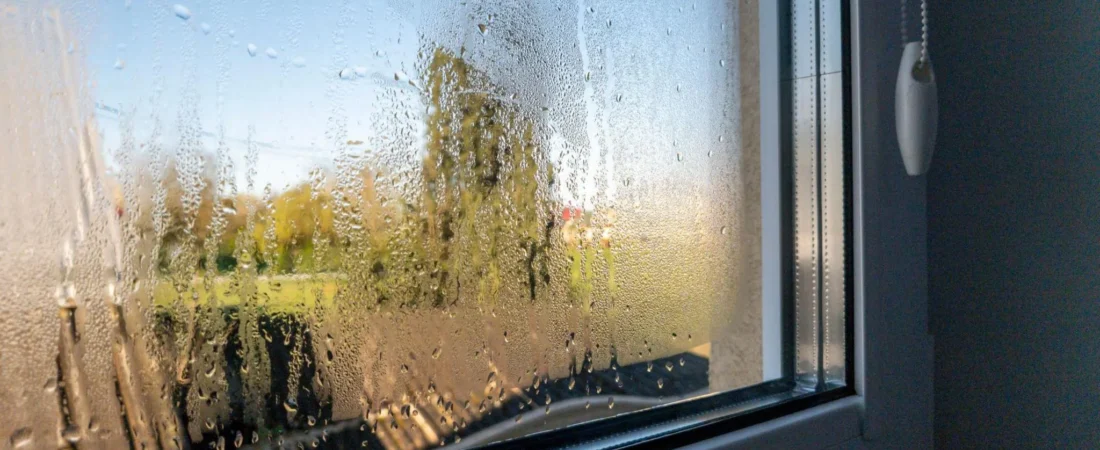
Many people wake up to find water droplets on their windows in the morning, even when the room feels otherwise dry. The glass appears fogged or covered with moisture, yet by midday, the condensation may disappear completely. This common phenomenon occurs when warm air inside the house meets cooler window surfaces overnight, creating the perfect conditions for moisture to collect on glass.
Condensation on windows in the morning is a result of overnight humidity buildup combined with cooling surfaces. This process happens the same way condensation appears on a cold glass of water – when warm, moist air contacts a cooler surface, water vapor turns into liquid droplets. Cold air outside and lower nighttime temperatures cause window glass to become the coldest surface in your home, which is why dew forms there first.
What is Window Condensation
Window condensation is the process where moisture from the air collects on window glass, often making it look foggy or covered in water droplets. This happens when warm, humid air inside your home meets a cold surface—like your window glass—especially during chilly nights. When the temperature of the glass drops to or below the dew point, the water vapor in the air turns into liquid, forming visible condensation.
This is a natural reaction between temperature and moisture. The colder the window surface, the more likely it is that condensation will form, especially if the indoor air is humid. Understanding how window condensation works is the first step to prevent condensation and avoid potential moisture problems in your home.
What Happens to Indoor Air Overnight
At night, indoor conditions change significantly. Doors and windows are closed, movement stops, and airflow becomes minimal. At the same time, moisture continues to enter the air through breathing, and everyday activities like cooking, showering, and even breathing throughout the day contribute to indoor humidity.
Over several hours, this moisture accumulates quietly. All that moisture from these activities can lead to excess humidity accumulating overnight, especially when ventilation is limited. Because there is little air exchange, humidity rises gradually even if the room felt comfortable before sleep. By morning, the air contains more moisture than it did the night before.
| Time of Day | Typical Indoor Humidity | Condensation Risk |
|---|---|---|
| Evening (9 PM) | 35-45% | Low |
| Midnight | 40-50% | Moderate |
| Early Morning (6 AM) | 45-55% | High |
Why Windows Are the First Place Condensation Appears
Windows are usually the coldest surfaces in a room, especially overnight. As outdoor temperatures drop, the glass cools faster than walls or furniture. The effectiveness of window insulation and the condition of window panes can influence how quickly windows cool and how much condensation appears.
When warm, humid indoor air comes into contact with this cooler glass, it releases moisture in the form of condensation. This process happens silently and gradually throughout the night. Windows reveal what the air has been holding – they act as moisture indicators rather than proof of extreme humidity.
The Role of Temperature Drops During Sleep
Nighttime temperature drops play a major role in morning condensation. As indoor air cools, it can hold less moisture. Reduced air flow at night allows air temperature near the windows to drop more quickly, increasing the risk of condensation.
The excess moisture has to go somewhere. Glass surfaces cool quickly, becoming the primary location where moisture settles. Even small temperature differences are enough to trigger condensation when humidity is elevated. This is why condensation often appears suddenly in the morning rather than gradually.
- Indoor air temperature drops by 5-10°F overnight as heating systems cycle less frequently
- Window glass temperature can drop 15-20°F below room temperature on cold nights
- Reduced air circulation allows humidity to concentrate near window surfaces
- Moisture from breathing accumulates in closed bedrooms over 7-8 hours of sleep
- Dew point conditions are reached when glass temperature falls below air moisture saturation point
Types of Window Condensation
Not all window condensation is the same—there are three different types, each with its own causes and implications. The most common is interior condensation, which forms when warm, humid air inside your house comes into contact with the cold inner window surface. This usually happens overnight, when the temperature drops and the glass cools below the dew point temperature.
Exterior condensation appears on the outside pane of the window. This occurs when the outside glass surface is cooler than the dew point of the outdoor air, often during cool mornings after a warm, humid night. While it might look concerning, exterior condensation is usually harmless and a sign that your windows are well-insulated.
A third type is condensation between glass panes, which signals a problem with the window itself. If you notice moisture trapped between the panes, it means the window seal has failed, allowing air and moisture to get inside. This type of condensation can’t be wiped away and often requires window repair or replacement.
Why Condensation Appears Even Without High Humidity
Morning condensation can appear even when indoor humidity doesn’t feel high. Relative humidity, or the amount of moisture in the air compared to what it can hold at a given temperature, plays a key role in whether condensation appears. This happens because condensation depends on surface temperature, not just humidity levels.
Air that feels comfortable can still release moisture when it meets a cold surface. This distinction explains why condensation can appear in otherwise dry-feeling rooms. If condensation appears frequently, it may indicate a humidity problem that needs to be addressed.
“Even at 40% relative humidity, condensation will form on any surface that’s 20°F colder than the air temperature. In winter months, single-pane windows can easily reach this temperature differential, making condensation almost inevitable.”
Dr. Sarah Martinez, Indoor Air Quality Specialist
Bedrooms Are Most Affected
Condensation on windows in the morning is most common in bedrooms. Bedrooms are enclosed for long periods, receive continuous moisture from breathing, and have limited airflow overnight. Using ceiling fans in bedrooms can help circulate air and reduce the likelihood of condensation forming overnight.
As a result, humidity builds up more in bedrooms than in other rooms. When combined with cool window glass, condensation becomes visible by morning. This is a room-specific effect rather than a whole-house problem.
- Two people sleeping can add 1-2 pints of moisture to bedroom air through breathing alone
- Closed bedroom doors prevent moisture from dispersing to other areas of the home
- Limited air movement allows humidity to concentrate near windows and cool surfaces
- Body heat warms bedroom air while windows remain cold, creating ideal condensation conditions
- Morning condensation typically appears heaviest on north-facing bedroom windows that receive less sunlight
Why Condensation Disappears During the Day
As the day begins, indoor temperatures rise and airflow increases. Windows warm up, and moisture evaporates back into the air. Opening windows and increasing ventilation in the morning can help stop condensation by allowing moisture to escape more quickly.
This makes condensation disappear naturally without intervention. The disappearance doesn’t mean the moisture was never there — it simply means conditions changed. This cycle can repeat daily without causing immediate damage.
Seasonal Patterns in Morning Window Condensation
Morning condensation is more common during colder months. In winter, the difference between heat inside and cold outdoor temperatures increases the likelihood of condensation. Outdoor temperatures drop more at night, cooling window surfaces significantly.
During a cool night, even double glazing or new windows can develop condensation if indoor humidity levels are elevated. Spring and fall months also see frequent morning condensation as temperatures fluctuate between warm days and cool nights. Summer condensation is less common but can occur in air-conditioned homes where windows become the warmest surfaces instead of the coldest.
Frequently Asked Questions
Why do my windows have water on them in the morning?
Water appears on windows because moisture built up overnight and condensed on cool glass surfaces. When warm, humid indoor air contacts cold window glass, the water vapor turns into liquid droplets. This process is most common in bedrooms where humidity accumulates from breathing during 7-8 hours of sleep.
Is morning window condensation normal?
Yes, morning window condensation is completely normal, especially in bedrooms and during colder seasons. It occurs when indoor humidity meets cold window surfaces overnight, which happens naturally in most homes. However, daily heavy condensation that persists into the afternoon may indicate excessive moisture levels.
Why does it disappear later in the day?
Condensation disappears as temperatures rise and airflow increases throughout the day. Windows warm up from sunlight and indoor heating, causing the moisture to evaporate back into the air. Increased activity and ventilation also help disperse the accumulated humidity from overnight.
Does morning condensation mean my home is too humid?
Not always — occasional morning condensation is normal and depends on frequency and persistence rather than just appearance. Condensation can form even at comfortable 40% humidity levels when windows are significantly colder than room temperature. Daily heavy condensation or moisture that lasts past midday may indicate elevated humidity levels requiring attention.
Morning window condensation is a natural part of how moisture and temperature interact in your home. Understanding when it’s normal and when it might signal a moisture issue helps you maintain healthy indoor air quality while avoiding unnecessary worry about this common household occurrence.