
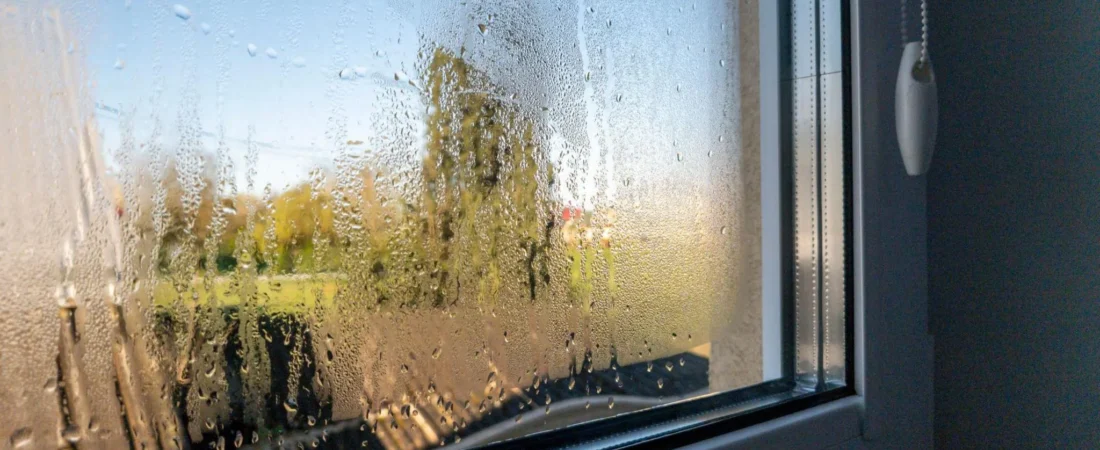
Many people wake up to find water droplets on their windows in the morning. The room may feel otherwise dry, yet the glass is fogged or covered with moisture. By midday, the condensation may disappear completely, making the issue easy to dismiss.
Condensation on windows in the morning is a result of overnight humidity buildup combined with cooling surfaces. Condensation forms when warm air inside the house meets a cooler surface, such as window glass, especially overnight. It does not mean something went wrong overnight — it reflects how moisture behaves while a home is closed and inactive during sleep.
This process happens the same way condensation appears on a cold glass of water. When warm, moist air comes into contact with a cooler surface like the cold glass, air condenses and water vapour in the moist air turns into liquid droplets on the surface. Cold air outside and lower air temperature at night cause the window glass to become a cold glass, which is why dew forms on the surface.
What is Window Condensation
Window condensation is the process where moisture from the air collects on window glass, often making it look foggy or covered in water droplets. This happens when warm, humid air inside your home meets a cold surface—like your window glass—especially during chilly nights. When the temperature of the glass drops to or below the dew point, the water vapor in the air turns into liquid, forming visible condensation.
This is a natural reaction between temperature and moisture. The colder the window surface, the more likely it is that condensation will form, especially if the indoor air is humid. Understanding how window condensation works is the first step to prevent condensation and avoid potential moisture problems in your home. By keeping an eye on indoor humidity and the temperature of your windows, you can reduce the chances of waking up to foggy or wet glass.
What Happens to Indoor Air Overnight
At night, indoor conditions change significantly. Doors and windows are closed, movement stops, and airflow becomes minimal. At the same time, moisture continues to enter the air through breathing, and everyday activities like cooking, showering, and even breathing throughout the day contribute to indoor humidity.
Over several hours, this moisture accumulates quietly. All that moisture from these activities can lead to excess humidity accumulating overnight, especially when ventilation is limited. Because there is little air exchange, humidity rises gradually even if the room felt comfortable before sleep.
By morning, the air contains more moisture than it did the night before.
Why Windows Are the First Place Condensation Appears
Windows are usually the coldest surfaces in a room, especially overnight. As outdoor temperatures drop, the glass cools faster than walls or furniture. The effectiveness of window insulation and the condition of window panes can influence how quickly windows cool and how much condensation appears.
When warm, humid indoor air comes into contact with this cooler glass, it releases moisture in the form of condensation. This process happens silently and gradually throughout the night.
Windows reveal what the air has been holding.
The Role of Temperature Drops During Sleep
Nighttime temperature drops play a major role in morning condensation. As indoor air cools, it can hold less moisture. Reduced air flow at night allows air temperature near the windows to drop more quickly, increasing the risk of condensation. The excess moisture has to go somewhere.
Glass surfaces cool quickly, becoming the primary location where moisture settles. Even small temperature differences are enough to trigger condensation when humidity is elevated.
This is why condensation often appears suddenly in the morning rather than gradually. Promoting air circulation in the room can help regulate air temperature and reduce condensation.
Types of Condensation
Not all window condensation is the same—there are a few different types, each with its own causes and implications. The most common is interior condensation, which forms when warm, humid air inside your house comes into contact with the cold inner window surface. This usually happens overnight, when the temperature drops and the glass cools below the dew point temperature, causing moisture to collect on the inside of the window.
Exterior condensation, on the other hand, appears on the outside pane of the window. This occurs when the outside glass surface is cooler than the dew point of the outdoor air, often during cool mornings after a warm, humid night. While it might look concerning, exterior condensation is usually harmless and a sign that your windows are well-insulated.
A third type is condensation between glass panes, which signals a problem with the window itself. If you notice moisture trapped between the panes, it means the window seal has failed, allowing air and moisture to get inside. This type of condensation can’t be wiped away and often requires window repair or replacement.
Recognizing which type of condensation occurs on your windows helps you take the right steps to prevent condensation and protect your home from excess moisture.
Why Condensation Appears Even Without High Humidity
Morning condensation can appear even when indoor humidity does not feel high. Relative humidity, or the amount of moisture in the air compared to what it can hold at a given temperature, plays a key role in whether condensation appears. This happens because condensation depends on surface temperature, not just humidity levels.
Air that feels comfortable can still release moisture when it meets a cold surface. Windows act as moisture indicators rather than proof of extreme humidity.
This distinction explains why condensation can appear in otherwise dry-feeling rooms. If condensation appears frequently, it may indicate a humidity problem that needs to be addressed.
Bedrooms Are Most Affected
Condensation on windows in the morning is most common in bedrooms. Bedrooms are enclosed for long periods, receive continuous moisture from breathing, and have limited airflow overnight. Using ceiling fans in bedrooms can help circulate air and reduce the likelihood of condensation forming overnight.
As a result, humidity builds up more in bedrooms than in other rooms. When combined with cool window glass, condensation becomes visible by morning.
This is a room-specific effect rather than a whole-house problem.
Why Condensation Disappears During the Day
As the day begins, indoor temperatures rise and airflow increases. Windows warm up, and moisture evaporates back into the air. Opening windows and increasing ventilation in the morning can help stop condensation by allowing moisture to escape more quickly.
This makes condensation disappear naturally without intervention. The disappearance does not mean the moisture was never there — it simply means conditions changed.
This cycle can repeat daily without causing immediate damage.
Seasonal Patterns in Morning Window Condensation
Morning condensation is more common during colder months. In winter, the difference between heat inside and cold outdoor temperatures increases the likelihood of condensation. Outdoor temperatures drop more at night, cooling window surfaces significantly. During a cool night, even double glazing or new windows can develop exterior condensation, which is a sign of good insulation.
In warmer seasons, condensation may still occur during cool nights or rainy weather, but it is usually less pronounced.
Seasonal variation helps explain why condensation appears at certain times of year and not others.
Condensation vs Moisture Problems
Occasional morning condensation is usually normal. It reflects temporary overnight conditions rather than persistent moisture issues.
However, frequent or heavy condensation can indicate that humidity is staying elevated overnight or that surfaces remain too cool to dry efficiently.
The key difference lies in frequency and persistence, not the presence of condensation itself.
If you notice persistent condensation or moisture problems, using a kitchen exhaust fan, bathroom fan, or installing a storm window can help manage indoor humidity and reduce condensation on windows in the morning.
When Morning Condensation Is Normal
Condensation on windows in the morning is generally normal when it:
- appears occasionally
- clears quickly after waking
- does not leave water pooling
- does not cause odors or staining
In these cases, it reflects normal overnight moisture behavior.
When Morning Condensation Deserves Attention
Condensation deserves attention when it appears every morning, is heavy, or lingers long after the room warms up.
If water collects on window frames, seeps into walls, or is accompanied by musty smells, it suggests that moisture is not dissipating efficiently overnight. If you notice condensation inside the window frame or between panes, it may indicate a problem with the window’s seal or insulation.
These patterns may signal broader humidity imbalance rather than a simple overnight effect.
Benefits of Reduced Condensation
Reducing condensation on windows offers several important benefits for your home and health. When you minimize condensation, you help maintain better air circulation and improve the quality of your indoor air. Less moisture on windows means a lower risk of mold and mildew growth, which can cause health issues and damage to your walls, window frames, and other surfaces.
By taking steps to reduce condensation—such as promoting air circulation, increasing ventilation, and using exhaust fans in kitchens and bathrooms—you can also improve your home’s energy efficiency. Dry windows and walls are less likely to suffer from rot or staining, saving you money on repairs in the long run.
Regularly cleaning your windows, checking for air leaks, and ensuring your home is properly ventilated all contribute to a healthier, more comfortable living environment. With less condensation, you’ll enjoy clearer windows, fresher air, and a home that feels drier and more inviting year-round.
Condensation as an Indicator, Not a Problem
Morning window condensation is best viewed as an indicator of how moisture behaves at night. It shows where humidity settles when airflow stops and temperatures drop.
Understanding this behavior helps identify whether conditions are within normal range or trending toward long-term moisture issues.
Condensation on windows in the morning forms because humidity builds up overnight while surfaces cool and airflow slows. Windows, being the coldest surfaces, reveal this moisture through visible condensation.
In most cases, morning condensation is normal and temporary. When it clears easily and does not recur excessively, it reflects natural overnight conditions. When it becomes frequent or heavy, it signals that indoor moisture is not leaving the space efficiently and deserves closer attention.
Frequently Asked Questions
Why do my windows have water on them in the morning?
Because moisture built up overnight and condensed on cool glass.
Is morning window condensation normal?
Yes, especially in bedrooms and during colder seasons.
Why does it disappear later in the day?
Because temperatures rise and moisture evaporates.
Does morning condensation mean my home is too humid?
Not always — it depends on frequency and persistence.