
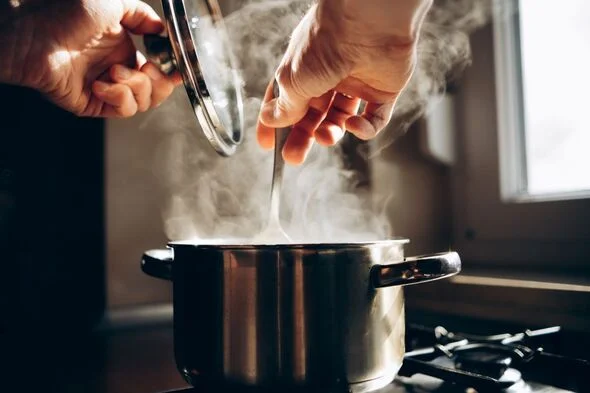
Many people notice condensation forming shortly after cooking. Windows fog up, cabinets feel damp, and walls may appear slightly wet, even though no water has spilled. In some cases, condensation spreads beyond the kitchen into nearby rooms.
Condensation after cooking happens because cooking releases large amounts of water vapor into indoor air, and this moisture settles on cooler surfaces when temperatures stabilize. Understanding this process explains why moisture appears even during routine meal preparation.
Cooking as a Major Moisture Source
Cooking is one of the largest everyday sources of indoor moisture. Boiling, steaming, simmering, and washing dishes release water vapor continuously.
This moisture rises with warm air and spreads throughout the kitchen and adjacent spaces. Unlike short humidity sources, cooking often lasts long enough to significantly affect indoor air.
Even simple meals can release surprising amounts of moisture.
Why Condensation Appears After Cooking Ends
Condensation often becomes visible after cooking stops. This happens because heat sources turn off and indoor temperatures begin to equalize.
As warm, humid air cools, it can no longer hold as much moisture. Excess water vapor condenses on cool surfaces such as windows, walls, and cabinets.
The effect is delayed rather than immediate.
Windows and Cabinets as Condensation Targets
Windows are usually the first surfaces to show condensation after cooking. Glass cools quickly and attracts moisture.
Cabinets, especially those near exterior walls, also become condensation targets. These surfaces remain cooler and dry slowly.
This explains why moisture often appears in specific kitchen areas.
Moisture Spreading Beyond the Kitchen
Cooking moisture rarely stays in the kitchen. Warm air carries humidity into hallways, living rooms, and bedrooms.
When this moist air reaches cooler rooms, condensation may appear there instead of in the kitchen. This delayed movement often confuses homeowners.
The source and the symptom are not always in the same place.
Why Some Kitchens Condense More Than Others
Not all kitchens experience condensation equally. Room size, layout, ventilation, window placement, and insulation affect moisture behavior.
Small or enclosed kitchens retain humidity longer. Kitchens with exterior walls cool faster. Open-plan kitchens disperse moisture differently.
These factors explain why condensation varies between homes.
Seasonal Influence on Cooking Condensation
Condensation after cooking is more noticeable in colder seasons. Windows and walls are cooler, increasing condensation risk.
In warm seasons, moisture may still be present but evaporates faster, making it less visible.
Seasonal changes amplify everyday moisture effects.
Condensation vs High Kitchen Humidity
Condensation and humidity are related but different. High humidity means moisture in the air. Condensation means moisture settling on surfaces.
A kitchen can have high humidity without visible condensation, and condensation can appear even at moderate humidity if surfaces are cold.
Understanding this difference prevents misinterpretation.
When Condensation After Cooking Is Normal
Some condensation after cooking is normal, especially after boiling or steaming.
Normal patterns include:
- temporary fogging of windows
- moisture that clears naturally
- no persistent dampness
- no odors or damage
These reflect routine moisture behavior.
When It Signals a Moisture Imbalance
Condensation deserves attention when it appears after every meal, spreads widely, or lingers for hours.
Persistent moisture may indicate slow drying, limited airflow, or cumulative humidity buildup.
These patterns suggest that moisture is not dissipating efficiently.
Connection to Long-Term Moisture Problems
Repeated cooking condensation can contribute to long-term moisture issues if drying is consistently slow.
Over time, surfaces exposed to frequent condensation may develop odors, material wear, or mold-friendly conditions.
The risk lies in repetition, not isolated events.
Condensation after cooking forms because cooking releases large amounts of water vapor that settles on cooler surfaces as temperatures stabilize. Moisture may appear immediately in the kitchen or later in nearby rooms.
In most cases, this condensation is normal and temporary. When it becomes frequent or persistent, it reflects slow moisture dissipation rather than unusual cooking behavior. Understanding this process helps distinguish routine condensation from early signs of indoor humidity imbalance.
Frequently Asked Questions
Why do my windows fog after cooking?
Because warm, humid air condenses on cool glass.
Is condensation after cooking normal?
Yes, especially after boiling or steaming.
Why does it appear in other rooms?
Because moist air travels before condensing.
Can cooking condensation cause mold?
Only if moisture persists repeatedly.