
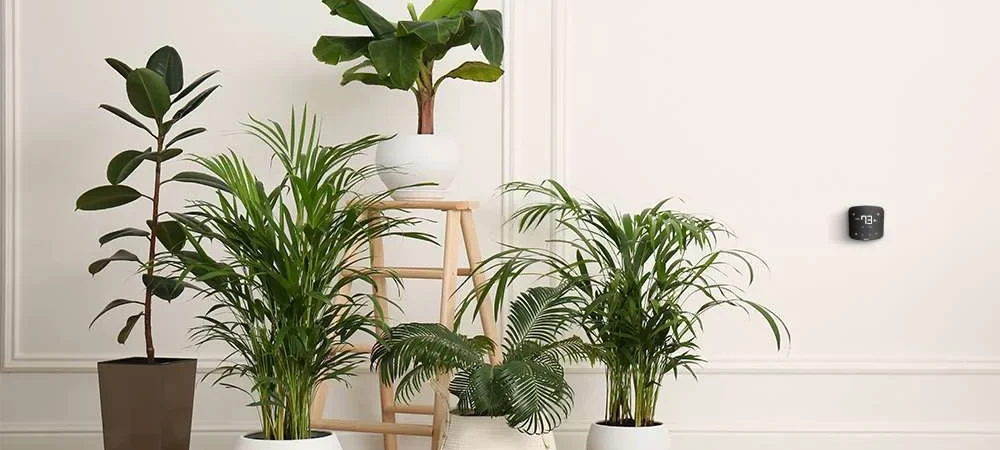
Here’s the uncomfortable truth about houseplants and air quality: they work, just not even close to how you think they do. The popular version of this story — that a few pothos on your windowsill are scrubbing toxins out of your home’s air — is based on real science that’s been wildly misapplied. And the part that almost nobody talks about? The plants themselves might be changing your indoor environment in ways that have nothing to do with VOC removal.
What Do Houseplants Actually Do to Indoor Air Quality?
Plants do three things to the air around them: they absorb carbon dioxide and release oxygen through photosynthesis, they transpire water vapor through their leaves, and — yes — they can absorb certain volatile organic compounds (VOCs) through their leaves and roots. All three of those are real. The problem is that the third one, the toxin-removal effect, has been hyped into something it absolutely isn’t in a real home.
The oxygen contribution is also almost meaningless in practical terms. One medium-sized plant produces somewhere between 5 and 10 milliliters of oxygen per hour. You breathe roughly 250 milliliters per minute. You’d need hundreds of plants in a sealed room to shift the oxygen balance even slightly — and at that point, you have much bigger problems than air quality.
What’s genuinely underappreciated, though, is the transpiration effect. A single 6-inch potted plant can release 15 to 30 milliliters of water vapor per hour into the air around it, depending on the species and light conditions. That might sound trivial, but in a dry apartment in winter — where your forced-air heating has dropped relative humidity below 30% — a cluster of 10 to 15 plants grouped near a seating area can measurably shift local humidity upward. Not dramatically. But measurably.
What Was the NASA Clean Air Study, and Why Do People Keep Getting It Wrong?
The NASA study from the late 1980s is one of the most misquoted pieces of environmental research in history. NASA researchers — working on problems related to keeping air clean inside sealed space stations — exposed specific plants to chambers filled with controlled concentrations of VOCs like benzene, formaldehyde, and trichloroethylene. The plants reduced those chemicals. That part is true.
Here’s where the translation goes completely sideways. Those were sealed, small, tightly controlled chambers — not 1,200-square-foot living rooms with windows, doors, cooking smells, and people walking in and out. The VOC concentrations in the NASA tests were also far higher than what you’d typically find in a home. The study was never designed to tell you how many snake plants to put in your bedroom.
A follow-up analysis published in the Journal of Exposure Science & Environmental Epidemiology looked at what it would actually take for plants to remove VOCs at a meaningful rate in a real home. The researchers calculated you’d need between 10 and 1,000 plants per square meter of floor space — not per room, per square meter — to match what a single air exchange with outdoor air accomplishes. Your pothos is not competing with ventilation. It never was.
“The NASA study is genuinely interesting science, but it was conducted in conditions that don’t translate to residential settings. The bigger story that gets missed is the microbial activity in plant soil, which plays its own complex role in indoor air chemistry — sometimes beneficial, sometimes not. Plants are not passive air filters. They’re living systems with a lot of variables.”
Dr. Marianne Forsythe, Environmental Health Scientist and Indoor Air Quality Consultant
Does Plant Soil Actually Affect the Air in Your Home?
This is the angle almost every houseplant-and-air-quality article skips entirely, and it matters more than most people realize. The soil in your potted plants isn’t inert. It’s a living ecosystem of bacteria, fungi, and microorganisms — and that ecosystem actively interacts with the air in your home.
On the beneficial side, certain soil microbes are actually responsible for a meaningful portion of VOC breakdown that gets credited to the plant itself. The roots absorb VOCs and pass them to soil microorganisms that metabolize them. Remove the soil — or sterilize it — and the plant’s air-cleaning ability drops dramatically. The plant is partly a delivery system for the real workers living underground.
On the less-discussed side, wet or overwatered soil can become a source of microbial volatile organic compounds (MVOCs) — the musty, earthy compounds released by mold and bacteria growing in anaerobic conditions. If your potting mix stays soggy, you might be adding a new category of airborne compounds to your indoor air rather than removing them. This is especially relevant in low-light apartments where soil dries slowly.
Overwatered plants in poorly draining pots are, in some cases, a minor source of indoor mold spores. The surface of wet soil is a hospitable environment for mold growth, and those spores go airborne. It’s not a catastrophic risk for most people, but for someone already sensitive to mold or managing asthma, a collection of chronically overwatered plants is worth thinking about.
How Do Houseplants Change Indoor Humidity, and Does It Actually Help?
Transpiration is the process by which plants release water vapor through tiny pores in their leaves called stomata. It’s essentially plants sweating — and unlike the VOC-removal story, this effect scales in a way that can be practically meaningful at home, even if modestly.
The relevance depends entirely on your starting conditions. If you live somewhere with low winter humidity — think heated interiors where relative humidity drops to 25–35% — adding plants to your living space contributes to a small but real humidity buffer. Your skin, sinuses, and wood furniture all respond to the ambient moisture level, and keeping that level even a few percentage points higher can make a genuine difference in comfort.
On the flip side, if your home already runs humid — anything above 55% relative humidity — more plants aren’t helping. You’d be adding moisture to an environment that already has too much, increasing the risk of condensation on windows, dust mite populations thriving, and mold finding surfaces it likes. This is the honest nuance: plants as humidity contributors are only a good thing if you’re on the dry side of the spectrum.
High-transpiration plants include peace lilies, Boston ferns, areca palms, and English ivy. Low-transpiration plants — your succulents, cacti, ZZ plants, and snake plants — release very little moisture. If you specifically want to nudge your indoor humidity upward, plant selection matters as much as quantity.
| Plant Type | Transpiration Rate | Best Used When |
|---|---|---|
| Boston Fern, Peace Lily, Areca Palm | High (15–35 mL/hour) | Indoor humidity below 40% RH |
| Pothos, Spider Plant, Philodendron | Moderate (8–15 mL/hour) | Balanced humidity environments |
| Snake Plant, ZZ Plant, Succulents | Low (under 5 mL/hour) | Already-humid spaces or low-maintenance setups |
Can Houseplants Make Indoor Air Quality Worse?
This question almost never gets asked, which is exactly why it should be. Plants are marketed as unconditional air quality heroes, but like any living thing introduced into an enclosed space, they come with tradeoffs that depend on how you manage them.
The overwatering-and-mold issue from the soil section is the biggest practical concern. But there are others. Some potting soils and fertilizers off-gas their own VOCs — particularly synthetic fertilizers and peat-heavy mixes treated with pesticides. If you’re buying plants from a garden center, the soil they come in may not be the cleanest starting point.
Pollen is another real factor. Most common houseplants are not heavy pollen producers, but some — like certain ficus varieties and flowering plants kept indoors — do release particulates that can aggravate allergies. This isn’t a reason to avoid houseplants, but it’s a reason to choose species thoughtfully if anyone in your household has respiratory sensitivities.
Here’s a scenario worth picturing: you buy five large potted plants to “improve your air quality,” place them near a north-facing wall with low light, water them generously because you want them to thrive, and your apartment naturally runs at 60% relative humidity year-round. Within a few months, you’ve got soggy soil, slow-growing mold on the surface of the pots, and an upward nudge in ambient moisture that’s now feeding dust mites in your bedding. That’s not fearmongering — it’s what happens when the real variables aren’t considered.
Which Houseplants Have the Most Evidence Behind Them for Air Quality?
Even with all the caveats about scale and real-world applicability, some plants do show consistently stronger performance in controlled studies. It’s worth knowing which ones, if only because it reframes the decision from “any plant is good” to “some plants are meaningfully different from others.”
- Peace Lily (Spathiphyllum) — Consistently strong in studies for removing benzene, formaldehyde, and ammonia. Also one of the highest-transpiration houseplants, making it a dual-purpose choice for dry environments. Tolerates low light reasonably well.
- Boston Fern (Nephrolepis exaltata) — One of the top performers for formaldehyde removal and one of the best for moisture release. High maintenance, needs humidity itself to stay healthy, but delivers more measurable environmental effect than most plants.
- Spider Plant (Chlorophytum comosum) — Reliable, fast-growing, and shown to reduce formaldehyde and xylene in chamber studies. Extremely low-maintenance and safe for homes with pets, which makes it a practical choice for most households.
- Rubber Plant (Ficus elastica) — Effective at formaldehyde absorption with a large leaf surface area that increases exposure to air. Easier to maintain than a fern, tolerates moderate light, and grows large enough to have a meaningful surface area.
- Areca Palm (Dypsis lutescens) — Among the highest transpiration rates of any common houseplant. It functions almost like a passive humidifier, particularly useful in living rooms with forced-air heating running through winter months.
What Actually Removes VOCs and Improves Indoor Air Quality Better Than Plants?
Knowing what plants can’t do efficiently leads to the obvious next question: what can? The answer isn’t complicated, but it’s less aesthetically pleasing than a shelf of trailing pothos.
Ventilation is the single most effective tool for reducing VOC concentrations in a home. Opening windows and running exhaust fans during and after activities that generate pollutants — cooking, cleaning, painting, using adhesives — dilutes indoor air chemistry faster than any plant or air purifier can. Fresh air exchange is free and immediate.
For situations where ventilation isn’t practical — living near a busy road, managing allergies during high pollen season, or dealing with wildfire smoke — a HEPA air purifier with an activated carbon filter is the evidence-backed choice. HEPA captures particulates; activated carbon adsorbs gases and VOCs. Together, they do what the NASA plant study was trying to accomplish, but at a scale that actually makes a dent in real room conditions.
Source control deserves more credit than it gets. The most effective way to reduce formaldehyde in your home is not to add plants — it’s to choose low-emission furniture, avoid pressed-wood products that off-gas heavily, and switch to fragrance-free or non-aerosol cleaning products. Reducing what goes into the air is always more efficient than trying to remove it after the fact.
Pro-Tip: If you use houseplants partly for their potential air quality effects, group them together rather than spreading them across different rooms. A cluster of 8–10 plants creates a microenvironment with meaningfully higher humidity and slightly increased biological surface area for VOC absorption — which is closer to the density levels where researchers start to see real effects. Spreading the same plants across five rooms dilutes any environmental benefit to near-zero.
How Many Houseplants Do You Need to Make a Measurable Difference?
The honest answer for VOC removal: more than is practical to own, and the exact number depends on factors — room size, air exchange rate, VOC source, plant species — that are impossible to standardize for a general recommendation. The researchers who calculated the 10–1,000 plants per square meter figure weren’t being dramatic. They were accounting for the reality that air moves, dilutes, and exchanges in ways that make plant-based filtration impractical at any reasonable scale.
For the humidity effect, the math is kinder. A space running at 30% relative humidity in a roughly 200-square-foot bedroom needs to gain roughly 100–150 milliliters of water vapor per hour to shift toward 40–45% — a more comfortable range. Ten medium-sized high-transpiration plants could theoretically contribute that, though actual results vary based on light levels, pot size, and soil moisture. That’s a realistic number of plants for a plant-enthusiast household.
For psychological and aesthetic benefit — which is real, documented, and worth taking seriously — even one or two plants make a difference. Studies on biophilic design show that visual exposure to greenery reduces cortisol levels and improves perceived air quality even when measured air quality hasn’t changed. That’s not a placebo effect to dismiss — it’s a legitimate mechanism with genuine health implications. Stress reduction matters.
What Are the Real Benefits of Houseplants Worth Caring About?
Strip away the oversold air-filtration story, and what’s left is actually a compelling case for keeping plants — just built on different ground than most people think.
- Humidity contribution in dry environments: For homes with winter humidity below 35–40%, high-transpiration plants genuinely help buffer dryness, reducing irritation to airways, skin, and mucous membranes.
- Psychological wellbeing: Contact with living plants — even visually — is consistently associated with lower stress, better mood, and improved focus in indoor environments. These effects are well-documented in workplace and residential research.
- Soil microbiome activity: Healthy, well-managed plant soil hosts microorganisms that do metabolize some airborne compounds. This is a real effect — just one that works at the margins and requires appropriate soil management.
- Noise reduction: Large, leafy plants and plant arrangements can provide minor acoustic dampening, scattering sound waves and reducing echo in hard-surfaced rooms. Not a substitute for acoustic panels, but a real secondary effect.
- Temperature microclimate: Grouped plants can slightly moderate temperature in their immediate vicinity through transpirational cooling — the same principle that makes forests feel cooler. Minimal in a typical room, but measurable near large plant clusters in warm, sunny spaces.
How Should You Choose and Manage Houseplants for Actual Air Quality Benefits?
The plants that deliver the most environmental benefit are usually the ones that are alive and thriving — which sounds obvious but matters enormously. A dying, root-bound plant in compacted soil that’s been overwatered for two years is contributing almost nothing positive and potentially adding mold spores and anaerobic soil chemistry to your indoor air.
Choose well-draining potting mix, use pots with drainage holes, and let the top inch or two of soil dry between waterings for most common houseplants. This keeps the soil microbiome active and aerobic rather than creating the anaerobic conditions where mold and MVOC-producing bacteria thrive. Repot plants annually or when root-bound — compacted root systems reduce transpiration and the plant’s overall metabolic activity.
Light is the biggest variable people underestimate. Most houseplants sold as “low light” tolerant still need more light than the interior of a north-facing apartment provides. Low light = slow growth = low transpiration = minimal environmental effect. If you want plants to actually do something in terms of moisture and metabolic activity, they need enough light to grow actively. A grow light on a timer is a straightforward solution if natural light is limited.
Think about plant placement relative to air quality goals. Near a forced-air heating vent, high-transpiration plants work against the drying effect of the heat. In a reading corner away from direct drafts, those same plants create a slightly more humid, biophilically enriched microenvironment. Where you put them is as relevant as which plants you choose.
The Verdict on Houseplants and Air Quality
Houseplants are worth having. They’re just worth having for the right reasons. The NASA myth persists not because people are gullible but because the underlying science is real — plants do interact with air chemistry. The leap to “a few plants will purify your home” is where the evidence runs out, replaced by wishful thinking and effective marketing.
What you actually get with a well-managed collection of plants: a meaningful contribution to indoor humidity in dry conditions, a documented psychological benefit that translates into real physiological effects, and a living soil ecosystem that has its own modest role in air chemistry — for better or worse, depending on how it’s managed. That’s not nothing. It’s just different from what the headlines promise.
The more interesting frontier isn’t whether plants clean air — it’s what the soil microbiome in indoor plants might teach us about engineering more effective biological air treatment systems at a scale that actually works. Researchers are already looking at “biofilters” — systems that circulate air through activated plant-soil columns — that can achieve the kind of VOC removal that a living room of pothos never could. Your houseplants might not be air purifiers yet, but they point toward something that eventually could be.
Frequently Asked Questions
Do houseplants really purify indoor air?
No—scientific consensus is clear. 2019 meta-analysis reviewing 30 years of research concluded “houseplants do not improve indoor air quality” and you’d need 10-1,000 plants per m² (5-500 per bedroom) to match two open windows. American Lung Association states “evidence does not show they are effective tool to reduce air pollution.” NASA’s 1989 study used sealed 1m³ chambers—EPA calculated 680 plants needed in typical house to replicate results. Real homes have ventilation exchanging air orders of magnitude faster than plants remove VOCs—“ventilation dominates VOC removal in virtually all real-world buildings.”
How many houseplants do you need to purify air?
680 plants for typical 1,500 sq ft house according to EPA 1992 review of NASA study—impractical and ineffective. Research confirms you’d need “roughly a hundred plants per square metre” to improve air beyond normal ventilation—that’s 1,300-2,800 plants for average home. Even one plant per m² is ineffective per 2019 analysis. A single open window provides 50,000-2,000,000x more air cleaning (CADR comparison). Reality: No realistic number of houseplants meaningfully improves indoor air quality in ventilated buildings—focus on ventilation, source control, mechanical filtration instead.
What did the NASA plant study actually find?
NASA tested 12 houseplant species in sealed 1m³ chambers (no air exchange) showing 10-70% VOC removal in 24 hours from formaldehyde, benzene, trichloroethylene. Critical context ignored: (1) Sealed chambers unlike homes—no ventilation competing with plant removal; (2) Extremely high pollutant concentrations unrepresentative of homes; (3) Roots/soil did filtering, not leaves—removing leaves barely reduced effectiveness. EPA immediately noted “hardly surprising validation attempt did not provide measurable success” in real buildings. Study intended for space stations (sealed environments)—never validated for residential application despite widespread misinterpretation.
Are some plants better at air purification than others?
No significant difference in real-world settings. NASA chamber study showed variation (peace lily, spider plant, snake plant performed best), but since roots/soil do bulk of work (not plant-specific leaves), species selection relatively unimportant. Research found “no significant difference between ‘air-purifying’ species and random houseplants” in real rooms. Any plant with healthy root system and active soil microbes has similar VOC removal capability—which is negligible compared to ventilation regardless of species. Marketing emphasizes certain plants to justify premium pricing despite equivalent performance.
Should I get rid of my houseplants for air quality?
No—but keep realistic expectations. Plants don’t harm air quality in most cases (unless overwatered causing mold, or emitting VOCs), they just don’t meaningfully improve it either. Research recommends “enjoying them as mood-lifting, aesthetic additions rather than air-cleaning workhorses.” Keep plants for proven benefits: stress reduction, psychological wellbeing, beauty, minor humidity addition. But for actual air quality improvement, invest in ventilation (open windows, exhaust fans), source control (low-VOC products), and mechanical filtration (HEPA + carbon purifiers)—these work while plants provide décor and mental health value.