
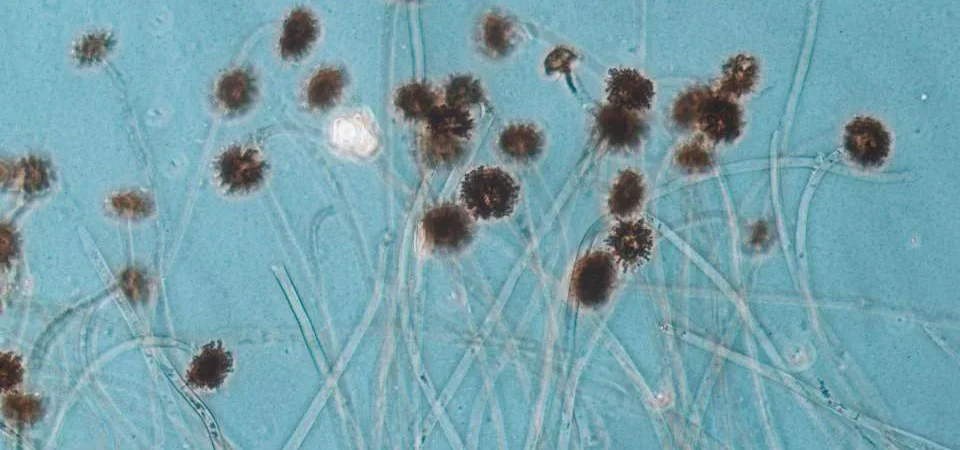
Bottom line: Mold doesn’t need a dripping pipe or a visible wet patch to grow. It needs relative humidity above 70%, a surface that stays damp for more than 24–48 hours, and an organic material to feed on — and your home delivers all three far more often than you’d think, with zero visible moisture in sight.
The reason people get blindsided by mold without visible moisture is a flawed mental model: they think mold is a water problem. It’s not. It’s a drying problem. Water gets into materials all the time — from humid air, from cooking steam, from breath. The question is whether that water leaves fast enough before mold spores, which are already sitting on virtually every surface in your home, find conditions favorable enough to germinate.
That reframe changes everything about how you diagnose, prevent, and fix mold growth. Once you understand that invisible humidity is often a slower and more damaging moisture source than a leaky pipe, you stop looking for puddles and start looking at airflow, drying rates, and the humidity map inside your walls.
Why Does Mold Grow When There’s No Visible Moisture?
Mold spores germinate when the moisture content of a surface — not the air, the actual surface — reaches a threshold that supports biological activity. For most common household molds like Cladosporium, Penicillium, and Aspergillus, that threshold sits at around 70–80% relative humidity sustained over a period of 24 to 72 hours. Nobody pours water on a wall to create those conditions. The air does it quietly, over days and weeks.
Here’s the mechanism: humid air carries water vapor that deposits onto cooler surfaces through a process called sorption — materials like drywall, wood framing, carpet backing, and ceiling tiles absorb moisture directly from the air, even when the air feels completely dry to the touch. A wall surface sitting at 65°F in a room where the air is 72°F and 65% relative humidity can have a surface moisture content high enough to support mold, while feeling bone-dry to your hand. That’s the trap.
Slow drying compounds the problem. A surface that gets slightly damp and then dries out within a few hours is almost never a mold risk. A surface that stays at marginal moisture levels for several days — even if it never feels wet — is a different story entirely. Drying rate depends on temperature, airflow, and vapor pressure differential, not just how wet something got in the first place.
What Does “Invisible Humidity” Actually Mean Inside a Home?
Every activity in your home generates water vapor: cooking, showering, breathing, houseplants, even the gas flame on your stove. A family of four produces roughly 10 to 15 pints of water vapor per day through normal activity alone. That moisture doesn’t disappear — it distributes through the air, gets absorbed by porous surfaces, and accumulates in areas with poor circulation.
The counterintuitive part is that you can have dangerously high surface moisture in a room that reads 50% relative humidity on a hygrometer placed in the center of the room. Why? Because humidity isn’t uniform. Cold corners, the underside of furniture against exterior walls, the back panel of a wardrobe — these spots can run 15 to 20 percentage points higher in relative humidity than the middle of the room because they’re colder and air moves past them slowly. Your hygrometer is measuring the average air in the open space, not the microclimate behind your bookshelf.
Walls look dry but can hold significantly elevated moisture content in their surface layers, particularly at thermal bridges — spots where metal fasteners, concrete lintels, or poorly insulated framing create cold patches that stay below the dew point of the room air for extended periods. This is often where mold appears first: not at a water stain, but at a barely-visible dark smudge in a corner that nobody thought to check.
How Slow Drying Creates Mold Risk Even in “Dry” Homes
Think about what happens in a typical bedroom in winter. The room is heated, so the air feels warm and comfortable. But the exterior wall surface — especially near the floor — is significantly cooler than the room air. The occupant breathes out about a pint of moisture overnight. That moisture migrates toward the cooler wall, gets absorbed by the drywall paper or the paint surface, and sits there at elevated moisture content.
During the day, if the room is well-ventilated and the sun warms that wall, the moisture evaporates and the surface dries back out before mold can establish itself. But in a room with heavy curtains, a bed pushed against the exterior wall, and a door that’s kept closed — the drying never happens fast enough. Night after night, the surface stays wet just long enough. Within four to six weeks, you have a black smudge behind the headboard that looks like it came from nowhere.
This scenario plays out in millions of homes every winter, and it’s almost never caused by a plumbing failure or a roof leak. It’s caused by a drying deficit — the rate of moisture input exceeding the rate of moisture removal from that specific surface. The fix isn’t finding the “source” of water, because there isn’t one in the traditional sense. The fix is improving the drying rate.
“People look for the leak that caused the mold, and when they can’t find one, they assume the mold is a mystery. But in the majority of cases I assess, there’s no liquid water involved at all. The problem is vapor-phase moisture that accumulates in low-airflow zones faster than it can dissipate. The mechanism is slow, invisible, and completely predictable once you know what to look for.”
Dr. Karen Whitfield, Certified Industrial Hygienist and Indoor Air Quality Consultant
Which Building Materials Are Most Vulnerable to Mold Without a Leak?
Not all surfaces behave the same way. Mold needs an organic nutrient source, and the building materials that provide the best combination of moisture retention and food value are the ones that go moldy first — often without any visible water event at all.
| Material | Mold Risk from Humidity Alone | Why |
|---|---|---|
| Drywall paper facing | High | Highly absorptive, organic cellulose food source for mold |
| Unpainted wood framing | High | Absorbs and holds vapor, supports multiple mold species |
| Carpet and padding | High | Traps moisture at floor level, slow to dry, large surface area |
| Concrete and masonry | Low (surface only) | Not a food source, but supports mold on dust and debris layer |
Drywall deserves special attention because it’s in virtually every room of every modern home. The paper facing on standard gypsum drywall is essentially a buffet for mold spores — cellulose is one of their preferred food sources, and paper holds moisture tenaciously once it absorbs it. At 70% relative humidity, the paper facing of drywall reaches a moisture content that can support mold growth within two to three days of sustained exposure. You don’t need a flood for that to happen.
Carpet is the other overlooked culprit. Relative humidity at floor level is almost always higher than at ceiling level because cold air sinks and warm air rises. A carpeted concrete slab in a basement or ground-floor room can maintain moisture content sufficient for mold growth year-round, even if the room never feels damp and there’s never been a water intrusion event. The carpet itself acts as a moisture trap, and the padding underneath is even worse.
How Do You Know If Invisible Humidity Is Causing Mold in Your Home?
The diagnostic challenge with mold without visible moisture is that standard visual inspection finds the mold after the fact, not the conditions that created it. By the time you see a black or green patch on a wall, the moisture conditions that caused it may have already changed — making it genuinely difficult to identify the mechanism if you don’t know what to measure.
A few reliable indicators that humidity-driven mold is the culprit rather than a water leak: the mold appears in multiple disconnected locations rather than spreading from a single wet point; it’s concentrated in corners, behind furniture, or on north-facing walls (which stay cooler); it has a fuzzy or powdery surface texture rather than the slimy appearance of mold feeding on active moisture; and it appears or worsens during cold weather rather than following a specific rain or plumbing event.
A non-invasive moisture meter is the most useful tool for early detection. Pin-type meters measure moisture content in wood and drywall directly — readings above 16% in wood or 1% in drywall paper suggest conditions approaching mold risk, even with no visible dampness. A digital hygrometer placed overnight in a closed room gives you a better picture of peak humidity than a spot reading taken during the day with windows open.
Pro-Tip: Place a cheap digital hygrometer in the corner of a room at floor level overnight, with the door closed and no ventilation running. That reading is far more representative of the conditions your walls actually experience than any daytime spot-check with the house “running normally.” If it reads above 65%, you have a slow mold risk in that room even if everything looks and feels dry.
What Conditions Make Mold Growth Without Visible Moisture Worse?
Several compounding factors dramatically increase the risk of humidity-driven mold growth, and most of them are things people introduce into their homes without realizing the trade-off. Understanding these factors is more useful than any checklist, because the same behavior can be low-risk in one home and high-risk in another depending on context.
- Poor thermal performance in walls and ceilings: Cold surface temperatures increase the relative humidity at the surface level, even when the room air is at acceptable overall humidity. A wall with inadequate or missing insulation creates a cold zone where surface RH can be 20–30 points higher than room air RH.
- Restricted airflow zones: Built-in wardrobes on exterior walls, beds pushed into corners, sofas against exterior walls — any furniture arrangement that blocks air circulation from a wall surface prevents the drying that would otherwise keep surface moisture below the mold threshold.
- Over-humidifying during winter: Many people run humidifiers in winter to combat dry air, which is often genuinely helpful for comfort. But running a humidifier to 55–60% RH in a poorly insulated or older home can push surface humidity in cold spots high enough to trigger mold growth even while the room air feels ideal.
- Inadequate kitchen and bathroom exhaust: Extract fans rated under 50 CFM in bathrooms, or fans that exhaust into an attic or wall cavity instead of outside, allow steam to accumulate and migrate into adjacent spaces rather than leaving the building.
- Vapor-impermeable finishes on cold walls: Gloss paint, vinyl wallpaper, or foil-backed coverings on exterior walls trap moisture in the wall assembly. The wall absorbs vapor from the interior, can’t release it back into the room, and stays at elevated moisture content for extended periods.
Can Mold Grow Inside Walls Where You Can’t See Any Moisture?
Yes — and this is arguably the most alarming manifestation of the problem, because it can go undetected for months or years. Inside a wall cavity, you have wood framing, drywall paper, insulation (often fiberglass batts, which are not mold-resistant but hold dust that mold can feed on), and potentially a vapor retarder placed on the wrong side of the assembly. The conditions inside that cavity can be completely different from anything you’d measure in the room.
The specific failure mode that produces hidden wall mold without any water leak goes like this: warm, humid interior air migrates through small gaps in the drywall into the wall cavity during heating season. It contacts the cooler sheathing on the exterior side of the cavity, where it deposits moisture. The exterior sheathing — typically OSB or plywood — holds that moisture and, if the wall can’t dry toward either the interior or exterior, stays wet long enough to grow mold on the wood grain and paper facings inside the cavity.
This is most common in older homes that were retrofitted with insulation but not updated with appropriate vapor management, and in any home where air-sealing was not done carefully during construction. The telltale signs are a musty smell that can’t be attributed to a visible source, or mold appearing at the base of walls or around electrical outlets where air movement from the cavity is highest.
How to Reduce Mold Risk When There’s No Visible Moisture to Remove
The practical approach to humidity-driven mold is fundamentally different from dealing with a leak. You’re not trying to find and stop a water source — you’re trying to shift the balance between moisture input and drying capacity across every surface in the relevant space. That sounds abstract, but it translates into a fairly concrete set of actions.
- Keep indoor relative humidity between 40% and 55%: This is the range where common household mold species cannot sustain growth on typical building materials, while the air still feels comfortable. Below 40% causes its own problems (static electricity, cracked wood, irritated mucous membranes). Above 55%, you’re within margin-of-error range of mold-supportive surface conditions in any cold spots.
- Move furniture away from exterior walls by at least 2 inches: This single change dramatically improves airflow to wall surfaces and allows them to dry between temperature cycles. It costs nothing and eliminates one of the most common setups for hidden mold growth.
- Run bathroom and kitchen fans for longer than you think: A bathroom fan needs 20–30 minutes of run time after a shower to remove all the moisture-laden air from the room and associated materials. Most people run them for 5 minutes or less. A fan-and-timer combination costs under $30 and solves this automatically.
- Use a dehumidifier in basement and lower-level spaces during summer: Ground-level spaces have higher surface humidity driven by cool surfaces and moisture migration from soil and concrete. A dehumidifier maintaining 50% RH in a basement protects not just the basement but the floor assembly above it, which is often where the real mold risk accumulates.
- Check surface temperatures in problem areas with an infrared thermometer: Cold spots below 55°F are almost always at risk for elevated surface RH regardless of what your main hygrometer reads. Addressing the insulation or air sealing at those spots is the fix — not cleaning the mold that appears there repeatedly.
Does Cleaning Mold Without Fixing the Humidity Actually Work?
Cleaning mold from a surface without addressing the underlying moisture and drying conditions is the single most common and most expensive mistake people make with this problem. It works, briefly, in the same way that mopping the floor works while the roof is still leaking — you’ll have a clean floor until the next rain.
Mold spores are on virtually every surface in your home at all times. Cleaning removes the colony that has visibly established itself, but it doesn’t remove the spores, and it doesn’t change the surface conditions that allowed those spores to germinate. If the surface humidity in that corner, behind that piece of furniture, or inside that wall cavity returns to the same conditions within a few weeks — and it will, if nothing changes — you’ll have a new colony forming in the same spot within one to three months.
The honest nuance here: cleaning is necessary and appropriate as part of remediation, and it can genuinely resolve the problem if you also make the drying-rate improvements that created the risk in the first place. The sequence matters — fix conditions first, then clean, then verify that conditions remain below mold-risk thresholds. Doing it in reverse order just repeats the cycle.
Is Mold from Humidity Less Dangerous Than Mold from Water Damage?
From a health standpoint, mold is mold. The species that grow in high-humidity conditions — Cladosporium, Penicillium, Aspergillus — are exactly the same species that grow after water damage events, and they produce the same range of mycotoxins and allergens. The assumption that humidity-driven mold is somehow “mild” mold is not supported by any toxicological evidence.
Where humidity-driven mold often gets underestimated is in its extent. A water damage event is usually visible, dramatic, and prompts an immediate response — remediation happens within days or weeks. Humidity-driven mold grows slowly and invisibly, often for months or years before it’s detected, which means the total spore load and colonized surface area by the time it’s found is frequently much larger than an acute water event would produce. The chronic, low-level nature of the exposure is what makes it clinically significant.
People with respiratory conditions, allergies, or immune compromise are disproportionately affected, but even healthy adults exposed to elevated indoor mold loads can experience persistent symptoms that are difficult to attribute correctly because the source is invisible and the onset is gradual. Fatigue, recurring respiratory irritation, and unexplained headaches in a specific room are worth taking seriously as potential indicators of a hidden mold problem.
What’s the Actual Humidity Level That Causes Mold Without Visible Moisture?
There isn’t a single threshold that applies universally, which is the kind of inconvenient nuance that most articles skip over. The relationship between air humidity and surface mold risk depends on surface temperature, material type, and duration of exposure. That said, research on building envelope performance and fungal ecology gives us practical working numbers.
For most common building materials at typical indoor temperatures (65–75°F), sustained indoor relative humidity above 60% increases mold risk at cold spots, and above 70% creates broad mold risk across nearly all porous surfaces. These numbers assume the humidity is sustained — a brief spike to 75% after a shower in a well-ventilated bathroom doesn’t cause mold growth. It’s the hours and days of sustained elevated humidity that matter, which is why overnight and seasonal readings tell you far more than spot checks.
Duration is the underappreciated variable. A surface at 75% RH for 12 hours is very different from a surface at 65% RH for 96 hours. Most mold researchers use the concept of “mold hours” — cumulative time spent above a threshold moisture condition — as a more accurate predictor of mold growth than any single point-in-time measurement. This is why air quality problems from invisible humidity often develop slowly over an entire heating or cooling season rather than appearing suddenly.
Understanding this cumulative mechanism is what separates effective humidity management from ineffective spot-treatment. Managing for a season-long average below 55% RH, with good airflow to all surfaces, is the actual target — not just checking the hygrometer when you happen to think of it and seeing a comfortable reading.
The homes that stay mold-free long-term are rarely the ones that are cleaned most aggressively. They’re the ones where someone thought carefully about where air doesn’t move, where surfaces stay cold, and whether the moisture generated daily ever actually leaves the building — and then did something about it before the mold made the decision for them.
Frequently Asked Questions
Can mold grow without water?
Yes, humidity alone can support mold growth.
Why does mold appear on dry-looking walls?
Because walls can hold invisible moisture.
Is invisible moisture common?
Yes, especially in enclosed or cool areas.
Does mold without leaks mean a serious problem?
It means moisture is persistent, not necessarily severe.
Disclaimer: This article is for informational purposes only and isn’t a substitute for professional mold inspection or remediation advice. Mold problems vary a lot depending on the material affected, the extent of growth, and your specific health situation. Always follow product label instructions when using cleaning chemicals, ensure proper ventilation, and consider consulting a certified mold remediation professional for anything beyond a small, surface-level patch. If you have respiratory conditions, allergies, or a compromised immune system, talk to a doctor before starting any DIY mold removal.