
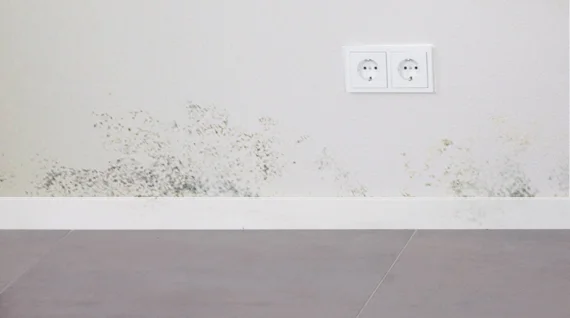
Bedroom mold isn’t a cleaning problem. That’s the misunderstanding that sends people scrubbing walls with bleach spray, feeling productive, and then watching the black spots come back six weeks later — sometimes worse. The mold you can see is just the symptom. What’s actually happening inside your walls, and why your bedroom specifically keeps feeding it, is a humidity story that most guides never bother to tell properly.
What mold in bedroom walls actually signals about your home’s humidity
Mold doesn’t grow randomly. It needs four things: a surface to colonize, organic material to feed on (paint, drywall paper, dust), temperatures between roughly 40°F and 90°F, and — most importantly — relative humidity above 60% sustained for more than 24 to 48 hours. Your bedroom checks every single box, almost by design.
Here’s the part most people get wrong: the humidity problem causing mold in bedroom walls often has nothing to do with how humid the room feels when you’re awake in it. It’s what happens while you sleep. A single adult exhales roughly 1 pint of moisture per night just through breathing. Add a partner, and you’re releasing close to a liter of water vapor into a room that’s probably been sealed up tight with the door closed for 7 to 9 hours straight.
That moisture has to go somewhere. And when it hits a cold exterior wall or a poorly insulated surface, it condenses — not dramatically, not visibly, just enough to keep a narrow zone of that wall surface perpetually above the 60% relative humidity threshold that mold needs to thrive. Repeat this every single night for weeks, and you’ve created a perfect, consistent feeding schedule for mold colonies.
Why do bedroom walls get mold when other rooms don’t?
The bedroom is the most consistently occupied room in your home — and that occupancy is unusually humid. Kitchens have exhaust fans. Bathrooms have exhaust fans. Bedrooms? Almost never. Yet they’re the rooms where two people spend 8 hours breathing, sweating, and generating warmth that creates temperature differentials against exterior walls.
Temperature differential is key here. When warm, moisture-laden bedroom air meets a wall that’s significantly cooler — often an exterior wall, especially in winter — the air cools rapidly at that surface. Cool air holds less moisture, so the excess water deposits right there on the wall. This is called the dew point effect, and it doesn’t require dramatic cold or dramatic humidity. A wall surface just 3°F to 5°F cooler than the room air can be enough to cause condensation in a room where relative humidity is hovering at 65%.
Furniture placement makes it worse in ways that feel counterintuitive. Pushing a bed or wardrobe against an exterior wall doesn’t just look tidier — it traps air against that cold surface and prevents the normal circulation that would carry moisture away. That’s exactly why mold is behind beds, wardrobes so often: the furniture itself creates a still-air microclimate where humidity accumulates undisturbed.
What does mold on bedroom walls look like before it gets serious?
Most people catch bedroom mold at the “suspicious discoloration” stage, which is actually a reasonable time to catch it — if you know what you’re looking at. The earliest signs aren’t the dramatic black patches you might picture. They’re subtle enough to dismiss.
Early-stage mold often appears as a faint grey or greenish smudge near the top corners of walls (where warm air rises and hits the ceiling), along the baseboard behind furniture, or in window reveals where condensation drips and pools. It can look like a shadow, like paint that’s gone slightly dingy, or like a dusty film that doesn’t wipe cleanly. The smell, if there is one, tends to be earthy and slightly sweet rather than pungent — easy to blame on laundry or old carpeting.
By the time you’re seeing clear black spotting covering an area larger than about 10 square inches, the colony has been there for some time. The surface growth is just the reproductive stage — the mycelium (the actual body of the mold) may already be penetrating the drywall paper and even the gypsum underneath. That’s when cleaning the surface genuinely stops being effective on its own.
Is mold in bedroom walls dangerous to your health?
The honest answer is: it depends — on the species of mold, the extent of the growth, how long you’ve been exposed, and your individual respiratory sensitivity. That nuance matters, and anyone telling you flat-out “bedroom mold is always dangerous” or “it’s usually harmless” is oversimplifying.
The most common household molds — Cladosporium, Penicillium, and Aspergillus species — can trigger allergic reactions, worsen asthma, and cause persistent low-grade symptoms like nasal congestion, itchy eyes, and fatigue in sensitive individuals. These symptoms are easy to attribute to seasonal allergies, which is why many people live with a mold problem for months before connecting it to their bedroom specifically.
Stachybotrys chartarum — what most people call “black mold” — genuinely is a more serious concern, producing mycotoxins that can affect the nervous system and respiratory function with prolonged exposure. However, Stachybotrys requires surfaces that have been wet for a very long time, not just humid. Most bedroom wall mold is not Stachybotrys, but you can’t visually identify mold species with any accuracy, which is why any extensive growth warrants professional assessment rather than guesswork.
“Bedrooms are uniquely problematic because people are sedentary and enclosed in them for extended periods during sleep, which concentrates both their moisture output and their mold exposure simultaneously. It’s not just that mold grows there — it’s that you’re inhaling what it produces for hours every night, which is a very different exposure profile from, say, a moldy basement you visit for ten minutes.”
Dr. Renata Kessler, Environmental Health Scientist and Indoor Air Quality Consultant
What causes mold specifically on the inside surface of exterior walls?
This is the question that separates understanding your mold problem from just reacting to it. Interior surface mold on exterior walls is almost always a thermal bridging and condensation issue, not a leak or water intrusion issue. These require completely different solutions.
Thermal bridging happens where building materials with poor insulating properties create a continuous path for cold to travel from outside to inside — think structural studs, lintels above windows, or concrete blocks at the base of walls. The wall surface at these points can be significantly colder than the surrounding plaster or drywall, creating localized dew point zones. You’ll often see mold appear in vertical stripes or in specific spots that correspond exactly to where the studs are — a pattern that makes total sense once you know what’s causing it.
Insufficient wall insulation is the other major driver. A wall with no insulation or aging, compressed insulation allows the interior surface temperature to track closely with outdoor temperatures in winter. In a bedroom where indoor air is 68°F and humidity is 60%, you only need the wall surface to drop to about 52°F before condensation begins. That’s not an extreme scenario — that’s a standard winter night in most temperate climates.
How does sleeping with the door closed make bedroom mold worse?
Closing the bedroom door at night is practically universal. It’s quieter, more private, and it keeps pets out. But from a humidity perspective, you’re creating a sealed environment where moisture can only build up — it has nowhere to go.
Over an 8-hour sleep, a room with two occupants and a closed door can see relative humidity climb from a starting point of 50% to well over 70%. The exact numbers depend on room volume, starting conditions, and how much you or your partner move around, but the direction of change is always the same: up. When that humid air finally hits cooler wall surfaces, condensation is essentially guaranteed at those humidity levels.
Sleeping with the window cracked even 1 to 2 inches introduces enough fresh air exchange to significantly reduce this moisture buildup — even in winter. The slightly cooler air is drier and helps keep the overall room humidity from peaking. It sounds like a minor change, but the difference in overnight peak humidity can be 10 to 15 percentage points, which is the difference between staying below and crossing the mold-growth threshold every single night.
Pro-Tip: Place a battery-powered hygrometer (humidity sensor) on your bedside table and check the reading first thing in the morning before you open the door. If it’s consistently reading above 65% when you wake up, your bedroom is generating more overnight moisture than it can safely handle — and that needs addressing before any surface cleaning will actually stick.
How to find hidden mold in bedroom walls before it spreads
Mold in bedroom walls is frustratingly easy to miss because we spend most of our waking hours in bedrooms not looking at the walls. Furniture covers the most vulnerable spots, lighting is typically low and warm (bad for seeing discoloration), and the growth often starts in corners where two surfaces meet — precisely the spots nobody examines.
Do a proper inspection by pulling furniture at least 4 inches away from exterior walls and checking with a flashlight at a low angle — raking light across a surface reveals texture and early growth that direct overhead light completely obscures. Pay particular attention to the wall area behind the headboard, behind any wardrobe on an exterior wall, and in the corners where the ceiling meets exterior walls. Also check around window reveals, where condensation dripping from the glass often tracks sideways into the wall.
If you can smell mold but can’t find it visually, the growth may be inside the wall cavity or behind the baseboard. A moisture meter (available for under $30) can identify areas of elevated moisture content in the drywall without opening anything up. Readings above 17% moisture content in drywall suggest active moisture accumulation and probable mold growth within the wall structure.
What actually removes mold from bedroom walls — and what doesn’t work
Bleach on mold is one of the most persistent DIY myths in home maintenance. Here’s what actually happens: bleach does kill mold on non-porous surfaces like tile or glass. On porous surfaces like drywall, the chlorine evaporates quickly at the surface while the water carrier penetrates deeper — adding moisture to the very material you’re trying to dry out, and feeding the root structure of the mold you’re supposedly killing. The surface looks clean for a few weeks. Then it comes back.
For early-stage surface mold on painted walls (not drywall that’s already visibly damaged), a solution of 1 cup of borax dissolved in 1 gallon of water is more appropriate. Borax doesn’t off-gas harmful fumes, it doesn’t add excess moisture, and it leaves a residue that inhibits regrowth. Apply it, scrub with a stiff brush, and don’t rinse — leaving the borax solution to dry in place gives you ongoing protection.
Any affected drywall that shows discoloration going more than surface-deep, that feels soft or crumbles slightly, or that covers an area larger than roughly 10 square feet, needs to be cut out and replaced. This isn’t pessimism — it’s just the physical reality that mold-penetrated drywall can’t be remediated in place. The paper facing of drywall is essentially the mold’s food source, and once that’s colonized through, the material is compromised.
What humidity level should bedrooms actually be kept at?
The target range for bedroom relative humidity is 40% to 55%. Below 40% and you’ll notice it — dry throat in the morning, static electricity, chapped lips. Above 55% sustained, and you’re in the zone where mold can establish itself given the right surface temperatures and enough time.
The tricky part is that bedrooms swing significantly in humidity across a 24-hour period, and most people only know what their home’s humidity is in a general sense (if at all). The daytime reading in your living room with windows open tells you almost nothing about what’s happening in your sealed bedroom at 3 AM. This is why monitoring specifically in the bedroom, specifically overnight, is the only way to know whether you actually have a problem.
| Bedroom Relative Humidity | Mold Risk Level | Recommended Action |
|---|---|---|
| Below 40% | Very Low | Consider a humidifier for comfort |
| 40% – 55% | Minimal | Ideal range — maintain with ventilation |
| 56% – 65% | Moderate | Improve ventilation, monitor wall surfaces |
| Above 65% | High | Dehumidifier needed, inspect walls immediately |
Step-by-step: how to stop bedroom wall mold from coming back
Stopping recurrence is about fixing the conditions, not just treating the surface. These steps address the actual causes in the right order — because sequence matters here.
- Measure first. Get a hygrometer with overnight logging capability and establish what your bedroom humidity actually reaches while you sleep. You can’t fix what you haven’t measured, and the number will tell you how aggressive the solution needs to be.
- Improve overnight ventilation. Crack a window or leave the bedroom door open during sleep if privacy allows. Even small air exchanges break the sealed-room moisture cycle that drives overnight humidity spikes.
- Pull furniture away from exterior walls. A 4-inch gap between the wall and any large piece of furniture is enough to restore air circulation at the wall surface. This single change eliminates the still-air microclimate where mold establishes most easily.
- Address the wall surface temperature. If the affected wall is an exterior wall with inadequate insulation, adding internal insulation board (even a thin rigid foam layer) raises the surface temperature enough to keep it above the dew point in most conditions.
- Use a mold-resistant primer before repainting. After remediation, standard paint over cleaned walls is a missed opportunity. Mold-inhibiting primers contain biocides that are bound into the coating and suppress surface regrowth — they’re worth the extra cost every single time.
- Run a dehumidifier if needed. For bedrooms with persistent humidity issues despite ventilation improvements, a small dehumidifier running overnight can hold the room below 55% reliably. Size it appropriately — a unit rated for 30 pints per day is typically adequate for a standard bedroom.
What makes bedroom mold keep coming back even after cleaning?
Recurring mold after cleaning is one of the most frustrating experiences homeowners have, and it almost always comes down to one of a few fixable oversights.
- The moisture source was never removed. Surface cleaning does nothing if your bedroom is still generating the same overnight humidity every night — the mold simply re-establishes in weeks.
- The wall insulation problem was never addressed. Cleaning the interior surface without fixing the cold wall underneath is like mopping a floor while the ceiling is still leaking.
- Mold was cleaned but not killed. Wiping mold without a proper biocide just removes the visible spores and spreads them across the surface. Dormant spores can reactivate whenever conditions favor them again.
- Standard paint was used over affected areas. Regular latex paint is not a barrier to mold regrowth — it’s actually a food source for some species. Always use mold-inhibiting primer and paint after remediation.
- The furniture went right back against the wall. Recleaning and then replacing the wardrobe or bed flush against the exterior wall recreates the exact microclimate where the mold first developed.
When should you call a professional for bedroom wall mold?
The EPA’s general guidance — and it’s reasonable guidance — is that any mold growth covering more than 10 square feet should be handled by a professional remediator rather than a homeowner. That’s roughly a 3-foot by 3-foot patch. It’s not a huge area, and many bedroom wall mold problems exceed it before they’re noticed.
Beyond size, there are specific situations that warrant professional involvement regardless of area: mold that has penetrated through drywall into the wall cavity, any mold growth associated with a water leak or flood (because the contamination profile is different), mold in a home where someone has a compromised immune system or chronic respiratory condition, and any situation where you’ve cleaned the mold twice and it’s returned both times. That last one is a signal that there’s a structural moisture problem that surface treatment will never solve.
Professional remediation isn’t just about cleaning more thoroughly — it’s about containment (preventing spore dispersal during removal), identifying hidden moisture pathways, and confirming the space is safe after work is complete through post-remediation air testing. Those are things a bucket of borax genuinely can’t replicate.
Long-term strategies for keeping bedroom humidity under control
Treating mold is the short game. Controlling the bedroom environment permanently is the long game, and the two require different thinking. Long-term humidity management in a bedroom means building habits and making small structural changes that compound over time rather than doing emergency interventions whenever the mold comes back.
Daily ventilation habits matter more than any single product you could buy. Opening the bedroom window for 10 to 15 minutes in the morning — even in winter — flushes overnight moisture-saturated air and replaces it with drier outdoor air. This one habit, done consistently, can keep average bedroom humidity 5 to 8 percentage points lower than an unventilated room, which is often the difference between a clean room and a recurring mold problem.
Longer-term, if your bedroom walls are on an exterior-facing surface and you have ongoing condensation issues, the structural fix is improving the thermal performance of those walls. Adding interior insulation — even a 1-inch layer of rigid foam before re-drywalling — raises the interior wall surface temperature enough to eliminate the condensation zone in most climates. It’s disruptive, but it’s the only permanent solution to a thermal bridging problem. Everything else is maintenance.
Controlling sources of moisture in adjacent spaces also matters — a bathroom on the other side of a shared wall with no exhaust fan, for example, can drive humidity through the wall into the bedroom over time. The bedroom doesn’t have to be the only place you look when bedroom mold keeps appearing.
Mold in bedroom walls is ultimately a humidity story with a condensation mechanism at its center — and once you understand that mechanism, the solutions stop feeling like endless surface treatments and start looking like solvable engineering problems. The bedroom that’s been moldy for years often needs one structural change and two new habits, not a tenth round of cleaning. As building materials improve and more homes incorporate better thermal envelopes, bedroom mold should become less common — but only if homeowners understand what’s actually driving it, rather than treating the walls and ignoring the air.
Frequently Asked Questions
Why does mold grow on bedroom walls?
Mold grows on bedroom walls because humidity lingers and walls dry slowly, especially at night. When people sleep in enclosed bedrooms, moisture from breathing accumulates over 6-8 hours with limited air circulation. This creates conditions where walls absorb moisture but can’t dry completely before the next humidity cycle begins.
Is mold in bedroom walls caused by leaks?
Often no — bedroom wall mold is commonly caused by indoor humidity rather than water leaks. Unlike bathroom or kitchen mold, bedroom mold typically develops from accumulated moisture from breathing, poor ventilation, and temperature differences between indoor air and cooler exterior walls. This humidity-based mold can appear without any visible water source or plumbing issues.
Why is mold behind furniture so common?
Mold behind furniture is common because airflow is blocked and moisture becomes trapped in these areas. Furniture placed against walls creates dead air spaces where humidity can’t disperse naturally. These hidden areas often stay cooler and damper than the rest of the room, creating perfect conditions for mold growth that goes unnoticed until furniture is moved.
Can bedroom wall mold return after cleaning?
Yes, bedroom wall mold can return after cleaning if humidity conditions remain unchanged. Cleaning removes visible mold but doesn’t address the underlying moisture problem that caused it initially. Without improving ventilation, controlling humidity levels, or addressing temperature differences, mold will likely reappear in the same locations within weeks or months.