
Here’s something nobody tells you: a dehumidifier treats the symptom, not the cause. If your home is consistently pushing 65–70% relative humidity, running a machine is the equivalent of mopping up a slow leak without ever finding the pipe. The natural ways to reduce humidity that actually work aren’t about absorbing moisture after it arrives — they’re about stopping it from accumulating in the first place. That’s the angle most guides completely skip.
Why Do Natural Humidity Reduction Methods Fail for Most People?
The honest answer is sequencing. Most people try one or two passive fixes — open a window here, put a bowl of salt there — and then wonder why their bathroom ceiling still looks like a rainforest. Natural methods don’t fail because they’re ineffective; they fail because they’re applied in the wrong order, without understanding which moisture sources are actually dominating your home.
Your home produces moisture from roughly five categories: occupant respiration, cooking, bathing, laundry, and infiltration from outside air or the ground. Each of those sources requires a different intervention. Tackling all of them with a bag of silica gel is like trying to bail out a rowboat with a teaspoon.
The counterintuitive fact most people miss: opening windows doesn’t always lower indoor humidity. On a warm, muggy afternoon when outdoor relative humidity is 80%, ventilating freely pulls more moisture in than it pushes out. Timing and outdoor conditions matter more than the act of ventilating itself.
How Does Moisture Actually Build Up Indoors?
Understanding the mechanism is half the battle. Water vapor enters your living space and gets trapped when there’s no efficient pathway for it to escape. Warm air holds more moisture than cold air — that’s basic physics — which is why kitchens and bathrooms spike dramatically during use and then slowly leak that humidity into the rest of the house through gaps, corridors, and shared HVAC systems.
Ground moisture is the silent offender that most guides barely mention. In homes without a sealed crawl space or adequate subfloor vapor barrier, the ground beneath your home can contribute hundreds of liters of water vapor per week, rising through the structure. You can run every fan in the house and still fight a losing battle if the moisture is literally coming up from below.
Condensation is the visible symptom of this invisible process — water vapor hitting a surface cold enough to convert it back into liquid. If you’re seeing persistent window condensation or damp patches on exterior walls, you’re not dealing with a ventilation problem alone. You’re dealing with a thermal boundary problem, and those require different solutions. Learning to reduce condensation properly starts with identifying where the cold surfaces are and why they’re cold.
What Are the Most Effective Natural Ways to Reduce Humidity at the Source?
Source control is the only strategy that compounds over time. Everything else is maintenance. Here are the interventions ranked by impact, in the order you should tackle them:
- Seal ground-level moisture entry points. If you have a crawl space, covering the bare earth with a 6-mil polyethylene vapor barrier and sealing the perimeter vents dramatically reduces baseline indoor humidity — often by 10–15 percentage points in poorly managed homes. This single step outperforms almost every surface-level intervention combined.
- Modify your cooking behavior. Boiling water releases roughly 0.5 liters of vapor per hour directly into your kitchen air. Lids on pots, shorter boiling times, and using a well-vented extractor fan (exhausting outside, not recirculating) can cut cooking-related moisture generation by more than half.
- Fix bathroom ventilation timing. Running the exhaust fan for 15–20 minutes after a shower — not just during — removes the residual moisture that lingers on warm surfaces and re-evaporates into the room once the fan stops. Most people turn the fan off when they leave. That’s exactly when the majority of evaporation is still happening.
- Dry laundry outside or in a vented space. A single load of wet laundry releases approximately 2 liters of water as it dries. Drying indoors without dedicated ventilation is one of the largest discretionary moisture loads a household creates, and it’s entirely avoidable.
- Adjust your indoor plant placement. Plants transpire — they release moisture through their leaves as part of their metabolic process. A cluster of large leafy plants in a poorly ventilated room can raise local humidity by 5–8%. That doesn’t mean you should get rid of your monstera, but grouping them near a ventilated window rather than in a corner changes the outcome significantly.
Does Strategic Ventilation Actually Lower Indoor Humidity Naturally?
Yes — but only when done correctly, and the “when” matters as much as the “how.” The goal of natural ventilation isn’t air circulation for its own sake; it’s creating a pressure differential that pulls moist indoor air out and replaces it with drier outdoor air. That only works when outdoor air is genuinely drier than what’s inside.
Early morning — typically between 5 a.m. and 9 a.m. in most climates — is when outdoor relative humidity tends to be highest, even if temperatures feel comfortable. Counterintuitively, mid-afternoon on a sunny day is often the best ventilation window because lower relative humidity outdoors means the air can actually absorb and carry away your indoor moisture load. Checking a hygrometer before opening windows costs you nothing and saves you from accidentally making things worse.
Cross-ventilation amplifies the effect significantly. Opening windows on opposite sides of a room or home creates a pressure-driven airflow rather than stagnant circulation. Even in a still-air day, the temperature gradient between shaded and sun-exposed sides of a home is often enough to generate measurable air movement through well-positioned openings.
“Passive ventilation strategies work, but they work conditionally. Homeowners often underestimate how much the indoor-outdoor vapor pressure differential determines the outcome. A five-degree temperature difference between indoor and outdoor air can completely reverse the direction moisture moves — bringing it in rather than pushing it out. Measuring before ventilating is the step most people skip entirely.”
Dr. Sandra Hewitt, Building Scientist and Indoor Air Quality Specialist, MSc Environmental Engineering
Which Natural Absorbents Actually Work and Which Are Mostly Hype?
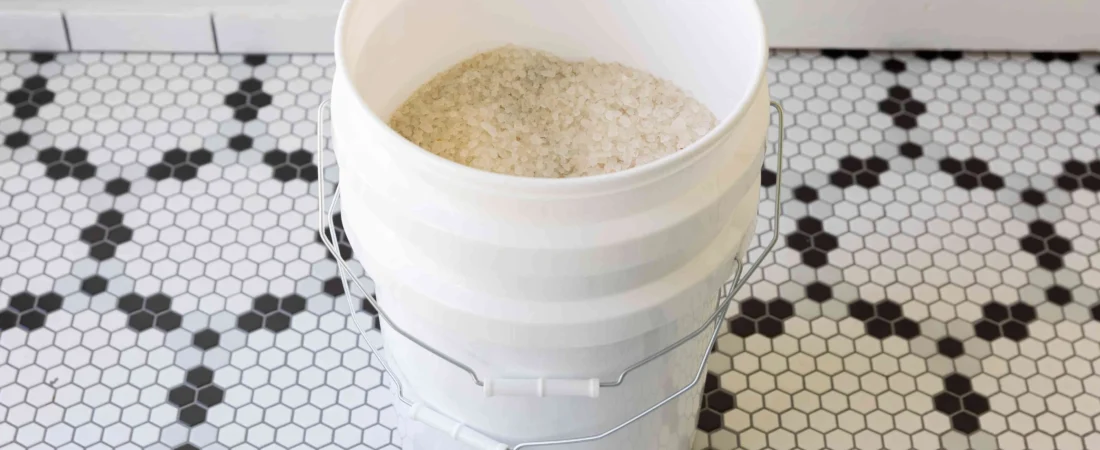
There’s a whole cottage industry around “natural dehumidifiers” — rock salt, baking soda, charcoal, calcium chloride crystals — and the honest answer is that some work modestly within a small, enclosed space, and most are being asked to do a job they’re physically incapable of. Here’s the realistic breakdown:
| Natural Absorbent | Realistic Use Case | Approximate Moisture Capacity |
|---|---|---|
| Rock salt (sodium chloride) | Small enclosed spaces (closets, storage boxes) | ~100–200ml per kg over several weeks |
| Silica gel | Drawers, containers, camera bags | ~30–40% of its own weight before saturation |
| Activated charcoal (bamboo) | Odor and minor humidity in wardrobes | Minimal — primarily an odor absorber |
| Calcium chloride (commercial DampRid style) | Rooms up to ~20 sqm, enclosed spaces | Up to 2x its weight; most effective of the group |
The important nuance here: absorbents are maintenance tools, not solutions. They saturate and stop working. Rock salt in a bowl becomes a bowl of brine water in a high-humidity environment — at which point it’s contributing back to the problem. Silica gel is genuinely useful in sealed containers but makes no meaningful dent in a 25-square-meter living room. Calibrate expectations accordingly.
That said, calcium chloride-based products in appropriate containers can pull meaningful amounts of moisture from a small bedroom or bathroom — enough to matter in a targeted scenario where you’re waiting on a structural fix or dealing with a seasonal spike. Think of them as a bridge, not a destination.
How Do You Reduce Humidity in Specific Problem Rooms Without a Machine?
Different rooms have different dominant moisture sources, so the same approach applied everywhere produces mixed results. A targeted room-by-room strategy is far more efficient than a blanket fix.
Here’s a scenario that captures the typical mistake: a homeowner notices their bedroom is consistently 5–8% more humid than the rest of the house. They open the window every morning, place a bowl of salt on the dresser, and nothing changes. Why? Because the real source is a poorly sealed cold exterior wall creating condensation, which re-evaporates during the day. The window and the salt are irrelevant to that mechanism. Fixing the thermal bridge — through better curtains, internal insulation, or simply moving furniture away from the wall to allow airflow — addresses the actual cause.
Room-specific natural strategies to consider:
- Bathroom: Keep shower temperature 5–10°F lower than your usual setting — hotter showers produce significantly more vapor — and squeegee tiled walls after use to remove surface water before it evaporates back into the air.
- Kitchen: Always use lids when boiling, use the smallest burner that gets the job done (less surface evaporation), and crack a window at the opposite end of the room to create cross-ventilation when cooking.
- Bedroom: Avoid air-drying clothes or towels in the bedroom overnight — a damp towel on a hook releases roughly 0.3–0.5 liters of moisture into a closed room by morning. Move plants to better-ventilated areas.
- Basement: The priority here is stopping ground infiltration, not absorbing ambient air. A sealed concrete floor and walls, combined with a low-cost exhaust fan timed to run during low outdoor humidity periods, can reduce basement humidity by 20% or more without any chemical intervention.
- Living areas: Furniture pushed flush against exterior walls restricts airflow and creates micro-environments where humidity concentrates and mold colonizes. Even pulling sofas and shelving 2–3 inches from exterior walls changes the surface temperature dynamics enough to matter.
Can Houseplants and Natural Materials Help or Hurt Indoor Humidity?
The plant question deserves a more honest treatment than it usually gets. You’ll find plenty of lists claiming that certain houseplants “regulate” indoor humidity, citing spider plants and peace lilies as natural humidifiers. That’s technically true — they do release moisture. Calling this a regulation mechanism is a stretch, though. Plants don’t have a hygrometer; they transpire based on their own biology, not your indoor conditions.
Some plants can passively absorb surface moisture from the air during certain metabolic phases, but this effect is negligible at the scale of a room. The net contribution of most houseplants in a sealed space is moisture addition, not reduction. The exception is placing plants near open windows where their transpiration is carried outside — then they’re essentially neutral.
Natural building materials are a more interesting and underappreciated angle. Unfinished wood, natural cork, and clay plasters have meaningful hygroscopic properties — they absorb moisture from the air when humidity rises and release it when conditions dry out. This buffers spikes rather than eliminating humidity, but it’s a genuine, passive effect that synthetic materials don’t replicate. Cork flooring in a humid room isn’t just an aesthetic choice; it’s quietly doing low-level humidity regulation around the clock.
Pro-Tip: If you’re renovating any room with persistent humidity issues, specify moisture-buffering finishes like clay-based paint or natural plaster on at least one wall. These materials can absorb and release up to 30 grams of moisture per square meter per day — a genuinely measurable passive buffer that requires zero maintenance and lasts decades.
How Do Behavioral Changes Lower Indoor Humidity Better Than Any Product?
The unglamorous truth about humidity control is that daily habits drive more of your indoor moisture load than almost any fixed feature of the home. Products get marketed because they’re sellable. Behavior change doesn’t have a price tag, which is probably why it gets buried at the bottom of most guides or skipped entirely.Consider the cumulative effect of a family of four: four showers per day averaging 10 minutes each, two loads of laundry dried indoors per week, one boiling meal per evening, and four people exhaling vapor continuously. Without any structural problem, this routine alone generates 15–20 liters of airborne moisture daily in a moderately sealed modern home. That’s not a dehumidifier problem — that’s a behavior problem, and it responds to behavior solutions.
Small shifts compound dramatically. Showering with the bathroom door closed and the fan running prevents humidity from migrating to adjacent rooms. Covering pots while boiling reduces cooking vapor by up to 60%. Air-drying laundry outside even on cool dry days — not just warm ones — removes one of the largest single moisture loads a household generates. None of these cost money. None require a product. They just require knowing why they matter.
What’s the Right Target Humidity Level and How Do You Know You’ve Hit It?
The widely cited target is 40–60% relative humidity indoors. That range balances comfort, respiratory health, structural protection, and mold prevention reasonably well across most climates. Below 30%, you’ll start noticing dry skin, static electricity, and cracking wood. Above 65% sustained over days or weeks, mold can begin colonizing porous surfaces even without visible condensation.
A digital hygrometer costs between $10 and $20 and is the single most useful tool in this entire process — not to fix humidity, but to measure it so you’re responding to real data rather than guesswork. Place one in each problem room for a week before making any changes. You’ll almost certainly find that the rooms you suspected aren’t the worst, and the rooms you ignored are the actual problem. That kind of discovery is only possible with measurement.
It’s worth noting that “ideal” humidity is somewhat context-dependent. A home in a cold climate will naturally run drier in winter due to heating systems, and pushing toward 50% can require active humidification. A home in a subtropical climate may find that 55% is the realistic floor of what natural methods can achieve without mechanical assistance. Setting 40% as a rigid target in Miami without a dehumidifier is a frustrating exercise; setting 60% as the ceiling you’re working to stay below is a more honest and achievable goal.
How Do You Keep Humidity Low Long-Term Without Constant Effort?
Sustainability comes from systems, not sprints. The homeowners who manage humidity well without machines aren’t doing more — they’ve set up conditions where moisture doesn’t accumulate in the first place. That looks like sealed crawl spaces, properly exhausted bathroom and kitchen fans, habit loops around cooking and laundry, and a hygrometer check that takes ten seconds every few days.
Seasonal adjustment matters too. The interventions that work in summer don’t necessarily apply in winter, and vice versa. In colder months, internal moisture sources (cooking, breathing, bathing) dominate because the home is sealed tighter. In warmer months, infiltration from outside air becomes a bigger factor in many climates. Treating humidity as a year-round variable rather than a summer problem keeps you ahead of issues instead of reacting to them.
One structural investment that pays indefinitely: improving the thermal performance of your exterior walls and windows. Cold surfaces are where humidity concentrates into condensation, and condensation is where mold starts. Better insulation doesn’t just save on heating and cooling bills — it raises surface temperatures throughout the home, reducing the number of cold spots where moisture can collect. That’s a passive, permanent upgrade that no absorbent bowl or open window can replicate.
The homes that never need a dehumidifier aren’t lucky — they’ve been made unfriendly to moisture accumulation at a structural and behavioral level simultaneously. Get those two aligned, and you’ll find that humidity stops being something you fight and starts being something that simply isn’t a problem anymore. That shift is worth working toward, because the alternative is an indefinite cycle of managing symptoms while the causes quietly continue.
Frequently Asked Questions
Can humidity be reduced naturally?
Yes, through ventilation, airflow, and moisture-aware habits.
Do natural methods work without devices?
They often do for mild or seasonal humidity issues.
How long does it take to see results?
Usually days to weeks, depending on conditions.
Are natural methods enough to prevent mold?
They help significantly, especially when moisture does not persist.