
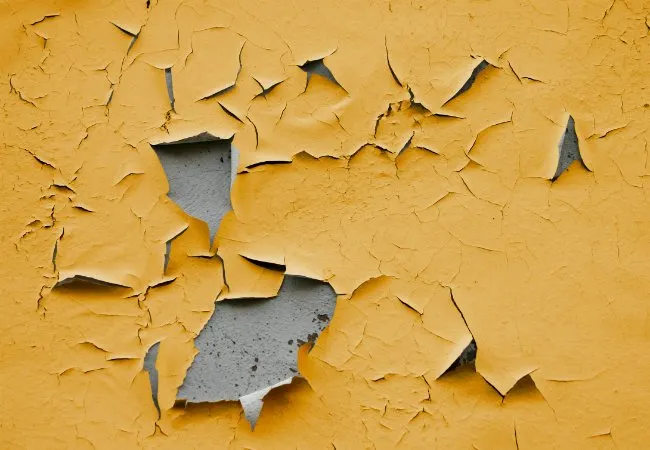
Peeling paint is one of the clearest signs that moisture is affecting an indoor wall. Paint may lift at the edges, crack in thin lines, or flake away from the surface, sometimes exposing the wall beneath. What makes this frustrating is that peeling often appears even when there are no leaks, no visible water stains, and no obvious damage to the wall itself.
In many apartments, paint does not fail because it was applied incorrectly, but because moisture repeatedly interacts with the wall surface from the inside. Understanding this process helps explain why paint peeling often develops slowly and why repainting alone rarely fixes the problem.
How Moisture Causes Paint to Peel
Paint forms a thin protective layer on the wall, but it is not completely waterproof. Walls naturally absorb and release small amounts of moisture, and paint must allow this exchange to happen evenly.
Problems begin when moisture builds up faster than it can escape. As moisture accumulates beneath the paint layer, it creates pressure that weakens adhesion. Over time, the paint loses its grip on the surface and begins to lift or crack.
This process usually happens gradually, which is why peeling paint often seems to appear suddenly even though the conditions existed for months.
Why Paint Can Peel Without Any Visible Water
One of the most confusing aspects of peeling paint is that walls may look completely dry. This happens because moisture does not need to appear as liquid water to damage paint.
Moisture can enter the wall through:
- indoor humidity
- brief condensation that dries quickly
- slow absorption from surrounding air
Even when the surface dries, moisture can remain trapped beneath the paint layer. Repeated exposure to this hidden moisture is enough to cause paint failure over time.
The Role of Condensation in Paint Failure
Condensation plays a key role in many cases of peeling paint, especially on colder walls. When warm, moist indoor air meets a cool wall surface, moisture can briefly form on the paint. This moisture may evaporate quickly and never be noticed.
However, when this cycle repeats—night after night or season after season—the paint layer experiences repeated wetting and drying. These cycles gradually weaken adhesion and make peeling more likely, particularly on exterior walls and in rooms with limited airflow.
Damp Walls and Long-Term Paint Damage
Peeling paint is often a symptom of damp walls rather than sudden moisture exposure. Damp walls retain small amounts of moisture within their materials and dry very slowly.
Paint applied to such walls is under constant stress because moisture remains present just beneath the surface. This explains why peeling paint often appears in areas where walls feel cold or slightly clammy to the touch.
Where Peeling Paint Commonly Appears
Peeling paint tends to show up in specific locations rather than randomly across a room. Common areas include:
- exterior walls
- corners of rooms
- areas behind large furniture
- walls with limited airflow
These areas dry more slowly and are more exposed to temperature differences.
Why Peeling Paint Often Appears Behind Furniture
Furniture placed close to walls restricts airflow and heat circulation. Behind wardrobes, beds, or cabinets, walls stay cooler and moisture evaporates more slowly. Paint in these hidden areas is often exposed to damp conditions for longer periods, which explains why peeling is sometimes discovered only after furniture is moved.
Seasonal Patterns in Peeling Paint
Peeling paint often follows a seasonal pattern rather than appearing randomly.
- Winter: Cold walls, slower evaporation, and more frequent condensation increase moisture stress on paint.
- Summer: Higher humidity can trap moisture beneath paint layers, sometimes causing blistering.
When peeling paint worsens during certain seasons, it strongly suggests moisture-related causes rather than poor paint quality.
Moisture-Related Peeling vs Paint Application Issues
It is common to blame peeling paint on poor preparation or low-quality paint, but moisture-related peeling behaves differently.
| Feature | Moisture-Related Peeling | Paint Application Issues |
|---|---|---|
| Develops gradually | Yes | Often quickly |
| Linked to cold or damp walls | Yes | No |
| Seasonal pattern | Common | Rare |
| Reappears after repainting | Often | Less likely |
| Affects specific areas | Yes | Usually widespread |
This difference explains why repainting alone often does not solve the problem.
Why Repainting Alone Usually Fails
Repainting over a moisture-affected wall may improve appearance temporarily, but it does not remove the moisture already present in the wall. New paint can even trap moisture more effectively, leading to repeated peeling months later—often in the same spots.
This cycle is one of the most common frustrations associated with peeling paint indoors.
Peeling Paint as an Early Warning Sign
Peeling paint is often one of the earliest visible indicators that moisture conditions are not balanced. It may appear before damp smells, staining, or mold growth. For this reason, peeling paint should be viewed not just as a cosmetic issue, but as a signal that moisture is interacting with the wall over time.
Peeling paint due to moisture is common in apartments and is usually caused by indoor humidity, condensation, damp walls, and slow drying rather than poor paint quality. Moisture can build up beneath paint layers even when walls appear dry, gradually weakening adhesion and causing paint to lift or flake.
Understanding peeling paint as part of a broader indoor moisture pattern helps explain why the issue often returns after repainting and why it appears in specific locations or seasons
Frequently Asked Questions
Can paint peel even without leaks?
Yes. Indoor moisture and condensation are common causes.
Why does paint peel more on exterior walls?
Because they stay colder and dry more slowly.
Is peeling paint always serious?
Not always, but repeated peeling usually indicates moisture imbalance.