
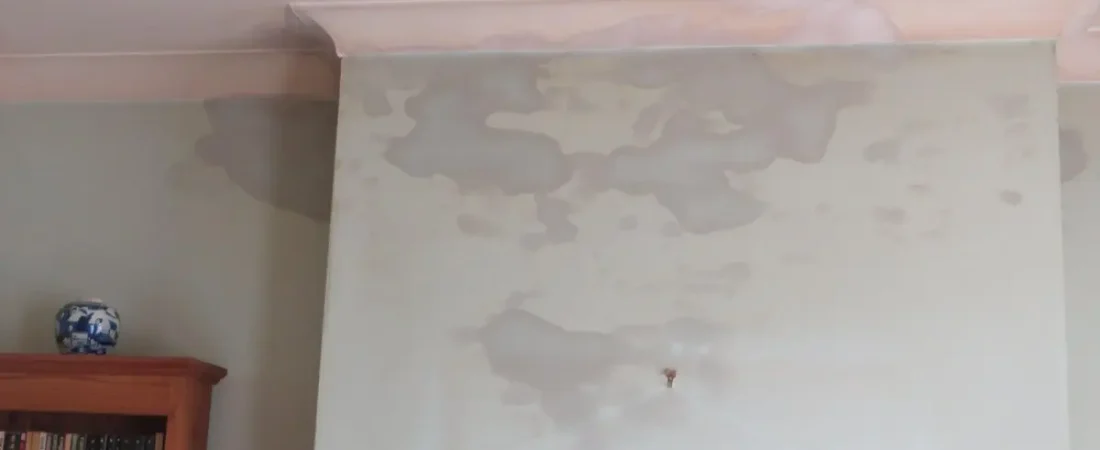
Damp walls without leaks are a common and confusing issue in apartments. Walls may feel cold, moist, or clammy even though there are no visible water stains, no dripping pipes, and no signs of structural damage. Because leaks are often the first thing people suspect, the absence of one can make the situation feel mysterious.
In many cases, damp walls develop without any leaks at all. This article explains why walls can feel damp when nothing is broken, how moisture enters walls from indoor air, and how to understand whether this is a temporary condition or a recurring pattern.
Why Leaks Are Not the Only Cause of Damp Walls
Leaks involve active water entering walls from plumbing or the building structure. Damp walls, however, often involve passive moisture buildup.
Walls can become damp through:
- moisture in indoor air
- repeated condensation
- slow drying
- limited airflow
This means dampness can develop even in well-maintained apartments.
Indoor Moisture as the Main Source
The most common source of damp walls without leaks is indoor moisture.
Everyday activities release moisture into the air:
- breathing
- showering
- cooking
- drying clothes indoors
When this moisture cannot escape efficiently, it interacts with cooler wall surfaces.
How Moisture Moves From Air Into Walls
Walls are not completely sealed.
Moisture can:
- settle on surfaces briefly
- be absorbed into paint or plaster
- move slowly into wall materials
- evaporate unevenly
Over time, this process allows moisture to accumulate without ever forming visible water.
Invisible Condensation and Damp Walls
Not all condensation is visible.
Invisible condensation:
- forms briefly
- evaporates quickly
- leaves moisture behind
Repeated invisible condensation is one of the most common reasons walls feel damp without leaks.
Why Exterior Walls Feel Damp Without Leaks
Exterior walls are especially prone to leak-free dampness.
They:
- stay cooler due to outdoor temperatures
- experience larger temperature differences
- dry more slowly
As a result, moisture from indoor air interacts with these walls more easily.
Damp Walls Without Leaks in Winter
Winter often makes damp walls more noticeable.
Reasons include:
- colder wall surfaces
- slower evaporation
- higher indoor humidity from closed spaces
This seasonal pattern strongly suggests condensation-driven dampness rather than leaks.
Damp Walls Without Leaks in Summer
Damp walls can also appear in summer.
This happens when:
- outdoor humidity is high
- air conditioning cools wall surfaces
- moisture lingers in materials
In summer, dampness may feel cool and clammy rather than visibly wet.
Why Damp Walls Often Appear Behind Furniture
Walls behind furniture often feel damp even without leaks.
Furniture:
- blocks airflow
- prevents walls from warming
- slows drying
This creates small zones where moisture accumulates unnoticed.
Damp Walls Without Leaks vs Leak-Related Dampness
This comparison helps clarify the difference:
| Feature | Damp Walls Without Leaks | Damp Walls From Leaks |
|---|---|---|
| Visible water | Rare | Common |
| Appears suddenly | ❌ | ✅ |
| Seasonal pattern | Often | Rare |
| Dries on its own | Slowly | Usually not |
| Source of moisture | Indoor air | Plumbing or structure |
This table shows why many damp walls are not caused by leaks.
Why Damp Walls Can Persist Without Getting Worse
Leak-free damp walls often:
- feel consistently damp
- change slowly
- do not spread rapidly
This slow progression is another reason they are often mistaken for minor issues.
Damp Walls Without Leaks and Smell
Musty or damp smells often accompany leak-free damp walls.
This happens because:
- moisture remains trapped
- walls dry slowly
- odors linger
Smell is often noticed before visible changes.
When Damp Walls Without Leaks Are Considered Normal
This situation may be considered normal when:
- dampness is mild
- it appears seasonally
- it affects limited areas
- walls eventually dry
These patterns usually reflect indoor moisture balance.
When Damp Walls Without Leaks Become a Pattern
More attention may be needed when:
- walls feel damp year-round
- drying takes very long
- multiple rooms are affected
- surface damage develops
Persistent dampness usually signals ongoing moisture imbalance.
Why Damp Walls Without Leaks Are Often Misunderstood
This issue is misunderstood because:
- people expect leaks to be visible
- moisture feels “hidden”
- walls look intact
Understanding moisture movement helps remove this confusion.
How Damp Walls Without Leaks Fit Into the Bigger Picture
Leak-free damp walls often sit between:
- humidity (moist air)
- condensation (surface moisture)
- mold (growth over time)
They are part of a gradual moisture process rather than a sudden failure.
Damp walls without leaks are common in apartments and are usually caused by indoor moisture interacting with cooler wall surfaces, slow drying, and limited airflow. Moisture can move from the air into wall materials through invisible condensation and gradual absorption, even when no water damage or leaks are present.
In many cases, this type of dampness is seasonal and mild. It becomes more significant when it is persistent, spreads, or leads to surface changes or odors. Understanding that damp walls can exist without leaks helps interpret indoor moisture conditions more accurately and calmly.
Frequently Asked Questions
Can walls be damp without leaks?
Yes. Indoor moisture is a common cause.
Why are exterior walls damp without leaks?
Because they stay cooler and dry more slowly.
Is dampness without leaks normal?
Often yes, especially seasonally.
Does invisible condensation cause damp walls?
Yes. Repeated invisible condensation is common.
When should damp walls without leaks be investigated further?
When dampness is persistent or spreading.