
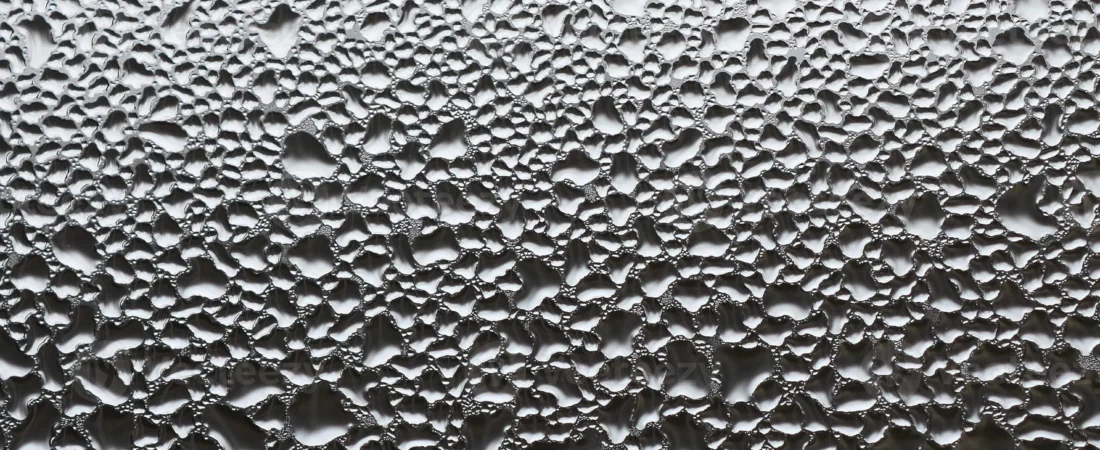
Condensation in apartments isn’t a moisture problem — it’s a heat problem wearing a moisture costume. That distinction matters more than most renters (and landlords) ever realize, and getting it wrong leads to years of wiping windows, arguing over blame, and watching mold quietly take hold behind furniture. Here’s what’s actually happening, where it hits hardest, and why your apartment’s layout might be working against you before you even boil a kettle.
What Is Condensation in Apartments, Really?
Condensation forms when warm, moisture-laden air contacts a surface that’s cold enough to drop the air temperature below its dew point — the temperature at which water vapor can no longer stay airborne and converts to liquid. In apartments, that process happens constantly and invisibly until it doesn’t. You see the result as water droplets on windows, wet patches on walls, or that persistent damp smell in the corner of a bedroom.
The dew point itself shifts depending on how much moisture is in the air. At 65% relative humidity and 68°F indoors, the dew point sits around 52°F — meaning any surface cooler than that will start collecting water. Single-glazed windows in older apartment blocks regularly sit at 40–45°F on cold mornings, well below that threshold.
What almost every explainer article gets wrong is framing condensation purely as “too much moisture.” The moisture is a passenger. The cold surface is the driver. An apartment with identical humidity levels but better-insulated walls simply won’t condense — the surfaces never get cold enough to trigger it.
Why Do Apartments Get Condensation More Than Houses?
Apartments are structurally built for condensation to flourish, even if nobody designed them that way. They tend to be smaller, meaning the moisture from cooking, showering, breathing, and drying clothes gets concentrated into less air volume. A 600 sq ft apartment with two occupants can see indoor humidity spike to 70–80% during an evening routine without a single window open.
Shared walls with neighboring units actually help thermal retention in the middle of a building — but corner apartments and top-floor flats are exposed on more sides, making their external walls significantly colder than internal ones. That temperature differential between the warm living space and a cold external wall is exactly the recipe for surface condensation.
Older apartment buildings often have another structural problem: thermal bridging. Steel or concrete structural elements pass through insulation, creating cold “shortcuts” from outside to inside. Those spots — usually around window frames, floor-ceiling junctions, or behind radiators — can be 10–15°F colder than surrounding surfaces, making them prime condensation targets even when the rest of the wall is fine.
What Causes Condensation in Apartments? The Real Mechanism
Every moisture source inside your apartment contributes to the relative humidity of the indoor air. When that air comes into contact with a cold surface, physics does the rest. But not all moisture sources are equal — and the ones that matter most often surprise people.
- Breathing and body heat: Two people sleeping in a room produce roughly 1–1.5 pints of moisture per night through respiration alone. Over a week, that’s over a gallon of water released into your bedroom air with no cooking, showering, or houseplants involved.
- Cooking without extraction: Boiling water on a hob releases steam rapidly into the kitchen and adjoining rooms. A pot of pasta can add 0.5 pints of airborne moisture in under 20 minutes if the extractor fan isn’t running.
- Showering and bathing: A standard 8-minute shower with no ventilation raises bathroom humidity to near 100%. Without an exhaust fan, that humid air migrates to adjacent rooms — often the bedroom — where it meets cooler surfaces.
- Drying laundry indoors: A single load of wet laundry releases approximately 2 pints of moisture into the air as it dries. In an unventilated apartment, that’s one of the fastest ways to push humidity above 70%.
- Houseplants and pets: Each contributes small but meaningful amounts through transpiration and respiration. A collection of 10 medium houseplants can add several ounces of moisture to the air daily — minor on its own, compounding when combined with other sources.
The counterintuitive truth here is that modern energy-efficient apartments with good sealing can actually worsen condensation risk. Better airtightness traps moisture inside rather than letting it drift through gaps and cracks. An older drafty flat often had accidental ventilation doing the work that a modern building needs intentional ventilation systems to replicate.
Where Does Condensation Appear First in an Apartment?
Condensation doesn’t pick random spots — it follows cold surfaces with almost predictable logic. Once you understand why certain areas get hit, you’ll stop being surprised when the same corners keep reappearing in your cleaning routine.
Windows are the most visible site because glass conducts cold far faster than insulated walls. Even double-glazed units can show condensation between the panes if the seal has failed, which tells you the insulating argon or krypton gas has escaped and the two panes are now behaving thermally like single glazing. That internal misting can’t be wiped away — the glass needs replacing.
Behind large furniture pushed against external walls is the most overlooked location. A wardrobe or sofa touching an outside wall blocks the small amount of heat that would otherwise keep that wall surface marginally warmer. The wall cools below dew point, condensation forms, and mold colonizes the back panel of your furniture and the wall behind it — invisible until you move things around or notice a smell.
Here’s a real scenario: a tenant in a ground-floor apartment kept complaining of mold behind their bed on the external wall. They’d tried every spray cleaner and painted over it twice. The actual issue was that their bed headboard was flush against a north-facing external wall, blocking airflow and keeping that wall surface at a consistently lower temperature than the rest of the room. Moving the bed 4 inches from the wall stopped new mold growth within a season.
| Location | Why It’s Vulnerable | Typical Surface Temp Drop |
|---|---|---|
| Single-glazed windows | Glass conducts cold rapidly with no insulating barrier | Up to 30°F below room temp |
| External wall corners | Exposed on two sides, minimal thermal mass to retain heat | 10–15°F below adjacent wall |
| Behind furniture on outside walls | Blocked airflow prevents wall from receiving room heat | 5–10°F below exposed wall |
| Bathroom ceiling above shower | Steam rises directly, ceiling may be uninsulated slab | Varies; high humidity saturation |
How Does Cold Weather Change the Condensation Equation?
Cold outdoor temperatures drive condensation harder for two reasons that work together. First, colder outside air means colder external surfaces — walls, window frames, and floors above uninsulated spaces all drop in temperature as winter deepens. Second, people heat their apartments more in cold weather, which raises indoor air temperature and increases how much moisture that air can hold before reaching saturation.
That sounds paradoxical — warmer air holds more moisture, so shouldn’t it condense less? The problem is that the same warmer, moisture-rich air eventually hits those still-cold surfaces at the building envelope, and when it does, the drop below dew point is more dramatic. You get more water per event, not fewer events.
Heating patterns also matter significantly. An apartment kept at a steady 65°F is actually less prone to condensation than one that’s heated to 74°F in the evening and drops to 55°F overnight. Those temperature swings change the dew point constantly, and the coldest part of the overnight cool-down is when surfaces stay cold while the air still holds the humidity from an active evening — peak condensation formation time.
“Condensation control in residential buildings is fundamentally about managing surface temperatures, not just indoor humidity levels. Tenants are often blamed for producing too much moisture when the real failure is an under-insulated building envelope that allows surface temperatures to fall below the dew point during normal occupation. You can’t expect occupants to live without cooking, sleeping, or breathing.”
Dr. Marcus Henley, Building Physics Consultant and former lecturer in Environmental Building Design
Is Condensation in Apartments a Tenant Problem or a Building Problem?
This is where honest nuance matters, because the answer genuinely depends on the situation. Some condensation is caused by lifestyle — drying laundry indoors in an unventilated apartment, never running the bathroom extractor, cooking without any extraction running. That’s controllable. But a significant portion of condensation in apartment buildings traces directly to structural deficiencies that no amount of ventilation habit will fully overcome.
A building with inadequate wall insulation, failed window seals, or no mechanical ventilation will condense regardless of how carefully the tenant manages moisture. If every apartment in a block has the same problem in the same corners, it’s not a coincidence of bad habits — it’s a building envelope issue. Understanding the overlap between humidity and mold responsibility is worth knowing before any difficult conversation with a landlord, because mold that results from building deficiencies typically sits with the landlord, not the tenant.
The honest framework: if you’ve actively managed ventilation, maintained reasonable heating consistency, and reduced obvious moisture sources — and condensation still persists on external walls or around window frames — that’s almost certainly a structural problem. If condensation is only appearing in rooms with poor airflow, behind unmoved furniture, or in a bathroom with a broken extractor fan, lifestyle adjustments will actually help.
Pro-Tip: Run your bathroom extractor fan for at least 20 minutes after you finish showering — not just while you’re in there. The steam that lingers after you leave accounts for more moisture migration into adjacent rooms than the shower itself produces during use.
What Are the Signs That Condensation Is Getting Worse?
Condensation that’s escalating tells you something specific: either the moisture load inside your apartment is increasing, the surface temperatures are getting colder, or both. Recognizing the progression early is what separates a manageable ventilation habit from a mold remediation project.
- Water streaks below window sills: Droplets forming and running down indicate sustained condensation events, not just occasional light moisture. The paint or sill staining below windows is a reliable sign it’s been happening repeatedly.
- Black spotting at wall corners: Cladosporium and Aspergillus — the mold species most associated with condensation — appear as black or dark green speckling, usually at corners or behind furniture where airflow is lowest.
- Musty smell that appears seasonally: If the smell is stronger in winter or during wet weather, it’s almost certainly condensation-related rather than a plumbing leak.
- Peeling wallpaper or paint bubbling near external walls: Moisture working through the wall or collecting behind surface finishes eventually disrupts adhesion. This indicates the condensation has been present long enough to saturate the surface materials.
- Persistent foggy windows even midday: Morning window condensation that clears by mid-morning is normal. Condensation that stays or reforms throughout the day points to persistently high indoor humidity that isn’t being cleared by any ventilation.
How Does Apartment Layout Affect Condensation Risk?
Apartment layout is one of the most underappreciated factors in condensation risk, and it’s rarely discussed because renters usually don’t get to choose the floorplan. But understanding how layout contributes explains why identical habits can cause serious condensation in one apartment and almost none in another.
North-facing or east-facing apartments receive less direct sun, meaning external walls stay cooler throughout the day and never get the natural warming that helps lift surface temperatures above dew point. South or west-facing apartments benefit from afternoon sun warming external glass and masonry, which meaningfully reduces condensation hours per day.
Open-plan layouts distribute moisture more evenly through the space, which sounds worse but actually reduces the concentration of humid air in any single zone. Closed-off kitchens and bathrooms — especially when their extractor fans are undersized or broken — allow humidity to spike locally to 80–90%, creating a moisture reservoir that seeps under doors and into cooler adjacent rooms. A studio apartment with good cross-ventilation will typically outperform a two-bedroom with a closed, poorly-ventilated kitchen on condensation metrics, even with more occupants.
What’s the Difference Between Condensation and a Rising Damp or Leak?
Misidentifying the source of moisture is surprisingly common, and it matters because the fix is completely different. Treating a leak as condensation means the leak continues. Treating condensation as rising damp means unnecessary and expensive remedial work on a wall that doesn’t need it.
Condensation moisture appears on surfaces — it’s the air depositing water onto a cold face. It typically appears at the coldest points (window corners, external wall junctions, cold bridges) and tends to follow temperature patterns, being worse in the morning after overnight cold and improving as the apartment warms. Rising damp wicks upward from ground-level moisture through porous masonry, typically appearing as a tide mark at a consistent height — usually below 1 meter — regardless of which wall face you’re looking at. Leaks from above or from pipes appear in specific spots that don’t follow cold-surface logic and may be wet to the touch even in warm weather.
A simple test: use a piece of foil taped flat against a suspect damp patch for 48 hours. If moisture appears on the room-facing side of the foil, the moisture is coming from the air — condensation. If moisture appears on the wall-facing side, it’s coming through the wall — a leak or penetrating damp. It’s low-tech but reliable, and it’s the same diagnostic approach building surveyors use before ordering more expensive tests.
What Practical Steps Actually Reduce Condensation in Apartments?
Reducing condensation requires either lowering the moisture content of the indoor air, raising the temperature of cold surfaces, or improving airflow so humid air doesn’t linger long enough to condense. Most effective interventions combine at least two of these approaches — doing just one rarely eliminates the problem entirely.
Ventilation is the most effective lever most people have in a rental. Trickle vents on windows (the small slotted opening at the top of a window frame) should be left open year-round — they don’t significantly increase heating bills, but they provide enough air exchange to prevent humidity buildup overnight. If your apartment has them and you’ve been closing them for warmth, that’s worth reconsidering.
Surface temperature matters just as much. Keeping heating at a low background level overnight — 60–62°F rather than dropping to 50°F — prevents walls and windows from reaching the coldest temperatures of the night when the air still holds significant moisture from the day’s activities. The energy cost difference between 50°F and 62°F overnight is less than most people assume, and the condensation reduction is significant.
Furniture positioning is the easiest zero-cost adjustment. Leaving 4–6 inches of clear space between furniture and external walls allows room-temperature air to circulate against the wall surface, keeping it slightly warmer and above dew point for more hours of the day. It takes less than 10 minutes to move a wardrobe or bookshelf and can stop recurring mold patches without any products involved.
Dehumidifiers are genuinely useful in apartments where structural changes aren’t possible, but size matters. A 30-pint unit is appropriate for a studio or one-bedroom apartment; a larger two or three-bedroom apartment will need a 50-pint model to actually move the needle on ambient humidity. Running an undersized dehumidifier in a space too large for it barely keeps up with ongoing moisture production and doesn’t protect the coldest surfaces.
Does Condensation Always Lead to Mold?
Not inevitably — but the margin between condensation and mold growth is narrower than most people assume. Mold spores are present in virtually every indoor environment. What they need to activate and colonize a surface is sustained moisture and an organic food source (which wall paint, timber, and dust all provide). Condensation that evaporates within a few hours and leaves a surface fully dry most days won’t typically trigger mold. Condensation that lingers — on a wall surface that stays wet for 6 or more hours at a time — almost certainly will.
The species of mold that typically results from condensation — Cladosporium, Penicillium, and Aspergillus — tend to grow at lower temperatures and higher humidity levels than the Stachybotrys (black mold) species associated with serious water damage. They’re not harmless, but the risk profile is different. Respiratory irritation and allergic reactions are the main health concerns, particularly for occupants with asthma, young children, or elderly residents.
Condensation becomes a genuine health issue when it’s chronic and untreated rather than occasional and managed. Seasonal surface condensation on windows that gets wiped and dried is a maintenance task. Persistent dampness on walls, repeated mold regrowth, or moisture visible inside walls or ceilings is a different order of problem that needs structural assessment, not just better ventilation habits.
Conclusion
Apartment condensation will only become more relevant as building standards tighten and older housing stock ages without adequate retrofit. The drive toward better airtightness for energy efficiency — without equivalent investment in mechanical ventilation — is creating a generation of apartments that seal moisture in rather than breathing it out. The physics of condensation won’t change: warm wet air, cold surface, water. But how apartments are designed to manage that equation is changing, and the tenants who understand why their walls sweat will be far better positioned to know whether the fix belongs to them or to the building.
Frequently Asked Questions
What is condensation in apartments?
It is moisture from indoor air turning into water on cold surfaces.
Can condensation happen without leaks?
Yes. Condensation does not require leaks or water damage.
Is condensation normal in apartments?
Occasional condensation is common, especially in colder seasons.
Why does condensation appear on windows first?
Windows are usually the coldest indoor surfaces.
Does condensation always mean a problem?
No. It becomes a concern only when it is persistent or widespread.