
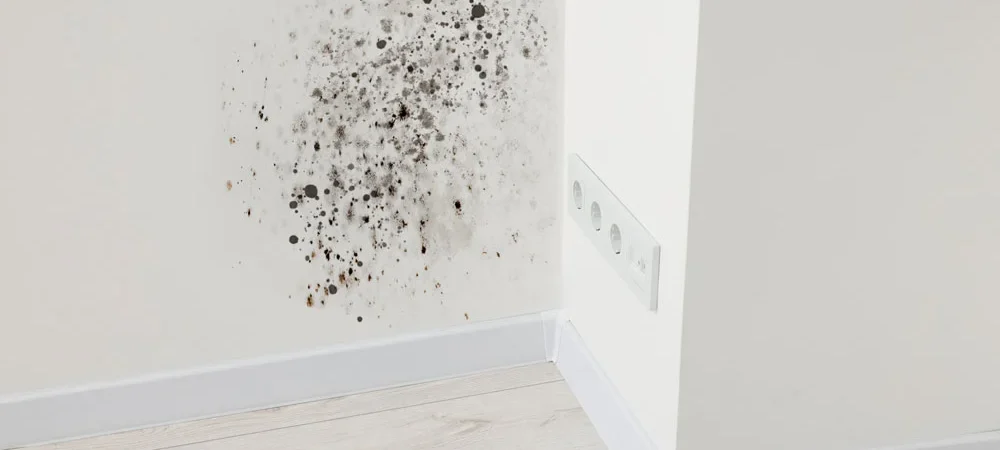
Painting over mold kills it — that’s the fix most homeowners reach for, and it fails almost every time. The mold you see on walls is rarely the full picture. It’s a symptom of a moisture condition that’s still very much active inside your wall cavity, and no coat of paint changes that. This article is built around the thing most mold guides skip entirely: the difference between treating the surface and solving the problem, and why that gap keeps mold coming back month after month.
What is mold on walls, exactly?
Mold is a living fungus, and wall surfaces are genuinely one of its favorite places to colonize. It reproduces by releasing microscopic spores into the air — spores that are already floating through your home right now, in every room, waiting for the right conditions. Those conditions come down to three things: moisture, a food source (drywall, paint, wood, dust), and temperatures between roughly 40°F and 100°F.
Your walls check all three boxes by default. The only variable you can realistically control is moisture. That’s not a minor point — it’s the entire lever.
Mold on walls typically appears as discolored patches: black, green, gray, or sometimes a fuzzy white. The color doesn’t reliably tell you the species, and the species doesn’t reliably tell you the danger level — both of those are common misconceptions we’ll address below.
Why does mold grow on walls even when there’s no visible leak?
This is the question that trips people up most. You check your pipes. No leak. You check the roof. Fine. And yet mold keeps appearing on your bedroom wall, your bathroom ceiling, the corner behind your wardrobe. The answer, almost always, is condensation — not a leak.
Condensation on walls happens when warm, humid indoor air makes contact with a wall surface that’s cooler than the air’s dew point. The moisture literally comes out of the air and deposits on the wall. You don’t see it drip. You don’t find a wet patch. But over days and weeks, that invisible moisture accumulates in porous materials and mold takes hold.
This is especially common on exterior-facing walls, in corners with poor airflow, and in rooms that generate a lot of humidity — bathrooms, kitchens, and bedrooms with poor ventilation. Understanding why mold grows on walls without any obvious water source is the first step toward actually fixing it instead of just cleaning it off repeatedly.
What are the most common causes of mold on walls?
There’s no single cause — but there are patterns. Here are the most frequent culprits, in rough order of how often they’re responsible:
- High indoor humidity. Relative humidity above 60% creates a sustained environment where mold can grow with no other contributing factor. Cooking, showering, breathing, and even houseplants release moisture into the air constantly.
- Poor ventilation. Rooms that don’t get fresh air circulation trap humid air against walls. This is why mold often appears in corners, behind furniture, and in wardrobes — areas where air barely moves.
- Thermal bridging. In older or poorly insulated buildings, parts of the wall structure (like studs or lintels) conduct cold from outside into the wall surface. These cold spots hit the dew point first and become mold hotspots.
- Plumbing leaks inside walls. A slow pipe leak can saturate insulation and drywall for months before any surface sign appears. By the time you see mold, there’s often significant hidden growth inside the cavity.
- Rising damp. Ground moisture can wick upward through masonry walls in older homes, especially those without a proper damp-proof course. This usually produces a distinctive tide-mark pattern low on the wall.
- Roof or window leaks that track sideways. Water doesn’t always fall straight down. A leaking window frame or flashing failure can drive water laterally through a wall cavity and appear as mold several feet from the actual entry point.
What are the health risks of mold on walls?
The health effects of mold exposure depend on the species, the concentration of spores, and how sensitive the individual is — which means there’s no single honest answer that covers everyone. Some people live with low-level mold for years with minor symptoms; others react severely to small amounts. The honest nuance is that vulnerability matters enormously here.
That said, documented health effects from mold exposure include respiratory symptoms (coughing, wheezing, shortness of breath), nasal and throat irritation, eye irritation, skin rashes, and in people with asthma, potentially serious attacks. For immunocompromised individuals, some mold species can cause invasive infections that are genuinely dangerous.
The CDC notes that the most common indoor molds — Cladosporium, Penicillium, and Aspergillus — are present in virtually every home but become problematic when concentrations spike due to active wall growth. Black mold (Stachybotrys chartarum) gets the most media coverage, but it actually requires very specific conditions to grow and is less common than the others. Color is not a reliable guide to danger.
“People often fixate on the color of mold when they should be fixating on the area of growth. A square foot of any mold species in a child’s bedroom is a more urgent problem than identifying whether it’s black mold or green mold. Surface area and proximity to sleeping spaces are what matter most for exposure risk.”
Dr. Rachel Simms, Environmental Health Specialist and Indoor Air Quality Consultant
How do you identify mold vs. other wall discoloration?
Not every dark patch is mold. Efflorescence — the white, chalky mineral deposit that appears on masonry walls — is frequently mistaken for mold, as is soot staining from candles or fireplaces, and simple water staining from old leaks. Getting this right before you treat anything saves a lot of wasted effort.
A quick field test: dab a small amount of diluted bleach (1 part bleach to 10 parts water) on the discolored area. If the color lightens within a minute or two, you’re likely looking at mold or mildew. If it stays dark, it’s probably a stain. This isn’t lab-accurate, but it’s a practical first filter.
Mold also tends to have a fuzzy or slightly raised texture when you look closely, and it almost always comes with a musty, earthy smell — even when the patch is small. That smell is volatile organic compounds (MVOCs) being released by the mold colony, and it often appears before the visual growth becomes obvious. If you can smell it but not see it yet, look in corners, behind baseboards, and on the back of drywall near exterior walls.
How to remove mold from walls — the right way
Here’s the part where most guides get it exactly backwards: they lead with cleaning solutions and end with a vague sentence about “fixing the moisture problem.” That ordering is wrong. You should fix the moisture source first, then clean. If you don’t, you’re cleaning a wet surface and mold will return within weeks.
Once you’ve identified and addressed the moisture cause — improved ventilation, fixed the leak, reduced indoor humidity — removal depends on what your walls are made of and how extensive the growth is. Here’s a practical breakdown:
| Surface type | Cleaning approach | When to replace instead |
|---|---|---|
| Painted drywall (non-porous surface) | Diluted bleach solution or commercial mold remover, scrub and dry thoroughly | If mold has penetrated more than ¼ inch into the drywall |
| Unpainted or porous drywall | Removal is usually the only effective option | Almost always — porous drywall cannot be reliably cleaned |
| Tile and grout | Bleach-based cleaner, stiff brush, rinse well, dry completely | If grout is crumbling or tile is lifting |
| Masonry or concrete block | Stiff brush, diluted bleach, allow to dry fully before repainting | If rising damp source hasn’t been fixed — cleaning alone won’t hold |
For small patches — under 10 square feet — most homeowners can handle removal safely with the right precautions. The EPA’s general guidance is that anything over 10 square feet warrants professional assessment, not because the cleaning itself is necessarily beyond a capable DIYer, but because larger growth almost always indicates a more significant underlying moisture problem that needs proper diagnosis.
Pro-Tip: Before scrubbing mold, lightly mist the area with water first. This reduces the number of spores that go airborne during cleaning — which is the main way mold spreads to other parts of your home during the removal process. Dry scrubbing a moldy patch is one of the most reliable ways to make the problem worse.
What safety precautions do you need when removing wall mold?
Mold removal kicks up spores. That’s just the reality, and it’s why protective equipment isn’t optional — it’s the part people skip that sends them back to square one with mold in a new location. When you disturb a mold colony without containment, those spores travel through your HVAC system and settle in new spots.
Minimum protection for small-area mold removal:
- N95 respirator or better (a basic dust mask does not filter mold spores adequately)
- Nitrile gloves — not thin latex, which bleach and other cleaners degrade quickly
- Safety glasses or goggles to protect eyes from both spores and cleaning chemicals
- Old clothing you can bag and wash immediately, or a disposable coverall
- Plastic sheeting over furniture and floor vents in the room to limit spore spread
- A HEPA-filter vacuum to clean up after — standard vacuums just recirculate spores
Turn off your HVAC system before starting work and keep it off until you’ve cleaned up and the area has dried. This single step prevents your ventilation system from distributing disturbed spores throughout the rest of the house.
Does bleach actually kill mold on walls?
Bleach kills mold on non-porous surfaces — tile, glass, sealed concrete — effectively. On porous materials like drywall and unpainted wood, it’s a different story. The chlorine in bleach doesn’t penetrate deeply, so it kills surface mold while the root-like structures (hyphae) lower in the material survive. The mold regrows from the inside out.
This is the counterintuitive fact that explains why so many bleach treatments seem to work for a few weeks and then the mold is back. You bleached the visible growth — you didn’t touch the colony. For porous surfaces, antifungal products containing quaternary ammonium compounds, borate-based solutions, or products specifically rated for porous surfaces are more effective because they penetrate deeper.
There’s also a color issue. Bleach will lighten the staining left by mold even after the mold itself is dead. So a wall that’s been bleached can look clean while still harboring dead spores that can serve as food for future growth. Cleaning with a detergent solution after treatment and allowing proper drying is the step that most people skip.
How do you prevent mold from coming back on walls?
Mold prevention is basically humidity management with better ventilation. The target indoor relative humidity for mold prevention is between 30% and 50%. Above 60%, you’re creating reliable mold conditions regardless of how clean your surfaces are. A basic digital hygrometer costs under $15 and gives you real data instead of guesswork.
Ventilation is the other half. Here’s a real scenario that plays out constantly: a family moves into a well-sealed modern apartment, hangs a wardrobe against an exterior wall, and within eight months finds mold covering the entire back panel of the wardrobe and the wall behind it. No leak. No obvious moisture source. Just warm humid air from the room getting trapped in a dead-air pocket against a cold wall. Moving the wardrobe two to three inches away from the wall — enough for air to circulate — would have prevented it entirely.
Practical prevention steps worth keeping long-term:
Run bathroom exhaust fans during showering and for at least 20 minutes after. Cook with lids on pots where possible and run the range hood. Keep interior doors open when rooms aren’t in use to allow air circulation. In particularly damp climates or problem rooms, a dehumidifier running continuously makes more difference than any cleaning product.
Anti-mold paint is worth mentioning, but it’s not a standalone fix — it’s a finishing layer on top of properly dry, treated wall surfaces. Applied to walls that still have underlying moisture issues, it fails within a season. Applied to clean, dry surfaces in rooms with controlled humidity, it provides a genuinely useful additional barrier.
When should you call a professional for mold on walls?
The 10-square-foot rule is a reasonable starting point, but there are situations that warrant professional help regardless of size. If you find mold on walls in multiple rooms simultaneously, that usually indicates a systemic humidity or HVAC issue — not a localized problem you can clean your way out of. If mold keeps returning within weeks of cleaning, the source hasn’t been addressed and you likely need someone to diagnose it properly.
Also get professional help if the mold is inside your walls — not just on the surface — or if you suspect it involves your HVAC ducts. Mold in ductwork can distribute spores to every room in the house every time the system runs, and cleaning ductwork is not a DIY job.
Health situations also change the calculus. Households with infants, elderly people, anyone with asthma, or immunocompromised individuals should lower their threshold for calling in a professional. The cost of a proper remediation — typically $500 to $6,000 depending on scope — is significant, but so is the cost of repeated exposure to elevated mold spore concentrations for someone whose lungs are already compromised.
What does mold remediation actually involve?
Professional mold remediation isn’t just a more thorough version of what you’d do yourself. The process involves containment (sealing off the work area with negative air pressure so spores don’t escape), HEPA air scrubbing running continuously during work, physical removal of affected materials rather than just surface treatment, and post-remediation testing to verify the area is clear before reconstruction begins.
Any contractor who offers to clean mold without removing affected drywall when it’s warranted — or who skips post-remediation verification — is cutting corners that matter. Reputable remediators will follow guidelines from the EPA or the Institute of Inspection, Cleaning and Restoration Certification (IICRC S520 standard) and should be able to explain their process clearly.
Get at least two quotes and ask each contractor specifically: “Will you test the air after remediation to confirm spore levels are back to normal?” A confident answer yes — with a written explanation of what testing involves — is a good sign. Reluctance to discuss post-remediation verification is a red flag.
Does mold on walls always mean the building has a serious problem?
Not always — and this is where some perspective is useful. A small patch of mold on a bathroom wall near a poorly ventilated shower is common, fixable, and not a sign of structural failure. It means the ventilation in that room isn’t keeping up with the moisture load. Fix the ventilation, clean the mold properly, and you’re done.
A pattern of mold across multiple walls, on exterior-facing surfaces throughout the building, or recurring after proper treatment — that’s a different situation. It suggests something systemic: a building envelope that’s allowing moisture intrusion, an HVAC system creating moisture problems, or insulation that’s failing and allowing widespread thermal bridging.
The distinction matters because the solutions are completely different in scale and cost. Treating a serious building-envelope problem with cleaning products and better ventilation habits is like bailing a boat without patching the hull. Knowing which situation you’re actually in determines whether this is a weekend project or a conversation with your landlord, building manager, or a structural consultant.
What most mold articles won’t tell you is this: the homes that struggle with chronic wall mold tend to be either very old (with aging infrastructure) or very new and well-sealed (where airtight construction traps moisture that older, drafty buildings would have naturally vented). The middle ground — moderately aged homes with normal ventilation — is actually the least problematic category. Better sealing requires better active ventilation, and that’s an engineering trade-off that residential construction hasn’t fully caught up with yet.
Frequently Asked Questions
Can mold grow on walls without leaks?
Yes. Humidity and condensation are common causes.
Why does mold appear behind furniture?
Furniture blocks airflow, preventing walls from drying properly. Large items like wardrobes and beds create cooler, shaded areas where moisture can accumulate over time. Without proper air circulation, even small amounts of humidity or condensation can lead to sustained mold growth.
Is mold on walls always serious?
Not always. Small areas often reflect localized moisture issues.
Why does wall mold return after cleaning?
Because moisture and airflow conditions remain unchanged. Cleaning removes visible mold but doesn’t address the underlying humidity, condensation, or ventilation problems that caused the growth. Without fixing these root causes, mold spores will simply regrow in the same favorable conditions.
Is wall mold common in apartments?
Yes. Apartments often have cold exterior walls and limited airflow.
Disclaimer: This article is for informational purposes only and isn’t a substitute for professional mold inspection or remediation advice. Mold problems vary a lot depending on the material affected, the extent of growth, and your specific health situation. Always follow product label instructions when using cleaning chemicals, ensure proper ventilation, and consider consulting a certified mold remediation professional for anything beyond a small, surface-level patch. If you have respiratory conditions, allergies, or a compromised immune system, talk to a doctor before starting any DIY mold removal.