
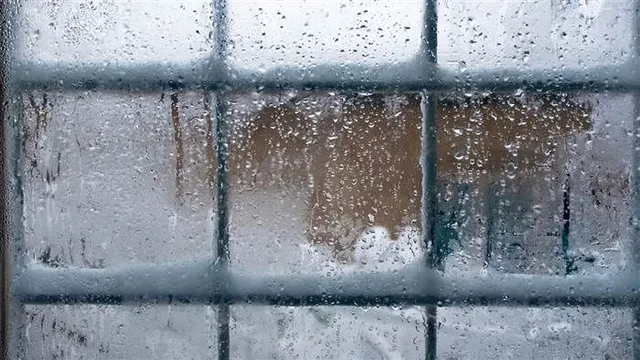
Here’s what almost no one tells you about indoor humidity in winter: the problem usually isn’t that your home is too dry — it’s that different rooms in the same house can sit at wildly different humidity levels simultaneously, and treating the whole home as one unit is why most fixes fail.
The standard advice goes like this: winter air is dry, so buy a humidifier and aim for 40–50% relative humidity. Done. But that ignores the fact that your bathroom might be sitting at 70% RH while your bedroom is at 25%, and a single humidifier in the hallway isn’t going to solve either problem. Managing indoor humidity in winter is a room-by-room challenge, not a whole-home dial you simply turn up.
This guide cuts through the generic advice and explains what’s actually happening to humidity levels in winter, why it varies so much between spaces, and what genuinely works — depending on your specific situation.
What Is a Normal Indoor Humidity Level in Winter?
The widely cited target range is 30–50% relative humidity (RH) indoors during winter. The American Society of Heating, Refrigerating and Air-Conditioning Engineers (ASHRAE) recommends keeping indoor RH between 30% and 60%, with the lower end of that range being more appropriate in winter when outdoor temperatures drop significantly. Below 30%, you’ll start to notice dry skin, static electricity, and irritated sinuses. Above 50% in winter, you’re inviting condensation problems on cold surfaces like exterior walls and window glass.
The honest nuance here: what counts as “normal” depends heavily on how cold it is outside. At outdoor temperatures of 20°F (-7°C) or below, indoor humidity should ideally stay closer to 30–35% to prevent moisture from condensing inside wall cavities and on windows. At milder winter temperatures — say, 35–45°F (2–7°C) — you can safely push toward 45–50% indoors without the same condensation risk.
Most digital hygrometers cost under $15 and give you a real reading in under a minute. If you don’t own one, you’re essentially guessing — and guessing wrong in either direction causes real problems.
Why Does Indoor Humidity Drop So Much in Winter?
Cold air physically holds less moisture than warm air — that’s not opinion, it’s physics. At 32°F (0°C), a cubic meter of air can hold about 5 grams of water vapor. At 68°F (20°C), that same volume can hold nearly 17 grams. When frigid outdoor air infiltrates your home and gets heated to room temperature, its relative humidity plummets — not because moisture was removed, but because the air’s capacity expanded dramatically while the actual moisture content stayed low.
Think of it this way: you’re taking a sponge that’s barely damp and stretching it to three times its original size. It’s going to feel very dry. That’s what your heating system does to winter air every time it cycles on.
Older homes with drafty windows, unsealed attic hatches, and gaps around pipe penetrations exchange indoor and outdoor air constantly — accelerating this drying effect. Tighter, modern homes have the opposite problem: they trap moisture-generating activities like cooking, bathing, and breathing, which can push humidity up rather than down.
Why Low Humidity in Winter Causes More Damage Than Most People Realize
Dry indoor air gets blamed for chapped lips and static shocks — which is fair — but it also does slow, structural damage that people rarely connect back to humidity. Hardwood floors can shrink and develop gaps between boards when RH drops below 30% consistently. Wooden furniture joints loosen. Musical instruments (guitars, pianos) can warp or crack. None of this happens overnight, but it accumulates over a heating season or two.
Your respiratory system takes a hit too. The mucous membranes in your nose and throat need moisture to trap airborne particles effectively — at very low humidity levels, that defense mechanism weakens, which is one reason respiratory infections spread more easily in dry winter air. It’s not just about comfort; it’s about how your body filters what it breathes.
There’s also an energy cost angle that almost never gets mentioned. Humid air feels warmer than dry air at the same temperature, which means if you’re running your home at 30% RH, you might compensate by setting the thermostat higher. Bringing humidity up to 40–45% can let you feel just as comfortable at a lower temperature setting — potentially trimming heating costs in the process.
What Happens When Indoor Humidity Gets Too High in Winter?
High indoor humidity in winter is, in many ways, a bigger structural problem than low humidity. When warm, moist indoor air contacts cold surfaces — exterior walls, window frames, pipes running through unheated spaces — that moisture condenses. If it happens repeatedly, you get mold, rot, and in wall cavities, degraded insulation that loses its effectiveness permanently.
The scenario plays out like this: a family moves into a well-insulated newer home, sets up a whole-house humidifier, and dials it to 50% RH because they read that was the target. By February, they notice damp patches appearing on the north-facing exterior wall of the bedroom. The insulation inside that wall has become saturated. What started as a comfort decision turned into a remediation project. Fifty percent RH is too high when outdoor temperatures are in the teens or single digits.
Mold needs sustained surface moisture and organic material to grow — and drywall, wood framing, and dust give it plenty of both. It can begin colonizing within 24–48 hours of a surface staying wet. High winter humidity doesn’t announce itself loudly; it works quietly behind walls and under floors until the damage is already extensive.
“Most homeowners think about indoor humidity as a comfort issue. What they underestimate is the building science side — moisture moves through walls, and in cold climates, getting the indoor RH wrong by even 10 percentage points can mean the difference between a dry wall assembly and one that’s rotting from the inside. The target isn’t one fixed number; it needs to shift with outdoor temperature.”
Dr. Sandra Merritt, Building Scientist and Indoor Environment Specialist, University of Minnesota Extension
What Is the Right Indoor Humidity Level for Each Winter Temperature?
This is the table no one seems to publish clearly, even though it’s the most practical thing you actually need. Your target indoor RH should decrease as outdoor temperatures fall — here’s a reliable working guide:
| Outdoor Temperature | Recommended Indoor RH |
|---|---|
| Above 35°F (2°C) | 45–50% |
| 20–35°F (-7 to 2°C) | 35–45% |
| 0–20°F (-18 to -7°C) | 30–35% |
| Below 0°F (-18°C) | 25–30% |
These aren’t arbitrary numbers — they’re based on the dewpoint at which moisture begins condensing on typical window glazing and exterior wall assemblies. Single-pane windows will see condensation at higher outdoor temperatures than double or triple-pane units, so if your home still has older windows, err toward the lower end of each range.
Using a hygrometer alongside a simple outdoor thermometer — many inexpensive units display both — lets you make this adjustment dynamically rather than setting your humidifier once and forgetting it.
How Do You Raise Indoor Humidity in Winter Without Creating New Problems?
Adding moisture to your home in winter sounds simple, but doing it carelessly creates the condensation and mold problems described above. The goal is targeted, controlled humidification — not blanket saturation. Here’s a practical approach broken into steps:
- Measure before you act. Place a hygrometer in the room where you spend the most time. If it reads below 30%, you genuinely need more humidity. If it reads 38–42%, you probably don’t need to add anything — even if your skin feels dry, the fix might be your skincare routine, not the air.
- Choose the right humidifier type for the room size. Ultrasonic cool-mist humidifiers work well for bedrooms (quiet, energy-efficient), but they can deposit white mineral dust if you have hard water — use distilled water or a demineralization cartridge. Evaporative humidifiers are self-regulating (they slow down as RH rises) making them harder to over-humidify with.
- Place humidifiers strategically, not centrally. A humidifier in a bedroom benefits the bedroom. A hallway humidifier barely registers in rooms with closed doors. Match the output to the space, not the floor plan.
- Use passive moisture sources thoughtfully. Houseplants release moisture through transpiration. Air-drying laundry indoors adds significant humidity — a single load can release 2–3 pints of water into the air. These aren’t trivial contributions; in a small apartment, they can be enough on their own.
- Monitor after changes, not just before. Check your hygrometer daily for the first week after adding any humidity source. It’s easy to overshoot, especially in tightly sealed homes where moisture accumulates faster than expected.
Pro-Tip: Run your humidifier during the day when the heating system is most active, not overnight when indoor temperatures dip and condensation risk on cold surfaces is highest. A programmable or smart humidistat makes this effortless.
How Do You Lower Indoor Humidity in Winter When It’s Too High?
Counterintuitively, some homes in winter run too humid — not too dry. This is especially common in well-sealed newer construction, basement apartments, and homes with multiple occupants generating a lot of moisture from cooking, showering, and even just breathing. A family of four exhales roughly a pint of water vapor per person per night into a closed bedroom.
The fastest and most effective intervention for high winter humidity is ventilation — specifically, brief, intentional ventilation rather than leaving windows cracked all day. Opening a window for 5–10 minutes exchanges a meaningful volume of air without chilling the room dramatically. It sounds almost too simple, but questions about whether humidity in winter can be reduced by opening windows come up constantly — and yes, it genuinely works, because outdoor winter air is almost always much drier than indoor air.
Beyond ventilation, targeted extraction at the moisture source is non-negotiable. Running the bathroom exhaust fan for at least 20 minutes after a shower — not just during — removes the majority of shower steam before it migrates to other rooms. Same logic applies to kitchen extraction while cooking.
Here are the most effective ways to lower indoor humidity in winter without spending a lot:
- Run bathroom and kitchen exhaust fans consistently and for longer than feels necessary — at least 15–20 minutes post-activity
- Vent your tumble dryer to the outside if it isn’t already — an unvented dryer dumps 4–6 pints of water into indoor air per cycle
- Cover pots while cooking to reduce steam output
- Use a dehumidifier in problem areas like basements or laundry rooms where moisture sources are concentrated
- Seal around obvious air gaps with weatherstripping or caulk, but balance this against the need for some fresh air exchange
Why Do Different Rooms Have Such Different Humidity Levels in Winter?
This is the part that most humidity guides skip entirely, and it’s the reason whole-home averages can be misleading. Moisture doesn’t distribute evenly — it follows temperature gradients, airflow patterns, and proximity to sources.
Bathrooms spike to 80–90% RH during and after a shower, then slowly equalize. Kitchens see similar spikes while cooking. Bedrooms with closed doors accumulate overnight moisture from respiration. Basements often stay naturally humid because they’re surrounded by soil with higher moisture content, and concrete and masonry are permeable. Meanwhile, the living room with a running radiator and no moisture source might sit at 25% all day.
The practical takeaway: put a hygrometer in each problem area, not just one in the main living space. A $12 hygrometer in the basement might reveal a 65% RH reading that never shows up in your living room measurement — and that basement humidity, if left unaddressed, migrates upward into the rest of the house over time.
What Are the Warning Signs That Winter Humidity Is Out of Control?
Your home gives fairly readable signals when humidity has drifted into problematic territory — in either direction. Learning to recognize them early saves you from damage that’s expensive to reverse.
Signs that humidity is too low:
- Persistent static electricity — clothing clinging, shocks from door handles
- Gaps appearing between hardwood floorboards or parquet tiles lifting at the edges
- Skin that feels dry even right after moisturizing
- Waking up with a dry, scratchy throat even when you’re not sick
Signs that humidity is too high:
- Condensation forming on the inside of windows, particularly in the morning
- A musty smell in rooms with poor airflow — closets, basements, behind furniture
- Paint bubbling or peeling on exterior-facing walls
- Black spots appearing in corners, window sills, or grout lines
That last one — black spots in grout or caulk — often gets dismissed as a cleaning issue. It’s actually a humidity issue wearing a cleaning-problem disguise. Scrubbing mold away without addressing the moisture conditions that created it is just buying yourself a few weeks before it returns.
Does Your Type of Home Change How Winter Humidity Behaves?
Absolutely — and this is a variable that generic humidity advice almost never accounts for. The age, construction method, and layout of your home fundamentally changes how moisture moves through it and where problems concentrate.
Older homes built before the 1970s were typically constructed without vapor barriers, with single-pane windows and significant air infiltration through the building envelope. They naturally vent moisture through those gaps — which is why they’re less prone to high-humidity problems in winter but dry out faster and more severely. Modern tightly sealed homes, by contrast, trap moisture efficiently and need deliberate mechanical ventilation (like an HRV — heat recovery ventilator) to maintain healthy air exchange without energy loss.
Apartments add another layer of complexity: you share walls, floors, and ceilings with neighbors whose humidity habits affect yours. A neighbor who line-dries laundry inside and doesn’t run exhaust fans can push moisture through shared structural elements into your space, creating humidity problems you didn’t generate yourself. This is genuinely underappreciated, and worth raising with building management if you’re seeing persistent condensation or mold despite doing everything right on your end.
Basement apartments deserve special mention — they’re surrounded on multiple sides by soil and concrete, both of which conduct moisture year-round. Winter heating can temporarily drive some moisture out, but the surrounding ground stays relatively humid. A basement apartment almost always needs dehumidification rather than humidification in winter, even when it feels cold and dry.
How Does Heating Type Affect Indoor Humidity in Winter?
Your heating system isn’t neutral — it actively shapes your indoor humidity profile. Forced-air systems (the most common type in North American homes) circulate and dry air continuously, typically pulling RH down to 20–25% in cold snaps unless humidification is added. Radiator and radiant floor systems don’t move air in the same way, so they tend to produce a less dramatic drying effect — though they still heat air and lower relative humidity.
Gas furnaces also generate combustion byproducts (including water vapor) that are exhausted outside — this means they’re net-drying the air, not adding any moisture to it. Electric resistance heaters and heat pumps don’t produce combustion byproducts, but they also don’t add moisture. The only exception is unvented propane or kerosene heaters, which release combustion moisture directly into the living space — which is one reason they’re associated with high indoor RH and condensation issues (in addition to carbon monoxide concerns that make them genuinely dangerous).
Wood-burning stoves and fireplaces pull air from the room to feed combustion, which reduces indoor humidity — sometimes significantly in a small, tight room. If your primary heat source is a wood stove and you’re fighting dry air, the stove itself is part of the equation.
What Tools and Equipment Do You Actually Need to Manage Winter Humidity?
You don’t need to spend a lot of money to manage indoor humidity in winter effectively. The gap between doing nothing and doing the basics is enormous; the gap between the basics and a premium setup is much smaller.
At the minimum, every home should have a hygrometer in the main living area and ideally one in the bedroom and any problem areas like a basement or bathroom. A basic digital hygrometer with temperature display runs $10–15 and is accurate to within 2–3% RH if it’s a decent brand — Govee, Inkbird, and ThermoPro are reliable options that don’t require brand loyalty to praise.
For homes that run too dry, a 1–2 gallon evaporative or ultrasonic humidifier per bedroom is a reasonable starting point. For serious whole-home dryness, a bypass or fan-powered whole-home humidifier installed on the HVAC system (running $200–600 installed) makes more sense than running six portable units. For homes with high humidity, a 30–50 pint dehumidifier for the basement and disciplined use of exhaust fans in bathrooms and the kitchen will handle most situations without additional equipment.
Heat recovery ventilators (HRVs) represent the smart long-term investment for tight, modern homes — they exchange stale humid indoor air for fresh outdoor air while recovering 70–80% of the heat that would otherwise be lost. They’re not cheap ($1,000–2,500 installed) but they solve the ventilation-humidity-energy trilemma simultaneously rather than addressing each problem separately.
Can You Over-Humidify a Room Without Knowing It?
Yes — and this happens more often than people expect, particularly with ultrasonic humidifiers that can output significant moisture quickly and quietly. The room might feel comfortable at 45% RH, but the space directly around the humidifier — on the wall behind it, on the window sill above it, in the corner nearest to it — might be sitting at 70–80% RH due to localized moisture concentration.
Placement matters more than most people think. Position humidifiers away from walls, windows, and furniture — ideally at least 3 feet from any surface. Elevating them on a table rather than running them at floor level helps moisture disperse more evenly. And never run them at full output in a small, closed room overnight without a
Frequently Asked Questions
Is indoor humidity lower in winter than in summer?
Yes. Cold outdoor air holds less moisture, which lowers indoor humidity when air is heated.
Is condensation on windows normal in winter?
Light condensation can be normal, especially during cold weather. Persistent moisture may indicate high indoor humidity.
Can indoor humidity be too low in winter?
Yes. Very low humidity can reduce comfort, but slightly lower levels are common and expected in winter.
Does heating cause low humidity?
Heating itself doesn’t remove moisture, but it lowers relative humidity by warming the air.
Should indoor humidity be the same all winter?
No. Indoor humidity naturally fluctuates with outdoor temperature and daily activities.