
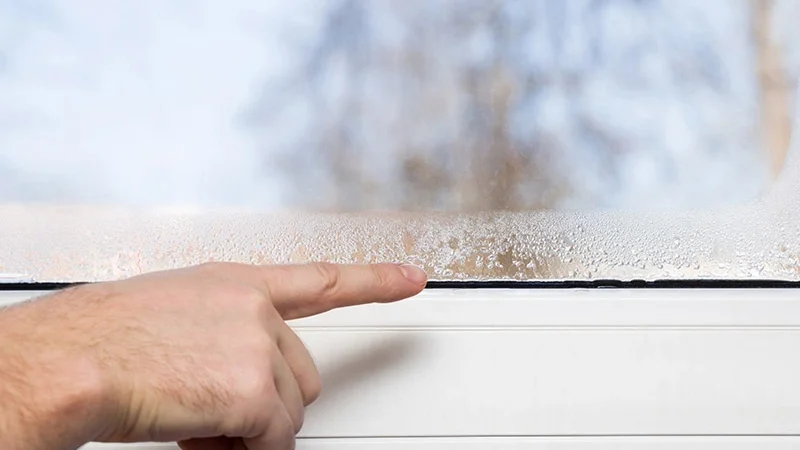
Most apartment humidity problems aren’t caused by bad ventilation or the weather — they’re caused by the building itself trapping moisture that tenants unknowingly generate every single day. The target range is 30–50% relative humidity, but hitting that in an apartment is harder than in a house, for structural reasons most humidity guides completely ignore.
Why Apartments Are Humidity Traps That Houses Are Not
Here’s what almost every humidity article misses: apartments are fundamentally different from houses, and the advice written for homeowners often backfires in an apartment setting. A house breathes through attic vents, crawl spaces, and exterior walls on all four sides. Your apartment shares walls, ceilings, and floors with neighbors — and their moisture becomes yours.
That shared-structure problem is the core thesis here. A neighbor who cooks without a range hood, runs a humidifier, or has a slow plumbing leak in their unit can raise your indoor humidity by 5–10 percentage points, and you’ll have no obvious way to trace it. Apartment humidity is a collective problem dressed up as a personal one.
On top of that, apartments typically have less total air volume per occupant, fewer operable windows, and mechanical ventilation systems that are shared, aged, or poorly maintained. You’re not just managing your own moisture — you’re managing the cumulative output of a building.
What Is the Normal Indoor Humidity Level for an Apartment?
The widely accepted target for normal indoor humidity level is between 30% and 50% relative humidity (RH). Below 30% and the air gets dry enough to irritate your respiratory tract, crack wood furniture, and create static electricity. Above 50% and you’re creating conditions where dust mites thrive, mold can establish itself within 24–48 hours on a wet surface, and condensation starts forming on windows and cold pipes.
That 30–50% band is the same whether you live in a studio or a three-bedroom unit. What changes in apartments is how difficult it is to stay inside that band compared to a detached home. Your control over the building’s HVAC, insulation quality, and air sealing is essentially zero — those are landlord territory.
A practical note: during colder months, the upper limit effectively drops. At outdoor temperatures below freezing, keeping indoor RH above 40% will cause condensation on windows, which can lead to mold at the frame edges. Many building scientists recommend 35% as the winter ceiling in cold climates, not 50%.
| Humidity Level | Condition | Risk in Apartments |
|---|---|---|
| Below 30% RH | Too Dry | Respiratory irritation, static, cracking surfaces |
| 30–50% RH | Ideal Range | Comfortable, low mold and dust mite risk |
| Above 50% RH | Too Humid | Mold growth, condensation, dust mite proliferation |
| Above 60% RH | Dangerously High | Rapid mold colonization, structural moisture damage |
What Causes High Humidity in Apartments Specifically?
Understanding why high indoor humidity happens in apartments requires looking at moisture sources most tenants never think about. The obvious culprits are cooking, showering, and doing laundry indoors. But those account for only part of the picture.
A single person generates roughly 0.5–1 liter of moisture per hour just by breathing and perspiring — multiply that by two or three occupants and a sealed apartment, and you’re pumping serious humidity into a small volume of air with nowhere to go. Add in houseplants (each one transpires moisture continuously), and a 600-square-foot apartment can hit 65% RH on a mild day without a single window open.
Ground-floor and basement apartments face an additional mechanism: vapor diffusion from the soil and concrete below. Concrete is not waterproof — it’s porous — and ground moisture migrates upward through slab floors and foundation walls continuously. No amount of dehumidifying will permanently solve that unless the source is addressed.
Here are the most common apartment-specific humidity sources, ranked roughly by volume of moisture contribution:
- Showering and bathing — A 10-minute shower releases approximately 200–300ml of moisture into the air. Without an exhaust fan running for at least 20 minutes after, that moisture migrates into the rest of the apartment.
- Cooking without ventilation — Boiling water, simmering sauces, and even running a dishwasher all release steam. Range hoods vented to the exterior make a large difference; recirculating hoods do almost nothing for humidity.
- Occupant respiration and perspiration — Two people sleeping in a bedroom for 8 hours generate over a liter of moisture combined. This is why bedrooms in apartments often show the highest humidity readings.
- Indoor drying of laundry — A single load of wet laundry releases 2–4 liters of water as it dries. This is one of the single largest discrete humidity events in an apartment.
- Building envelope failures — Gaps around pipes, poorly sealed windows, and aging weatherstripping allow outdoor humid air in during summer and allow moisture-laden indoor air to condense on cold surfaces in winter.
- Neighboring units — Shared plumbing walls, common laundry rooms adjacent to your unit, and moisture migrating through unsealed penetrations between floors are all invisible contributors.
What Are the Signs Your Apartment Humidity Is Too High?
Condensation on windows is the most obvious sign, but it’s also the last one to appear. By the time water is beading on your glass, your humidity has almost certainly been elevated for weeks. The earlier warning signs are subtler and easy to dismiss.
A musty smell that you can’t locate a source for is a strong indicator of active mold growth somewhere hidden — behind walls, under flooring, or inside a window frame. Mold doesn’t need a visible water leak to colonize; sustained humidity above 60% on a cold surface is enough. That smell is microbial volatile organic compounds (MVOCs) being off-gassed by the colony.
Paint bubbling or peeling at corners, especially near exterior walls and around window frames, is another reliable early sign. The paint isn’t failing — moisture is getting trapped beneath it and forcing it off. That same moisture is sitting in the wall assembly behind it.
Watch for these specific indicators in your apartment:
- Persistent condensation on windows, mirrors, or cold pipes that doesn’t clear within an hour of appearing
- Black or grey spots appearing at ceiling corners, around window frames, or behind furniture placed against exterior walls
- Warping or swelling of wooden cabinet doors, drawer faces, or laminate flooring edges
- A persistent musty or earthy smell that’s worse in certain rooms or after rain
- Allergic symptoms (sneezing, itchy eyes, worsening asthma) that improve noticeably when you leave the apartment for a few days
What Causes Low Humidity in Apartments and Why It’s Underrated
Most apartment humidity content focuses entirely on excess moisture, and that’s a mistake. Dry indoor air is an equally real problem, and in apartments with forced-air heat or electric baseboard heating, winter humidity can drop below 20% RH — drier than the Sahara Desert’s average of about 25%. At that level, you’re not just uncomfortable; you’re creating conditions that crack wooden flooring, cause nosebleeds during sleep, and make you more susceptible to airborne viruses because your nasal passages lose their protective mucus layer.
The counterintuitive fact here: apartments heated by older steam radiators often maintain better winter humidity than apartments with forced-air systems. Steam heat doesn’t pull air through ductwork and out of the building the way a forced-air furnace does, so moisture stays in the space. Tenants in forced-air buildings sometimes blame “old, drafty windows” for their dry air when the actual culprit is the heating system exhausting humid indoor air continuously.
Dry air below 30% RH also increases static electricity, which can damage electronics over time — not a concern most people associate with humidity, but a real one in apartments with carpet and dry winter air.
How to Measure Humidity Accurately in an Apartment
You can’t manage what you can’t measure. A hygrometer — a device that reads relative humidity — costs between $10 and $30 for a basic digital unit, and it’s the single most useful tool for any apartment humidity problem. Guessing based on how the air “feels” is genuinely unreliable; humans perceive humidity very differently depending on temperature, and a room can be at 65% RH and feel acceptable if it’s cool.
Place your hygrometer away from windows, exterior walls, and vents — those locations give skewed readings. The center of the room at breathing height gives you the most representative number. If you only buy one hygrometer, put it in the bedroom, since that’s where you spend the most time and where occupant moisture load is highest overnight.
For apartments with suspected moisture problems, it’s worth taking readings in multiple rooms. A 10-point RH difference between a bedroom and a bathroom (after the bathroom has been unused for several hours) suggests poor exhaust ventilation. A large difference between rooms on different sides of the apartment can indicate an exterior moisture source on one wall.
Pro-Tip: Take your humidity readings at the same time each day — early morning, before activity begins — for at least a week before drawing conclusions. Single-point readings are nearly meaningless because RH fluctuates with every shower, cooking session, and weather change. A consistent pattern over time tells you what you’re actually dealing with.
Practical Solutions for High Humidity in Apartments
The honest nuance here is that the right solution depends entirely on the source of your humidity problem — and most apartments have more than one source running simultaneously. A dehumidifier alone won’t fix a bathroom with a broken exhaust fan; a fan alone won’t fix an apartment with chronic moisture infiltration from below. You need to address sources and control ambient levels as separate tasks.
Start with ventilation before you buy any appliance. Run the bathroom exhaust fan for at least 20–30 minutes after every shower, not just during. Open a window in the kitchen when cooking, even just a few centimeters, to give steam somewhere to go. If your building’s exhaust fans are visibly clogged with dust — which is almost universal in older apartment buildings — notify your landlord in writing, because inadequate mechanical ventilation is typically a code violation.
Consider a real scenario: a tenant on the fourth floor of a 1970s building starts noticing mold at the corner of their bedroom ceiling every winter. They buy a dehumidifier, run it all season, and the mold keeps coming back. The actual problem is that the exterior wall in that corner is poorly insulated, so the surface temperature of that corner drops below the dew point even when room humidity is at 45%. The solution isn’t lower humidity — it’s better insulation or air sealing at that junction, which is a landlord responsibility. Knowing the mechanism saves you from spending money on the wrong solution.
“In multi-unit buildings, individual tenant behavior accounts for maybe 40% of the humidity equation. The rest comes down to the building’s vapor barrier integrity, HVAC maintenance, and shared-wall moisture transfer. Tenants who only address their own habits are fighting with one hand tied behind their back.”
Dr. Marcus Hale, Building Science Consultant and Certified Indoor Environmental Professional
For humidity you can actually control from inside your unit, here’s what works in practice:
- Portable dehumidifier: Effective for units above 55% RH. Look for a unit rated for your actual square footage — undersized dehumidifiers run continuously without achieving target humidity. Empty the water tank daily or connect a drain hose.
- Dry laundry near an open window or in a bathroom with the exhaust fan running — don’t dry clothes in a sealed bedroom or living room.
- Moisture-absorbing products (calcium chloride or silica gel containers) for small enclosed spaces like wardrobes and under-sink cabinets where airflow is poor and mold risk is high.
- Move furniture away from exterior walls by at least 5cm to allow air circulation — trapped air pockets behind furniture on cold walls are where mold colonies start.
Practical Solutions for Low Humidity in Apartments
Adding moisture back into dry apartment air is simpler than removing it, but doing it carelessly creates its own problems. Over-humidifying is a real risk — people buy a humidifier, crank it up, and then wonder why condensation appears on their windows two weeks later. The goal is 35–45% RH in winter, not “as humid as possible.”
Evaporative humidifiers (also called cool-mist or wick humidifiers) are generally preferable to ultrasonic models for apartments. Ultrasonic humidifiers produce a fine mist that can deposit white mineral dust across furniture if you’re using hard tap water, and that dust carries whatever was dissolved in the water — not something you want to breathe over months. Evaporative units naturally regulate output relative to ambient humidity, making it harder to accidentally over-humidify.
Simpler passive approaches also work: a bowl of water placed near a heat source, houseplants (with the caveat that they’ll add to summer humidity loads), and simply leaving the bathroom door open after a shower rather than running the exhaust fan. Context matters — in winter, that post-shower steam is actually helping you, not hurting you.
When Is Your Apartment’s Humidity Problem Your Landlord’s Responsibility?
This question gets dodged in almost every humidity guide, probably because the answer involves landlord-tenant law rather than just product recommendations. But it’s worth being direct: in most jurisdictions, landlords are legally required to provide habitable housing, and that includes functional ventilation systems and a building envelope that doesn’t allow excessive moisture infiltration.
If your bathroom exhaust fan doesn’t work, if your windows don’t seal, if there’s a plumbing leak in the wall causing sustained high humidity, or if the building’s HVAC system is distributing humid air from a poorly maintained unit — those are maintenance failures, not tenant-caused humidity problems. Document everything with dated photographs, take regular hygrometer readings with timestamps, and put all complaints in writing rather than verbal conversations.
The distinction that matters legally is source of origin. Humidity caused by your cooking, showering, and breathing is your domain to manage. Humidity caused by structural deficiencies, failed building systems, or neighboring unit issues is the landlord’s domain. Knowing that line protects you from being asked to spend your own money on a dehumidifier to mask a building problem your landlord is legally obligated to fix.
How Apartment Building Age and Construction Type Affect Humidity
Older apartment buildings — particularly those built before vapor barriers became standard construction practice in the 1960s and 70s — have fundamentally different moisture dynamics than newer construction. Older buildings are often more permeable, which sounds bad but actually means they’re better at releasing trapped moisture through natural air exchange. Newer, heavily insulated, tightly sealed buildings hold moisture longer and require more active management.
Concrete and masonry construction (common in urban apartment towers) creates a different humidity environment than wood-frame construction. Concrete has a high thermal mass, which keeps wall surface temperatures more stable — reducing cold-spot condensation — but it also absorbs and releases moisture slowly, so once a concrete wall gets damp, it stays damp for a long time. A single flooding event or prolonged high humidity can keep a concrete wall elevated in moisture content for months after the source is resolved.
Top-floor apartments face elevated summer humidity from roof heat gain, while ground-floor units contend with soil moisture. Middle floors tend to have the most stable humidity profiles — which is worth knowing if you’re choosing between available units in the same building.
The Forward-Looking Reality of Apartment Humidity Management
Managing indoor humidity in apartments is less about finding the one right product and more about understanding the layered system you’re living inside. Your behavior, your building’s construction, your neighbors’ habits, and the local climate all interact — and your solutions need to be as layered as the problem.
The people who successfully maintain comfortable, healthy apartment humidity aren’t necessarily the ones who spend the most on equipment. They’re the ones who identified their specific sources first, addressed the controllable ones directly, and held their landlord accountable for the structural ones. That combination — measurement, source control, mechanical backup where needed, and knowing what’s not your responsibility — gets you to 30–50% RH and keeps you there.
As buildings get tighter in pursuit of energy efficiency and climate targets, indoor air quality — humidity included — will become a bigger issue in apartments, not a smaller one. The instinct to seal buildings without matching that with intentional ventilation design is already creating an indoor air quality problem in newer construction that’s just starting to show up in building science research. Understanding humidity now, in your current apartment, is genuinely useful preparation for how housing is going to work over the next few decades.
Frequently Asked Questions
Is indoor humidity higher in apartments than houses?
It can be. Apartments often have less ventilation control and shared building elements, which can trap moisture more easily.
Can indoor humidity vary by room?
Yes. Bathrooms, kitchens, and bedrooms often have higher humidity than living rooms or hallways.
Is high indoor humidity dangerous?
High humidity itself is not always dangerous, but it can contribute to discomfort and conditions that support mold growth.
Does opening windows always reduce humidity?
Opening windows can help in some conditions, but in humid weather it may increase indoor moisture instead.
Can indoor humidity change without visible signs?
Yes. Humidity can remain high even when there is no visible condensation or mold.