
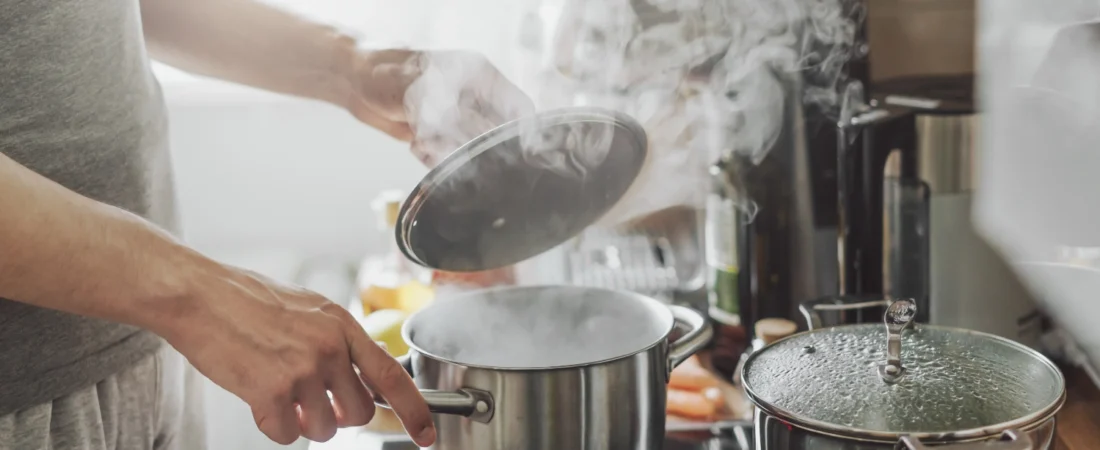
Cooking is one of the most moisture-intensive activities in any home. Steam rises from boiling water, warm air spreads through the room, and surfaces heat up quickly. Even short cooking sessions can noticeably change how the kitchen feels. Windows fog, the air feels heavier, and nearby rooms may feel warmer or more humid than usual.
Kitchen humidity while cooking is normal. The issue is not that moisture appears, but how it behaves after cooking ends. Understanding where this moisture goes — and why kitchens handle it differently from other rooms — helps explain when humidity is harmless and when it becomes part of a larger indoor moisture problem.
Why Cooking Produces So Much Moisture
Most cooking methods release water vapor directly into the air. Boiling, simmering, steaming, and even frying introduce moisture, especially when heat is applied for extended periods.
Unlike bathrooms, where moisture is concentrated in a short burst, kitchens often produce humidity gradually over longer periods. This steady release allows moisture to spread beyond the immediate cooking area, affecting walls, cabinets, and even adjacent rooms.
Cooking combines heat and moisture, which amplifies humidity faster than many people expect.
How Warm Air Moves Moisture Through the Kitchen
Heat plays a key role in how kitchen humidity behaves. Warm air rises and moves outward, carrying moisture with it. During cooking, this air spreads across the ceiling and upper walls before slowly cooling.
As the air cools, moisture begins to settle on cooler surfaces such as windows, exterior walls, cabinets, and ceilings. This process continues even after cooking stops, which is why kitchens may stay humid longer than expected.
Moisture does not disappear when the stove is turned off — it redistributes.
Why Kitchen Humidity Can Affect Other Rooms
Kitchens are often connected to living spaces. Open layouts, doorways, and shared air volume allow humid air to travel easily.
During cooking, moisture does not stay contained in the kitchen. It moves into nearby rooms, where it may condense on cooler surfaces or raise overall indoor humidity.
This is why cooking-related humidity sometimes shows up as condensation in living rooms or bedrooms later in the day.
Why Kitchen Surfaces Dry Slowly After Cooking
Kitchen surfaces are exposed to repeated cycles of heat and moisture. Cabinets, walls, and ceilings absorb small amounts of moisture during cooking and release it slowly afterward.
Grease particles in the air can also affect how moisture behaves, creating thin films on surfaces that slow evaporation. Over time, this contributes to kitchens feeling slightly damp even when no water is visible.
Slow drying is often mistaken for poor cleanliness, when it is actually a moisture behavior issue.
The Role of Airflow in Kitchen Moisture
Airflow determines how efficiently moisture leaves the kitchen. In many homes, airflow during cooking is limited or uneven.
Humid air may rise and spread before it can exit the space. If moisture reaches cooler surfaces first, condensation occurs regardless of ventilation.
This explains why kitchens can remain humid even when windows are opened or range hoods are used briefly.
Why Kitchen Humidity Is Often Underestimated
Unlike bathroom steam, kitchen humidity is less dramatic. There is usually no visible cloud of steam filling the room, especially during everyday cooking.
Because the moisture increase feels gradual, people often underestimate how much humidity cooking produces. By the time the air feels heavy, moisture has already spread throughout the space.
This makes kitchen humidity a quiet but significant contributor to overall indoor moisture levels.
Temperature Differences and Condensation in Kitchens
Condensation in Kitchens: Kitchens often contain exterior walls, windows, and appliances that create temperature differences. When warm, humid air meets these cooler surfaces, condensation forms easily.
This condensation may appear on windows, behind cabinets, or along wall edges. Even when it dries quickly, repeated condensation contributes to long-term moisture accumulation.
Temperature contrast is one of the reasons kitchens are prone to hidden humidity issues.
When Kitchen Humidity Is Normal
Some increase in humidity during cooking is expected and harmless. Kitchens are designed to handle short-term moisture, and brief dampness that clears naturally is not a concern.
Normal kitchen humidity usually:
- clears within a reasonable time
- does not leave lingering odors
- does not cause recurring condensation
- does not spread noticeably to other rooms
In these cases, humidity is part of everyday living.
When Kitchen Humidity Becomes a Problem
Kitchen humidity deserves attention when it becomes persistent rather than temporary.
Signs of concern include:
- frequent condensation on windows or walls
- musty or stale odors after cooking
- cabinets or walls feeling cool or damp
- humidity affecting nearby rooms
These patterns suggest that moisture is not leaving the kitchen efficiently.
Kitchen Humidity and Long-Term Moisture Risks
Over time, repeated cooking humidity can contribute to larger moisture problems if drying is slow. Cabinets, walls, and ceilings may gradually absorb moisture, increasing the risk of odors or mold in hidden areas.
Kitchens rarely show mold immediately, but they often play a role in raising overall indoor humidity levels that affect other rooms.
Kitchen humidity while cooking is a normal result of heat and moisture being released into the air. The key factor is not the presence of humidity, but how efficiently it leaves the space afterward. Warm air spreads moisture quickly, and slow drying allows humidity to linger longer than expected.
Understanding how cooking affects indoor moisture helps distinguish between harmless, temporary humidity and patterns that contribute to long-term indoor moisture issues. When moisture clears consistently, kitchen humidity is part of normal living. When it lingers and spreads, it becomes a signal worth paying attention to.
Frequently Asked Questions
Kitchen Humidity: Why Cooking Moisture Lingers and How it Spreads
Yes, cooking releases moisture into the air.
Why does my kitchen stay humid after cooking?
Because moisture spreads and dries slowly on surfaces.
Can cooking humidity affect other rooms?
Yes, humid air often moves beyond the kitchen.
Does kitchen humidity cause mold?
Not immediately, but persistent moisture increases risk over time.