
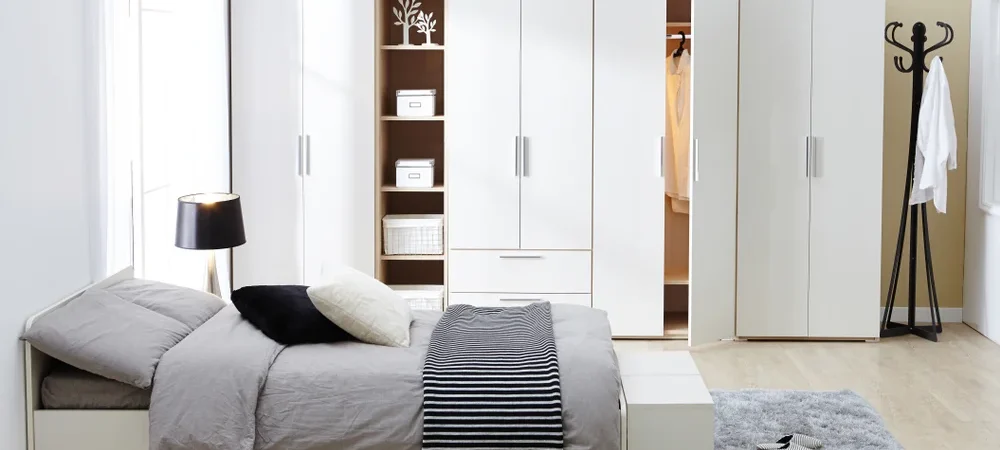
Mold in closets and wardrobes often appears unexpectedly, catching homeowners off guard. You might notice clothes smelling musty, dark spots forming on walls or shelves, and fabrics feeling slightly damp. What makes this particularly puzzling is that the surrounding room often feels completely normal, leaving you wondering how mold could develop in such a seemingly dry environment.
The answer lies in the unique conditions that closets create. These enclosed spaces trap humidity and severely restrict airflow, creating a stable environment where moisture lingers far longer than in open areas. Understanding this fundamental difference explains why mold frequently develops inside storage spaces before appearing anywhere else in your home.
Why Closets Create Perfect Conditions for Hidden Moisture
Closets and wardrobes are designed to remain closed most of the time, which fundamentally changes how moisture behaves inside them. When doors stay shut for hours or days, airflow becomes minimal, and air exchange with the rest of the room is severely limited. This creates a microenvironment that operates independently from the surrounding space.
When humid air enters a closet – whether from opening the door during humid weather or from moisture carried on clothing – it has little opportunity to escape. The trapped air becomes saturated more easily and remains that way much longer than air in open areas. Over time, this creates consistently humid conditions even when the room itself maintains comfortable humidity levels.
| Location | Typical Humidity Level | Air Changes Per Hour |
|---|---|---|
| Open bedroom | 45-55% | 2-3 changes |
| Closed closet | 60-75% | 0.1-0.5 changes |
| Packed wardrobe | 65-80% | Less than 0.1 changes |
How Clothing and Fabrics Amplify Moisture Problems
Clothing, shoes, and textiles act like moisture sponges inside closets. Natural fibers like cotton, wool, and linen can absorb 15-20% of their weight in moisture before feeling damp to the touch. Synthetic materials, while less absorbent, still trap moisture in the air spaces between fibers.
Once moisture enters a wardrobe, clothes prevent the space from drying efficiently by blocking what little airflow exists. They also release absorbed moisture slowly over time, creating a continuous cycle of humidity. Even brief spikes in humidity can have lasting effects, which explains why mold can appear on clothing or behind it rather than on exposed surfaces.
The Role of Cool Walls and Condensation
Many closets are positioned along exterior walls or in corners where temperatures run 5-10 degrees cooler than the main living space. When warm, humid air enters these spaces and encounters cooler surfaces, condensation forms – often invisibly at first. This process is similar to how water droplets form on a cold glass on a humid day.
The problem intensifies because stored items block airflow around these cool surfaces. Condensation that would normally evaporate within minutes in an open area can persist for hours or days in a packed closet. These repeated condensation cycles gradually increase moisture levels on wall surfaces, creating ideal conditions for mold growth.
“We see closet mold cases where humidity levels measure 75-80% consistently, while the adjacent bedroom stays at 50%. The 6-inch depth of a closet can create a completely different moisture environment.”
Dr. Sarah Chen, Indoor Air Quality Specialist
Why Mold Develops Without Any Water Leaks
Many homeowners assume closet mold must indicate a hidden leak, but this isn’t always the case. Mold spores need only three things to grow: moisture, organic material, and temperatures above 40°F. Humidity levels above 60% provide sufficient moisture for mold development, even without visible water.
- Humid air enters during door openings
- Moisture gets trapped by poor ventilation
- Cool surfaces promote condensation
- Organic materials (wood, paper, fabric) provide food sources
- Stable temperatures support continuous growth
This process happens gradually and invisibly, which makes closet mold especially confusing to diagnose. The repeated exposure to elevated humidity is enough to support mold growth without any dramatic water events.
Recognizing Early Warning Signs
A musty odor is typically the first indication of mold activity in closets. These odors appear before visible growth because microbial activity often begins behind clothing, inside wall cavities, or under shelf materials where it can’t be seen. The enclosed nature of closets concentrates these odors, making them more noticeable when you open the door.
- Musty smell that hits you when opening the closet door
- Clothes feeling slightly damp even after being stored clean and dry
- Discoloration on walls, especially in corners or behind hanging items
- White or dark spots appearing on leather goods, shoes, or fabric items
- Wallpaper or paint beginning to peel in small areas
- Increased static or clinging in synthetic fabrics stored in the space
Hidden Growth Patterns in Enclosed Spaces
Mold rarely appears on front-facing surfaces inside closets. Instead, it develops in the areas with the least airflow and coolest temperatures – behind hanging clothes, along back walls, under shelves, or in upper corners. These locations accumulate moisture first and dry out last, making them prime real estate for mold development.
This hidden growth pattern explains why mold problems can persist for months before discovery. By the time you notice visible signs, the colony has likely been established for weeks or longer. The mold may have already spread to multiple clothing items or penetrated into wall materials.
Seasonal Factors That Worsen Closet Conditions
Closet mold problems often follow predictable seasonal patterns. Winter heating systems can create temperature differentials that promote condensation on exterior walls. Spring and summer bring higher outdoor humidity that gets trapped when it enters closets. Fall weather changes can cause rapid fluctuations in moisture levels.
These seasonal effects explain why closet mold may seem to appear suddenly or worsen at specific times of year. The underlying conditions develop gradually, but seasonal triggers push humidity levels past the threshold where mold can thrive.
Health and Safety Considerations
Mold in closets doesn’t automatically create severe health risks, but it does signal ongoing moisture imbalance that needs attention. The primary concern is that hidden mold can spread to clothing and personal items, potentially causing respiratory irritation for sensitive individuals. More importantly, persistent moisture conditions that support mold growth can eventually damage wall structures and create larger problems.
Addressing the underlying humidity issues is more effective than simply cleaning visible mold. Without controlling moisture sources, mold will likely return even after thorough cleaning.
Frequently Asked Questions
Why does mold grow in closets?
Mold grows in closets because humidity becomes trapped and airflow is severely limited in these enclosed spaces. When doors remain closed for extended periods, moisture can’t escape naturally, creating consistently humid conditions that support mold development even when the surrounding room feels dry.
Can mold appear without leaks?
Yes, humidity and condensation alone are sufficient for mold growth without any water leaks. When humid air gets trapped in closets and encounters cool surfaces, condensation forms and provides the moisture mold spores need to establish colonies on organic materials like wood, paper, or fabric.
Why do clothes smell musty?
Clothes smell musty because fabrics absorb moisture from humid air and release odors slowly over time. Natural fibers can absorb 15-20% of their weight in moisture before feeling damp, and this trapped moisture becomes a breeding ground for the microorganisms that produce musty odors.
Is closet mold common?
Yes, closets are among the most common locations for hidden mold growth in homes. The combination of poor ventilation, temperature fluctuations, and organic materials creates ideal conditions for mold development, making closet mold more frequent than many homeowners realize.
Understanding why mold develops in closets and wardrobes helps you recognize the early warning signs and address moisture problems before they become serious. The key is controlling humidity levels and improving air circulation in these naturally problematic spaces, rather than waiting for visible mold to appear.