
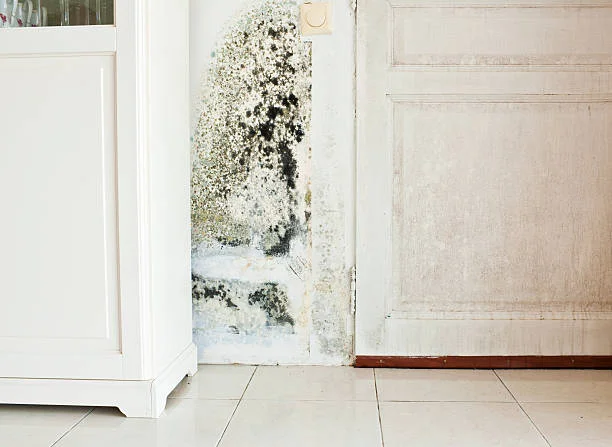
Finding a patch of black, fuzzy growth behind your furniture is every homeowner’s silent nightmare. It often stays hidden for months, releasing invisible spores into your bedroom while you sleep. But mold behind furniture isn’t just a cleaning issue—it’s a physics problem involving dew point science, hidden moisture patterns, and airflow dynamics.
The Physics Behind Furniture Mold Growth
Mold requires three conditions to thrive: food sources, moisture, and stagnant air. Behind heavy furniture, these factors create what scientists call a “perfect microclimate” for fungal growth.
Warm air in your home carries water vapor. When this air drifts into the narrow gap behind a wardrobe, it meets the external wall, which is significantly colder. If the wall’s temperature drops below the dew point, the air can no longer hold its moisture and instantly condenses into liquid water.
Without proper airflow to evaporate this condensation, the wall remains damp for extended periods. This creates an ideal breeding ground where mold spores can land, germinate, and establish colonies within 24-48 hours under optimal conditions.
Understanding Dew Point Science in Your Home
The dew point is the temperature at which water vapor in the air becomes saturated and condenses into liquid. In homes, this happens when warm, humid indoor air contacts cold surfaces like exterior walls, windows, or areas with poor insulation.
For example, if your room is 70°F (21°C) with 60% relative humidity, the dew point is approximately 57°F (14°C). Any surface at or below this temperature will collect condensation, creating the moisture mold needs to survive.
“We’ve measured wall temperatures behind furniture that are 8-12°F cooler than room temperature. When combined with humidity levels above 50%, condensation becomes inevitable within these confined spaces.”
Dr. Sarah Chen, Indoor Air Quality Specialist
Why Furniture Areas Become Mold Buffets
The space behind furniture provides multiple food sources for mold growth. These organic materials become available nutrients once moisture is present:
- Wallpaper paste made from starch-based adhesives
- MDF and plywood backing that absorbs moisture and provides wood fibers
- Accumulated dust containing skin cells and organic particles
- Paint and primer containing organic binders
- Carpet fibers and padding underneath furniture
Identifying Different Types of Growth
Before starting any removal process, you need to accurately identify what you’re dealing with. Different types of growth require different treatment approaches.
| Growth Type | Appearance | Characteristics | Risk Level |
|---|---|---|---|
| Mildew | Gray or white powdery spots | Surface growth, easy to remove | Low to Moderate |
| Black Mold | Dark green/black, fuzzy texture | Deep roots, releases mycotoxins | High |
| Ghosting | Dark streaks or patches | Dust attracted by static, no odor | None |
| Aspergillus | Blue-green with white edges | Common on damp materials | Moderate to High |
Health Risks of Bedroom Mold Exposure
Living with mold in your bedroom poses serious health risks due to prolonged exposure time. Spending 6-8 hours nightly next to an active colony can trigger various symptoms that many people don’t initially connect to mold exposure.
Common health effects include respiratory distress with chronic coughing and sinus congestion, neurological symptoms like unexplained headaches and brain fog, and disrupted sleep patterns. Many homeowners report feeling tired despite getting a full night’s rest, which you can learn more about in our guide on High Humidity Symptoms.
Professional Removal Process
Never scrub dry mold, as this releases billions of spores into the air and throughout your home. Follow this systematic approach for safe and effective removal:
- Isolate the area by sealing off the room and opening windows for ventilation
- Put on proper protective equipment including N95 respirator, long sleeves, and rubber gloves
- Mist the moldy area with water to prevent spores from becoming airborne during cleaning
- Apply your chosen cleaning solution based on the surface material and mold type
- Wipe in one direction using disposable cloths, discarding each cloth immediately after use
- Treat the cleaned surface with a preventive barrier solution like borax to prevent regrowth
Post-Cleaning Wall Treatment
Once you’ve removed visible mold, don’t replace furniture immediately. The wall surface needs treatment to prevent future growth.
Apply a borax barrier by wiping the wall with a borax solution and allowing it to dry without rinsing. This leaves a protective salt layer that prevents mold spores from germinating for years. For chronically cold walls, consider installing thermal wall liners or anti-mold wallpaper to raise surface temperature above the dew point.
Permanent Prevention Strategies
Preventing mold behind furniture requires understanding airflow dynamics and temperature management. The key is eliminating the conditions that allow condensation to form and moisture to accumulate.
Follow the 2-inch rule by maintaining at least 5cm of space between exterior walls and furniture. This creates a chimney effect where air flows upward, preventing moisture buildup. Choose furniture with legs rather than solid bases to allow air circulation from floor level.
Monitor your indoor humidity levels using a hygrometer, keeping levels below 50% year-round. You can learn proper measurement techniques in our guide on How to Measure Indoor Humidity. Don’t turn off heating in unused rooms, as cold spaces become moisture magnets for the rest of your home.
Frequently Asked Questions
Can I paint over mold?
No. Mold will eat through the paint or grow underneath it, eventually causing the paint to bubble and peel.
Does a dehumidifier solve the problem?
A dehumidifier helps by lowering ambient moisture levels, but it won’t eliminate the problem completely without proper furniture spacing. Without the 2-inch rule, air behind wardrobes remains stagnant and can still reach dew point temperatures. Dehumidifiers work best when combined with improved airflow and furniture positioning.
How do I know if the mold is gone?
The Smell Test is the most reliable indicator. If the room still smells earthy or musty after cleaning, there’s likely mold inside the wall or furniture backing.
Mold behind furniture is fundamentally a physics problem involving dew point science and airflow management. By understanding these principles and implementing proper spacing, humidity control, and temperature management, you can transform your bedroom back into a healthy environment. Check your humidity levels today and give your furniture the breathing room it needs to prevent future mold growth.