
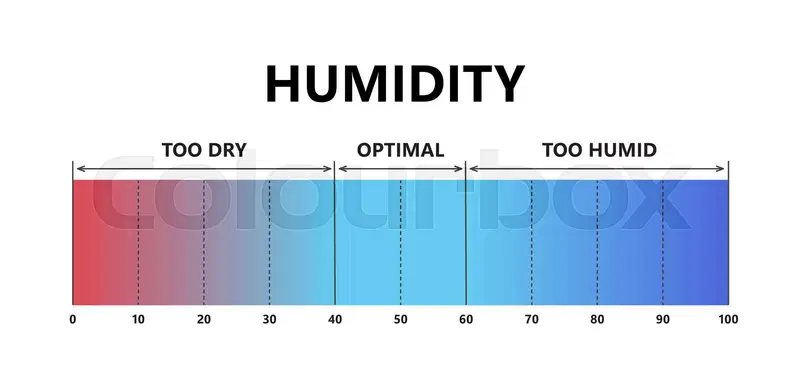
Indoor humidity rarely stays perfectly balanced. In apartments, moisture levels often swing between being too low or too high depending on the season, weather, and daily habits. While both extremes can affect comfort and indoor conditions, they do so in very different ways.
This article compares low vs high indoor humidity side by side. Instead of focusing on one problem alone, it explains how each condition feels, how it shows up in apartments, what low vs high indoor humidity symptoms are common, and why neither extreme is ideal. Understanding the differences makes it easier to recognize what’s happening inside your apartment and why.
What Is Considered Low or High Indoor Humidity?
Indoor humidity is measured as relative humidity (RH), expressed as a percentage.
In most apartments:
- Normal indoor humidity: 30%–50%
- Low indoor humidity: Below ~30%
- High indoor humidity: Above ~50%
Short-term changes outside this range are common and often harmless. Problems usually arise when humidity stays too low or too high for extended periods.
How Low and High Indoor Humidity Feel Different
One of the clearest ways to tell the difference between low and high humidity is how the indoor air feels.
Low Indoor Humidity
Air with low humidity often feels:
- Dry
- Light or thin
- Cool even at normal temperatures
People often notice dryness more in winter, when cold outdoor air is heated indoors.
High Indoor Humidity
High humidity makes air feel:
- Heavy or thick
- Sticky or damp
- Warmer than the actual temperature
This sensation is more common in summer or during humid weather but can occur year-round in some apartments.
Visual Signs: Low vs High Indoor Humidity
Low and high humidity leave very different visual clues around an apartment.
Signs of Low Indoor Humidity
- Dry or cracked surfaces
- Static electricity
- Shrinking or drying of wood materials
- Lack of condensation even on cold days
These signs are subtle and often mistaken for normal seasonal changes.
Signs of High Indoor Humidity
- Condensation on windows or glass
- Damp or cold walls
- Fogging on mirrors
- Darkened or moist spots on surfaces
High humidity tends to be more visible, especially when condensation forms repeatedly.
How Low and High Humidity Affect Indoor Surfaces
Moisture levels influence how materials inside an apartment behave over time.
Effects of Low Humidity
- Wood may dry, crack, or shrink
- Paint and finishes may become brittle
- Fabrics can feel stiff or overly dry
Effects of High Humidity
- Paint may peel or bubble
- Wood may swell or warp
- Walls may feel damp or cold
- Materials absorb moisture and release it slowly
Both extremes can affect materials, but high humidity is more likely to cause visible moisture-related damage.
Odors Associated With Low vs High Indoor Humidity
Smell is another area where the difference between low and high humidity becomes noticeable.
Low Humidity and Odors
Low humidity usually does not create strong odors. In very dry air, smells may dissipate quickly because moisture is not present to trap them.
High Humidity and Odors
High humidity often leads to:
- Musty or damp smells
- Stale indoor air
- Odors lingering longer than usual
Moist air holds odors more easily, especially in closets, bedrooms, and storage areas.
Condensation: A Key Difference Between Low and High Humidity
Condensation rarely occurs in low-humidity environments. When indoor air is dry, moisture is less likely to collect on cold surfaces.
High indoor humidity, on the other hand, is closely linked to condensation. When moist air meets cold windows, walls, or pipes, water droplets can form. Frequent condensation is one of the clearest indicators that indoor humidity is on the high side.
Mold Risk: Low vs High Indoor Humidity
Humidity level plays a major role in whether mold conditions develop.
Low Indoor Humidity
Low humidity generally reduces mold risk, as mold needs moisture to grow. However, very dry air does not eliminate all indoor issues.
High Indoor Humidity
High humidity creates an environment where mold can grow, especially in:
- Poorly ventilated rooms
- Hidden areas behind furniture
- Corners and exterior walls
High humidity does not guarantee mold, but it significantly increases the likelihood over time.
Seasonal Patterns: When Low or High Humidity Is More Common
Apartments often experience both low and high humidity at different times of the year.
Low Humidity Is More Common:
- In winter
- During cold, dry weather
- In buildings with strong heating systems
High Humidity Is More Common:
- In summer
- During rainy or humid weather
- In apartments with limited airflow or cooling
Seasonal shifts explain why humidity problems may feel completely different just a few months apart.
Room-by-Room Differences in Low vs High Humidity
Humidity does not affect every room equally.
- Bedrooms: Low humidity may feel dry in winter; high humidity may feel heavy at night
- Bathrooms: More prone to high humidity due to moisture from showers
- Kitchens: High humidity can appear during and after cooking
- Living areas: Often show low humidity in winter due to constant heating
Recognizing room-specific patterns helps identify whether humidity issues are isolated or widespread.
Is Low or High Indoor Humidity Worse?
Neither low nor high indoor humidity is ideal. Each extreme affects indoor comfort and conditions in different ways.
- Low humidity tends to cause dryness and discomfort
- High humidity tends to cause moisture buildup and visible indoor issues
In apartments, high humidity usually creates more noticeable problems because of condensation and mold risk. However, very low humidity can still reduce comfort and affect materials.
The goal is not perfection but balance within a reasonable range.
Why Apartments Often Swing Between Low and High Humidity
Apartments are especially prone to humidity swings because:
- Airflow is often limited
- Temperature changes affect small spaces quickly
- Shared walls influence moisture movement
- Residents have limited control over building systems
As a result, an apartment may feel too dry in winter and too humid in summer, even within the same year.
Low vs high indoor humidity affects apartments in very different ways. Low humidity is usually associated with dry air, static, and material dryness, while high humidity is linked to condensation, damp surfaces, odors, and mold risk. Both conditions can reduce indoor comfort, but they leave distinct signs that make them easier to identify.
Understanding the differences between low and high indoor humidity helps apartment residents interpret what they’re seeing and feeling indoors. Rather than reacting to isolated symptoms, recognizing overall patterns—such as seasonal shifts, room-specific changes, and recurring moisture signs—provides a clearer picture of indoor conditions and why balance matters.
Frequently Asked Questions
Is low indoor humidity common in apartments?
Yes. Low humidity is especially common in winter due to heating and cold outdoor air.
Is high indoor humidity more dangerous than low?
High humidity is more likely to cause visible moisture problems, but both extremes can reduce comfort.
Can an apartment have both low and high humidity?
Yes. Different rooms or seasons can experience opposite humidity issues.
Does normal humidity feel the same to everyone?
No. Comfort levels vary, even within the normal humidity range.
Should indoor humidity stay the same all year?
No. Some seasonal variation is normal and expected.