
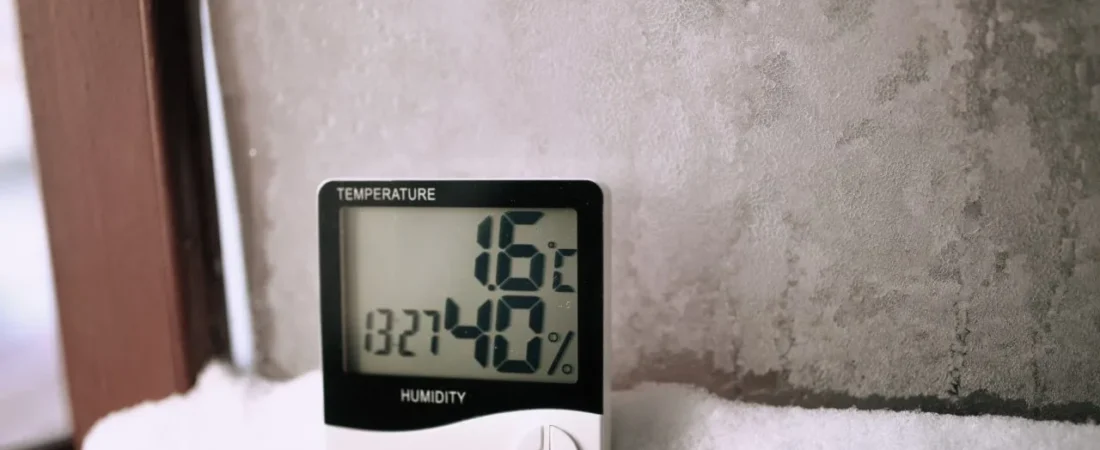
Knowing your indoor humidity level is the only reliable way to understand what’s really happening inside an apartment. Many people rely on how the air feels or on visible signs like condensation, but these clues are often misleading. Indoor humidity can be too high or too low even when there are no obvious symptoms.
This article explains how to measure indoor humidity correctly, which tools work best in apartments, where to place them, and how to interpret the results. The focus is on practical, accurate measurement—not estimates or guesswork.
Why Measuring Indoor Humidity Matters
Indoor humidity changes constantly due to temperature, weather, and daily activities. Without measuring it, it’s difficult to tell whether conditions are normal or outside a comfortable range.
Measuring indoor humidity helps you:
- Understand whether moisture levels are actually high or low
- Distinguish seasonal changes from ongoing problems
- Identify room-specific humidity differences
- Avoid relying on assumptions based on comfort alone
In apartments, where airflow and temperature vary by room, measurement is especially important.
What Indoor Humidity Is Measured In
Indoor humidity is measured as relative humidity (RH) and expressed as a percentage.
Relative humidity shows how much moisture the air contains compared to how much it could hold at the same temperature. Because warmer air can hold more moisture than cooler air, humidity readings are always connected to temperature.
This is why humidity levels can change even when no moisture is added or removed—temperature alone can shift the reading.
The Most Accurate Way to Measure Indoor Humidity
Using a Hygrometer
A hygrometer is the most reliable and practical tool for measuring indoor humidity. It directly measures relative humidity and displays it as a percentage.
Modern hygrometers are:
- Small and inexpensive
- Easy to read
- Suitable for everyday indoor use
Some models also display temperature, which helps put humidity readings into context.
Digital vs Analog Hygrometers
Digital Hygrometers
Digital hygrometers are the most common choice for apartments.
They typically:
- Show exact percentage readings
- Update automatically
- Are easy to move between rooms
Because they’re simple and accurate enough for home use, digital hygrometers are ideal for understanding indoor humidity patterns.
Analog Hygrometers
Analog models use a needle or dial to indicate humidity.
They:
- Don’t require batteries
- Are often less precise
- May drift over time
While analog hygrometers can provide a rough estimate, they are generally less reliable for detailed indoor monitoring.
Where to Place a Hygrometer in an Apartment
Placement matters as much as the tool itself. Poor placement can lead to misleading readings.
For accurate results:
- Place the hygrometer at breathing height
- Keep it away from direct heat sources
- Avoid placing it next to windows or exterior walls
- Don’t position it directly above vents or radiators
Humidity readings are most useful when they reflect the general indoor air, not localized extremes.
Measuring Humidity in Different Rooms
Apartments often have different humidity levels in different rooms. Measuring only one area may not tell the full story.
Bedrooms
Humidity often rises at night due to breathing and reduced airflow. Measuring overnight can reveal patterns that aren’t visible during the day.
Bathrooms
Bathroom humidity spikes after showers. Measuring before and after use helps show how quickly moisture dissipates.
Kitchens
Cooking adds moisture to the air. Short-term increases are normal, but lingering humidity may indicate limited airflow.
Living Areas
These spaces often reflect the most stable humidity levels and can serve as a baseline for comparison.
When to Measure Indoor Humidity
Humidity readings change throughout the day, so timing matters.
Useful times to measure include:
- Morning (after waking up)
- Midday (during normal activity)
- Evening (after cooking or showering)
- Overnight (especially in bedrooms)
Taking multiple readings over time provides a clearer picture than a single measurement.
How Often Indoor Humidity Should Be Checked
There is no need to monitor humidity constantly. Instead, checking periodically is usually sufficient.
Recommended situations to measure humidity:
- During seasonal changes
- When condensation appears
- When indoor air feels unusually dry or heavy
- When odors or dampness persist
In apartments with recurring moisture issues, regular checks help track patterns rather than isolated readings.
Interpreting Indoor Humidity Readings
Once you have a reading, the next step is understanding what it means.
General guidelines:
- 30%–50%: Typical comfort range
- Below ~30%: Low humidity
- Above ~50%: High humidity
Short-term readings outside this range are common. Concern usually arises when levels remain consistently high or low over time.
Why “Feeling” Humidity Can Be Misleading
Many people assume they can sense humidity accurately, but perception is unreliable.
For example:
- Cool air can feel dry even at normal humidity
- Warm air can feel humid even when levels are moderate
- Air movement can change how humidity feels
Measuring removes guesswork and replaces assumptions with clear data.
Can You Measure Humidity Without a Hygrometer?
There are informal methods people sometimes mention, such as watching condensation or observing how fast laundry dries. While these signs can suggest moisture trends, they do not provide reliable measurements.
Without a hygrometer:
- You can notice symptoms
- You cannot know actual humidity levels
For understanding indoor humidity accurately, a measuring device is essential.
Common Measurement Mistakes
Common Humidity Mistakes – Even with the right tool, mistakes can affect accuracy.
Common issues include:
- Placing the hygrometer near heat or cold sources
- Measuring immediately after moving the device
- Relying on a single reading
- Ignoring room-to-room differences
Allowing the device time to adjust and measuring consistently improves reliability.
How Measuring Humidity Helps Identify Problems Early
Regular humidity measurement often reveals trends before visible problems appear.
For example:
- Rising humidity before mold becomes visible
- Low winter humidity before discomfort increases
- Room-specific patterns that point to airflow issues
Early awareness allows better understanding of indoor conditions without reacting too late.
Measuring indoor humidity is the most reliable way to understand moisture levels inside an apartment. Tools like hygrometers provide clear, objective data that helps distinguish between normal fluctuations and persistent imbalance. Because indoor humidity varies by room, time of day, and season, consistent measurement offers insights that visual signs alone cannot provide.
By learning how, where, and when to measure indoor humidity correctly, apartment residents gain a clearer picture of their indoor environment. Instead of guessing based on how the air feels, measurement allows patterns to emerge—making it easier to recognize what’s normal and what may need closer attention.
Frequently Asked Questions
What is the most accurate way to measure indoor humidity?
Using a digital hygrometer placed away from heat and cold sources.
Can one hygrometer measure an entire apartment?
It can provide a general idea, but checking multiple rooms gives better insight.
How long should a hygrometer sit before reading?
Allow at least 15–30 minutes for the reading to stabilize after moving it.
Does temperature affect humidity readings?
Yes. Relative humidity always depends on temperature.
Is measuring humidity necessary if there are no symptoms?
It’s not required, but it can help identify changes before problems appear.