
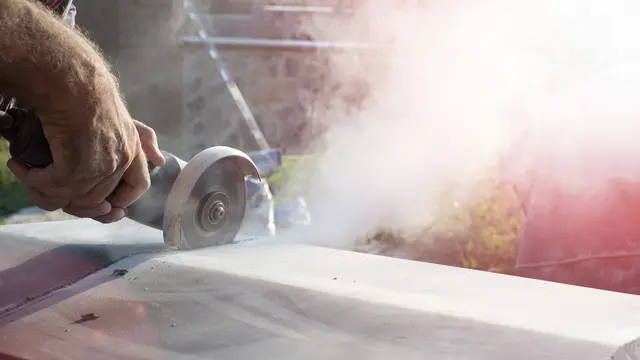
The contractors finally left. Your kitchen renovation is complete—beautiful new cabinets, stunning countertops, perfect tile backsplash. But there’s a problem they didn’t warn you about: the dust. It’s everywhere. Thick layers coat every surface in adjacent rooms despite the plastic barriers. Fine particles have infiltrated your HVAC system, bedroom furniture, clothing in closets. You wipe down surfaces, and they’re dusty again within hours. You vacuum, and clouds of dust billow into the air, settling back down moments later. What you’re breathing isn’t just annoying household dust—it’s construction dust containing crystalline silica from cut concrete, drywall, and tile. Research documents that inhaling silica dust can result in lung cancer, tuberculosis, and silicosis—an incurable lung disease. The 2019 London Atmospheric Emissions Inventory found that approximately 30% of particulate matter (PM10) emissions come from construction, and your home is now a concentrated repository of exactly these emissions.
The timeline for naturally dissipating construction dust without intervention is 3-6 weeks for visible surface dust and 3-6 months for fine particles embedded in HVAC systems, carpets, and fabrics. But natural dissipation doesn’t mean elimination—it means particles settling into layers that become re-suspended with every footstep, air movement, or cleaning attempt. Respiratory issues are the most immediate health risk from inhaling construction dust, with fine particles penetrating deep into the lungs, leading to conditions such as chronic obstructive pulmonary disease (COPD), bronchitis, and asthma. This comprehensive guide examines exactly what’s in construction dust making it hazardous, explains why standard cleaning methods fail and actually worsen exposure, reveals the 3-phase evidence-based cleanup protocol professionals use, and provides the timeline, equipment, and strategies to reclaim healthy indoor air quality after renovations without spending months breathing lung-damaging particulates.
What Is Construction Dust: The Three Dangerous Categories
Not all dust is equal. Construction dust can be broadly classified into three categories: silica dust, wood dust, and other ‘general’ dust. Understanding these distinctions clarifies why post-renovation cleanup requires specialized approaches.
Category 1: Silica Dust (Respirable Crystalline Silica – RCS)
Sources in home renovations:
- Concrete cutting (floors, foundations, countertops)
- Tile cutting (ceramic, porcelain)
- Drywall installation (gypsum contains silica; joint compound)
- Brick or stone work
- Mortar and grout mixing/application
- Engineered stone countertops (up to 90% crystalline silica)
Why it’s most dangerous: Silica is particularly hazardous as it can penetrate deep into the lungs, causing irreversible damage over time and leading to serious respiratory disease including silicosis, lung cancer, and COPD.
Particle characteristics:
- Particles <10 microns (PM10) reach deep lung
- Particles <2.5 microns (PM2.5) penetrate lung barrier into bloodstream
- Crystalline structure causes mechanical and chemical damage to lung tissue
Category 2: Wood Dust
Sources:
- Cutting, sanding, drilling wood floors
- Cabinet installation
- Trim and molding work
- Demolition of wood structures
Health hazards:
- Respiratory irritation and allergic reactions
- Occupational asthma (particularly from hardwoods)
- Nasal cancer with prolonged exposure (professional carpenters)
- Dermatitis from direct skin contact
Particle behavior: Tends to be larger and settles faster than silica, but still creates respiratory hazards when airborne.
Category 3: General Construction Dust
Sources:
- Gypsum (drywall, plaster)
- Paint dust from sanding
- Insulation fibers
- Metal particles (from cutting, grinding)
- Demolition debris (varied materials)
Health concerns: While generally less toxic than silica, general dust still causes:
- Respiratory irritation
- Exacerbation of asthma and allergies
- Eye and skin irritation
- Potential contamination with lead or asbestos in older buildings
Crystalline Silica: The Invisible Lung Killer
Among construction dusts, crystalline silica warrants special attention due to its prevalence in renovations and severe health consequences.
What Makes Silica So Dangerous
Crystalline structure: Unlike amorphous silica (relatively harmless), crystalline silica has sharp, jagged molecular structure that physically damages lung tissue on contact.
Respirable size: Construction activities such as blasting, drilling, cutting, or grinding silica materials can create breathable particles (i.e., PM10), which can be significantly harmful.
Dose-response relationship: Respirable crystalline silica dust is created when cutting, crushing, drilling, grinding, or sawing block, brick, concrete, mortar, rock, and stone, and even short-term high exposures accumulate irreversible lung damage.
Silicosis: The Incurable Disease
What happens: Inhaled silica particles lodge in lung alveoli (air sacs). Immune cells attempt to remove them but fail, dying in the process. Scar tissue (fibrosis) forms, progressively replacing functional lung tissue.
Three forms:
- Chronic silicosis: Develops after 10-20+ years of low-level exposure
- Accelerated silicosis: Develops within 5-10 years of higher exposures
- Acute silicosis: Develops within weeks/months of massive exposure (rare in home renovations)
Statistics: Over 500 construction workers are estimated to die from exposure to silica dust every year in the UK alone. Of the 52 subjects in the study, 20 suffered progressive massive fibrosis, 11 needed lung transplants, and 10 died because of their silica dust exposures.
No cure: Silicosis damage is permanent. Treatment manages symptoms but cannot reverse fibrosis.
Occupational Standards vs. Home Renovation Reality
OSHA Permissible Exposure Limit: 50 micrograms per cubic meter (µg/m³) as an 8-hour time-weighted average (TWA) for occupational exposure.
Home renovation problem: No monitoring, no exposure limits, no protective equipment for homeowners living in renovation zones. Post-renovation dust cleanup exposes residents (including children) to particles that sent contractors home in respirators.
PM10 and PM2.5: Size Determines Danger
Understanding particle size explains why some dust you can see is less dangerous than invisible dust you’re breathing unknowingly.
Particle Size Categories
Coarse particles (PM10 – 2.5 to 10 microns):
- Visible as dust clouds
- Can see settling on surfaces
- Filtered by nose and upper respiratory tract
- Deposit in upper airways; cleared by coughing/mucus
Fine particles (PM2.5 – <2.5 microns):
- Often invisible to naked eye
- Remain suspended in air for hours/days
- Can penetrate the lung barrier and enter a person’s blood system
- Deposit deep in alveoli (gas exchange regions)
Ultrafine particles (<0.1 microns):
- Completely invisible
- Remain airborne for days
- Penetrate deepest into lungs and potentially cross into bloodstream
- Most dangerous per unit mass
Why You Can’t See the Worst Threats
Visual assessment fails: When renovation area “looks clean,” fine and ultrafine particles remain suspended and continue circulating through HVAC systems.
False security: Seeing dust settle makes you think cleanup is working, while invisible PM2.5 persists at health-damaging concentrations.
Measurement required: Professional post-renovation cleanup uses particulate monitors measuring PM10 and PM2.5 concentrations, targeting <35 µg/m³ PM2.5 (EPA 24-hour standard) before declaring success.
Health Effects: Acute vs. Chronic Exposure
Construction dust creates both immediate symptoms and long-term disease risks depending on exposure duration and intensity.
Acute Effects (Days to Weeks Post-Renovation)
Common symptoms:
- Coughing and throat irritation
- Eye redness and watering
- Nasal congestion
- Headaches
- Shortness of breath during exertion
- Skin irritation and rashes
- Exacerbation of existing asthma
Mechanism: Particulate matter irritates respiratory tract lining, triggering inflammation and mucus production. This is your body’s defense mechanism attempting to expel foreign particles.
Vulnerable populations: Children, elderly, individuals with asthma/COPD experience more severe acute symptoms and require immediate intervention.
Chronic Effects (Months to Years of Exposure)
Respiratory disease:
- Chronic obstructive pulmonary disease (COPD), bronchitis, and asthma from fine particles penetrating deep into the lungs
- Silicosis from crystalline silica (irreversible lung scarring)
- Reduced lung function over time
Cancer:
- Prolonged exposure to various types of construction dust, mainly silica and asbestos, increases the risk of lung cancer
- Silica dust can cause a lung disease called silicosis, making it hard to breathe and increasing the chance of lung cancer
Systemic effects:
- Some dust particles can enter the bloodstream through the lungs, potentially causing systemic effects
- Cardiovascular disease (PM2.5 inflammatory effects)
- Possible neurological impacts (ultrafine particle transport to brain)
Latency period: Many construction dust diseases have 10-40 year latency—symptoms appearing decades after exposure. A single renovation’s dust exposure won’t cause silicosis, but repeated exposures (multiple renovations, occupational) accumulate irreversible damage.
Why Construction Dust Persists for Months
Understanding dust physics and building systems explains the cleanup timeline challenge.
Particle Settling Rates
Coarse particles (>10 microns): Settle within minutes to hours due to gravity. These create visible layers on surfaces.
PM10 (2.5-10 microns): Remain airborne hours to days depending on air currents. Settle into carpet fibers, upholstery, HVAC filters.
PM2.5 (<2.5 microns): Remain suspended for days to weeks. HVAC air movement keeps them circulating; they only settle in completely still air or when captured by filtration.
Ultrafine (<0.1 microns): Behavior more like gases than particles—remain airborne indefinitely unless actively filtered.
HVAC System Amplification
During renovation:
- Dust enters HVAC system through return air vents
- Accumulates in ductwork, on fan blades, in air handler
- Standard HVAC filters (MERV 6-8) capture only large particles; PM2.5 passes through
Post-renovation:
- Every HVAC cycle re-suspends settled dust in ducts
- Contaminated system continuously re-introduces particles to living spaces
- Can extend dust exposure 3-6 months after renovation completion
Solution: Professional duct cleaning + high-MERV filtration (MERV 13-16) or HEPA filtration post-renovation.
Porous Material Repositories
Deep penetration:
- Carpets: Fibers trap particles deep in pile; standard vacuums can’t extract
- Upholstered furniture: Fabric weave traps particles; difficult to clean thoroughly
- Drapes/curtains: Large surface area absorbs substantial dust
- Bedding: If not protected during renovation, becomes contaminated reservoir
Re-suspension: Walking on carpets, sitting on furniture, moving drapes re-suspends embedded particles, creating recurring exposure.
The Standard Cleaning Mistake That Worsens Exposure
Most homeowners’ first instinct after renovation is the exact wrong approach, dramatically increasing respiratory exposure.
The Dry Dusting Disaster
What people do: Wipe surfaces with dry cloths, feather dusters, or brooms.
What actually happens:
- Particles lift off surface into air
- Cloud of dust disperses into breathing zone
- Fine particles remain suspended for hours
- Settle onto different surfaces (now contaminated)
- Repeat cycle
Measurement evidence: Studies measuring PM2.5 during dry dusting show spikes to 200-500 µg/m³ (10-30x EPA guidelines) lasting 2-4 hours after cleaning attempt.
The Vacuum Problem
Standard bagless vacuums:
- Capture large particles in chamber
- Exhaust fine particles (PM2.5) directly into room air
- Filter efficiency typically 50-80% for PM2.5—means 20-50% expelled
- Creates net increase in airborne PM2.5 during operation
Even bagged vacuums without HEPA:
- Better than bagless but still expel 5-20% of PM2.5
- Particles too small to see expelled in exhaust plume
Immediate consequence: Room air PM2.5 concentration during non-HEPA vacuuming can exceed 300 µg/m³—higher than during actual renovation work.
The Compressed Air Catastrophe
Never use:
- Leaf blowers
- Air compressors
- Fans to “blow dust away”
Result: Maximum particle aerosolization, creating dangerous PM2.5 clouds persisting for hours and spreading contamination throughout entire home.
Timeline: How Long Construction Dust Remains Airborne
Setting realistic expectations prevents premature declaration of “clean.”
Week 1 Post-Renovation: Peak Contamination
Status:
- Heavy visible dust layers on all surfaces
- HVAC system heavily contaminated
- PM10 and PM2.5 concentrations 5-20x normal background levels
- Every air movement creates visible dust clouds
Actions: Containment (keep affected area sealed), begin gross removal of heavy accumulations, deploy HEPA air filtration.
Weeks 2-3: Active Cleanup Phase
With proper protocol:
- Visible surface dust removed via wet cleaning
- HEPA vacuuming of all porous surfaces
- PM2.5 declining but still 2-5x baseline
Without intervention:
- Dust redistributing through home
- HVAC system re-circulating particles
- Residents experiencing ongoing respiratory symptoms
Weeks 3-6: Stabilization (With Intervention)
Professional cleanup complete:
- Surface dust eliminated
- HVAC ducts cleaned and high-MERV filtration installed
- Carpets deep-cleaned with HEPA-filtered extractors
- PM2.5 approaching baseline (<15 µg/m³)
Natural dissipation (no cleanup):
- Coarse dust settled but fine particles persist
- HVAC contamination ongoing
- PM2.5 still 2-3x baseline
Months 2-6: Long-Term Clearance
With intervention:
- Indoor air quality returned to pre-renovation levels
- HEPA filtration continues capturing residual particles
- Periodic HEPA vacuuming maintains low particulate levels
Without intervention:
- Embedded particles in carpets/furniture continue slow release
- HVAC system gradually self-cleans (depositing particles on surfaces)
- PM2.5 slowly approaches baseline over 4-6 months
- Total exposure burden substantially higher than intervention scenario
The 3-Phase Professional Cleanup Protocol
Professional post-construction cleaning follows systematic approach preventing re-contamination and protecting respiratory health.
Phase 1: Gross Removal (Days 1-3)
Goal: Remove bulk of visible settled dust without aerosolization.
Methods:
HEPA vacuuming (primary tool):
- Use only true HEPA-filtered vacuums (99.97% efficiency for 0.3 micron particles)
- Vacuum all hard surfaces before any wet cleaning
- Empty vacuum canister/bag outside or in sealed disposal bags
- Never use shop vacs or standard household vacuums (they re-emit fine particles)
Damp wiping:
- Microfiber cloths dampened (not soaked) with water or mild detergent
- Wipe in one direction, fold cloth to clean side, continue
- Rinse cloths frequently; launder separately from regular laundry
- Multiple passes required (3-5 times) as dust keeps settling from air/HVAC
Sticky mop/pad systems:
- Disposable pads that trap dust without liquids
- Effective for floors, walls
- Prevent particle re-suspension
Never:
- Dry sweep or dust
- Use standard vacuum cleaners
- Use compressed air
- Use high-velocity fans (spreads contamination)
Phase 2: Deep Cleaning (Days 3-14)
Goal: Remove embedded particles from porous materials and surfaces.
Carpet and upholstery:
- Professional hot water extraction with HEPA-filtered extractors
- Multiple passes may be required
- Consider professional cleaning services specializing in post-construction cleanup
- Severely contaminated items (especially near work zone): May require disposal and replacement
HVAC system decontamination:
- Professional duct cleaning using source removal methods (NADCA-certified)
- Clean air handler, fan blades, coils
- Install high-efficiency filters (MERV 13-16 minimum; HEPA ideal)
- Seal duct leaks that allowed dust infiltration
All surfaces:
- Wet wipe walls, ceilings, light fixtures, windows
- Clean inside cabinets, closets, drawers
- Wash or dry-clean all textiles (curtains, bedding, clothing)
- Clean electronics with appropriate methods (compressed air outside, then wipe)
Phase 3: Air Clearing and Verification (Days 14-30+)
Goal: Capture remaining airborne particles and verify safe levels achieved.
Continuous HEPA air filtration:
- Deploy portable HEPA air purifiers (sized appropriately for rooms)
- Run 24/7 for minimum 2-4 weeks post-cleanup
- Target 4-6 air changes per hour (ACH) in affected spaces
HVAC operation:
- Run HVAC in fan-only mode to circulate air through new high-efficiency filters
- Replace filters more frequently (weekly for first month, then monthly)
- Continue high-MERV filtration permanently (improved baseline air quality)
Verification:
- Visual inspection (no visible dust accumulation)
- Air quality testing (PM2.5 monitors showing <15 µg/m³)
- Symptom resolution in occupants
- Professional clearance testing if budget allows
HEPA Filtration: Why It’s Non-Negotiable
HEPA (High-Efficiency Particulate Air) filtration is the technological foundation of effective post-construction dust removal.
HEPA Standard Definition
True HEPA: Removes 99.97% of particles 0.3 microns in diameter (and higher efficiency for larger and smaller particles).
Why 0.3 microns: This is the “most penetrating particle size” (MPPS)—hardest for filters to capture. If 99.97% of 0.3 micron particles are captured, smaller and larger particles are captured even more efficiently.
HEPA Vacuum Requirements
Must-have features:
- Sealed system (no air leaks bypassing filter)
- True HEPA final filter (not “HEPA-type” or “HEPA-like”)
- Sufficient airflow for effective cleaning
- Sturdy construction for repeated use
Recommended brands: Miele, Nilfisk, ProTeam, commercial units from Sanitaire or Pullman
Cost: $200-800 for residential; $400-2,000 for commercial units. This investment is non-negotiable—using standard vacuums worsens exposure.
HEPA Air Purifiers
Sizing: Calculate room volume (length × width × height), select purifier rated for 4-6 air changes per hour.
Placement: Position centrally, away from walls, with clear airflow paths. Run continuously during cleanup phase.
Maintenance: Replace HEPA filters per manufacturer schedule (typically 6-12 months); pre-filters every 1-3 months.
Wet Cleaning Methods vs. Dry Dusting
The fundamental principle: keep particles wet and heavy so they don’t become airborne.
Wet Microfiber Technique
Proper protocol:
- Dampen microfiber cloth with water (wring out excess—cloth should be damp, not dripping)
- Wipe surface in single direction
- Fold cloth to clean section after each wipe
- Rinse cloth frequently in bucket of clean water
- Change water when dirty
- Allow surface to air dry
- HEPA vacuum after complete drying to capture any residual
Why microfiber: Electrostatic properties and fine fibers trap particles rather than pushing them around.
Detergent Solutions
For heavily soiled surfaces:
- Mild dish soap or all-purpose cleaner in water
- TSP (trisodium phosphate) for walls/ceilings (follow safety precautions)
- Avoid products creating strong odors (additional VOC exposure)
Application: Same microfiber technique; rinse surface with clean water afterward.
Sticky/Tacky Cleaning Products
Disposable options:
- Swiffer-type systems with disposable pads
- Tacky pads/rollers for walls and ceilings
- Advantage: Trap dust without water; discard without rinsing
HVAC System Decontamination
Neglecting HVAC cleanup guarantees months of continued dust circulation.
Why HVAC Contamination Is Severe
During renovation:
- Even with plastic barriers, dust infiltrates return air vents
- Negative pressure from exhaust fans pulls dust into ductwork
- Accumulation on all internal surfaces: ducts, fan blades, coils, air handler cabinet
Consequences:
- Every heating/cooling cycle re-suspends particles
- Dust deposited back into living spaces
- Extended exposure timeline (3-6 months natural dissipation)
- Reduced HVAC efficiency
Professional Duct Cleaning (Strongly Recommended)
NADCA-certified contractors: National Air Duct Cleaners Association standards ensure proper methods.
Source removal method:
- Access openings cut in ductwork
- Agitation devices (brushes, air whips) dislodge debris
- HEPA-filtered vacuum simultaneously extracts dislodged particles
- All registers and grills removed and cleaned
- Air handler and coils cleaned
Cost: $400-1,200 depending on system size and complexity. Worth every dollar to prevent months of re-circulation.
DIY HVAC Maintenance (Supplemental)
If professional cleaning not immediately affordable:
- Replace all filters: Discard heavily contaminated filters; install MERV 13-16 new filters
- Clean accessible components: Vacuum return air grills, supply registers with HEPA vacuum
- Frequent filter replacement: Weekly for first month, then biweekly, then monthly
- Monitor filter condition: If filters blacken rapidly, professional cleaning urgently needed
Limitation: DIY maintenance is temporary measure—professional cleaning remains necessary for complete decontamination.
Special Considerations: Lead and Asbestos in Older Homes
Renovations in homes built before 1980 introduce additional hazards requiring specialized approaches.
Lead-Based Paint
Prevalence: 87% of homes built before 1940 in the United States have some lead-based paint. Homes built before 1978 may contain lead.
Risk during renovation: Sanding, scraping, cutting painted surfaces creates lead-contaminated dust. Lead particles are heavy metals with severe neurological toxicity, particularly to children.
Cleanup protocol:
- Professional lead-specific cleaning following EPA RRP (Renovation, Repair, and Painting) Rule
- HEPA vacuuming mandatory
- Wet methods throughout
- Clearance testing required (certified inspector measures lead dust levels)
- Children and pregnant women should not return until clearance achieved
DIY restrictions: Federal law requires contractor certification for lead-safe work practices in pre-1978 homes; DIY renovations exempt but cleanup should still follow RRP protocols.
Asbestos-Containing Materials
Common locations in older homes:
- Popcorn ceilings
- Vinyl floor tiles and adhesive
- Pipe insulation
- Vermiculite attic insulation
- Some drywall joint compounds
Extreme danger: Asbestos fibers cause mesothelioma (fatal cancer with 10-50 year latency) and asbestosis (progressive lung scarring).
Never DIY: Asbestos abatement requires licensed professionals with containment, personal protective equipment, and specialized disposal.
If disturbed during renovation:
- Seal area immediately
- Do not disturb further
- Contact licensed asbestos abatement company
- Do not attempt cleanup yourself
- Consider air testing to verify clearance
Comparison Table: Cleanup Methods Effectiveness
| Method | PM2.5 Reduction | Appropriate Use | Risks if Done Wrong | Cost | Best For |
|---|---|---|---|---|---|
| HEPA Vacuuming | 80-90% surface removal | All hard and soft surfaces; primary cleanup tool | Using non-HEPA vacuum dramatically worsens exposure | $200-800 (vacuum); $0 operation | Universal first-step; prevents aerosolization |
| Wet Microfiber Wiping | 70-85% surface removal | Hard surfaces after HEPA vacuuming | Dry dusting aerosolizes particles creating 10-30x higher exposure | $20-50 (cloths); minimal time | Hard surfaces, walls, ceilings, furniture |
| HEPA Air Purifiers | 60-80% airborne particles | Continuous operation in all affected rooms | Undersizing or using non-HEPA creates false security | $150-600 per unit; $20-50/year filters | Capturing airborne particles post-cleanup |
| HVAC High-MERV Filters | 50-70% particles in circulated air | Ongoing filtration through existing system | Low-MERV filters (<13) ineffective for PM2.5 | $20-40 per filter; monthly replacement | System-wide air cleaning |
| Professional Duct Cleaning | 90-95% duct contamination | One-time intensive cleaning of HVAC system | Inadequate contractor leaves debris; scam companies don’t actually clean | $400-1,200 | HVAC decontamination; prevents months of re-circulation |
| Carpet Hot Water Extraction | 70-85% embedded particles | Deep cleaning carpets, upholstery post-renovation | Non-HEPA extractors re-emit particles; over-wetting causes mold | $150-400 professional; $40-80 rental | Deep-embedded particle removal from porous materials |
| Dry Dusting/Standard Vacuum | NEGATIVE (increases exposure) | NEVER use post-construction | Aerosolizes particles creating immediate high exposure; spreads contamination | N/A | Avoid entirely |
Don’t Breathe What Contractors Left Behind
Construction dust isn’t just inconvenient debris—it’s documented respiratory hazard containing crystalline silica that causes incurable lung disease, PM2.5 proven to damage cardiovascular systems, and particles that persist for months without proper intervention. The renovation contractors protecting themselves with N95 respirators while cutting tile and concrete drove away leaving you and your family to breathe the residual contamination for the next 3-6 months if you rely on natural dissipation. Research is unequivocal: inhaling silica dust can result in lung cancer, tuberculosis, and silicosis, and fine particles can penetrate deep into the lungs, leading to conditions such as chronic obstructive pulmonary disease (COPD), bronchitis, and asthma. These aren’t theoretical risks—they’re measured outcomes in exposed populations, and your post-renovation home is an exposure chamber until proper cleanup eliminates the hazard.
Your action framework begins with rejecting instinct. Don’t dry dust. Don’t use standard vacuums. Don’t assume visible cleaning equals safe air. The 3-phase professional protocol—HEPA vacuuming all surfaces, wet microfiber wiping, deep cleaning porous materials, professional HVAC decontamination, and continuous HEPA air filtration for 2-4 weeks—reduces PM2.5 exposure by 80-90% compared to standard cleaning attempts that actually worsen exposure through particle aerosolization. The $1,000-2,500 investment in proper equipment (HEPA vacuum, air purifiers, professional duct cleaning) and 2-3 weeks of intensive effort protects your lungs from months of crystalline silica exposure documented to cause irreversible disease.
The families who renovate without experiencing prolonged respiratory symptoms aren’t lucky—they’re informed. They understand that construction dust cleanup is a health intervention, not aesthetic housekeeping. They purchase HEPA vacuums before renovation begins. They seal HVAC returns during work. They implement the wet-cleaning protocol immediately post-renovation. They hire professional duct cleaning within days of contractor departure. They run HEPA air purifiers 24/7 for a month. These aren’t excessive precautions—they’re evidence-based strategies preventing cumulative exposure to particles that sent construction workers home in respirators while leaving you to “just clean up a little dust.”
Take action today. If your renovation ended weeks ago and you’ve been dry dusting and standard vacuuming, stop immediately—you’re creating ongoing exposure peaks. Purchase a HEPA vacuum tomorrow. Start the wet-cleaning protocol this weekend. Schedule professional duct cleaning this month. Deploy HEPA air purifiers in every affected room. Your contractor finished your beautiful renovation, but the job isn’t complete until the air you breathe in that renovated space is clean. Don’t spend the next 3-6 months breathing silica and PM2.5 while waiting for “natural” dissipation that deposits those particles deep in your family’s lungs. The choice is clear: proper cleanup now or respiratory consequences later.
Frequently Asked Questions
How long does construction dust stay in the air after renovation?
Coarse particles settle within hours to days, but PM2.5 (<2.5 microns) remains airborne for days to weeks without intervention. With HVAC system contamination, dust recirculation continues 3-6 months until professional duct cleaning and high-MERV filtration eliminate the reservoir. HEPA air filtration for 2-4 weeks post-cleanup captures remaining airborne particles, reducing timeline to 3-4 weeks total.
Can I use a regular vacuum for construction dust?
No—standard vacuums exhaust 20-50% of fine particles (PM2.5) directly into breathing air, creating exposure spikes of 200-500 µg/m³ lasting hours. Only true HEPA vacuums (99.97% efficiency at 0.3 microns) prevent re-emission. Using non-HEPA vacuums for construction dust cleanup actually worsens respiratory exposure compared to leaving dust settled.
Is construction dust dangerous if you’re not allergic?
Yes. Construction dust health effects aren’t allergic reactions—they’re direct toxic damage. Crystalline silica causes silicosis (incurable lung scarring), lung cancer, and COPD regardless of allergy status. PM2.5 causes cardiovascular disease, respiratory inflammation, and systemic effects by penetrating deep into lungs and bloodstream. Allergies are irrelevant to these toxic mechanisms.
Should I hire professional cleaners after renovation?
For major renovations (kitchen, bath, whole-home remodeling), professional post-construction cleaning is strongly recommended. They have HEPA equipment, training in wet-cleaning protocols, and systematic approaches preventing cross-contamination. Cost ($500-2,000) is worthwhile given health protection and thoroughness impossible with DIY efforts lacking proper equipment.
How do I clean my HVAC after construction?
Professional duct cleaning by NADCA-certified contractors using source removal methods ($400-1,200) is most effective, removing accumulated dust from ductwork, air handler, and coils. Install MERV 13-16 filters immediately post-renovation and replace weekly for first month. HEPA filtration in air handler (if compatible) provides maximum protection. DIY maintenance (replacing filters, cleaning accessible registers) supplements but doesn’t replace professional cleaning.