
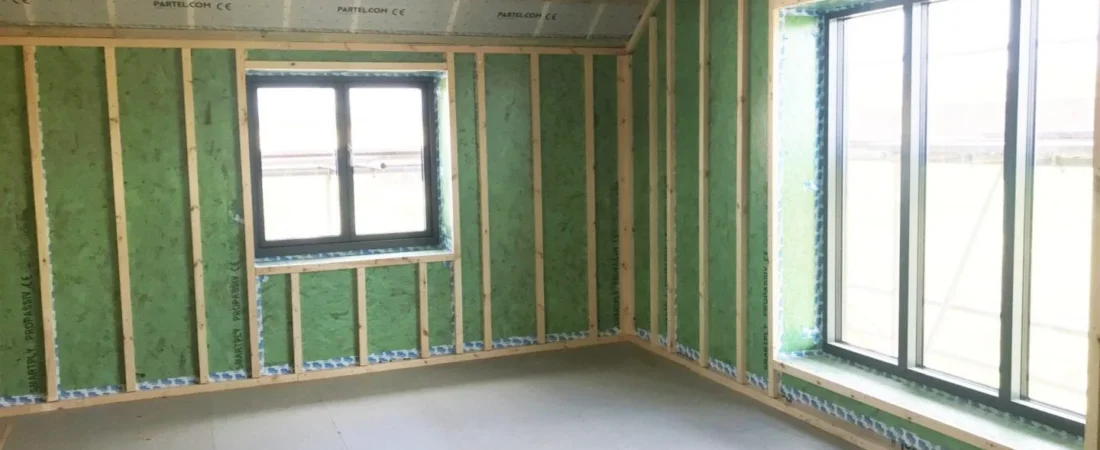
Sealing your home tighter doesn’t just trap heat — it traps everything else too. That’s the part the energy-efficiency industry conveniently leaves out of its pitch. Airtight homes can cut your heating and cooling bills by 20–30%, but the same envelope that keeps conditioned air in also keeps pollutants, moisture, and chemical off-gassing from ever finding a way out. The paradox isn’t that efficiency is bad — it’s that most homeowners seal first and ventilate never.
What Do Airtight Homes Actually Mean for Indoor Air Quality?
An airtight home is one where the building envelope — walls, roof, foundation, windows, doors — has been sealed to reduce uncontrolled air leakage to an absolute minimum. Builders measure this with a blower door test, and a well-sealed modern home typically scores below 1.0 ACH50 (air changes per hour at 50 pascals of pressure). Older homes often leak at 5–10 ACH50, which sounds like a flaw but actually functions as accidental ventilation.
Here’s what that difference means in practice: in a leaky older house, indoor air turns over constantly through gaps in the structure. In a tight modern home, that turnover essentially stops unless you deliberately replace it with a mechanical system. The air sitting in your living room at 8am could still be there — along with everything in it — at 8pm.
The indoor air quality problem in airtight homes isn’t really about the tightness itself. It’s about the assumption, baked into most construction projects, that sealing is the finish line rather than the starting line.
Why Do Airtight Homes Build Up Pollutants Faster Than Older Homes?
Every home is a slow chemistry experiment. Furniture releases formaldehyde from pressed wood and adhesives. Carpets off-gas volatile organic compounds (VOCs) for months after installation. Cooking produces carbon monoxide, nitrogen dioxide, and fine particulate matter. Personal care products, cleaning sprays, and even scented candles add their own chemical cocktail to the mix.
In a drafty house, these compounds dilute fairly quickly because fresh outdoor air is always sneaking in. In an airtight home, they accumulate. The EPA has found that indoor air can be 2–5 times more polluted than outdoor air, and in poorly ventilated airtight homes that number can climb higher — especially in the first few years after construction or renovation when off-gassing peaks.
There’s also a compounding effect most people don’t think about: the tighter you seal, the more pressure differentials matter. A gas range without a properly vented hood doesn’t just smell bad in a tight home — it can push combustion byproducts into the living space at concentrations that would simply never accumulate in a drafty one. The same stove. Completely different outcome.
Is Moisture the Biggest Air Quality Risk in a Sealed Home?
Moisture is the one problem that almost everyone underestimates, even people who are aware of the broader airtight home issue. Here’s why it’s sneaky: water vapor doesn’t just raise your relative humidity number. It migrates into wall assemblies, attic spaces, and floor systems where it can feed mold growth for months before you see or smell anything.
A family of four generates roughly 2–4 gallons of water vapor per day through breathing, cooking, showering, and doing laundry. In a leaky old house, most of that vapor finds its way out. In a sealed home, it has nowhere to go unless the mechanical ventilation system is actively removing it. Relative humidity above 60% creates conditions where mold can colonize surfaces within 24–48 hours — and airtight homes without adequate ventilation regularly sit in that range.
The counterintuitive fact here is that airtight homes in humid climates can actually be harder to manage than airtight homes in dry climates, but the reverse is also true for different reasons. In dry climates, sealed homes can become uncomfortably dry in winter, which damages wood and irritates respiratory passages. There’s no single setting that works everywhere — the ventilation strategy genuinely has to be calibrated to your climate zone.
“We’ve spent decades getting very good at air sealing and almost no time training builders or homeowners on what has to happen next. The building science is clear: you can’t seal a home without ventilating it. When you try, you don’t get an energy-efficient house — you get a sealed chamber with an air quality problem that takes years to show up.”
Dr. Marcus Ellroy, Building Science Consultant and Certified Indoor Environmentalist
What Specific Pollutants Concentrate in Airtight Homes?
It’s not one thing — it’s a layered accumulation of sources that interact with each other. Understanding which pollutants you’re actually dealing with helps you prioritize what to fix first rather than throwing money at air purifiers that address the wrong threat.
- Formaldehyde: Released from particleboard furniture, laminate flooring, and certain insulation materials. Off-gassing is highest in the first 2 years but can continue at lower levels for much longer. Formaldehyde is classified as a known carcinogen, and concentrations in newly built airtight homes can exceed 0.1 ppm — the threshold where symptoms like eye irritation and headaches begin for sensitive individuals.
- Carbon dioxide (CO₂): Humans exhale CO₂ constantly, and in a sealed room with poor ventilation, levels can climb above 1,000 ppm within hours. At 1,500 ppm and above, cognitive performance measurably declines — studies have shown decision-making and concentration drop by 15–20% at these levels. This is arguably the most underappreciated air quality issue in tight homes.
- Radon: A naturally occurring radioactive gas that seeps from soil and rock. Older leaky homes let it dilute; tight homes can concentrate radon to levels above the EPA’s action threshold of 4 pCi/L. It’s the second leading cause of lung cancer in the U.S. after smoking, and it’s odorless and invisible.
- Volatile Organic Compounds (VOCs): A broad family of chemicals from paints, adhesives, cleaning products, air fresheners, and building materials. In a sealed home, the total VOC load (TVOC) can be 3–10 times higher than in a comparable leaky home, particularly in the months following renovation.
- Fine particulate matter (PM2.5): Generated by cooking, candles, incense, and tracked-in outdoor particles. In a sealed home, PM2.5 has nowhere to exit. Long-term exposure is linked to cardiovascular and respiratory disease — and a 20-minute cooking session without ventilation can spike indoor PM2.5 to levels comparable to a polluted outdoor city environment.
Why Does the “Just Open a Window” Advice Fail in Tight Homes?
Opening windows is the most reflexively given advice for indoor air quality, and it’s the most contextually useless one for airtight home owners. It’s not wrong exactly — it’s just incomplete in a way that creates a false sense of security.
The problem is intermittency. You open a window for 20 minutes while cooking, then close it. The house re-seals, and the pollutants that didn’t exit during those 20 minutes — which is most of them — continue accumulating. Natural ventilation also depends entirely on pressure differentials between inside and outside, wind speed, and temperature. On a still, humid summer day when your home is sealed against the heat, opening a window achieves almost nothing in terms of air exchange.
There’s also the outdoor air quality issue. If you live near a highway, in a wildfire-prone region, or in a high-pollen area, the outdoor air you’re letting in may be worse than what you’re trying to dilute. Random window-opening is a Band-Aid approach; what tight homes actually need is a controlled, continuous mechanical ventilation strategy.
What’s the Right Ventilation System for an Airtight Home?
This is where the solution lives, and it’s more nuanced than “buy an air purifier.” The gold standard for airtight homes is a Heat Recovery Ventilator (HRV) or Energy Recovery Ventilator (ERV) — and the choice between them matters depending on where you live.
An HRV exhausts stale indoor air while simultaneously drawing in fresh outdoor air, with a heat exchanger core in between that transfers roughly 70–85% of the thermal energy from the outgoing air to the incoming air. You get fresh air without throwing away the heating or cooling you’ve already paid for. An ERV does the same thing but also transfers moisture — which makes it better suited for hot, humid climates where you want to prevent outdoor humidity from flooding the conditioned space.
The ASHRAE 62.2 standard recommends a minimum ventilation rate of 7.5 CFM per person plus 1 CFM per 100 square feet of floor area for residential buildings. A 2,000-square-foot home with 4 occupants needs at least 50 CFM of fresh air — continuously. Most homes with no mechanical ventilation system are getting essentially zero.
| Ventilation System | Best Climate | Moisture Control | Typical Efficiency |
|---|---|---|---|
| HRV (Heat Recovery Ventilator) | Cold/dry climates | Exhausts excess indoor moisture | 70–85% heat recovery |
| ERV (Energy Recovery Ventilator) | Hot/humid climates | Limits incoming outdoor humidity | 65–80% total energy recovery |
| Exhaust-only ventilation | Mixed use / older tight homes | Moderate — removes stale air only | Low — no energy recovery |
One thing worth knowing: an HRV or ERV doesn’t eliminate the need for source control. If you have high-VOC materials in the home or a gas range without adequate exhaust, the ventilation system dilutes those pollutants but doesn’t eliminate them. The best strategy combines source control (choosing low-VOC materials, using range hoods that vent outside) with continuous mechanical ventilation.
How Does Humidity in Airtight Homes Affect Your Health Specifically?
Relative humidity in the 40–60% range is the sweet spot for human health and building durability. Below 30%, your nasal passages dry out, which actually weakens your body’s ability to filter out airborne pathogens — your mucous membranes are a primary immune barrier, and dry air degrades them. Above 60%, dust mite populations explode (they need moisture to survive), mold spores find hospitable surfaces, and the structural materials in your home begin to absorb and hold water.
Airtight homes swing in both directions depending on season and climate. In winter, a tight home in a cold climate tends to get very dry because cold outdoor air holds almost no moisture, and when you heat that air indoors the relative humidity plummets — sometimes to 15–20% in severe cases. In summer, a tight home in a humid climate can spike above 70% if the air conditioning system isn’t sized correctly or runs intermittently.
What makes this genuinely tricky is that symptoms of poor humidity control — headaches, fatigue, respiratory irritation, frequent colds — overlap with symptoms of many other conditions. People spend years treating symptoms without identifying the sealed home as the source. A simple $30 digital hygrometer placed in two or three rooms gives you data that most doctors will never think to ask about.
Pro-Tip: Place one hygrometer in your main living area and one in a bedroom with the door closed for 4–6 hours. If the bedroom reads more than 5 percentage points higher in relative humidity than the living area, your home’s air isn’t circulating properly — and that closed room is likely a mold risk even if you can’t see any yet.
What Do New Construction Airtight Homes Get Wrong That Retrofits Don’t?
New construction airtight homes have a problem that retrofitted older homes often avoid accidentally: they’re loaded with new materials. Fresh construction means new drywall compound, new flooring adhesives, new paint, new cabinetry, new carpeting — every single one of these off-gasses at peak levels for the first 6–24 months. In a house with 5 ACH50 of natural leakage, that dissipates quickly. In a house with 0.6 ACH50, you’re living in a chemical incubator.
There’s a real scenario that plays out in new developments constantly: a family moves into a tight, energy-efficient new build and within weeks starts experiencing headaches, brain fog, and sleep disruption. They assume it’s stress from the move. Their doctor finds nothing. Nobody tests the air. The formaldehyde and VOC levels in that house — which might be 3–5 times the levels in their old drafty colonial — never get measured because nobody thinks to look.
Retrofitted homes, on the other hand, tend to be sealed gradually — one round of weatherstripping here, some foam insulation there. The materials are old and mostly done off-gassing. The accidental ventilation that remains from imperfect sealing often provides just enough dilution to prevent the worst accumulation. Ironically, the partial retrofit can sometimes be healthier in the short term than the perfect new build.
How Do You Test Air Quality in an Airtight Home Without Expensive Equipment?
You don’t need to hire an industrial hygienist to get useful data — though for radon and mold assessment, professional testing is genuinely worth the cost. For day-to-day monitoring, a layered approach with consumer devices covers the most important bases.
- CO₂ monitor: A NDIR (non-dispersive infrared) CO₂ sensor costs $80–$150 and gives you real-time data on ventilation adequacy. If CO₂ climbs above 1,000 ppm during occupied hours, your ventilation is insufficient for the occupancy load. This single device is the most actionable purchase for airtight home owners.
- Radon test kit: Long-term alpha track test kits cost $15–$30 and need to sit in your lowest occupied level for 90 days minimum. This is cheap enough that skipping it is genuinely hard to justify, given radon’s documented health impact.
- Digital hygrometer: $20–$35 for a reliable unit with min/max memory. Monitoring over days — not just a spot check — gives you the real picture of humidity swings your home goes through in a 24-hour cycle.
- Combination air quality monitor: Devices like the Airthings Wave Plus or IQAir AirVisual simultaneously track VOCs, CO₂, temperature, and humidity. They run $150–$250 but replace four separate devices and help you see correlations — like how VOCs spike every time you run the dishwasher, which can signal a plumbing ventilation issue.
- Professional mold assessment: If your hygrometer regularly reads above 60% RH and you notice any musty odor or discoloration, a certified mold inspector can identify hidden growth in wall cavities and HVAC systems that consumer tests won’t catch. The cost ($300–$600) is minor compared to remediation costs if growth is allowed to establish.
Can an Airtight Home Actually Have Better Air Quality Than an Old Leaky One?
Yes — but only with intention. This is the answer that the “airtight homes are dangerous” camp misses, and it’s an important one. A deliberately designed and properly ventilated airtight home can have significantly better air quality than an old leaky house, because you’re in control of what air enters rather than at the mercy of whatever the wind pushes in through your walls.
With an HRV or ERV paired with a MERV-13 filter on the intake, you’re bringing in air that’s been filtered for particulates, tempered to a comfortable temperature, and delivered at a controlled rate. You’re not pulling in outdoor pollution, pollen, or wildfire smoke through random gaps in the building envelope. The tight home with proper mechanical ventilation is the better system — the old leaky house just happens to avoid the worst outcomes by accident.
The honest answer is that whether your airtight home is healthier or more problematic than an older leaky one depends almost entirely on whether you’ve paired the sealing with deliberate ventilation design. Sealing without ventilating is the mistake. Sealing with ventilating is actually the goal.
What’s the Simplest Action Plan for Improving Air Quality in an Airtight Home?
If you’re already living in a tight home and can’t immediately install an HRV, there are practical steps that move the needle without a major construction project. The priority order matters — start with the highest-impact interventions.
First, deal with combustion sources. If you have a gas range, get a range hood that vents directly outside (not a recirculating model) and use it every single time you cook. Gas cooking without exhaust ventilation in a tight home is one of the fastest ways to accumulate nitrogen dioxide and PM2.5 at harmful levels — and it’s fixable for a few hundred dollars.
Second, audit your materials. Pressed wood furniture, laminate flooring, and synthetic carpets all off-gas. This doesn’t mean replacing everything at once, but it does mean prioritizing natural materials — solid wood, tile, wool, cotton — when you replace things. If you’re doing a renovation, specify low-VOC or zero-VOC paint and adhesives before the work starts, not after you’re sealed back in with the fumes.
Third, run bathroom and kitchen exhaust fans for longer than feels necessary. The standard advice is “run the fan during and for 20 minutes after a shower,” but in a very tight home, 20 minutes often isn’t enough to return humidity to baseline. Running it for 30–45 minutes after a shower costs almost nothing in energy but meaningfully reduces the daily moisture load your home has to manage.
Fourth — and this is the long game — get the HRV or ERV installed if you can. HVAC contractors who specialize in building science can often integrate an HRV into an existing forced-air system for $2,000–$4,000. Compared to the health costs and structural repair costs of unchecked indoor air quality problems, that’s not a hard calculation.
The deeper truth about airtight homes is that they represent a design philosophy that was never finished. We learned to build tight — and we’re still learning, slowly, to teach the people who live in those homes what comes next. As building codes in more regions begin to require mechanical ventilation in new construction, the gap between what the industry builds and what occupants actually need will start to close. But if you’re in a tight home right now, you don’t have to wait for the codes to catch up — the tools and strategies exist today, and the investment in getting it right pays forward in ways that compound quietly over years.
Frequently Asked Questions
Why do airtight homes have air quality problems?
Airtight homes (<3 ACH50) exchange air <0.3 times hourly naturally vs leaky homes (>15 ACH50) at 1.5-3 ACH—reducing dilution 5-10x. Research confirms “increasing airtightness has negative correlation with CO2 and VOC concentration” meaning pollutants increase as buildings tighten. Studies show formaldehyde rising 77-169% when moving from 11 ACH50 to 1.5 ACH50. Indoor pollutants (VOCs from materials, CO2 from occupants, moisture from activities) accumulate to 2-10x higher concentrations without mechanical ventilation compensating for reduced natural infiltration. Problem isn’t airtightness itself—properly ventilated airtight homes outperform leaky buildings. Real issue: Building codes mandate envelope tightness without equally requiring mechanical ventilation.
Do new houses have poor air quality?
New houses built tight without proper ventilation: Yes—often worse than old homes. Research documents “making homes more airtight increased likelihood of chemical compounds being retained indoors, resulting in increased air contamination.” Measured concentrations: formaldehyde 0.027-0.109 mg/m³, VOCs 2-5x outdoor levels, CO2 routinely exceeding 1,500-2,500 ppm overnight. New construction materials (engineered wood, adhesives, paints, carpeting) emit VOCs creating “new home smell” indicating chemical off-gassing. But properly designed new homes with MVHR show dramatically superior IAQ—UK study found 90% of non-MVHR bedrooms exceeded 1,500 ppm CO2 vs under 20% with MVHR. Modern construction can achieve excellent IAQ if “build tight, ventilate right” philosophy followed.
Is it better to have a leaky or tight house?
Tight house with mechanical ventilation superior on every metric. Comparison: Leaky (24 ACH50): 1.5-3 ACH natural, acceptable CO2 (600-800 ppm) but massive energy waste heating/cooling 8x required air, drafts, no filtration; Tight without ventilation (3 ACH50): 0.2-0.3 ACH natural, dangerous CO2 (2,000-3,000 ppm), sick building syndrome likely; Tight with MVHR (3 ACH50 + 0.35 mechanical): Optimal 0.5-0.65 total ACH, excellent CO2 (<1,000 ppm), 60-95% heat recovery making ventilation nearly energy-free, filtered incoming air, best comfort and health. Research conclusive: “IAQ in airtight homes with MVHR significantly better than airtight homes without MVHR” and superior to leaky buildings.
How do you fix poor air quality in a new house?
Install mechanical ventilation system (MVHR/ERV) providing ASHRAE 62.2-required airflow (typically 30-80 CFM residential). Calculation: 7.5 CFM × (bedrooms + 1) + 0.01 × floor area. Interim measures while planning installation: (1) Open windows strategically 30-60 min daily creating cross-ventilation; (2) Run bathroom/kitchen exhaust fans continuously not just during use; (3) HEPA air purifiers (don’t provide fresh air exchange but remove particles/some VOCs); (4) Source control—remove/reduce VOC-emitting items, use low-VOC products. Long-term solution: Professional MVHR installation ($3,500-7,000) with heat recovery making continuous ventilation energy-affordable. Research confirms even poorly-installed MVHR outperforms no mechanical ventilation in tight homes.
What is the healthiest level of air tightness?
≤3 ACH50 with continuous mechanical ventilation providing ≥0.35 ACH total air exchange. Envelope tightness itself isn’t health determinant—ventilation rate determines IAQ. Optimal combination: Tight envelope (3 ACH50) reduces energy waste from uncontrolled leakage + mechanical ventilation (MVHR) provides controlled fresh air with heat recovery. Research shows this achieves best IAQ, energy efficiency, comfort simultaneously. Avoid: Moderate tightness (5-10 ACH50) without mechanical—achieves neither energy efficiency (too leaky) nor adequate ventilation (too tight). Passive House (<0.6 ACH50) requires sophisticated MVHR but achieves exceptional performance when properly implemented. Key principle: “Build tight, ventilate right”—tightness and ventilation must be paired, not chosen independently.