
Bottom Line Up Front: The air quality problem in your apartment probably isn’t coming from what you think — it’s not outdoor pollution seeping in, and it’s not even mold (usually). The real culprit is a closed-loop air environment where everyday activities like cooking, cleaning, and sleeping compound pollutant levels faster than any air purifier can keep up. Once you understand that apartments are essentially sealed boxes with shared air systems, the fixes become much clearer.
Why Is Indoor Air Quality in Apartments Worse Than in Houses?
Apartment air quality isn’t just a “small space” problem — it’s a system problem. Unlike a detached house where your indoor air only mixes with the outdoors, an apartment unit is physically connected to dozens of other units through shared ventilation ducts, pipe chases, and wall cavities. That means your neighbor’s cooking smoke, cigarette odor, or cleaning product fumes can become your air quality problem without you ever opening a door.
The EPA has documented that indoor air can be 2 to 5 times more polluted than outdoor air — and in tightly constructed apartment buildings, that number climbs higher. Here’s the mechanism: newer apartment construction prioritizes energy efficiency, which means tighter building envelopes with very little natural air infiltration. Less air exchange sounds good on an energy bill, but it means pollutants generated inside have nowhere to go.
Older buildings have the opposite problem. Gaps around pipes and under doors let neighbor-generated pollutants migrate freely between units. You’re either dealing with a sealed box or a leaky one — and either way, the air quality math doesn’t favor you.
What Are the Most Overlooked Sources of Indoor Air Pollution in Apartments?
Everyone talks about mold and VOCs from paint. Those are real, but they’re not the whole story. The most underappreciated pollution sources in apartments are the ones that happen continuously and invisibly — activities that generate fine particulate matter (PM2.5) in concentrations that rival standing next to a highway.
Frying a single pan of bacon on a gas stove can push PM2.5 levels in a small apartment kitchen above 200 micrograms per cubic meter — more than 13 times the WHO guideline of 15 μg/m³ for 24-hour exposure. That number drops slowly in a sealed space. Without a functioning range hood vented to the outside (not just recirculating), you’re essentially hot-boxing your kitchen with fine particulates every time you cook.
Then there’s the furniture factor. Pressed-wood furniture, particleboard shelving, and foam-filled sofas off-gas formaldehyde and other volatile organic compounds for months — sometimes years — after purchase. Apartments tend to have smaller square footage per piece of furniture, which concentrates that off-gassing. Add new flooring or a fresh coat of paint and you’ve created a temporary but significant air quality event.
Candles deserve a special mention here. Paraffin candles produce soot particles fine enough to penetrate deep into lung tissue, and they’re one of the leading causes of black residue appearing on apartment walls and HVAC filters. Most people assume that’s just “dust.” It’s not.
How Does Your Apartment’s HVAC System Affect Air Quality?
Your HVAC system is either your biggest air quality ally or your biggest liability — and in most apartments, it’s quietly the latter. The typical apartment building uses a shared or centralized HVAC system where one air handler serves multiple units. That design prioritizes energy efficiency and maintenance convenience, not individual tenant air quality.
The filters in these systems are almost always MERV 4 to MERV 8, which captures large dust particles but lets fine particulates, many allergens, and almost all biological contaminants pass straight through. A MERV 13 filter would do a meaningfully better job, but building managers resist using them because higher-rated filters restrict airflow and stress aging equipment. You’re not getting hospital air from your landlord’s system — you’re getting adequate-for-code air.
There’s also the duct problem. Shared ductwork in apartment buildings rarely gets cleaned on any meaningful schedule. Dust, pet dander (from previous tenants, no less), mold spores, and debris accumulate in ducts and circulate every time the system runs. If you’ve ever moved into a “freshly renovated” apartment and immediately started sneezing, you’ve felt this firsthand.
“Apartment dwellers often have less control over their air environment than they realize. The building’s HVAC infrastructure — its filter grade, duct condition, and ventilation rate — has a far greater impact on what they breathe than any portable air purifier they might purchase. Understanding that distinction is the first step toward actually improving your exposure.”
Dr. Rachel Summers, Environmental Health Scientist and Indoor Air Quality Consultant
What Pollutants Are Unique to Apartment Living?
There’s one pollutant that apartment dwellers face at rates significantly higher than homeowners: secondhand smoke and its chemical relatives. Even in smoke-free buildings, cigarette smoke can migrate through electrical outlets, shared walls, and HVAC systems from adjacent units. Studies have measured measurable nicotine deposits in non-smoking apartments directly adjacent to units where smoking occurs regularly.
Pesticide drift is another one. When a building management company treats one unit for pests, the chemicals don’t stay there. They volatilize into the air and move through shared spaces and ventilation pathways. Tenants in adjacent units are exposed to pesticides they never consented to — and often never know about.
Carbon monoxide deserves attention specifically in older apartment buildings. Shared parking garages beneath residential floors, adjacent laundry rooms with gas dryers, and poorly maintained boilers can all introduce CO into living spaces. Gas stoves without proper ventilation are a chronic low-level CO source. The counterintuitive fact: you can feel the effects of low-level chronic CO exposure — headaches, fatigue, difficulty concentrating — and attribute them to stress, bad sleep, or a bad diet, never suspecting your air.
How Can You Actually Test Air Quality in Your Apartment?
Testing is where most apartment dwellers either do nothing or wildly overcomplicate it. You don’t need a $2,000 professional assessment to get useful data. A few targeted, inexpensive monitors will tell you most of what you need to know about your specific air quality situation.
Here’s what’s worth measuring and what it costs to measure it:
| Pollutant | Why It Matters in Apartments | Affordable Testing Method |
|---|---|---|
| PM2.5 (fine particulate matter) | Cooking, candles, smoke migration from neighbors | Consumer air quality monitor ($50–$150) |
| Carbon Monoxide (CO) | Gas appliances, shared garages, boilers | Plug-in CO alarm with digital display ($25–$60) |
| VOCs (volatile organic compounds) | New furniture, cleaning products, paint off-gassing | Consumer VOC monitor or lab test kit ($40–$120) |
| Radon | Ground-floor and basement apartments especially | Long-term charcoal test kit ($15–$30) |
Radon is the one that surprises most apartment renters. It’s associated with houses, but ground-floor and basement apartments — particularly in high-radon geological zones — can have elevated radon levels. The EPA estimates radon causes about 21,000 lung cancer deaths per year in the U.S., and many of those cases involve people who never thought to test because they didn’t own a house.
A practical approach: run a PM2.5 monitor in your kitchen during and after cooking for one week. You’ll see your air quality spikes clearly, and you’ll understand exactly when and why they happen. That data is more actionable than any general advice about “improving ventilation.”
What Can You Actually Control as a Renter?
Renters often feel stuck because they can’t replace windows, upgrade HVAC systems, or demand duct cleaning without a fight. That’s fair — but the scope of what you can control is larger than most people assume, and it starts with understanding which pollution sources are within your direct influence.
Here’s an honest look at what actually moves the needle:
- Fix your cooking ventilation first. If your range hood recirculates instead of venting outside, use a high-quality carbon filter replacement on a strict schedule (every 3–4 months minimum if you cook daily). Better yet, open a window while cooking and run the hood simultaneously. Cooking is the single highest-impact controllable source of PM2.5 in most apartments.
- Choose a portable air purifier with a true HEPA filter and activated carbon. Position it in the room where you spend the most hours, not necessarily where the air seems worst. Most people put purifiers in the kitchen after cooking — but your bedroom, where you spend 7–8 hours unconscious, matters more for cumulative exposure.
- Seal the gaps between you and your neighbors. Foam backer rod, acoustic caulk, and door sweeps under your front door and unit entry points cost under $30 total and meaningfully reduce pollutant migration from corridors and adjacent units.
- Switch to fragrance-free cleaning products. Scented cleaning sprays, fabric softeners, and air fresheners contribute to indoor VOC loads significantly. Fragrances in cleaning products can react with indoor ozone to form formaldehyde. Fragrance-free isn’t just for people with allergies — it’s genuinely better air chemistry.
- Ask your building manager about filter upgrades in writing. Some building managers will switch to MERV 11 or MERV 13 filters if asked — not all, but some. A written request creates a paper trail and sometimes produces results that a verbal ask doesn’t. You’re entitled to know what filter grade your unit’s air handler uses.
Pro-Tip: Place your portable air purifier at least 3 feet away from walls and furniture, running on its highest fan setting during and immediately after cooking, and drop to its lowest setting overnight in your bedroom. This cycling approach covers acute pollution spikes and chronic low-level exposure without maxing out your electricity usage or creating sleep-disrupting noise.
Does Humidity Level Affect Indoor Air Quality in Apartments?
Humidity is the invisible variable that most apartment air quality guides skip entirely — and that’s a mistake. Humidity affects how pollutants behave, how allergens survive, and how comfortable (and healthy) your respiratory system functions. It’s not just about mold prevention.
At relative humidity above 60%, dust mites thrive, mold spores germinate faster, and certain VOCs become more reactive. At humidity below 30%, airborne particles stay suspended longer because dry air reduces the weight gain that makes particles settle. Your nasal passages and mucous membranes — your body’s first-line air filtration system — also dry out and become less effective at trapping contaminants below 30% RH.
The sweet spot is 40–50% relative humidity. Apartments face specific challenges here: bathroom steam, cooking steam, and breath humidity from multiple occupants in a small space can push humidity high quickly. Meanwhile, winter heating in cold climates strips humidity dramatically — forced-air heat can drop apartment humidity to 15–20% RH, which is drier than most deserts. A $30 digital hygrometer tells you where you stand; a well-sized humidifier or dehumidifier gets you where you need to be.
What Role Does Your Apartment’s Age and Building Materials Play?
Building age matters for air quality in ways that cut both directions. Older apartments — particularly those built before the 1980s — may contain asbestos in floor tiles, ceiling materials, and pipe insulation. They may have lead paint on walls. Neither of these poses an acute inhalation risk when undisturbed, but any renovation, drilling, or deterioration releases particles that are genuinely dangerous.
Newer apartments built post-2000 largely eliminated those legacy hazards but introduced their own set of problems. Modern building materials — engineered wood products, spray foam insulation, synthetic carpet, and adhesives — off-gas a complex mixture of VOCs during and after construction. Moving into a brand-new apartment smells pleasant (that “new” smell) but that odor is your nose detecting off-gassing compounds, not cleanliness.
There’s an honest nuance here: the severity of off-gassing depends heavily on how long the unit sat empty before you moved in, how aggressively the building ventilated during and after construction, and the specific products used. Two identically aged new buildings can have dramatically different VOC loads depending on these factors. The only way to know is to measure.
How Do Pets, Plants, and People Affect Apartment Air Quality?
Pets are significant. A cat or dog in a 700-square-foot apartment generates a continuous load of dander, hair, and biological material that recirculates in closed air. Cat allergen specifically (Fel d 1) is so lightweight and sticky that it adheres to walls, furniture, and clothing — and persists in an apartment for months after a cat has left the space. If you’re a renter moving into an apartment where cats previously lived, their allergen load is part of your air quality reality whether or not you’re allergic.
Plants are often marketed as indoor air purifiers, a claim rooted in a 1989 NASA study that’s been significantly overstated by the time it reached houseplant influencers. Real-world analysis shows you’d need between 100 and 1,000 plants per square meter to achieve meaningful air purification through plant respiration. What plants do contribute, more practically, is some humidity through transpiration and a minor psychological benefit from greenery. Overwatering plants also creates mold growth in the soil — a legitimate concern in enclosed spaces.
As for people: every occupant in an apartment exhales CO2, water vapor, and trace bioeffluents continuously. A two-person apartment with no ventilation sees CO2 levels rise above 1,000 ppm (the threshold where cognitive performance starts to dip) within a few hours of the windows being closed. This is one reason you often feel “foggy” or sleepy in a poorly ventilated space — it’s not just tiredness, it’s CO2 accumulation affecting your brain directly.
What Are the Health Effects of Poor Indoor Air Quality in Apartments?
Short-term symptoms are easy to dismiss because they mimic everything else: headaches, fatigue, eye irritation, runny nose, difficulty concentrating. Most people cycle through these and assume they’re fighting a cold, dealing with seasonal allergies, or just stressed. The problem is that chronic low-level pollutant exposure produces exactly these vague symptoms — which means poor apartment air quality can go unidentified for months or years.
The long-term picture is more serious. Long-term PM2.5 exposure is associated with cardiovascular disease, reduced lung function, and increased cancer risk. Formaldehyde is classified as a known human carcinogen. Radon is the second leading cause of lung cancer in the U.S. These aren’t scare tactics — they’re documented dose-response relationships that apply even at indoor concentration levels.
Here’s what often gets missed in these discussions: children and elderly residents in apartments are disproportionately affected. Children breathe more air relative to their body weight than adults and spend more time indoors. A child doing homework in a 400-square-foot bedroom with elevated VOC levels is receiving a proportionally higher exposure than an adult in the same space. The household air quality decisions you make affect the most vulnerable people in the unit most acutely.
What Ventilation Strategies Work When You Can’t Open Windows?
Not every apartment has windows that open — many high-rise units, especially in cities, are designed as sealed environments dependent entirely on mechanical ventilation. And even apartments with operable windows face real constraints: street-level pollution, security concerns, noise, and seasonal temperature extremes all limit how freely you can air things out. You need strategies that work within these constraints.
These approaches work even in restricted ventilation situations:
- Use exhaust fans aggressively. Bathroom exhaust fans aren’t just for steam — run yours for 20–30 minutes after showers and during any activity that generates moisture or odors. Many people flip the fan off the moment they leave the bathroom. Leaving it running actually exhausts air from your living space and creates a mild negative pressure that draws in fresher corridor air through gaps.
- Time your window openings strategically. If outdoor pollution is a concern, check your local air quality index before opening windows. Early morning (before traffic peaks) and late evening generally offer the lowest outdoor PM2.5 levels in urban areas.
- Run air purifiers in “exchange mode.” Rather than running a purifier 24/7 at low speed, cycling it at high speed for 30-minute intervals is more effective at actually cleaning a room’s air volume. A purifier with a Clean Air Delivery Rate (CADR) of 200+ can cycle a 300-square-foot room’s air roughly twice in that period.
- Request Heat Recovery Ventilator (HRV) assessment. Some newer apartment buildings have HRV units built in but set to minimal operation. Asking building management to verify and adjust HRV settings is a reasonable and sometimes surprisingly effective request — these systems exchange stale indoor air with filtered outdoor air while recovering heat, so they don’t add to energy costs the way opening windows does.
How Do You Talk to Your Landlord About Air Quality Issues?
This is where practical knowledge matters more than technical knowledge. Landlords respond to specific, documented complaints differently than to vague concerns about “air quality.” The framing of your request determines whether you get action or a polite brush-off.
Document before you contact. Take photos of visible mold, record PM2.5 readings over several days, note dates and times of odor events from neighboring units. Specific, timestamped records establish a pattern and signal that you’re a tenant who’ll follow through if necessary. A complaint that says “the air smells bad sometimes” gets filed. A complaint that says “I measured PM2.5 levels above 150 μg/m³ on six separate occasions, and attached are the timestamps from my monitor” gets attention.
Know your leverage. Many jurisdictions have building habitability codes that include ventilation and air quality standards — your local housing authority or tenant rights organization can tell you what your landlord is legally obligated to maintain. Requesting duct inspection, range hood repair, or bathroom exhaust fan replacement often falls within normal landlord maintenance obligations. You don’t always need to fight — sometimes you just need to know what’s already legally required and ask for it plainly.
Are Air Purifiers Worth It for Apartment Indoor Air Quality?
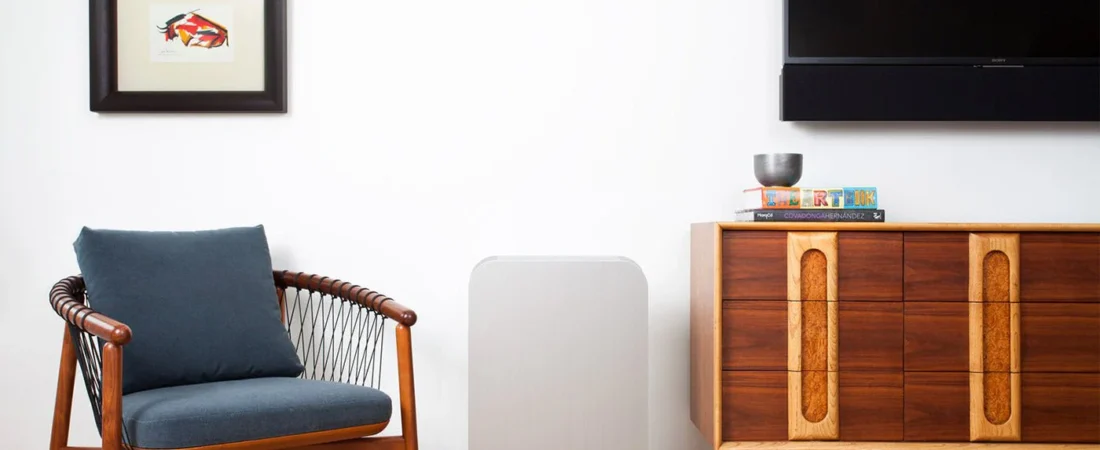
Yes, with specifics. A portable air purifier with a true HEPA filter (not “HEPA-type” or “HEPA-style,” which are marketing terms with no performance standard) and an activated carbon layer is the single highest-impact purchase most apartment renters can make for their air quality. But placement, sizing, and expectations matter.
Match the purifier’s CADR to your room size. The Association of Home Appliance Manufacturers recommends a CADR of at least two-thirds of your room’s square footage. So for a 300-square-foot bedroom, you want a CADR of 200 or above. Undersized units run constantly at high speed, burn out faster, and still don’t adequately process the room’s air volume.
Air purifiers do not fix moisture problems, ventilation deficits, or the source of pollution — they filter what’s already in the air. An air purifier in an apartment with an active mold problem is treating a symptom. The mold needs to be addressed. Purifiers earn their keep most clearly in apartments with well-controlled humidity, no major structural issues, and identifiable particulate or VOC sources that can be somewhat reduced but not eliminated — like cooking or moderate traffic from neighboring units.
The air you breathe while sleeping is the air that matters most, because your body’s detoxification and repair systems are most active overnight, and you’re unconscious
Frequently Asked Questions
Why do I smell my neighbor’s cooking in my apartment?
Multiple pathways: (1) Door gap—1-inch gap under entry doors admits 10-30 CFM hallway air containing cooking odors; (2) Shared wall penetrations—electrical outlets, plumbing, HVAC in shared walls transfer 30-50% of cooking PM2.5; (3) Shared HVAC—return air systems mix all units’ air, redistributing cooking emissions; (4) Elevator shaft—distributes odors from all floors. Solution: Install door sweep, seal shared-wall penetrations, request HVAC filter upgrade.
Can door gap sealing really improve apartment air quality?
Yes, dramatically. Door gaps admit 10-30 CFM hallway air continuously—equivalent to 15.8 million cubic feet annually. Research shows increased compartmentalization provided better control of contaminant concentrations. Installing door sweep ($10-80) reduces hallway infiltration 70-90%, eliminating most odor, smoke, and VOC infiltration from shared spaces. This single intervention often addresses 40-60% of mysterious smell problems residents attribute to within-unit sources.
What apartment IAQ factors can’t I control as a renter?
Building-wide infrastructure requiring landlord action: Elevator shaft pressurization, trash chute dedicated exhaust, professional compartmentalization sealing all inter-unit penetrations, HVAC filter/outdoor air upgrades, parking garage ventilation, neighbor smoking/cooking behavior enforcement. Renter-implementable: Door/wall sealing, portable air purifiers, positive pressurization via supply fan, within-unit source control. Approximately 50-60% of factors are renter-addressable; remaining 40-50% require building management intervention.
How do I know if my apartment’s IAQ problems come from neighbors vs. my unit?
Monitor with multi-parameter device (CO2, VOCs, PM2.5) placed near door and shared walls. Timing patterns reveal sources: Spikes at 6-8 PM suggest neighbor cooking; Sunday afternoon spikes suggest trash chute heavy use; spikes correlated with elevator activity suggest shaft distribution; spikes without your activities indicate external infiltration. Smoke test door gaps: If smoke is drawn under door, hallway air is infiltrating. Document patterns, then implement targeted sealing—if problems resolve, external infiltration was the cause.
Is hallway air really that contaminated in apartments?
Yes. Hallway air contains: all units’ cooking emissions (doors opening releases kitchen air), trash chute VOCs (500-2,000 µg/m³ near chute), smoking violations (smoke enters hallways when violators open doors), cleaning chemicals (from building maintenance), outdoor urban pollution (lobby doors opening 100+ times daily admits traffic PM2.5), and elevator shaft contamination (distributed from all floors). Research emphasizes overlooked significance of IAQ in common spaces, particularly shared circulation spaces substantially impacting unit air quality.