
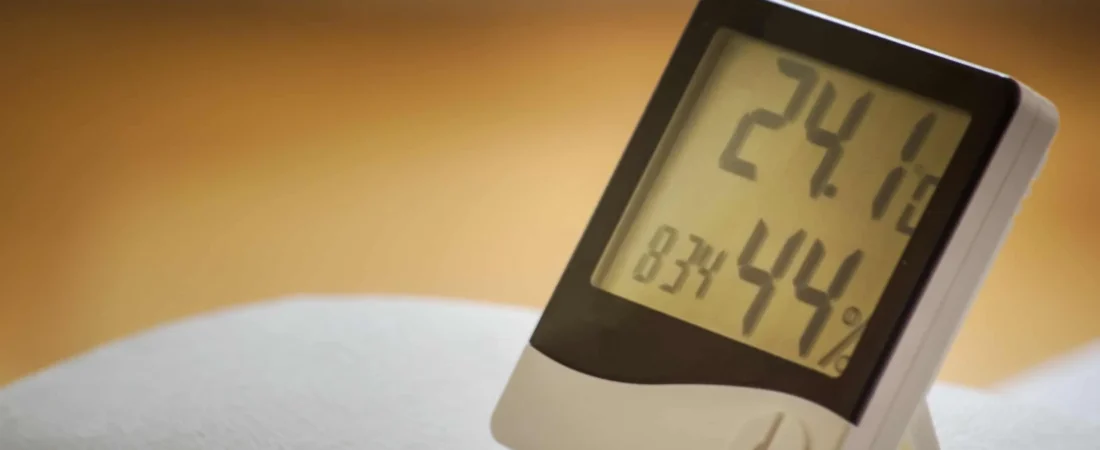
Bottom line up front: Humidity gets all the attention in winter apartment air quality discussions — but it’s the least of your problems. Volatile organic compounds off-gassing from furniture, carbon monoxide creeping from gas stoves, and near-zero air exchange rates are doing far more damage to the air you’re breathing every night. Fix those first, then worry about your humidifier.
The real issue with winter apartments isn’t dryness — it’s containment. When outdoor temperatures drop, you seal everything up: windows shut, doors closed, draft stoppers in place. That’s smart for your heating bill. It’s genuinely bad for your lungs. You’re essentially living inside a slowly accumulating chemical soup, and the humidity conversation has been drowning out that far more pressing reality.
This article is about what’s actually polluting your apartment air in winter, why the sources are different from summer, and what you can realistically do about it without spending a fortune or becoming obsessed with air monitors.
Why Is Indoor Air Quality Worse in Winter Apartments Specifically?
Apartments have a structural disadvantage that detached houses don’t: they share air. Through wall cavities, elevator shafts, pipe chases, and HVAC returns, your neighbor’s cooking fumes, cigarette smoke, and cleaning product vapors can migrate into your unit. In summer, that air movement is partially offset by open windows. In winter, it’s a closed loop.
The EPA estimates that indoor air can be two to five times more polluted than outdoor air — and that figure jumps in tightly sealed winter conditions. Ventilation rates in older apartment buildings can drop to as low as 0.1 air changes per hour in deep winter, compared to a recommended minimum of 0.35. That means pollutants accumulate across hours without any meaningful dilution.
Heating systems compound this. Forced-air heat dries the air (yes, humidity does matter here, just not as the primary issue), but it also stirs up settled dust, pet dander, and particulate matter that had landed on surfaces. Every time your heat kicks on, you’re getting a small re-suspension event in your living room.
What Are the Actual Pollutants in Winter Apartment Air?
Most people imagine air pollution as visible — smoke, dust, that kind of thing. The more dangerous winter apartment pollutants are invisible, odorless, and accumulate gradually. That’s what makes them easy to ignore until they’re causing real symptoms.
Here’s the honest breakdown of what you’re most likely dealing with:
- Volatile Organic Compounds (VOCs): Off-gassing from furniture, flooring, paint, and cleaning products. Formaldehyde from pressed-wood furniture is one of the most common indoor VOCs, with levels often two to four times higher in winter due to sealed conditions.
- Carbon Monoxide (CO): Gas stoves, furnaces, and water heaters all produce CO. In apartments with older appliances or inadequate combustion air, levels can creep into the 5–15 ppm range over a winter day — below alarm thresholds but enough to cause headaches and fatigue.
- Particulate Matter (PM2.5): Tiny particles from cooking, candles, incense, and yes, heating systems. PM2.5 is what gets deepest into lung tissue. Winter cooking habits — more soups, roasted meats, high-heat frying — generate significantly more PM2.5 than summer salads.
- Nitrogen Dioxide (NO2): A byproduct of gas cooking that’s almost completely overlooked. Studies have found NO2 levels in apartments with gas stoves can exceed outdoor air quality standards within 15 minutes of cooking on high.
- Radon: Often forgotten in apartment discussions, but ground-floor and basement units face real radon risk in winter because negative pressure inside sealed buildings can draw radon up from the soil through foundation cracks.
What’s worth noting here: none of these are solved by a humidifier. They require either source reduction or ventilation — two very different interventions.
Why Gas Stoves Are the Underrated Winter Air Quality Problem in Apartments
Gas stoves have become a flashpoint in broader environmental debates, but the apartment-specific winter concern is more immediate and practical than most coverage suggests. It’s not just about long-term exposure — it’s about what happens in your kitchen on a Tuesday night in January when every window is shut and you’re making pasta.
A gas burner on high for 20 minutes can push NO2 concentrations in a small kitchen to 200–300 ppb. The WHO’s outdoor guideline for NO2 is 25 ppb averaged over 24 hours. You’re not outdoors, and you’re not averaging — you’re getting a spike. Short-term NO2 exposure at those levels irritates airways, exacerbates asthma, and in children, is associated with increased respiratory infections.
The counterintuitive part: your range hood probably isn’t helping as much as you think. Research from Stanford found that most residential range hoods recirculate air rather than exhaust it outside. If your range hood doesn’t vent to an exterior wall, it’s filtering grease but doing almost nothing for NO2 or CO. Cracking a window — even half an inch — does measurably more.
“The combustion byproducts from gas cooking are one of the most underappreciated indoor air quality issues in residential settings. In apartments, where kitchen and living areas often share open floor plans and ventilation is severely limited in winter, NO2 and CO levels can reach concentrations we’d consider alarming if measured outdoors — yet most residents have no idea it’s happening.”
Dr. Priya Nandakumar, Environmental Health Researcher, Indoor Exposure Sciences Laboratory
How Much Do VOCs Actually Build Up in a Sealed Winter Apartment?
Formaldehyde is the headline VOC, but the more accurate picture is that dozens of VOCs off-gas simultaneously from different sources — and they interact. A couch, a bookshelf, a painted wall, a scented candle, and a spray cleaner in the same sealed room create what researchers call a “VOC cocktail” with effects that can exceed what any single compound would cause alone.
Temperature makes this worse in a specific way. VOC off-gassing rates increase with heat. Your winter heating — especially if you’re running the thermostat at 70–72°F — accelerates formaldehyde release from particleboard furniture and laminate flooring. A room held at 72°F off-gasses measurably more formaldehyde than the same room at 65°F. So your comfort literally works against your air quality in winter.
Here’s the scenario that plays out in thousands of apartments every winter: someone buys a new bookshelf or a secondhand couch, sets it up in October, keeps all the windows shut from November onward, and by January they’re experiencing persistent headaches and fatigue they attribute to seasonal affective disorder or poor sleep. VOC accumulation from that new furniture is a plausible culprit that almost never gets investigated.
What Are Safe Indoor Air Quality Levels to Target in Winter?
Having a target matters, otherwise you’re just guessing. The numbers below aren’t maximums to stay under — they’re the ranges you want to actually aim for in a healthy winter apartment.
| Pollutant | Target Level | Action Threshold |
|---|---|---|
| PM2.5 | Below 12 µg/m³ (24-hr avg) | Above 35 µg/m³ |
| CO | Below 4 ppm (8-hr avg) | Above 9 ppm (trigger ventilation) |
| Formaldehyde | Below 40 ppb | Above 100 ppb |
| NO2 | Below 53 ppb (annual avg) | Spike above 100 ppb during cooking |
These figures come from EPA, WHO, and ASHRAE guidance combined — no single body covers all four consistently, which is part of why indoor air quality targets feel murky to most people. The honest nuance: what’s “safe” also depends on how long you’re exposed and your individual health status. Someone with asthma should treat these thresholds more conservatively than a healthy adult.
Does an Air Purifier Actually Fix Winter Apartment Air Quality?
Yes and no — and the “no” part is what most air purifier marketing doesn’t want you to think about. HEPA filters are excellent at capturing particulate matter: PM2.5, dust, pet dander, pollen, mold spores. For PM2.5 specifically, a properly sized HEPA unit running continuously in a bedroom can reduce concentrations by 50–80%.
But HEPA does nothing for gases. Formaldehyde, NO2, CO — these pass right through a HEPA filter like it isn’t there. For VOCs and gases, you need activated carbon filtration, and not just a token carbon layer. Meaningful VOC reduction requires a deep activated carbon bed — at least 2–5 lbs of carbon by weight. Most consumer air purifiers have a thin carbon pre-filter that’s essentially cosmetic.
The practical answer: an air purifier helps, particularly for particulates, and it’s worth running one in the bedroom overnight. But it’s a supplement, not a solution. Source control and strategic ventilation do more work for less money.
Pro-Tip: When comparing air purifiers for winter apartment use, check the CADR (Clean Air Delivery Rate) for smoke — not just dust or pollen. Smoke CADR is the best proxy for fine particulate performance, and it’s the metric most relevant to cooking and combustion pollution in sealed winter spaces.
How to Actually Ventilate a Winter Apartment Without Freezing
The number one reason people don’t ventilate in winter is the obvious one: it’s cold, and opening a window feels like throwing money out into the street. That reluctance is understandable and not entirely wrong — you will lose heat. The question is how to minimize that loss while still moving enough air to matter.
Here’s the thing about microventilation: you don’t need to fully open a window. A 1–2 inch gap for 5–10 minutes is enough to achieve a meaningful air change in most apartment rooms. Do this two or three times a day — especially after cooking or cleaning — and you’ll cut VOC and combustion pollutant levels significantly without your heating bill exploding. The thermal mass of your walls, furniture, and floors absorbs the brief cold exposure; indoor temperature typically drops only 1–2°F during a 10-minute micro-vent.
Timing matters too. Ventilating immediately after cooking, when NO2 and PM2.5 are at peak levels, is far more effective than ventilating at a random time when your air has already had hours to mix and dilute somewhat. Think of ventilation as a targeted flush rather than continuous background airflow.
What’s the Step-by-Step Priority Order for Improving Winter Apartment Air?
If you’re going to do this properly, sequence matters. Spending money on an air purifier before addressing your gas stove ventilation is like buying expensive running shoes before fixing a stress fracture. Address the sources before you try to clean up after them.
- Test for radon if you’re on a low floor. Ground-floor and first-floor apartments in certain geological regions can have radon levels that exceed the EPA’s 4 pCi/L action level. Short-term test kits cost under $15 and provide results in 2–7 days. This is genuinely the first thing to rule out because it’s both serious and cheap to assess.
- Address gas appliance ventilation. Make sure your range hood is ducted (not recirculating) if possible, or establish the habit of cracking a window every time you cook. If your building has adjustable exhaust fans in the kitchen, use them on high during and 15 minutes after cooking.
- Identify and reduce VOC sources. New furniture and recently painted surfaces are the biggest emitters. Maximize ventilation for the first 2–4 weeks after introducing new items. Store cleaning products with tight lids outside of living areas if possible. Switch to fragrance-free or low-VOC cleaning products.
- Install a CO alarm and consider an air quality monitor. A CO alarm is a minimum — the kind that detects low-level chronic exposure, not just the high concentrations that trigger evacuation alarms. A multipollutant air quality monitor (measuring PM2.5, VOCs, CO2, and humidity) gives you real data to act on rather than guessing.
- Add HEPA filtration for particulates. Once combustion and VOC sources are addressed, a properly sized HEPA air purifier in your bedroom and main living area genuinely reduces particulate load. Size for your room: for a 200 sq ft bedroom, you want a unit rated for at least 300 sq ft to allow for realistic airflow at quieter fan settings.
- Then manage humidity. Yes, 30–50% relative humidity is the right winter target. Dry air at below 30% damages nasal membranes, impairing the body’s first-line defense against airborne particles. But get here after the other steps — not as a substitute for them.
Can Houseplants Meaningfully Improve Winter Apartment Air Quality?
This is one of those topics where an appealing idea has outrun the actual evidence, and it’s worth being direct about it. The NASA Clean Air Study from the late 1980s — the one that launched a thousand “air-purifying houseplant” listicles — was conducted in sealed chamber conditions at plant densities that would be absurd in a real apartment. Follow-up research has consistently found that plants do absorb VOCs, but at rates so slow they have no meaningful impact on indoor air quality at normal houseplant densities.
Researchers at Drexel University calculated you’d need somewhere between 100 and 1,000 plants per square meter of floor space to match what a modest air exchange rate achieves naturally. Your three pothos plants are lovely. They’re not doing anything detectable for your air quality.
Plants can actually add to humidity slightly through transpiration, which is genuinely useful in winter if your indoor air is very dry. That’s a real, modest benefit. Just don’t count them as an air quality intervention — they’re décor that happens to contribute a little moisture.
How Does Building Age Affect Winter Indoor Air Quality in Apartments?
Older buildings and newer buildings create opposite problems, and understanding which one you’re in changes what you prioritize. It’s not as simple as “newer is better.”
Pre-1980s apartment buildings are drafty by modern standards — infiltration rates can be high enough that natural air exchange does some of the ventilation work for you. The trade-off is that older buildings often have lead paint, asbestos-containing materials (which only become a problem if disturbed), older gas appliances with less efficient combustion, and sometimes inadequate CO safety infrastructure. Radon infiltration can also be more pronounced through older, less sealed foundations.
Newer, energy-efficient apartments built post-2000 are often so tightly sealed that they rely entirely on mechanical ventilation systems. If that system is poorly maintained, undersized, or turned off by building management to save energy, you’re in an extremely low-ventilation environment with high off-gassing from new construction materials — adhesives, sealants, carpets, and fresh paint can off-gas heavily for 6–12 months. New building smell is VOCs. The cleaner the envelope, the more dependent you are on your building’s mechanical systems being well-run.
What Role Does CO2 Play in Winter Apartment Stuffiness?
CO2 isn’t a pollutant in the conventional sense — it’s not toxic at normal indoor levels. But it’s an excellent proxy for overall ventilation quality, and the “stuffiness” sensation people describe in sealed winter apartments is almost entirely CO2 accumulation.
Outdoor air has about 420 ppm CO2. In a bedroom with two sleeping adults and no ventilation overnight, CO2 can easily reach 1,500–2,500 ppm. Research from the Lawrence Berkeley National Laboratory found that cognitive performance measurably declines above 1,000 ppm, with significant impairment at 2,500 ppm. You’re not being poisoned — you’re being subtly dulled. Decision-making, focus, and sleep quality are all affected.
This is worth knowing because many people attribute winter brain fog to shorter days, heavier food, or reduced exercise. All of those are real factors. But CO2 accumulation in a sealed bedroom is also a completely plausible explanation that can be fixed with a cracked window — not therapy, not supplements, not a new sleep schedule.
Are Candles and Incense Making Winter Apartment Air Quality Worse?
Candles and incense are winter comfort staples for a lot of people, and there’s no good reason to feel guilty about burning them occasionally. The issue is frequency and ventilation, not the act itself. A single candle burned for two hours in a well-ventilated room is a meaningfully different exposure than burning three candles for six hours in a sealed apartment.
Paraffin candles — which are the standard cheap variety — release benzene and toluene when burned, both VOCs with established health concerns at chronic exposure levels. Soot from candle flames is ultrafine particulate matter that deposits deep in lung tissue. Incense is worse: research has found that burning incense generates more particulate matter per hour than cigarette smoking in the same space, with particle concentrations sometimes exceeding 1,000 µg/m³ — far above any safe threshold.
If you love candles in winter, beeswax and soy options burn cleaner and produce less soot than paraffin. Burn them in a room you can crack a window in, limit burns to under two hours, and keep wicks trimmed to ¼ inch to reduce soot production. That’s not perfect, but it’s meaningfully better than the default.
The conclusion worth sitting with is this: winter apartment air quality is a systems problem, not a single-fix problem. The sealed envelope, the combustion sources, the off-gassing materials, the heating equipment, and your daily habits all feed into what you’re actually breathing. Understanding that it’s a system means you can make smart, targeted changes rather than chasing a single solution — and it means you’ll keep getting better outcomes as you address each layer. The apartments with genuinely good winter air quality aren’t the ones with the fanciest equipment; they’re the ones whose occupants actually understand what’s polluting the air and deal with it at the source.
Frequently Asked Questions
Why does my apartment feel stuffy in winter even at normal humidity?
Elevated CO2 from inadequate ventilation is the primary cause. Sealed winter apartments accumulate CO2 above 1,000-1,600 ppm from occupants’ breathing without fresh air exchange. Research shows significantly higher bedroom CO2 in cold seasons due to inefficient ventilation. Additionally, VOC concentrations 2-5x higher than outdoor levels from off-gassing materials concentrate without dilution. Solution: brief daily window opening, bedroom door undercuts, air quality monitoring.
Can I improve apartment air quality without landlord permission?
Yes, significantly. Renter-controlled solutions: Portable HEPA + carbon air purifiers ($200-800), strategic window opening (10-15 minutes daily during warmer hours), proper exhaust fan usage, source control (low-VOC products), bedroom ventilation (door gaps/window cracks), CO monitoring. These require no modifications. Landlord approval needed for: HVAC changes, installing ventilation equipment, structural modifications.
Is poor air quality in winter apartments a habitability violation?
Depends on severity. Habitability violations requiring landlord action: broken ventilation systems (exhaust fans, HVAC), mold from landlord-caused moisture, CO leaks from appliances, severe contamination. NOT violations: Low-level discomfort from tight construction, code-compliant but inadequate ventilation, normal off-gassing. Document problems with monitors/photos; if severe health impacts, consult tenant rights organizations about escalation options.
How often should I open windows in winter apartment?
Minimum 3-4 times weekly; daily optimal. Brief (10-15 minutes) cross-ventilation during warmest afternoon hours (noon-3 PM) reduces CO2 from 1,200+ ppm to 600-700 ppm with minimal heating cost (<$10/month impact). Even 5-10 minutes helps substantially. If impossible due to extreme cold, crack windows 1/4-1/2 inch continuously in living areas providing slow exchange, and prioritize bedroom overnight ventilation preventing CO2 accumulation above 1,500 ppm.
What air quality monitor should renters buy for winter apartments?
Priority: CO2 measurement (most common winter problem). Recommended: Aranet4 ($200-250) – excellent CO2 accuracy, portable, battery-powered; Airthings View Plus ($300) – CO2, VOCs, PM2.5, radon, comprehensive. Budget: CO2Meter Day/Night ($120) – basic CO2 only. Target measurements: CO2 <800 ppm (excellent), <1,000 ppm (acceptable); VOCs <500 µg/m³; PM2.5 <12 µg/m³. Monitor bedrooms overnight and living areas during occupied hours.